


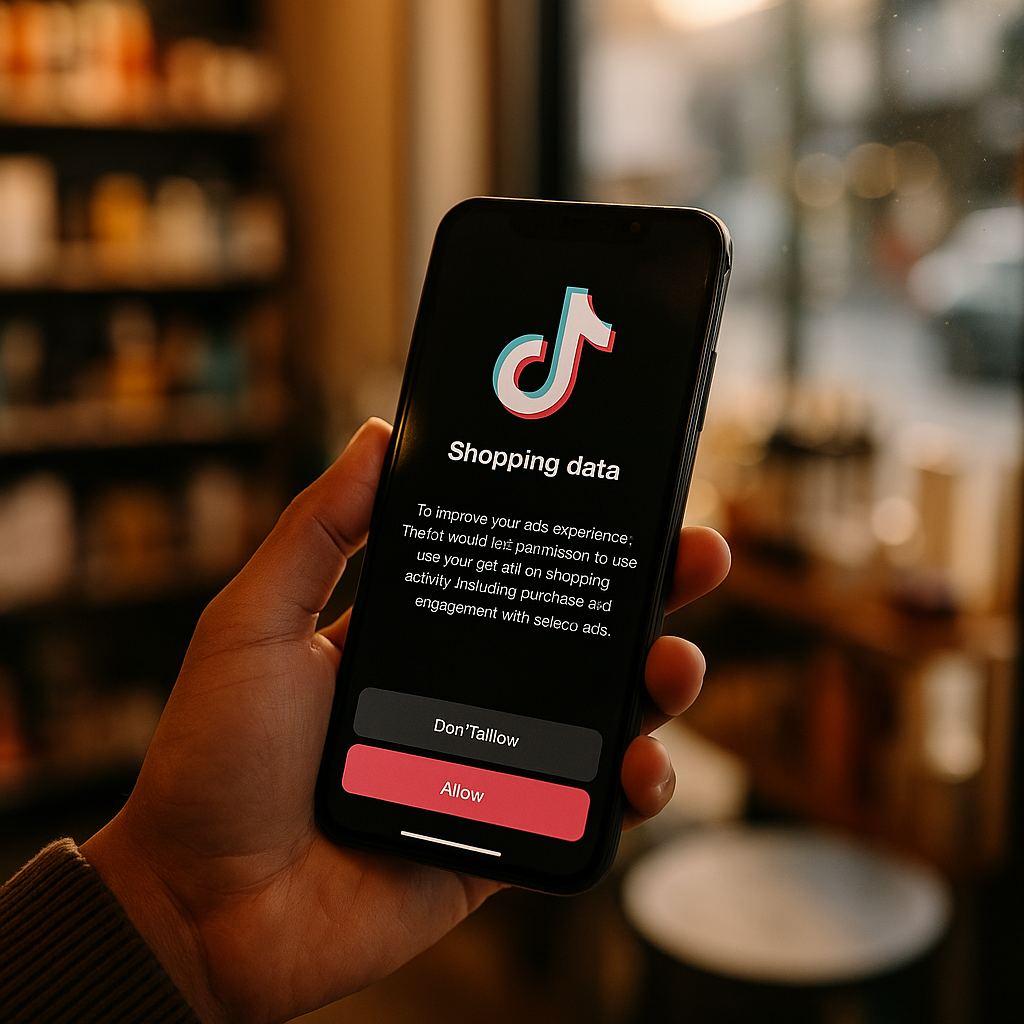
Seventy-three percent of consumers say they’d abandon a checkout flow that feels like it’s hiding something. Now imagine that flow is inside TikTok Shop, and the “something” is a data consent prompt regulators have been demanding for two years. The TikTok March consent prompt update for shopping data isn’t a cosmetic UI tweak — it’s a structural change to how brands capture, store, and justify every data point tied to a shoppable video, livestream, or affiliate link. If your compliance team hasn’t mapped it yet, you’re already behind.
This walkthrough breaks down what’s technically changing, why TikTok made the move now, and exactly what brands running shop storefronts need to fix before the rollout hits full enforcement.
Why TikTok Is Doing This Now
TikTok Shop has grown fast — arguably too fast for its own compliance infrastructure to keep pace. Merchant onboarding, livestream checkout, and affiliate attribution all generate granular behavioral data: what you clicked, how long you watched, which creator drove the sale, what you almost bought. Regulators on both sides of the Atlantic have been circling that data pipeline for a while.
The update responds directly to pressure points that have been building. State privacy laws modeled on the CCPA now cover a majority of the U.S. population. The FTC has signaled repeatedly that it views commerce-adjacent data collection — purchase intent signals, cart abandonment tracking, livestream watch-time — as sensitive enough to warrant explicit, affirmative consent rather than buried opt-outs. TikTok’s own TikTok for Business platform has been quietly rebuilding its data architecture to reflect this for months. March is when it surfaces to the merchant-facing side.
The shift isn’t just “add a pop-up.” It’s a redesign of the consent chain: what triggers a prompt, what data classes require separate consent, and what happens to attribution if a user declines.
What Actually Changes in the Consent Flow
Here’s the technical core of it. Previously, TikTok Shop bundled shopping-data consent into the platform’s general terms of service — a single accept-all click at account setup. The new architecture separates consent into distinct, revocable layers:
- Behavioral tracking consent — covers watch-time, scroll depth, and product-page dwell time used for recommendation algorithms.
- Purchase intent consent — covers cart data, saved items, and livestream “tap to buy” signals shared with merchants for retargeting.
- Third-party data sharing consent — governs whether a merchant’s CRM, ad pixel, or CDP can receive shopper data at all.
- Creator-attribution consent — a new category specific to affiliate and livestream sales, determining whether a shopper’s purchase can be linked back to a specific creator’s dashboard for commission and analytics purposes.
Each layer can be accepted or declined independently. That’s the part brands underestimate. A shopper can allow purchase completion but decline third-party sharing — meaning your carefully built retargeting audience from TikTok Shop just got a lot smaller, and you have no reliable way to know in advance which segment you’ll lose.
The Merchant Dashboard Gets a New Compliance Tab
TikTok is adding a consent-status field to the merchant analytics dashboard. It won’t show individual user identities, but it will show aggregate consent rates by prompt type, region, and traffic source. Expect this to become a KPI your growth team actually watches, the way they watch CTR or conversion rate today.
Why does that matter operationally? Because low consent-acceptance rates in a given region will directly shrink your usable dataset for that market. If your EU consent rate on third-party sharing sits at 40%, your CDP is only getting real signal on less than half your EU TikTok Shop customers. That’s a forecasting problem, not just a legal one.
Brands that already went through the wringer on this with EU AI Act consent architecture changes will recognize the pattern. Regulatory-driven consent layering always looks like a UX problem first and reveals itself as a data-strategy problem three months later.
Does This Apply to Livestream Shopping Too?
Yes — and this is where most compliance teams are underprepared. Livestream shopping generates real-time purchase-intent data (countdown-driven urgency clicks, “add to cart” spikes during a host’s pitch) that TikTok now classifies under the same consent umbrella as standard shoppable posts. If a host references limited stock or a price drop during a livestream, and a viewer declines purchase-intent consent, TikTok’s backend won’t attribute that viewer’s later purchase back to the livestream session for analytics purposes.
That has a direct knock-on effect for brands already navigating livestream price claim audits under FTC rules. You can’t accurately claim “80% of viewers bought at the discounted price” if consent gaps mean a chunk of purchases are invisible to your attribution model. Overclaiming based on incomplete data is its own compliance exposure — separate from, but related to, the countdown-timer scrutiny brands are already facing under state scarcity marketing laws.
Creator Attribution: The Part No One’s Talking About
This is the sleeper issue. Creator-attribution consent determines whether TikTok links a sale to a specific affiliate’s dashboard. If a shopper declines that consent layer, the sale still completes — but the creator’s commission tracking may not reflect it accurately, or at all, depending on how TikTok’s backend resolves the gap.
Picture the conversation this forces: a creator sees inconsistent commission totals and asks your affiliate manager why. The honest answer — “some shoppers opted out of attribution tracking” — is true but unsatisfying, and it needs to be in your creator contracts before it becomes a dispute. This is exactly the kind of scenario the influencer contract checklist should already address in its payment and reporting clauses. If it doesn’t, March is your deadline to amend it.
Building the Compliance Checklist
Here’s the practical sequence brands should run before the update hits full enforcement:
- Audit your current data pipeline. Map every place TikTok Shop data flows into your CRM, ad platforms, or CDP. Flag anything relying on the old bundled-consent model.
- Update creator contracts. Add language addressing attribution gaps caused by consent declines, so commission disputes have a documented resolution path.
- Recalibrate attribution reporting. Build a margin-of-error disclaimer into internal and creator-facing sales reports, since declined consent will create underreporting, not overreporting.
- Brief legal on regional variance. Consent-acceptance rates will differ by market — EU and California shoppers historically decline third-party sharing at higher rates than other regions, per patterns eMarketer has tracked across similar consent rollouts.
- Cross-reference existing biometric and AR consent work. If your brand runs AR try-on features alongside TikTok Shop, align this update with existing AR try-on consent protocols so shoppers aren’t hit with three separate, contradictory prompts in one session.
Treat this less like a legal checkbox and more like a data-quality event. Every consent decline is a hole in your funnel visibility — plan your Q2 forecasting around incomplete data, not perfect data.
What Happens If You Ignore It
TikTok hasn’t published specific merchant penalties for non-compliance yet, but the pattern from past platform policy shifts is consistent: non-compliant shop listings get deprioritized in search and recommendation surfaces first, followed by throttled checkout eligibility, and in repeat cases, suspension of shop privileges. That’s before you even get to regulator attention. The FTC has made clear it’s watching commerce platforms’ data practices closely, and a brand caught relying on pre-update consent assumptions after the cutover is an easy enforcement target.
There’s also a reputational layer. Shoppers are more consent-literate than they were even two years ago. A clunky, confusing, or clearly non-compliant prompt sequence reads as untrustworthy — and trust is the entire currency of social commerce. Get this wrong and you’re not just risking a fine, you’re risking the conversion rate the whole TikTok Shop strategy was built to protect.
Next Step
Don’t wait for TikTok’s rollout notice to hit your merchant dashboard. Run the pipeline audit this month, update creator contracts before your next livestream campaign, and build consent-decline scenarios into your Q2 attribution forecasts now — not after the numbers stop matching expectations.
Frequently Asked Questions
What is the TikTok March consent prompt update for shopping data?
It’s a restructuring of TikTok Shop’s data consent flow that separates behavioral tracking, purchase intent, third-party sharing, and creator attribution into independent, revocable consent layers instead of one bundled agreement.
Does this affect livestream shopping specifically?
Yes. Livestream purchase-intent signals, including urgency-driven clicks during a host’s pitch, fall under the new consent categories. Declined consent can create gaps in livestream attribution and analytics accuracy.
Will declined consent affect creator commission tracking?
It can. If a shopper declines creator-attribution consent, the sale may not link back to the affiliate’s dashboard correctly, which can cause commission discrepancies that brands need to address contractually in advance.
How should brands prepare their TikTok Shop operations?
Audit existing data pipelines for reliance on the old bundled-consent model, update creator contracts to address attribution gaps, recalibrate sales reporting to account for consent-related data gaps, and align this update with any existing AR or biometric consent protocols already in use.
What happens if a brand doesn’t comply with the update?
Based on prior TikTok policy rollouts, non-compliant shop listings typically face reduced visibility in search and recommendations first, followed by checkout restrictions and potential suspension, alongside increased regulatory scrutiny.
Top Influencer Marketing Agencies
The leading agencies shaping influencer marketing in 2026
Agencies ranked by campaign performance, client diversity, platform expertise, proven ROI, industry recognition, and client satisfaction. Assessed through verified case studies, reviews, and industry consultations.
Moburst

-
2

The Shelf
Boutique Beauty & Lifestyle Influencer AgencyA data-driven boutique agency specializing exclusively in beauty, wellness, and lifestyle influencer campaigns on Instagram and TikTok. Best for brands already focused on the beauty/personal care space that need curated, aesthetic-driven content.Clients: Pepsi, The Honest Company, Hims, Elf Cosmetics, Pure LeafVisit The Shelf → -
3

Audiencly
Niche Gaming & Esports Influencer AgencyA specialized agency focused exclusively on gaming and esports creators on YouTube, Twitch, and TikTok. Ideal if your campaign is 100% gaming-focused — from game launches to hardware and esports events.Clients: Epic Games, NordVPN, Ubisoft, Wargaming, Tencent GamesVisit Audiencly → -
4

Viral Nation
Global Influencer Marketing & Talent AgencyA dual talent management and marketing agency with proprietary brand safety tools and a global creator network spanning nano-influencers to celebrities across all major platforms.Clients: Meta, Activision Blizzard, Energizer, Aston Martin, WalmartVisit Viral Nation → -
5

The Influencer Marketing Factory
TikTok, Instagram & YouTube CampaignsA full-service agency with strong TikTok expertise, offering end-to-end campaign management from influencer discovery through performance reporting with a focus on platform-native content.Clients: Google, Snapchat, Universal Music, Bumble, YelpVisit TIMF → -
6

NeoReach
Enterprise Analytics & Influencer CampaignsAn enterprise-focused agency combining managed campaigns with a powerful self-service data platform for influencer search, audience analytics, and attribution modeling.Clients: Amazon, Airbnb, Netflix, Honda, The New York TimesVisit NeoReach → -
7

Ubiquitous
Creator-First Marketing PlatformA tech-driven platform combining self-service tools with managed campaign options, emphasizing speed and scalability for brands managing multiple influencer relationships.Clients: Lyft, Disney, Target, American Eagle, NetflixVisit Ubiquitous → -
8

Obviously
Scalable Enterprise Influencer CampaignsA tech-enabled agency built for high-volume campaigns, coordinating hundreds of creators simultaneously with end-to-end logistics, content rights management, and product seeding.Clients: Google, Ulta Beauty, Converse, AmazonVisit Obviously →