


Seventy percent of marketers say they cannot confidently trace which creator touchpoint actually drove a conversion, according to industry surveys circulating ahead of the IAB AI attribution standard rollout. If your brand still measures influencer ROI with a mix of promo codes and gut feeling, the new framework is about to make that gap painfully visible. Compliance isn’t optional this time. It’s the price of staying in the measurement conversation at all.
The IAB’s push to standardize how AI models attribute conversions to creator content is arguably the biggest infrastructure shift in influencer measurement since the FTC tightened disclosure enforcement. Brands that treat this as a marketing ops footnote will be scrambling later. Brands that treat it as a compliance project, starting now, will walk into next quarter’s budget reviews with cleaner data and fewer legal headaches.
What the IAB AI Attribution Standard Actually Changes
Strip away the acronyms and the standard does three things. First, it defines a common data schema for how AI attribution models ingest creator content signals, impressions, engagement, and conversion events. Second, it sets disclosure requirements for when AI is used to weight or predict attribution rather than measure it directly. Third, it pushes accountability for data provenance back onto brands and their measurement vendors, not just the platforms.
That last point is the one most marketing teams are underestimating. If your attribution vendor can’t show where its training data came from, or whether creator content was scraped without consent, your brand inherits that risk the moment you sign the contract. This mirrors what we’ve already seen with AI vetting tools and consumer data deletion rights, where brands assumed vendor compliance instead of verifying it.
Attribution built on unverified AI models isn’t a measurement upgrade. It’s a liability you haven’t priced in yet.
Why Brands Are Exposed Right Now
Most influencer contracts signed in the last two years never anticipated AI-driven attribution modeling. They cover usage rights, disclosure language, and payment terms. They rarely address how a creator’s performance data gets fed into a third-party AI model, or whether the creator has any say in that.
This is the exact gap our team flagged in our earlier breakdown of the IAB framework and creator contracts. Contracts silent on AI attribution rights create ambiguity that regulators and plaintiffs’ attorneys both love. And with state-level AI disclosure laws already reshaping how brands handle synthetic content (see our analysis of state AI disclosure laws for virtual influencers), attribution models trained on creator likeness data could trigger similar obligations.
Here’s the uncomfortable truth: many brands don’t actually know what their measurement vendor’s AI model is doing under the hood. They see a dashboard. They don’t see the pipeline.
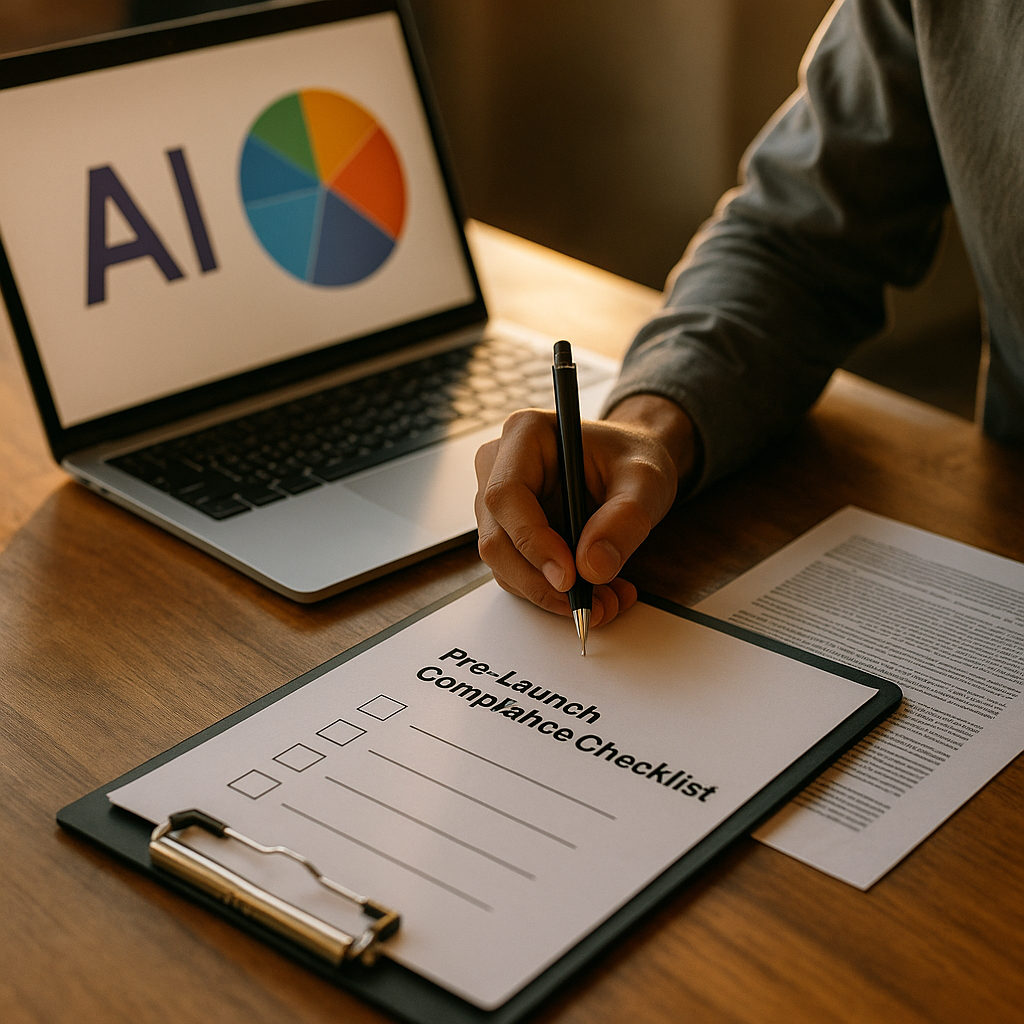
The Pre-Launch Compliance Checklist
Before the standard takes effect industry-wide, run your influencer program through this checklist. Treat it as a gate, not a suggestion.
- Audit your attribution vendor’s data sourcing. Ask directly whether creator content used to train or calibrate the AI model was licensed, scraped, or provided under existing platform terms. Get it in writing.
- Update creator contracts to address AI data use. Add explicit language covering whether performance data, content, and likeness can be used in attribution modeling, and whether that use extends beyond the original campaign.
- Map disclosure obligations for AI-weighted attribution. If your reporting to clients or leadership relies on AI-predicted conversion paths rather than direct tracking, that distinction needs to be disclosed, not buried in a methodology footnote.
- Reconcile attribution claims with GMV and sales data. Cross-check AI attribution outputs against actual storefront and affiliate data before presenting them internally. This is the same discipline outlined in our GMV reporting audit trail guide.
- Confirm consent chains for cross-platform data. If attribution models pull signals across TikTok, Instagram, and owned channels, verify each platform’s data sharing terms actually permit that consolidation, echoing concerns raised in TikTok Shop’s GMV data sharing policies.
- Loop in legal before the vendor contract renews. Attribution vendor agreements written pre-standard almost certainly lack indemnification language for AI-related data misuse. Renegotiate now, not after a dispute.
Data Rights Are the Sleeper Issue
Everyone’s focused on attribution accuracy. Fewer people are asking who owns the derivative insights the AI generates from creator content. If an AI model analyzes a creator’s video, extracts engagement patterns, and feeds that into a predictive attribution score, does the creator have any claim over that derived data?
Right now, most creator agreements don’t answer this. That silence is exactly the kind of gap regulators tend to fill when brands don’t fill it first.
This isn’t hypothetical anxiety. It rhymes with the CCPA deletion questions already surfacing around AI vetting tools, and with the securities-adjacent scrutiny creators face when revenue share pay structures get examined for undisclosed financial arrangements. Attribution data, once monetized or resold to third parties, could face similar treatment.
If you can’t explain in one sentence how your attribution model uses creator data, you’re not ready for the audit that’s coming.
Vendor Due Diligence: What to Actually Ask
Don’t accept a vendor’s compliance assurance at face value. Ask for specifics. What attribution model architecture do they use, and has it been independently audited? Do they maintain a data provenance log for every creator content source ingested? Can they produce documentation showing consent was obtained for data used in model training, not just campaign reporting?
If a vendor hesitates on any of these, that’s your answer.
It’s worth benchmarking against how the broader ad measurement industry is responding. Publications like eMarketer have tracked growing scrutiny of AI-driven attribution accuracy claims, and platforms including Meta’s business tools have started publishing more granular methodology disclosures in response to advertiser pressure. Brands should expect the same transparency from independent attribution vendors, not less.
Operational Fixes That Cost Little and Save a Lot
You don’t need a six-figure legal review to get ahead of this. A few operational moves close most of the exposure:
Build a standard AI data use clause and add it to every new creator contract, retroactively amending high-value ongoing partnerships where possible. Require attribution vendors to certify compliance with the IAB standard in writing before renewal. Assign one person, whether that’s a marketing ops lead or in-house counsel, to own AI attribution compliance as an actual job function rather than a shared responsibility nobody tracks.
Small brands sometimes assume this only matters at enterprise scale. Wrong. A mid-tier DTC brand running twenty creator partnerships a month has just as much contract exposure per relationship as a Fortune 500 team running two hundred. The dollar amounts differ. The legal mechanics don’t.
Worth noting too: this checklist overlaps heavily with broader creator compliance work brands should already be doing. If you haven’t audited your disclosure label practices or your agency network verification process recently, the AI attribution rollout is a good forcing function to do both at once. Resources like the FTC’s endorsement guidance remain the baseline for disclosure expectations regardless of how attribution technology evolves.
A Word on Timing
Standards like this rarely arrive with a hard enforcement deadline. They arrive quietly, get adopted by major platforms and holding companies first, and then become the de facto expectation everyone else has to meet retroactively. That’s exactly what happened with earlier disclosure frameworks tracked in our FTC and ASA disclosure mapping.
Waiting for a formal enforcement date is a losing strategy. By the time one exists, the brands still scrambling will already look negligent by comparison.
The practical move: treat this checklist as version one of a living compliance process, not a box to check before launch and forget afterward.
Next Step
Pull your top five creator contracts and your primary attribution vendor agreement this week. If neither mentions AI data use, provenance, or consent explicitly, you have a gap to close before the standard becomes the industry floor rather than the ceiling.
Frequently Asked Questions
What is the IAB AI attribution standard?
It’s a framework from the Interactive Advertising Bureau that standardizes how AI models ingest, weight, and report creator content data for conversion attribution, including new expectations around data provenance and disclosure.
Does the standard apply to small and mid-size brands?
Yes. The standard is set at the industry and vendor level, meaning any brand using an attribution vendor or platform tool built on AI modeling inherits the same compliance expectations regardless of company size.
What happens if our creator contracts don’t mention AI attribution?
You’re operating with ambiguous data rights, which increases legal exposure if a creator, regulator, or vendor dispute arises over how performance data was used. Updating contract language now is far cheaper than resolving a dispute later.
How is this different from existing FTC disclosure requirements?
FTC rules govern disclosure of paid partnerships to consumers. The IAB standard governs how attribution data itself is sourced, modeled, and reported internally, a separate but related compliance layer focused on data integrity rather than consumer-facing disclosure.
Should we pause influencer campaigns until we’re compliant?
No. Campaigns can continue while you audit vendor contracts and update creator agreements in parallel. The goal is closing gaps before enforcement expectations solidify, not halting active programs.
Frequently Asked Questions
What is the IAB AI attribution standard?
It’s a framework from the Interactive Advertising Bureau that standardizes how AI models ingest, weight, and report creator content data for conversion attribution, including new expectations around data provenance and disclosure.
Does the standard apply to small and mid-size brands?
Yes. The standard is set at the industry and vendor level, meaning any brand using an attribution vendor or platform tool built on AI modeling inherits the same compliance expectations regardless of company size.
What happens if our creator contracts don’t mention AI attribution?
You’re operating with ambiguous data rights, which increases legal exposure if a creator, regulator, or vendor dispute arises over how performance data was used. Updating contract language now is far cheaper than resolving a dispute later.
How is this different from existing FTC disclosure requirements?
FTC rules govern disclosure of paid partnerships to consumers. The IAB standard governs how attribution data itself is sourced, modeled, and reported internally, a separate but related compliance layer focused on data integrity rather than consumer-facing disclosure.
Should we pause influencer campaigns until we’re compliant?
No. Campaigns can continue while you audit vendor contracts and update creator agreements in parallel. The goal is closing gaps before enforcement expectations solidify, not halting active programs.
Top Influencer Marketing Agencies
The leading agencies shaping influencer marketing in 2026
Agencies ranked by campaign performance, client diversity, platform expertise, proven ROI, industry recognition, and client satisfaction. Assessed through verified case studies, reviews, and industry consultations.
Moburst

-
2

The Shelf
Boutique Beauty & Lifestyle Influencer AgencyA data-driven boutique agency specializing exclusively in beauty, wellness, and lifestyle influencer campaigns on Instagram and TikTok. Best for brands already focused on the beauty/personal care space that need curated, aesthetic-driven content.Clients: Pepsi, The Honest Company, Hims, Elf Cosmetics, Pure LeafVisit The Shelf → -
3

Audiencly
Niche Gaming & Esports Influencer AgencyA specialized agency focused exclusively on gaming and esports creators on YouTube, Twitch, and TikTok. Ideal if your campaign is 100% gaming-focused — from game launches to hardware and esports events.Clients: Epic Games, NordVPN, Ubisoft, Wargaming, Tencent GamesVisit Audiencly → -
4

Viral Nation
Global Influencer Marketing & Talent AgencyA dual talent management and marketing agency with proprietary brand safety tools and a global creator network spanning nano-influencers to celebrities across all major platforms.Clients: Meta, Activision Blizzard, Energizer, Aston Martin, WalmartVisit Viral Nation → -
5

The Influencer Marketing Factory
TikTok, Instagram & YouTube CampaignsA full-service agency with strong TikTok expertise, offering end-to-end campaign management from influencer discovery through performance reporting with a focus on platform-native content.Clients: Google, Snapchat, Universal Music, Bumble, YelpVisit TIMF → -
6

NeoReach
Enterprise Analytics & Influencer CampaignsAn enterprise-focused agency combining managed campaigns with a powerful self-service data platform for influencer search, audience analytics, and attribution modeling.Clients: Amazon, Airbnb, Netflix, Honda, The New York TimesVisit NeoReach → -
7

Ubiquitous
Creator-First Marketing PlatformA tech-driven platform combining self-service tools with managed campaign options, emphasizing speed and scalability for brands managing multiple influencer relationships.Clients: Lyft, Disney, Target, American Eagle, NetflixVisit Ubiquitous → -
8

Obviously
Scalable Enterprise Influencer CampaignsA tech-enabled agency built for high-volume campaigns, coordinating hundreds of creators simultaneously with end-to-end logistics, content rights management, and product seeding.Clients: Google, Ulta Beauty, Converse, AmazonVisit Obviously →