


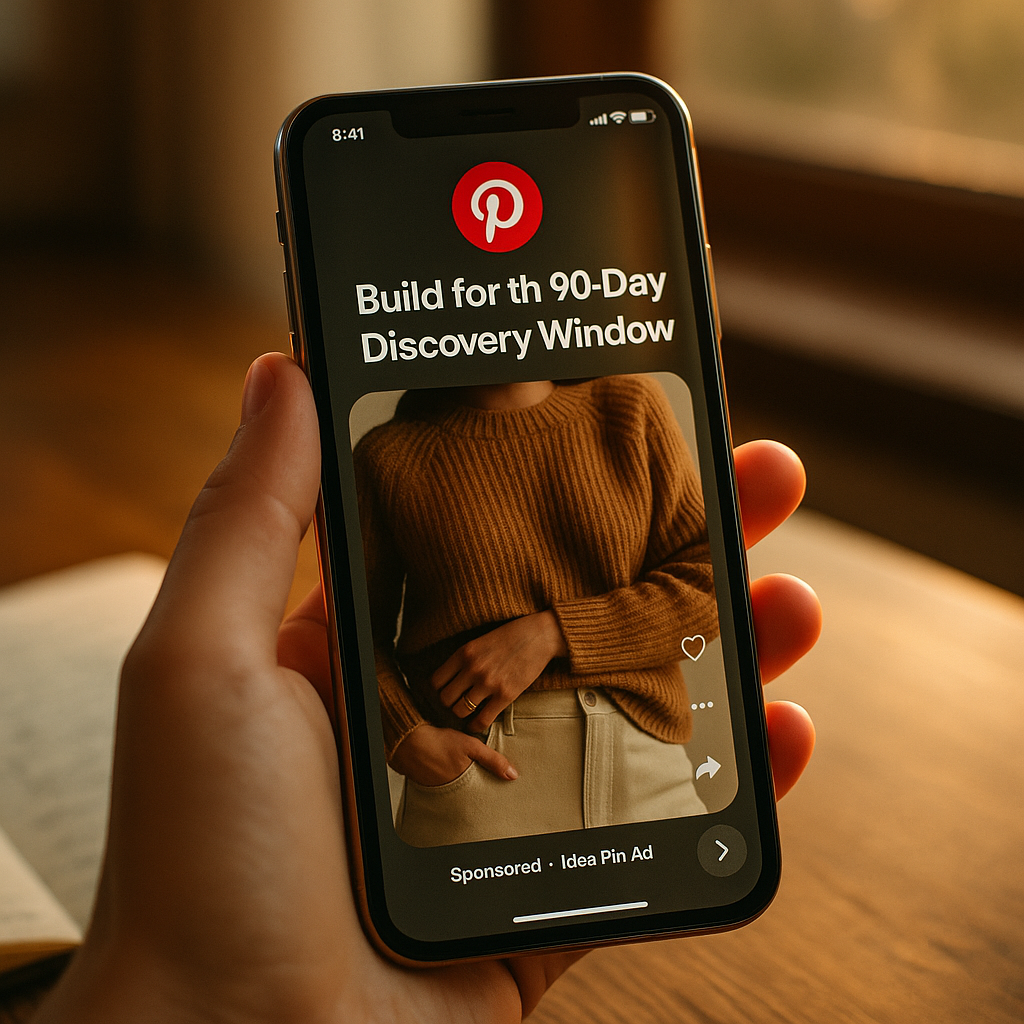
The average Pinterest user takes seven days to three months to move from saving a Pin to buying the product. No other major platform gives brands that kind of runway. Yet most Pinterest shopping ads campaigns are still built like TikTok Shop sprints, chasing 48-hour conversions on a platform designed for slow-burn discovery. That mismatch is costing brands budget and, worse, mislabeling a channel that actually works.
Why Pinterest’s Buying Window Breaks Standard Campaign Logic
Most paid social frameworks assume urgency. Meta and TikTok reward creative that converts fast, because their algorithms are optimized for immediate action and their attribution windows top out at 7 or 28 days. Pinterest is different by design. It’s a visual search engine wearing a social platform’s clothes, and users treat it like one, planning weddings, home renovations, and wardrobe overhauls months in advance.
That means a Pin someone saves in early autumn might convert around the holidays. If your reporting cuts off at day 7, you’re writing off a huge chunk of pipeline that simply hasn’t matured yet. eMarketer has repeatedly flagged Pinterest’s above-average purchase intent metrics, yet many media buyers still judge the platform against short-window benchmarks borrowed from other channels.
Judging Pinterest performance on a 7-day click window is like grading a garden a week after planting seeds. The mechanics need time, not just budget.
Idea Pins Are the Format Built for This Lag
Idea Pins (Pinterest’s multi-page, story-style format) aren’t just a content trend — they’re structurally suited to long consideration cycles. Unlike static product Pins, Idea Pins let you layer a narrative: problem, inspiration, product, application. That structure mirrors how users actually browse Pinterest, moving from vague intent (“small bathroom ideas”) to specific product consideration over weeks.
Static shopping ads are still essential for bottom-funnel retargeting. But Idea Pins do the top-of-funnel work that seeds the eventual sale. Treat them as the awareness layer of a longer funnel, not a direct-response unit.
What Structuring for Discovery Actually Means
In practice, structuring an Idea Pin campaign for Pinterest’s discovery window means three things:
- Sequencing content by funnel stage, not by product SKU
- Extending reporting windows to 30, 60, and 90 days instead of defaulting to 7
- Building seasonal lead time into your publishing calendar, often 60-90 days ahead of the actual shopping moment
Brands that get this right treat Pinterest less like a performance channel and more like an owned media property that happens to have a checkout button attached. That reframing changes budget conversations with finance, too — you’re not buying clicks, you’re buying a slot in someone’s multi-month research process.
Building the Three-Layer Campaign Structure
A discovery-window-aware Pinterest campaign generally breaks into three layers, each with its own creative brief and success metric.
Layer one: broad inspiration Idea Pins
These target broad interest and keyword searches (“fall capsule wardrobe,” “small space storage”). No hard product push. The goal is a save, a board add, or a follow. Measure this layer on engagement rate and saves-per-impression, not ROAS. If you demand purchase attribution here, you’ll kill the format before it does its job.
Layer two: consideration Idea Pins with soft product integration
This is where the product enters the story, but still framed as part of a broader idea (styling tips, a how-to, a room reveal). Link these to shoppable catalog Pins so warmed-up viewers can move to product pages without friction. Retargeting audiences here should be built from layer-one engagers, not cold interest targeting.
Layer three: direct shopping Pins for retargeting
Static or short-format shopping ads aimed squarely at users who engaged with layers one and two. This is your conversion layer, and it’s the only place a 7-14 day attribution window actually makes sense. Budget allocation typically runs 50/30/20 across the three layers for brands in active growth mode, though seasonal categories often shift more weight to layer one during pre-season windows.
This tiered approach isn’t unique to Pinterest conceptually. It resembles how smart brands structure shopping-tagged Reels campaigns on Instagram, layering discovery content ahead of conversion assets. The difference is timeline: Instagram’s window is measured in days, Pinterest’s in months.
Seasonal Planning Is Non-Negotiable Here
Pinterest itself publishes seasonal trend reports for a reason: its users start searching for holiday gift ideas in July and back-to-school content in May. If your Idea Pin campaign launches when the shopping moment actually arrives, you’ve already missed the discovery window that made the sale possible.
Home and lifestyle brands have this figured out better than most categories, largely because the format rewards long-range planning. For a deeper breakdown of how seasonal boards and video content compound over a full year, see this seasonal planning guide for home brands, which maps content cadence against Pinterest’s own trend data.
Fashion, beauty, and home decor brands running seasonal creator boards alongside Idea Pins tend to see compounding returns, because boards keep surfacing in search long after the initial campaign flight ends. That’s the quiet advantage Pinterest has over ephemeral formats: content doesn’t die when the campaign budget does.
Creator Partnerships Change the Calculus
Working with creators on Pinterest looks different than on TikTok or Instagram. There’s no expectation of viral spikes. Instead, brands should brief creators to produce Idea Pins that read like genuine inspiration content, tutorials, roundups, mood boards, not overt ad reads. Pinterest’s own algorithm favors content that resembles organic discovery material, and users are quick to scroll past anything that feels like a hard sell.
Whitelisting creator content through Pinterest’s ad tools (similar in spirit to the MCM setup used for creator whitelisting on other platforms) lets brands extend reach behind paid media without losing the creator’s authentic voice. That authenticity matters more on Pinterest than the follower count of the creator you’re working with, echoing a shift already documented across Instagram’s algorithm favoring authenticity over polish.
What About Attribution and Measurement?
This is the part that trips up finance teams. Pinterest’s own conversion tag and the Pinterest Tag API support extended lookback windows, but most advertisers still default to platform-standard 7 or 14-day windows inherited from other channels. If you’re running a discovery-window campaign, push your attribution settings to 30-day view-through at minimum, and cross-reference with your CRM or e-commerce platform’s own multi-touch data.
HubSpot’s attribution modeling tools and platforms like Sprout Social can help reconcile Pinterest-reported saves against actual downstream purchases, especially when the buying cycle stretches past a single ad platform’s native reporting.
If your Pinterest ROAS looks flat at day 7 but your organic search traffic from Pinterest keeps climbing, that’s not a failed campaign. That’s a discovery window doing exactly what it’s supposed to do.
Common Mistakes That Sabotage Idea Pin Campaigns
- Pulling budget too early because day-7 ROAS looks weak
- Using the same creative for cold and warm audiences, collapsing the funnel into one undifferentiated message
- Launching seasonal content on the shopping date instead of 60-90 days ahead
- Ignoring saves and board adds as leading indicators, focusing only on last-click conversions
- Briefing creators like it’s TikTok, chasing hooks and virality instead of evergreen, searchable inspiration
Each of these mistakes stems from the same root problem: applying short-window platform logic to a long-window platform. Pinterest isn’t underperforming when it looks slow. It’s behaving exactly as designed, and brands that fight that design lose budget efficiency chasing metrics the platform was never built to deliver quickly.
For context on how attribution mismatches show up elsewhere in the creator economy, see how TikTok’s watch-time algorithm forces media buyers to adapt their measurement approach, a useful comparison for understanding how platform-native metrics diverge from generic paid social benchmarks.
Next Step: Rebuild Your Reporting Calendar Before Your Creative Calendar
Before you brief another Idea Pin, extend your Pinterest attribution window to 30 days minimum and build a 90-day content runway ahead of your next seasonal push. The creative fixes itself once the measurement framework stops punishing patience.
FAQs
How long should I run a Pinterest Idea Pin campaign before judging performance?
Give top-of-funnel Idea Pin campaigns at least 30 days before evaluating performance, and ideally track saves and engagement out to 90 days given Pinterest’s average purchase window of one week to three months.
Are Idea Pins still the right format, or has Pinterest replaced them?
Pinterest has consolidated much of the Idea Pin functionality into standard video and multi-page Pin formats within its ads manager, but the strategic principle remains: multi-page, story-style content still outperforms single-image static Pins for top-of-funnel discovery.
What attribution window should I set for Pinterest shopping ads?
Set at minimum a 30-day view-through window, and cross-check against your CRM or e-commerce analytics, since Pinterest’s native reporting often undercounts conversions that happen weeks after the initial engagement.
Do creator partnerships perform differently on Pinterest than on TikTok or Instagram?
Yes. Pinterest rewards inspiration-style content that reads as organic discovery material rather than overt promotion, and follower count matters less than content relevance and searchability.
How far in advance should seasonal Idea Pin campaigns launch?
Most seasonal categories should launch content 60-90 days ahead of the actual shopping moment, matching Pinterest’s own published trend data on when users begin seasonal searches.
Top Influencer Marketing Agencies
The leading agencies shaping influencer marketing in 2026
Agencies ranked by campaign performance, client diversity, platform expertise, proven ROI, industry recognition, and client satisfaction. Assessed through verified case studies, reviews, and industry consultations.
Moburst

-
2

The Shelf
Boutique Beauty & Lifestyle Influencer AgencyA data-driven boutique agency specializing exclusively in beauty, wellness, and lifestyle influencer campaigns on Instagram and TikTok. Best for brands already focused on the beauty/personal care space that need curated, aesthetic-driven content.Clients: Pepsi, The Honest Company, Hims, Elf Cosmetics, Pure LeafVisit The Shelf → -
3

Audiencly
Niche Gaming & Esports Influencer AgencyA specialized agency focused exclusively on gaming and esports creators on YouTube, Twitch, and TikTok. Ideal if your campaign is 100% gaming-focused — from game launches to hardware and esports events.Clients: Epic Games, NordVPN, Ubisoft, Wargaming, Tencent GamesVisit Audiencly → -
4

Viral Nation
Global Influencer Marketing & Talent AgencyA dual talent management and marketing agency with proprietary brand safety tools and a global creator network spanning nano-influencers to celebrities across all major platforms.Clients: Meta, Activision Blizzard, Energizer, Aston Martin, WalmartVisit Viral Nation → -
5

The Influencer Marketing Factory
TikTok, Instagram & YouTube CampaignsA full-service agency with strong TikTok expertise, offering end-to-end campaign management from influencer discovery through performance reporting with a focus on platform-native content.Clients: Google, Snapchat, Universal Music, Bumble, YelpVisit TIMF → -
6

NeoReach
Enterprise Analytics & Influencer CampaignsAn enterprise-focused agency combining managed campaigns with a powerful self-service data platform for influencer search, audience analytics, and attribution modeling.Clients: Amazon, Airbnb, Netflix, Honda, The New York TimesVisit NeoReach → -
7

Ubiquitous
Creator-First Marketing PlatformA tech-driven platform combining self-service tools with managed campaign options, emphasizing speed and scalability for brands managing multiple influencer relationships.Clients: Lyft, Disney, Target, American Eagle, NetflixVisit Ubiquitous → -
8

Obviously
Scalable Enterprise Influencer CampaignsA tech-enabled agency built for high-volume campaigns, coordinating hundreds of creators simultaneously with end-to-end logistics, content rights management, and product seeding.Clients: Google, Ulta Beauty, Converse, AmazonVisit Obviously →