


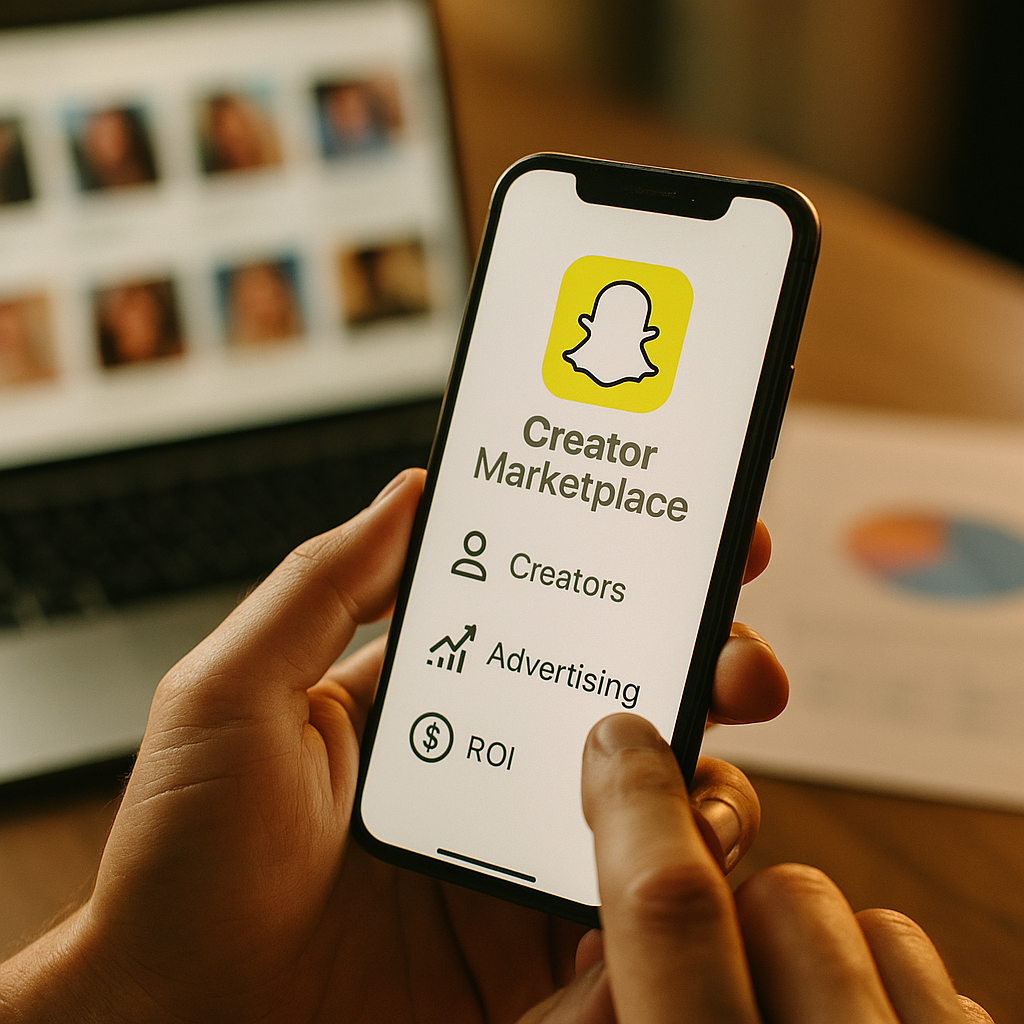
Snapchat’s audience skews young, mobile-first, and allergic to polished ads. Yet most brands still discover Snapchat creators through cold DMs and guesswork. The Snapchat Creator Marketplace exists to fix that, and if your team hasn’t logged in yet, you’re likely overpaying for underperforming placements.
What the Marketplace Actually Solves
Snap Inc. built its Creator Marketplace to formalize what used to be an informal, agency-heavy process. Before its expansion, brands sourced Snapchat talent through third-party influencer platforms or word of mouth, then negotiated blind. Rates varied wildly. Vetting was inconsistent. Measurement was almost nonexistent unless you had a direct Snap sales rep on speed dial.
Now brands can browse verified creator profiles, filter by audience demographics and content category, and initiate deals inside a single dashboard. It’s not as mature as TikTok’s Creator Marketplace or Meta’s Creator Partnerships hub, but it’s closing the gap fast, especially for brands targeting Gen Z and younger millennial audiences that still treat Snapchat as a daily habit rather than a legacy app.
Snapchat reports over 900 million monthly active users, with the majority under 35, a demographic window that’s increasingly expensive to reach on Instagram and TikTok through paid media alone.
How Brand Discovery Works Inside the Tool
The discovery layer is where most teams spend their first few sessions, and it’s worth doing right. You’re not just searching for “beauty creators.” You’re filtering by:
- Audience age bands and gender skew
- Geographic concentration (critical for regional or multi-market launches)
- Content vertical: gaming, beauty, food, fashion, finance, fitness
- Historical performance metrics like average view time and completion rate
- Past brand collaboration history, which helps flag exclusivity conflicts
Compare that to sourcing on Threads, where brand discovery still leans heavily on manual outreach and platform-native search limitations, as covered in our Threads creator sourcing guide. Snapchat’s structured filters save real hours, particularly for brands running always-on programs rather than one-off campaigns.
One caveat: the creator pool skews smaller than TikTok’s or Instagram’s. You won’t find the long tail of nano-creators as easily. Snapchat’s marketplace favors mid-tier and established creators who’ve already built Spotlight traction, which ties directly into the platform’s separate monetization mechanics discussed in our Spotlight Creator Fund breakdown.
Vetting Beyond the Platform’s Own Data
Don’t stop at what Snap shows you. Cross-reference engagement claims against independent tools, and always request screenshots of Snapchat’s own analytics dashboard (Creator Insights) before finalizing a deal. Inflated view counts are less common on Snapchat than on some platforms, but audience mismatch (a creator whose “Gen Z” label is technically true but skews 24-30 rather than 16-20) is a frequent surprise.
If your brand operates in a regulated category like finance or health, vetting needs an extra layer. The same disclosure and compliance logic that applies to fintech creator partnerships, detailed in our finance creator vetting guide, applies here. The FTC’s endorsement guidelines don’t care which app the ad ran on.
Setting a Realistic Budget
Here’s the honest answer nobody wants: Snapchat creator rates are less standardized than TikTok’s or Instagram’s, which means early negotiations can swing 30 to 50 percent depending on how prepared you walk in. A mid-tier lifestyle creator with 300,000 subscribers might quote $2,500 for a single Spotlight placement, or $1,200, depending entirely on demand that week.
A few budget anchors worth using in negotiation:
- Story takeovers (single-day, multi-frame) typically run lower than standalone Spotlight content because they’re ephemeral and harder to repurpose.
- Spotlight-native content commands a premium since it has longer shelf life and algorithmic discovery potential beyond the creator’s existing followers.
- AR Lens integrations sit at the top of the pricing tier because production complexity is higher and fewer creators specialize in them.
- Usage rights for paid amplification (running creator content as an ad) should always be negotiated as a separate line item, not bundled silently into the base rate.
Budget conversations get easier once you benchmark against adjacent platforms. If your team already runs TikTok Spark Ads or Meta Partnership Ads, you have internal cost-per-placement data to compare. Our Spark Ads spend guide is a useful side-by-side reference when building your Snapchat pitch to finance.
Treat your first three Snapchat creator deals as pricing discovery, not performance benchmarks. You’re building a rate card for your category, and that data is worth more than the immediate campaign result.
Does Snapchat Creator Marketplace Deliver ROI?
ROI depends heavily on category. Mobile gaming, beauty, and fast fashion brands consistently report strong swipe-up and shop-tag conversion because Snapchat’s audience is primed for quick, impulsive action within the app. B2B and considered-purchase categories, unsurprisingly, see weaker direct-response numbers and should lean on Snapchat for upper-funnel awareness instead.
Measurement inside the Marketplace has improved but still lags behind TikTok’s attribution tooling. Snap’s pixel and API integrations work well for e-commerce brands running Shopify storefronts, echoing the setup logic in our Shopify Collabs guide. If you’re not tracking through a connected commerce stack, you’re relying on platform-reported view and swipe metrics, which are directionally useful but shouldn’t anchor your entire ROI model.
A few practical benchmarks from brands running consistent Snapchat creator programs:
- Average swipe-up rate on creator-driven Spotlight content: 2 to 4 percent, notably higher than brand-owned Story ads
- Cost per swipe generally lands lower than equivalent TikTok Shop affiliate campaigns for impulse categories, according to internal agency benchmarking shared across several mid-market beauty accounts
- Repeat creator partnerships (same creator, third or fourth campaign) show measurably higher completion rates than first-time collaborations, likely due to audience familiarity with the creator’s sponsored content cadence
Where It Falls Short
Let’s not oversell this. The Marketplace still has real gaps.
Search functionality is basic compared to dedicated influencer platforms. There’s no robust campaign management layer for running dozens of creators simultaneously, which means larger programs often still route through agencies or third-party tools that plug into Snap’s API. And unlike YouTube or Instagram, there’s limited cross-platform reporting, so if your creator is also posting the same content to TikTok or Reels, you’re stitching together performance data manually.
Compare this to the algorithmic transparency shifts happening elsewhere, like the changes outlined in our YouTube and LinkedIn algorithm watch list. Snapchat hasn’t faced the same antitrust scrutiny as some competitors, a topic we unpacked in our TikTok antitrust filings piece, but that also means less public pressure to open up its data infrastructure to advertisers.
Brands running tiered creator distribution strategies, mixing macro anchors with nano armies as described in our tiered distribution framework, will find Snapchat’s marketplace better suited to the macro and mid-tier layer than the nano layer, simply because of pool depth.
Practical Steps to Get Started
- Request Marketplace access through your Snap Ads Manager account if you haven’t already; approval typically takes a few business days.
- Run a discovery pass filtering by your core demographic before reaching out to anyone. Build a shortlist of 15 to 20 creators.
- Negotiate a small test batch, three to five creators, across a single content format to establish your internal rate card.
- Set up conversion tracking through your commerce platform before launch, not after.
- Review performance at the 30-day mark and renegotiate repeat partnerships based on actual swipe and completion data, not follower count.
For teams benchmarking pricing across platforms, tools like Sprout Social and HubSpot publish regular creator economy benchmarks worth cross-referencing. Industry data from eMarketer and Statista also helps contextualize Snapchat’s audience size against competing platforms when building your internal budget case.
FAQs
What is the Snapchat Creator Marketplace?
It’s Snap Inc.’s native tool for brands to discover, vet, and negotiate directly with Snapchat creators, replacing informal outreach with a searchable, filterable database of verified talent profiles.
How much does a Snapchat creator campaign typically cost?
Rates vary widely by creator tier and content format, but mid-tier creators often quote between $1,200 and $2,500 for a single Spotlight or Story placement, with AR Lens integrations priced higher due to production complexity.
Is the Snapchat Creator Marketplace better than TikTok’s for brand discovery?
Not necessarily better, but different. TikTok’s marketplace has a deeper creator pool and stronger attribution tools, while Snapchat’s tool works well for brands specifically targeting its younger, mobile-first user base.
Can small businesses use the Snapchat Creator Marketplace?
Yes, though access and creator availability may be more limited compared to large enterprise advertisers. Smaller brands often get better results by starting with a focused test batch of three to five creators.
How do I measure ROI on Snapchat creator campaigns?
Connect your commerce platform’s pixel or API to track conversions directly, since Snapchat’s native reporting covers views and swipe-ups but doesn’t fully close the loop on downstream sales without integration.
Start small, track everything, and treat your first Snapchat creator batch as rate-card research rather than a performance benchmark. The brands winning on this platform right now are the ones who ran the test quietly six months ago while everyone else was still debating whether Snapchat still mattered.
Top Influencer Marketing Agencies
The leading agencies shaping influencer marketing in 2026
Agencies ranked by campaign performance, client diversity, platform expertise, proven ROI, industry recognition, and client satisfaction. Assessed through verified case studies, reviews, and industry consultations.
Moburst

-
2

The Shelf
Boutique Beauty & Lifestyle Influencer AgencyA data-driven boutique agency specializing exclusively in beauty, wellness, and lifestyle influencer campaigns on Instagram and TikTok. Best for brands already focused on the beauty/personal care space that need curated, aesthetic-driven content.Clients: Pepsi, The Honest Company, Hims, Elf Cosmetics, Pure LeafVisit The Shelf → -
3

Audiencly
Niche Gaming & Esports Influencer AgencyA specialized agency focused exclusively on gaming and esports creators on YouTube, Twitch, and TikTok. Ideal if your campaign is 100% gaming-focused — from game launches to hardware and esports events.Clients: Epic Games, NordVPN, Ubisoft, Wargaming, Tencent GamesVisit Audiencly → -
4

Viral Nation
Global Influencer Marketing & Talent AgencyA dual talent management and marketing agency with proprietary brand safety tools and a global creator network spanning nano-influencers to celebrities across all major platforms.Clients: Meta, Activision Blizzard, Energizer, Aston Martin, WalmartVisit Viral Nation → -
5

The Influencer Marketing Factory
TikTok, Instagram & YouTube CampaignsA full-service agency with strong TikTok expertise, offering end-to-end campaign management from influencer discovery through performance reporting with a focus on platform-native content.Clients: Google, Snapchat, Universal Music, Bumble, YelpVisit TIMF → -
6

NeoReach
Enterprise Analytics & Influencer CampaignsAn enterprise-focused agency combining managed campaigns with a powerful self-service data platform for influencer search, audience analytics, and attribution modeling.Clients: Amazon, Airbnb, Netflix, Honda, The New York TimesVisit NeoReach → -
7

Ubiquitous
Creator-First Marketing PlatformA tech-driven platform combining self-service tools with managed campaign options, emphasizing speed and scalability for brands managing multiple influencer relationships.Clients: Lyft, Disney, Target, American Eagle, NetflixVisit Ubiquitous → -
8

Obviously
Scalable Enterprise Influencer CampaignsA tech-enabled agency built for high-volume campaigns, coordinating hundreds of creators simultaneously with end-to-end logistics, content rights management, and product seeding.Clients: Google, Ulta Beauty, Converse, AmazonVisit Obviously →