


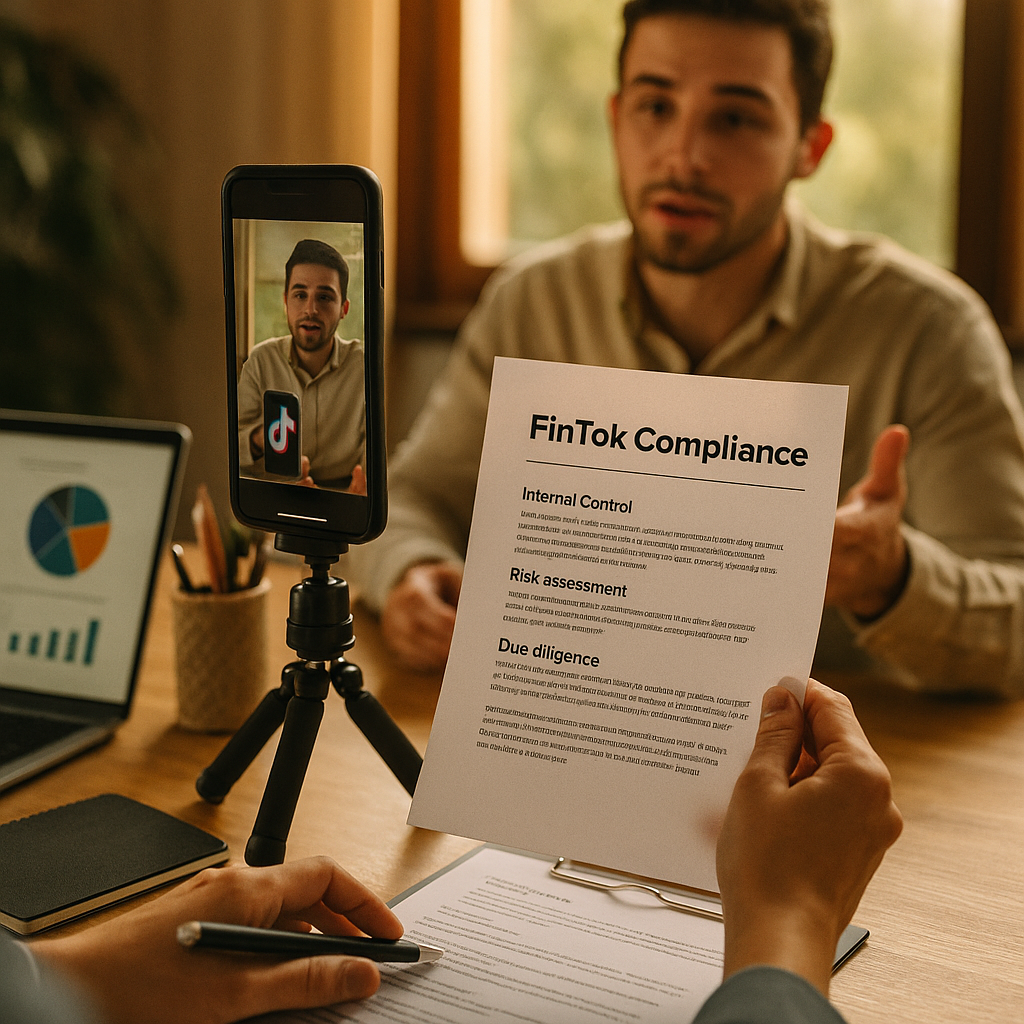
One in three Gen Z investors say they’ve made a financial decision based on a TikTok video, according to research cited by eMarketer. That statistic alone should terrify every compliance officer at a bank, fintech, or brokerage. FinTok compliance isn’t a nice-to-have anymore. It’s the line between a viral creator campaign and a six-figure regulatory fine.
Finance brands are pouring budget into TikTok’s niche financial verticals, from credit-building creators to retirement-planning explainers. But the rules governing what a creator can say about your product were written for prospectuses and print ads, not fifteen-second hooks. Here’s how brands are actually navigating it.
Why FinTok Is a Different Animal Than Beauty or Fashion Influencing
Most influencer compliance frameworks were built around the FTC’s endorsement guidelines: disclose the paid relationship, don’t make false claims, done. Finance brands have that layer, plus SEC, FINRA, and CFPB oversight stacked on top. A creator saying “this serum cleared my skin” carries different legal weight than a creator saying “this app doubled my returns.”
The FTC’s endorsement rules require clear, conspicuous disclosure of material connections. But for regulated financial products, brands also have to worry about suitability language, performance claims, and whether a creator inadvertently gives what amounts to unlicensed financial advice. That’s a compliance stack most influencer marketing teams weren’t built to manage.
A single unvetted FinTok post claiming guaranteed returns can trigger regulatory scrutiny that costs more than an entire year’s influencer budget.
Add to that TikTok’s own algorithmic unpredictability. Content that performs in fashion or beauty doesn’t always translate to finance, and reach can swing wildly based on factors brands don’t control. If you’re already navigating platform volatility, it’s worth reading how algorithmic reach penalties have shifted brand visibility on the platform more broadly.
The Core Compliance Risks Finance Brands Actually Face
Let’s get specific. There are four risk categories that show up repeatedly in FinTok campaigns.
- Unlicensed advice creep. A creator hired to talk about a budgeting app starts recommending specific stocks or crypto tokens on camera. Now you’ve got a securities issue.
- Performance guarantees. “This will get you out of debt” or “guaranteed 12 percent returns” language is a fast track to an FTC or SEC inquiry.
- Disclosure fatigue. Creators bury #ad in a wall of hashtags, or skip it entirely in the video itself, relying only on TikTok’s branded content toggle.
- Off-script duets and stitches. Your compliant original post gets remixed by another creator who adds unvetted commentary, and suddenly your brand is tagged in something you never approved.
None of these are hypothetical. Regulators have already fined fintech companies over influencer campaigns that crossed these lines, and the CFPB has signaled increased scrutiny of “finfluencer” partnerships in its public guidance. The pattern is consistent: brands assumed creator freedom equaled brand safety. It doesn’t.
Building a Creator Vetting Framework That Legal Will Actually Approve
Most influencer teams vet creators on engagement rate and audience fit. Finance brands need a second layer entirely: regulatory fit. That means checking whether a creator has a history of making unsubstantiated claims, whether they hold relevant certifications (or falsely imply they do), and whether their past sponsored content has drawn platform strikes or public backlash.
A practical vetting workflow looks like this:
- Pull the creator’s last 20 to 30 videos and flag any language around guarantees, tax advice, or investment recommendations.
- Cross-reference sponsorship history. Have they worked with competitors or with products that later faced regulatory action?
- Require a signed content agreement that includes specific prohibited phrases, not just a general “follow FTC guidelines” clause.
- Route every script or outline through compliance before filming, not after.
This slows down the process. It also saves you from becoming a headline. Brands running affiliate-style creator programs on TikTok Shop have found similar structured vetting essential, as outlined in the TikTok Shop affiliate setup guide, though finance verticals need an extra legal review step that fashion and beauty brands can often skip.
Disclosure Tactics That Actually Hold Up Under Scrutiny
Hashtag disclosures alone won’t cut it for regulated financial products. The FTC has been explicit that disclosures need to be unavoidable, meaning viewers shouldn’t have to click “see more” or pause the video to catch them. For FinTok specifically, best practice now includes:
- Verbal disclosure within the first three seconds of the video, not just on-screen text.
- TikTok’s built-in branded content toggle used in addition to, not instead of, verbal and text disclosure.
- A standardized disclaimer card at the end of every video linking to full terms, especially for anything mentioning rates, fees, or returns.
- Recordkeeping of every approved script, published video, and edit history for a minimum retention period aligned with your industry’s regulatory requirements.
That last point matters more than brands realize. If a regulator comes asking, “show me what was approved and when” needs to be a five-minute pull from your system, not a scramble through email threads and Slack messages.
If your compliance team can’t produce an approval trail in under five minutes, your FinTok program has a documentation problem, not just a creative one.
Some finance brands are borrowing governance structures from other regulated retail categories. The vendor oversight model described in the TikTok Shop vendor governance playbook translates surprisingly well: multiple approval layers, clear escalation paths, and a paper trail for every creator relationship.
Platform Tools vs Internal Controls: What Actually Prevents Violations
TikTok gives brands some native tools: branded content disclosure toggles, Spark Ads for whitelisted amplification, and reporting dashboards for flagged content. These help, but they’re not compliance systems. They’re distribution tools that happen to include a disclosure checkbox.
The real compliance work happens before content goes live. That’s why more finance brands are separating their paid amplification decisions from their compliance decisions entirely. Choosing between Spark Ads and Partnership Ads is a media strategy question. Whether the underlying content is regulator-safe is a legal question, and it needs to be answered first, independent of which ad product you’ll eventually use to boost it.
Internally, the brands doing this well have built a three-person minimum review chain: a marketing lead who understands platform mechanics, a compliance or legal reviewer who understands the regulatory language, and a creator relations manager who can translate legal notes into creative direction the influencer will actually follow without killing the video’s authenticity. Skip any one of these roles and something breaks, either the campaign gets rejected by legal at the last minute, or it goes live with a violation nobody caught.
Tools like Sprout Social and similar social listening platforms can help flag when a published video starts drawing comments about guaranteed returns or complaints, giving compliance teams an early warning system for content that’s technically approved but performing in a way that invites scrutiny.
What About Smaller Fintech Brands Without a Legal Department?
Not every fintech has a general counsel on staff. For leaner teams, the fix isn’t skipping compliance, it’s outsourcing the review function. Several agencies now offer FinTok-specific script review as a standalone service, priced per campaign rather than retainer. It’s cheaper than a fine, and far cheaper than the reputational cost of a viral video getting flagged as misleading financial advice.
If budget is tight, prioritize spend on fewer, better-vetted creators over a wide roster of micro-influencers you can’t individually monitor. A tiered distribution model, like the one described in the macro anchors and nano armies guide, can be adapted for compliance purposes too: put your compliance review budget toward the anchor creators who’ll get the most reach, and use simpler pre-approved scripts for the long tail.
The Takeaway
FinTok compliance isn’t about avoiding TikTok, it’s about treating creator content with the same rigor you’d apply to a print ad or a broadcast script. Build the vetting and disclosure process before you brief a single creator, not after a video goes viral for the wrong reasons.
Frequently Asked Questions
What is FinTok compliance?
FinTok compliance refers to the set of legal, regulatory, and disclosure practices finance brands use when working with TikTok creators who discuss financial products, services, or advice. It combines FTC endorsement rules with sector-specific regulations from bodies like the SEC, FINRA, or CFPB depending on the product involved.
Do finance brands need to pre-approve every TikTok script?
Yes, for regulated financial products this is considered best practice. Pre-approval catches problematic claims, such as guaranteed returns or informal investment advice, before they’re published rather than after they’ve gone viral and drawn regulator attention.
Is TikTok’s branded content toggle enough for disclosure compliance?
No. The toggle is a helpful supplementary tool, but the FTC expects disclosures to be clear and conspicuous within the content itself, meaning verbal or on-screen disclosure in the first few seconds of the video, not reliance on a platform label alone.
What happens if a creator makes an unauthorized financial claim in a sponsored video?
The brand can face regulatory scrutiny even if the creator acted outside the approved script. This is why signed content agreements with specific prohibited language, along with a documented approval trail, are critical for limiting liability.
Can smaller fintech brands manage FinTok compliance without an in-house legal team?
Yes, many smaller brands outsource script and content review to specialized agencies on a per-campaign basis. This is typically far less expensive than the cost of a regulatory fine or the reputational damage from a flagged campaign.
Top Influencer Marketing Agencies
The leading agencies shaping influencer marketing in 2026
Agencies ranked by campaign performance, client diversity, platform expertise, proven ROI, industry recognition, and client satisfaction. Assessed through verified case studies, reviews, and industry consultations.
Moburst

-
2

The Shelf
Boutique Beauty & Lifestyle Influencer AgencyA data-driven boutique agency specializing exclusively in beauty, wellness, and lifestyle influencer campaigns on Instagram and TikTok. Best for brands already focused on the beauty/personal care space that need curated, aesthetic-driven content.Clients: Pepsi, The Honest Company, Hims, Elf Cosmetics, Pure LeafVisit The Shelf → -
3

Audiencly
Niche Gaming & Esports Influencer AgencyA specialized agency focused exclusively on gaming and esports creators on YouTube, Twitch, and TikTok. Ideal if your campaign is 100% gaming-focused — from game launches to hardware and esports events.Clients: Epic Games, NordVPN, Ubisoft, Wargaming, Tencent GamesVisit Audiencly → -
4

Viral Nation
Global Influencer Marketing & Talent AgencyA dual talent management and marketing agency with proprietary brand safety tools and a global creator network spanning nano-influencers to celebrities across all major platforms.Clients: Meta, Activision Blizzard, Energizer, Aston Martin, WalmartVisit Viral Nation → -
5

The Influencer Marketing Factory
TikTok, Instagram & YouTube CampaignsA full-service agency with strong TikTok expertise, offering end-to-end campaign management from influencer discovery through performance reporting with a focus on platform-native content.Clients: Google, Snapchat, Universal Music, Bumble, YelpVisit TIMF → -
6

NeoReach
Enterprise Analytics & Influencer CampaignsAn enterprise-focused agency combining managed campaigns with a powerful self-service data platform for influencer search, audience analytics, and attribution modeling.Clients: Amazon, Airbnb, Netflix, Honda, The New York TimesVisit NeoReach → -
7

Ubiquitous
Creator-First Marketing PlatformA tech-driven platform combining self-service tools with managed campaign options, emphasizing speed and scalability for brands managing multiple influencer relationships.Clients: Lyft, Disney, Target, American Eagle, NetflixVisit Ubiquitous → -
8

Obviously
Scalable Enterprise Influencer CampaignsA tech-enabled agency built for high-volume campaigns, coordinating hundreds of creators simultaneously with end-to-end logistics, content rights management, and product seeding.Clients: Google, Ulta Beauty, Converse, AmazonVisit Obviously →