


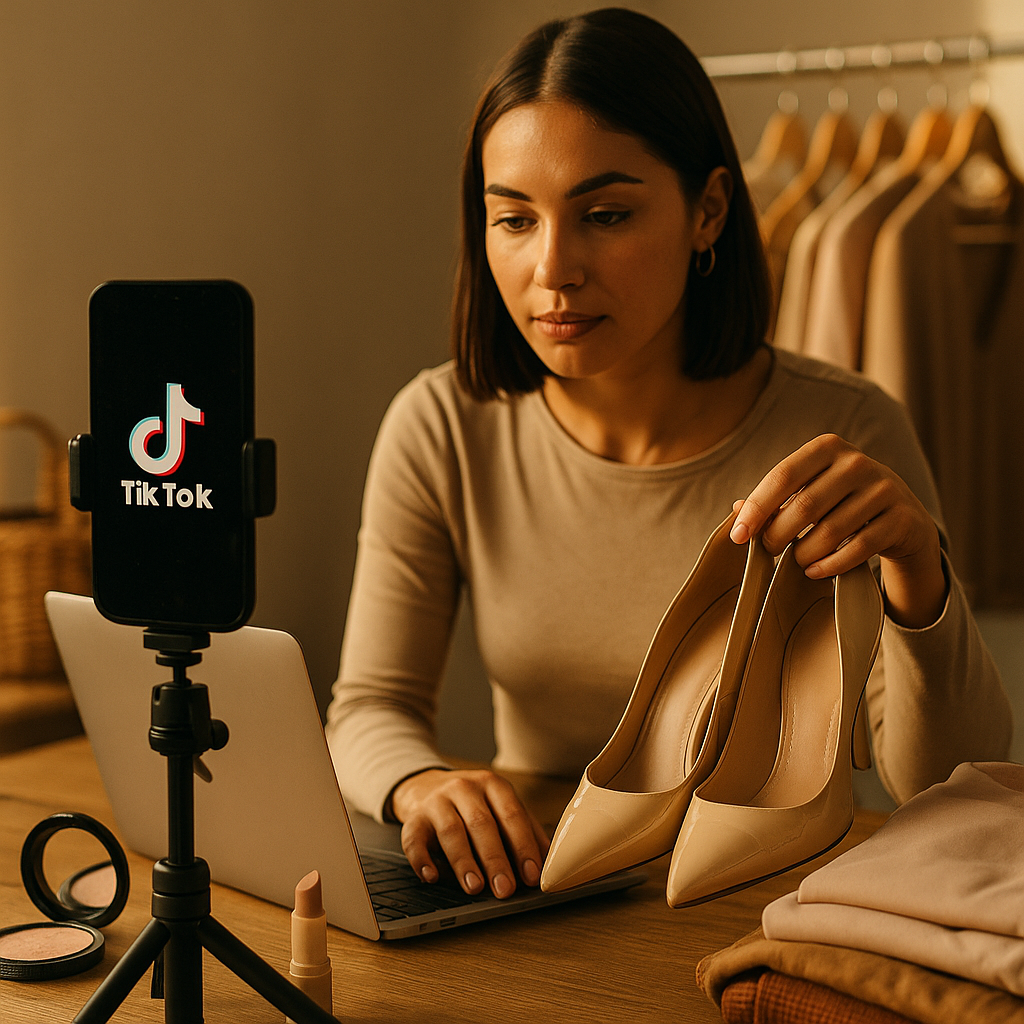
Brands running TikTok Shop affiliate programs are seeing GMV per creator jump 3 to 5 times higher than static gifting campaigns, yet most fashion and beauty teams still set commission rates by guesswork. That gap between opportunity and execution is where most programs quietly fail. A proper TikTok Shop affiliate program setup is not a checkbox task you hand to an intern. It is an operational system with commission logic, vetting criteria, and compliance guardrails that determine whether your brand scales or gets buried under low-quality content and FTC risk.
This playbook walks through the mechanics that actually matter: how to structure your Open Collaboration plan, when to move creators into Target Plans, how to vet applicants at volume, and what compliance steps protect you when regulators start paying closer attention to shoppable video.
Why Fashion and Beauty Brands Can’t Treat TikTok Shop Like a Side Channel Anymore
TikTok Shop has become the default discovery and purchase path for a huge chunk of Gen Z and younger millennial shoppers, and fashion and beauty categories lead the platform’s GMV charts by a wide margin. If you’re a brand strategist still routing budget primarily through Amazon Live or Shopify Collabs, you’re missing where the actual browsing behavior lives. TikTok Shop combines short-form discovery, live shopping, and in-app checkout in a single loop, which means the affiliate layer isn’t a bolt-on. It’s the engine.
The affiliate program specifically (as opposed to paid partnerships or Spark Ads) matters because it scales without requiring your team to negotiate every single deal. Creators discover your products in the Shop tab or through TikTok’s Creator Marketplace, apply to sell them, and earn commission automatically on every sale they drive. Done right, this turns hundreds of micro and mid-tier creators into a distributed sales force you’re not manually managing.
The brands winning on TikTok Shop right now aren’t the ones with the biggest ad budgets. They’re the ones who treated their affiliate program like a supply chain, with clear inputs, quality controls, and predictable outputs.
Setting Up the Program: The Foundational Steps
Before you touch commission rates, get the account architecture right. TikTok Shop Seller Center is where everything lives, and the Affiliate Program tab inside it controls your entire creator-facing offer.
- Verify your Seller Center account and product catalog. Every SKU you want creators to promote needs to be listed, categorized correctly, and stocked. Miscategorized beauty products (skincare filed as “personal care” instead of “skincare”) get buried in creator search and hurt discoverability.
- Choose your plan type. Open Collaboration Plan lets any eligible creator find and promote your products with a standard commission rate you set. Target Collaboration Plan lets you invite specific creators at custom rates. Most brands run both simultaneously: Open Collaboration for volume and top-of-funnel testing, Target Plans for your proven performers.
- Set your baseline commission rate. For fashion, 15 to 20 percent is competitive. For beauty, especially color cosmetics and skincare, 20 to 30 percent is common because margins support it and competition for creator attention is fierce. Go too low and creators simply won’t pick up your product when a competitor’s listing pays double.
- Build your sample strategy. TikTok Shop’s Free Sample feature lets you send product directly to creators who apply, which is often the fastest way to generate the first wave of organic content before you’ve built a reputation in the creator marketplace.
- Connect your fulfillment and returns workflow. Affiliate-driven orders behave differently than owned-channel orders, often smaller basket sizes, higher return rates on beauty shades, and faster shipping expectations because of TikTok’s in-app promise windows.
Get this scaffolding wrong and everything downstream, vetting, briefing, payout, breaks. Get it right and you’ve built a system that runs largely on autopilot once creators start opting in.
Commission Structure: The Lever Most Brands Pull Too Late
Here’s the uncomfortable truth: your commission rate is your recruiting budget. Creators on TikTok Shop are constantly scanning for the highest-paying products in their niche, and the algorithm surfaces higher-commission listings more aggressively in the affiliate marketplace’s search and recommendation feed. If your rate sits below category average, you’re invisible no matter how good your product photography is.
That said, flat blanket rates leave money on the table. Tiered commission structures work better for fashion and beauty specifically because performance varies wildly by creator tier.
- Base tier (all eligible creators): Standard rate, often 15 to 20 percent, applied through Open Collaboration.
- Performance tier (proven sellers): Bump rates to 25 to 35 percent for creators who’ve already driven a minimum GMV threshold, negotiated through Target Plans.
- Campaign tier (launches and drops): Temporary elevated rates, sometimes 40 percent plus, during product launch windows when you need velocity fast to trigger TikTok’s trending algorithms.
This mirrors the logic brands use when comparing Spark Ads versus partnership ads spend, where the decision isn’t which tool is “better” but which lever fits which stage of the funnel. Affiliate commission works the same way: it’s a budget allocation decision, not a fixed cost.
One more thing brands underestimate: category-specific bidding dynamics. Beauty in particular has become hyper-competitive on cost-per-action logic inside TikTok’s ad auction, and if you’re also running paid amplification alongside your organic affiliate program, understanding category CPA benchmarks for beauty will keep you from overpaying on both fronts simultaneously.
Vetting Creators at Scale Without Losing Your Mind
Open Collaboration means anyone can apply to sell your product. That’s the point, it’s how you get scale, but it also means you’ll get flooded with applicants ranging from serious full-time creators to accounts with 200 followers hoping for free product.
You need a filtering system, not a full manual review of every applicant.
- Set minimum follower and engagement thresholds inside your Target Plan criteria if you’re inviting creators directly. For Open Collaboration, you can’t gatekeep entry, but you can control who gets samples and elevated commission.
- Audit content history before sending free samples. Look at their last 10 to 15 videos. Are they actually doing product content, or is it lifestyle vlogging with zero commerce intent? Fashion and beauty creators who’ve never tagged a product before rarely convert well on their first attempt.
- Check for category fit, not just follower count. A creator with 40,000 highly engaged skincare followers will outperform one with 400,000 general lifestyle followers every time on a serum launch.
- Watch for engagement authenticity red flags. Comment-to-view ratios that seem off, follower growth spikes that don’t match content quality, these are signs worth a second look before you commit product or budget.
Tools inside TikTok’s Creator Marketplace now surface performance history and audience demographics directly, which cuts down manual research time significantly compared to a year ago. Still, no algorithm replaces a human scanning actual video content for brand fit. Fashion in particular is aesthetic-dependent in a way that pure metrics don’t capture.
The Content Brief Nobody Wants to Write (But Every Program Needs)
Affiliate creators aren’t your paid partnership creators. You can’t hand them a rigid script and expect them to follow it, that’s not how the format works and it tanks authenticity. But “no brief at all” is equally wrong. The middle path is a lightweight content guide covering:
- Required disclosure language and where it needs to appear on screen
- Key product claims they’re allowed to make (critical for skincare and any actives-based beauty products)
- Brand tone boundaries, not scripts, just guardrails
- Preferred hashtags and product tagging conventions for discoverability
This is also where compliance risk lives. The FTC has been increasingly explicit about disclosure requirements for affiliate and creator content, and “swipe up to shop” style videos without clear #ad or #affiliate labeling create real legal exposure for the brand, not just the creator. Review the FTC’s endorsement guidelines directly rather than relying on secondhand summaries, requirements get updated and enforcement priorities shift.
If you’re running affiliate programs across multiple platforms simultaneously, the disclosure logic used for Instagram partnership ads whitelisting offers a useful parallel framework, since both require creators to clearly signal paid or incentivized relationships even when the content feels organic.
Payout, Attribution, and the Reconciliation Headache
TikTok Shop handles commission payout automatically through its own system, creators get paid based on tracked conversions inside the platform. That sounds simple until you’re trying to reconcile TikTok Shop GMV against your broader creator marketing spend across YouTube, Instagram, and Amazon simultaneously.
This is where a lot of mid-size fashion and beauty brands get stuck. Finance wants a single view of creator ROI. Marketing has data scattered across four dashboards.
Solutions built specifically for cross-platform reconciliation, like the approach covered in Euka’s TikTok Shop and Instagram attribution guide, exist precisely because native platform reporting wasn’t built for brands running affiliate programs on more than one channel at once.
If your team can’t answer “what’s our blended commission cost per acquisition across TikTok Shop and Instagram this month” in under five minutes, your reconciliation process is costing you more than the commissions themselves.
What Sephora and Ulta Got Right (and Where Smaller Brands Can Learn From It)
Larger beauty retailers have had to build formal vendor governance structures around their TikTok Shop presence, balancing dozens of brand partners’ affiliate programs under one retail umbrella. The Sephora and Ulta vendor governance playbook is worth studying even if you’re a single brand, because the same governance logic (clear commission tiers, standardized disclosure requirements, centralized creator vetting) scales down effectively to a single-brand affiliate program run by a lean team.
The core lesson: structure beats improvisation. Brands that document their commission logic, vetting bar, and content requirements in writing (even a simple one-page internal doc) run more consistent programs than teams making rate decisions creator-by-creator based on gut feel.
Common Mistakes That Sink Otherwise Solid Programs
- Setting commission too low out of margin anxiety. A 10 percent rate that generates zero creator interest costs you more than a 25 percent rate that actually moves product.
- Ignoring return rates in beauty shade-matching. If your affiliate content doesn’t include honest shade range demonstrations, expect higher returns and unhappy customers, which drags down your Shop’s overall seller rating.
- No re-engagement plan for high performers. Your top 10 percent of affiliate creators drive the majority of GMV. Treat them like partners, not anonymous applicants, with faster payout support and priority access to new launches.
- Skipping the compliance review entirely. One viral video with an unsubstantiated skincare claim can trigger both a platform strike and regulatory attention.
According to industry benchmarking from eMarketer, social commerce conversion rates continue to outperform traditional paid social for younger demographics, which is exactly why getting the operational details right on TikTok Shop pays off disproportionately for fashion and beauty categories specifically.
Takeaway
Stop treating your TikTok Shop affiliate program as a passive listing and start running it like a recruiting and retention funnel: competitive commission tiers to attract creators, tight but light-touch vetting to protect quality, and documented compliance steps to protect the brand. Set a 90-day review cadence to adjust commission rates based on actual GMV data, not assumptions, and you’ll outperform competitors still running static gifting campaigns.
FAQs
What commission rate should fashion and beauty brands offer on TikTok Shop?
Fashion brands typically start between 15 and 20 percent, while beauty brands often offer 20 to 30 percent given stronger margins and heavier creator competition. Elevated rates of 35 percent or higher are common during product launches to drive early velocity.
Do I need to review every creator who applies to my Open Collaboration Plan?
No, full manual review at scale isn’t realistic. Set clear criteria for who receives free samples and elevated commission, and reserve deeper vetting for creators requesting Target Plan invitations or larger product allocations.
How is TikTok Shop affiliate different from a Spark Ads partnership?
Affiliate programs pay creators commission based on tracked conversions and scale without individual negotiation, while Spark Ads involve paid amplification of specific creator content through the ad platform. Many brands run both together for full-funnel coverage.
What disclosure requirements apply to TikTok Shop affiliate content?
Creators must clearly disclose paid or commission-based relationships, typically through on-screen text or hashtags like #ad or #affiliate, consistent with FTC endorsement guidelines. Brands share responsibility for ensuring compliance, not just the individual creator.
Can small and mid-size brands compete with larger retailers on TikTok Shop affiliate?
Yes, smaller brands often move faster on commission adjustments and creator relationship building than large retailers managing dozens of vendor partners. Structured governance, even a simple internal one-page policy, closes much of the operational gap.
How do I track affiliate performance across multiple platforms?
Native TikTok Shop reporting only covers TikTok activity, so brands running affiliate programs across Instagram, YouTube, or Amazon simultaneously typically need a dedicated attribution layer to reconcile blended creator ROI in one view.
Top Influencer Marketing Agencies
The leading agencies shaping influencer marketing in 2026
Agencies ranked by campaign performance, client diversity, platform expertise, proven ROI, industry recognition, and client satisfaction. Assessed through verified case studies, reviews, and industry consultations.
Moburst

-
2

The Shelf
Boutique Beauty & Lifestyle Influencer AgencyA data-driven boutique agency specializing exclusively in beauty, wellness, and lifestyle influencer campaigns on Instagram and TikTok. Best for brands already focused on the beauty/personal care space that need curated, aesthetic-driven content.Clients: Pepsi, The Honest Company, Hims, Elf Cosmetics, Pure LeafVisit The Shelf → -
3

Audiencly
Niche Gaming & Esports Influencer AgencyA specialized agency focused exclusively on gaming and esports creators on YouTube, Twitch, and TikTok. Ideal if your campaign is 100% gaming-focused — from game launches to hardware and esports events.Clients: Epic Games, NordVPN, Ubisoft, Wargaming, Tencent GamesVisit Audiencly → -
4

Viral Nation
Global Influencer Marketing & Talent AgencyA dual talent management and marketing agency with proprietary brand safety tools and a global creator network spanning nano-influencers to celebrities across all major platforms.Clients: Meta, Activision Blizzard, Energizer, Aston Martin, WalmartVisit Viral Nation → -
5

The Influencer Marketing Factory
TikTok, Instagram & YouTube CampaignsA full-service agency with strong TikTok expertise, offering end-to-end campaign management from influencer discovery through performance reporting with a focus on platform-native content.Clients: Google, Snapchat, Universal Music, Bumble, YelpVisit TIMF → -
6

NeoReach
Enterprise Analytics & Influencer CampaignsAn enterprise-focused agency combining managed campaigns with a powerful self-service data platform for influencer search, audience analytics, and attribution modeling.Clients: Amazon, Airbnb, Netflix, Honda, The New York TimesVisit NeoReach → -
7

Ubiquitous
Creator-First Marketing PlatformA tech-driven platform combining self-service tools with managed campaign options, emphasizing speed and scalability for brands managing multiple influencer relationships.Clients: Lyft, Disney, Target, American Eagle, NetflixVisit Ubiquitous → -
8

Obviously
Scalable Enterprise Influencer CampaignsA tech-enabled agency built for high-volume campaigns, coordinating hundreds of creators simultaneously with end-to-end logistics, content rights management, and product seeding.Clients: Google, Ulta Beauty, Converse, AmazonVisit Obviously →