


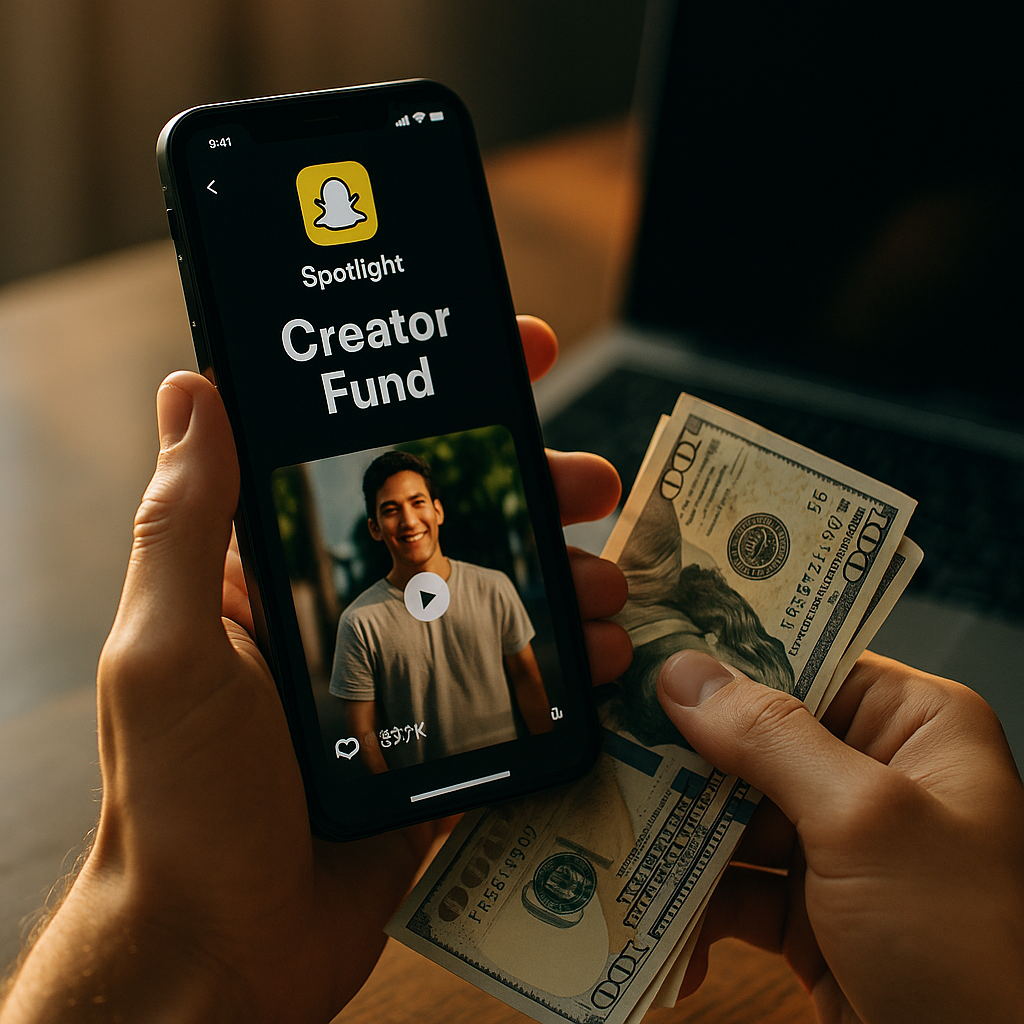
Snapchat’s Spotlight feed now reaches over 400 million users a month, and the platform quietly pays creators for views the same way TikTok’s old Creator Fund used to. So why do most brand marketers still treat Spotlight like an afterthought? The Snapchat Spotlight Creator Fund is one of the cheapest, least-crowded amplification channels left in short-form video, and the brands ignoring it are leaving reach on the table.
This guide breaks down what the fund actually pays, how brands can piggyback on it without running their own payout program, and where the risk sits when you’re amplifying creator content you don’t fully control.
What the Spotlight Creator Fund Actually Is
Spotlight is Snapchat’s answer to TikTok’s For You feed: a full-screen, algorithm-driven discovery surface for short vertical video. Unlike Snap Stars or Discover partnerships, Spotlight doesn’t require a following. A creator with zero subscribers can post a clip and get pushed to millions of strangers purely based on watch time and completion rate.
Snap funds this ecosystem directly. Instead of brands paying creators upfront, Snapchat pays creators based on how their Spotlight content performs, similar to ad revenue share models on YouTube. For brands, that means a layer of organic-feeling content already exists that you can amplify, remix, or license, often for less than a traditional influencer fee.
Brands that treat Spotlight as a discovery layer rather than a paid placement consistently get lower cost-per-view than equivalent TikTok or Reels spend, because the algorithm is still starved for quality content relative to demand.
Why Brand Marketers Should Care Right Now
Three things make this window worth acting on.
- Lower competition, higher reach ceiling. Fewer brands are actively seeding Spotlight compared to TikTok Shop or Instagram Reels, which means less saturation in the algorithm’s recommendation pool.
- Gen Z concentration. Snapchat still skews younger than Instagram or Facebook, and Spotlight is where that audience spends unstructured scroll time.
- Built-in performance incentive. Because creators get paid by Snap for views, they’re motivated to optimize completion rate and shareability without a brand needing to micromanage the creative brief.
That third point matters more than it sounds. A creator chasing fund payouts is already doing the retention optimization work brands normally pay agencies for. You’re essentially riding a second incentive layer for free.
How the Payout Model Actually Works
Snap doesn’t publish a fixed rate card, and payouts fluctuate based on total fund pool size and competing content volume. Historically, Snap has paid out from a defined content rewards pool distributed based on watch time, unique viewers, and engagement signals, not just raw view count. This is closer to a royalty pool than a flat CPM.
For brands, the practical implication is simple: you’re not paying the creator through the fund, Snap is. Your job is to identify creators already succeeding organically on Spotlight and either license their winning content for paid amplification, or brief new creators using the same content patterns that already work on the feed.
Three Ways Brands Can Amplify Spotlight Content
1. License and Boost Organic Winners
Find creators whose Spotlight content is already performing, then negotiate usage rights to run that footage as a Snap Ad or cross-post it into paid Instagram and TikTok placements. This is cheaper than commissioning original UGC because the creative has already proven itself with a real audience before you spend a dollar on media.
2. Brief for Spotlight-Native Formats
Spotlight rewards short, punchy, loop-friendly content, closer to TikTok’s earlier era than today’s more polished influencer output. Briefs should specify vertical 9:16 format, sub-15-second hooks, and native Snapchat editing tools rather than repurposed TikTok exports with visible watermarks, which the algorithm tends to deprioritize.
3. Layer Partnership Ads on Top
Once you’ve identified a creator whose content performs on Spotlight, consider running it through Snapchat’s paid partnership tools to extend reach beyond organic distribution. This mirrors the logic brands already use when deciding between spark ads and partnership ads on TikTok, where organic-first validation reduces paid media risk before scaling spend.
Where the Risk Actually Sits
Spotlight’s algorithm is opaque, and Snap has changed reward structures before without much warning. That’s the core risk: you’re amplifying content in an ecosystem where the underlying economics can shift mid-campaign. Brands need contractual clarity with creators about who owns usage rights if content is later boosted or licensed for ads.
There’s also a compliance layer that gets skipped too often. If you’re amplifying creator content as a brand, disclosure rules still apply under FTC guidance regardless of whether the original post was organic or paid. A creator earning fund payouts from Snap doesn’t exempt the brand from disclosure obligations once that content becomes part of a sponsored amplification push.
Age and content moderation is another factor. Snapchat’s user base skews younger, and Spotlight has faced scrutiny over content moderation gaps in the past. Brands in regulated categories (alcohol, finance, health) should run tighter creator vetting here than they might on a platform with more mature moderation infrastructure.
Comparing Spotlight to Other Short-Form Discovery Feeds
It’s tempting to treat Spotlight as a smaller TikTok clone, but the mechanics differ enough to matter for budget planning.
- TikTok’s For You feed is more saturated and rewards series-based, personality-driven content. Snap’s algorithm still favors format-level hooks over creator brand equity.
- Instagram Reels ties discovery closely to content signal optimization and existing follower graphs, whereas Spotlight is closer to a cold-start meritocracy.
- YouTube Shorts monetizes through ad revenue share tied to RPM and retention benchmarks, a model conceptually closer to Spotlight’s payout logic than TikTok’s flat creator fund ever was.
For brands running multi-platform amplification strategies, Spotlight fits best as a low-cost testing ground. Validate a creative hook there, then port winners into paid placements on platforms with heavier existing spend commitments.
Building a Simple Spotlight Amplification Workflow
You don’t need a dedicated Snapchat team to run this well. A lean workflow looks like:
- Scan weekly: Track Spotlight’s trending tab and category leaderboards for creators posting in your product category.
- Vet fast: Check creator history for brand safety red flags before reaching out, similar to vetting steps used in creator vetting and payout workflows on other platforms.
- Negotiate usage rights, not just a post: Secure rights to repurpose winning content across paid channels for a defined window.
- Layer paid spend on proven creative: Only push media budget behind content that’s already cleared organic performance thresholds on Spotlight.
- Document disclosure compliance: Confirm sponsorship tags and usage disclosures are applied before any amplification begins.
This mirrors the tiered logic brands already use in broader influencer strategy, where tiered distribution models combine a few anchor names with a wider net of smaller creators to maximize reach per dollar. Spotlight just happens to be one of the cheapest nets available right now.
Industry data from eMarketer continues to show short-form video commanding a growing share of total social ad spend, and platforms like Snapchat are fighting hard to keep their slice of that budget by making organic discovery genuinely competitive again. Ignoring Spotlight because it’s “not TikTok” is a strategic miss for brands chasing efficient reach in the current climate.
FAQs
Frequently Asked Questions
What is the Snapchat Spotlight Creator Fund?
It’s Snapchat’s program for paying creators based on the performance of their content in the Spotlight feed, similar to how YouTube and TikTok have rewarded creators through watch time and engagement based revenue pools.
Do brands get paid through the Spotlight Creator Fund?
No. The fund pays individual creators directly, not brands. Brands benefit indirectly by licensing, amplifying, or briefing creators whose content performs well within that fund-driven ecosystem.
How much does Snapchat pay creators through Spotlight?
Snap has not published a fixed rate card, and payouts vary based on total fund size, watch time, and competing content volume. Brands should treat payout figures as variable rather than a predictable CPM.
Is Spotlight content required to carry sponsorship disclosures?
Yes, if a brand is involved in commissioning, licensing, or amplifying the content as sponsored material, FTC disclosure guidelines apply regardless of whether the creator also earns fund payouts from Snap.
How does Spotlight compare to TikTok for brand amplification?
Spotlight generally has less saturation and a lower cost-per-view ceiling, but smaller reach volume and a less mature paid partnership infrastructure compared to TikTok’s established ad ecosystem.
Can brands run paid ads on top of organic Spotlight content?
Yes, brands can license high-performing organic Spotlight content and extend it through Snapchat’s paid partnership and ad tools once usage rights are secured from the original creator.
Start small: pull five trending Spotlight clips in your category this week, reach out about usage rights, and test one as a paid boost before committing real budget. The data will tell you fast whether this channel deserves a bigger seat at your media table.
Top Influencer Marketing Agencies
The leading agencies shaping influencer marketing in 2026
Agencies ranked by campaign performance, client diversity, platform expertise, proven ROI, industry recognition, and client satisfaction. Assessed through verified case studies, reviews, and industry consultations.
Moburst

-
2

The Shelf
Boutique Beauty & Lifestyle Influencer AgencyA data-driven boutique agency specializing exclusively in beauty, wellness, and lifestyle influencer campaigns on Instagram and TikTok. Best for brands already focused on the beauty/personal care space that need curated, aesthetic-driven content.Clients: Pepsi, The Honest Company, Hims, Elf Cosmetics, Pure LeafVisit The Shelf → -
3

Audiencly
Niche Gaming & Esports Influencer AgencyA specialized agency focused exclusively on gaming and esports creators on YouTube, Twitch, and TikTok. Ideal if your campaign is 100% gaming-focused — from game launches to hardware and esports events.Clients: Epic Games, NordVPN, Ubisoft, Wargaming, Tencent GamesVisit Audiencly → -
4

Viral Nation
Global Influencer Marketing & Talent AgencyA dual talent management and marketing agency with proprietary brand safety tools and a global creator network spanning nano-influencers to celebrities across all major platforms.Clients: Meta, Activision Blizzard, Energizer, Aston Martin, WalmartVisit Viral Nation → -
5

The Influencer Marketing Factory
TikTok, Instagram & YouTube CampaignsA full-service agency with strong TikTok expertise, offering end-to-end campaign management from influencer discovery through performance reporting with a focus on platform-native content.Clients: Google, Snapchat, Universal Music, Bumble, YelpVisit TIMF → -
6

NeoReach
Enterprise Analytics & Influencer CampaignsAn enterprise-focused agency combining managed campaigns with a powerful self-service data platform for influencer search, audience analytics, and attribution modeling.Clients: Amazon, Airbnb, Netflix, Honda, The New York TimesVisit NeoReach → -
7

Ubiquitous
Creator-First Marketing PlatformA tech-driven platform combining self-service tools with managed campaign options, emphasizing speed and scalability for brands managing multiple influencer relationships.Clients: Lyft, Disney, Target, American Eagle, NetflixVisit Ubiquitous → -
8

Obviously
Scalable Enterprise Influencer CampaignsA tech-enabled agency built for high-volume campaigns, coordinating hundreds of creators simultaneously with end-to-end logistics, content rights management, and product seeding.Clients: Google, Ulta Beauty, Converse, AmazonVisit Obviously →