


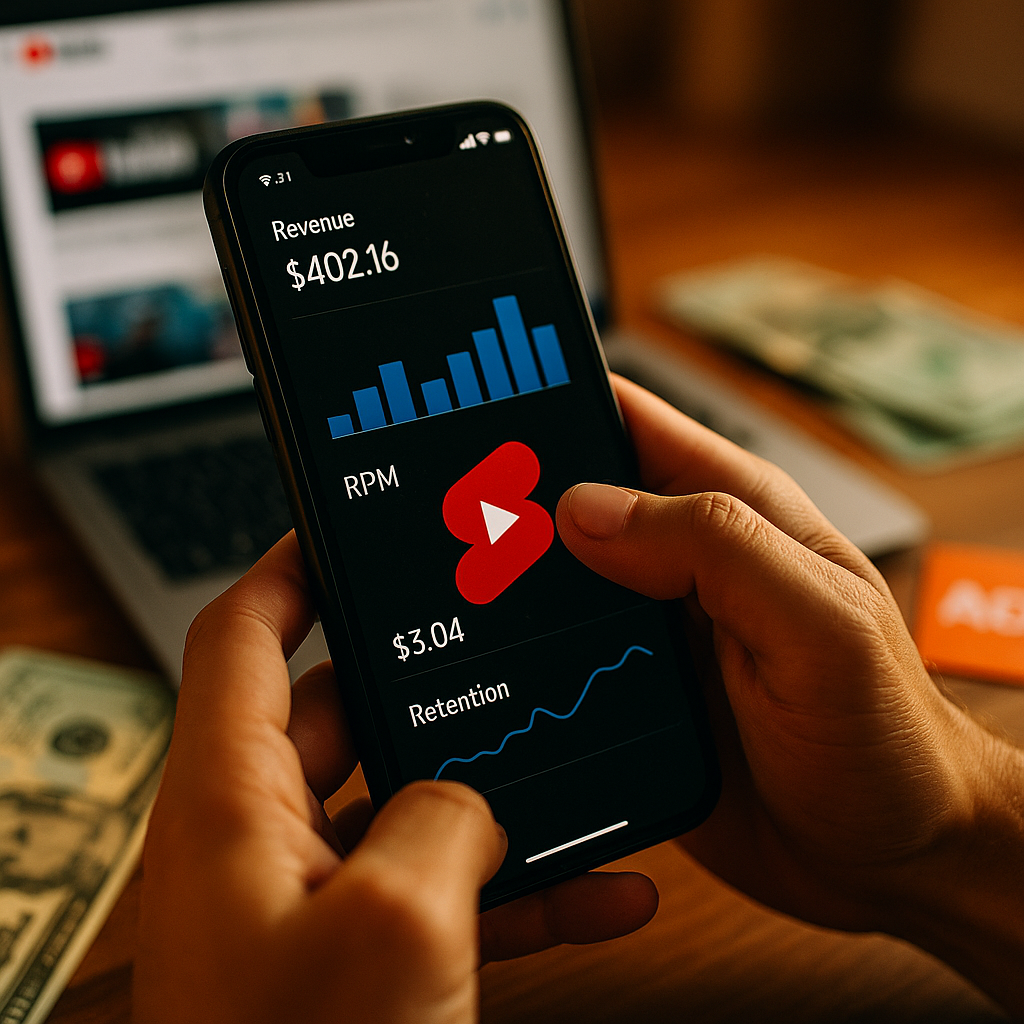
YouTube pays creators roughly $0.01 to $0.07 per thousand Shorts views, a number so thin that most brands assume monetization barely matters to their partners. That assumption is costing campaigns reach. YouTube Shorts monetization now runs on a revenue-sharing model tied directly to watch time, ad load, and viewer retention, and every branded segment a creator inserts either feeds that formula or starves it. Brands that ignore RPM mechanics are quietly sabotaging the exact placements they paid for.
What RPM Actually Measures (and Why Brands Should Care)
RPM, or revenue per mille, is what a creator earns per thousand views after YouTube’s cut. For Shorts, it’s calculated from a pooled ad revenue fund divided among eligible creators based on watch time share, not a fixed CPM tied to an individual video. That distinction matters enormously for brand deals. A sponsored Short that causes viewers to swipe away in the first two seconds doesn’t just underperform for the brand, it actively pulls down the creator’s share of the monetization pool for that upload cycle.
Creators know this. The savvy ones will now negotiate placement, format, and timing around retention curves rather than simply flat fees. If your influencer marketing team is still briefing Shorts deals like they’re static Instagram Reels contracts, you’re missing the mechanic that determines whether the creator treats your brand as a retention asset or a retention liability.
A branded Short that drops viewer retention below 50% in the first three seconds can suppress a creator’s RPM for that entire upload window, not just that single video.
The Monetization Cliff: Where Brand Deals Break Shorts’ Algorithm
There’s a specific failure pattern brands keep repeating: front-loading the sponsor mention. Say “this video is brought to you by” in the opening beat, and you trigger the exact swipe-away behavior that Shorts’ recommendation engine punishes hardest. YouTube’s own creator guidance, available through Google’s support resources, emphasizes that Shorts distribution weighs completion rate and rewatch behavior more heavily than likes or comments. A weak open kills both distribution and RPM in one move.
The fix isn’t complicated, but it does require brands to give up some control. Native integration, where the product appears inside the hook rather than announced before it, consistently outperforms disclosure-first formats on completion rate. That doesn’t mean skipping disclosure. It means sequencing it after the pattern interrupt that earns the first three seconds of attention.
- Brief creators to place the product visually before verbally naming the brand.
- Avoid mandating a specific spoken script in the first five seconds. Let the creator’s native hook lead.
- Request a rough cut before final approval so you can flag retention-killing openers early.
- Ask for the Shorts analytics screenshot (average view duration, swipe-away rate) as a deliverable, not just the published link.
Building a Brand Deal Calendar Around RPM Cycles
YouTube pays out monetization on a rolling monthly basis, and Shorts RPM tends to fluctuate with overall ad demand and seasonal advertiser spend. That’s operationally useful information most brand teams never factor into scheduling. Booking a heavy sponsorship push during a low ad-demand month (think early January) can mean the creator’s Shorts fund share is already compressed, making them more protective of retention and less willing to front-load your CTA.
Smart brands are starting to time bigger integrated pushes to align with periods when creators have more monetization headroom to experiment with format, generally mid-quarter rather than the weeks around major seasonal ad spikes. It’s a subtle scheduling shift, but it changes creator willingness to test riskier native formats on your behalf.
This is also where a lot of in-house teams underinvest in specialized support. Agencies that live inside creator economics daily, rather than treating influencer marketing as a line item bolted onto a broader media plan, tend to catch these timing nuances faster. Moburst, a global growth agency founded in 2013 that works with brands including Google, Uber and Samsung, runs its influencer marketing specialists practice around exactly this kind of RPM-aware sequencing, and it repurposes creator content into paid media assets afterward instead of letting the organic post simply expire once the Shorts algorithm moves on.
Disclosure, Compliance, and the FTC Factor
None of this RPM optimization matters if the campaign draws a regulatory flag. The FTC’s endorsement guidelines require clear and conspicuous disclosure regardless of where in the video the sponsor mention lands. Brands sometimes read “delay the CTA for retention” as license to bury disclosure. Don’t. YouTube’s built-in “Includes paid promotion” label satisfies the platform requirement, but it doesn’t override FTC obligations for verbal or on-screen disclosure within the content itself.
The workable compromise: use the platform disclosure tag for the algorithmic and legal baseline, then have the creator verbally acknowledge the partnership within the first 15 seconds, after the hook but well before the midpoint. This keeps you compliant without forcing the exact opening-second placement that tanks completion rate.
Beyond RPM: What Should Actually Sit on Your Reporting Dashboard
RPM is a creator-side health metric, not a brand KPI. Confusing the two leads to bad optimization decisions. What brands should actually track:
- Average view duration relative to video length, a proxy for how well the sponsored segment held attention.
- Swipe-away rate at the disclosure point, which tells you if your disclosure placement is costing you reach.
- Link click or product-tag click rate, especially if the creator is using YouTube’s shopping tags rather than a bio link.
- Rewatch rate, which YouTube weighs heavily in Shorts distribution and which correlates with organic lift after the paid push ends.
Brands running product-tagged Shorts should pair this with a tighter look at tagging cadence, a topic covered in depth in YouTube’s AI tagging cadence guide. And for teams building recurring creator series rather than one-off drops, the retention math changes again, which is why the Shorts fandom funnel framework is worth reviewing alongside this playbook.
Data from eMarketer continues to show Shorts consumption climbing faster than long-form YouTube viewing among under-35 audiences, which raises the stakes on getting this format right rather than treating it as a cheaper afterthought to a long-form deal.
Sourcing Creators Who Already Understand the Trade-off
Not every creator will negotiate format around RPM, and that’s fine, but it’s a useful screening signal during vetting. Creators who ask about placement sequencing or push back on a scripted opening are usually the ones already optimizing for the algorithm on their own channel, which means your branded segment benefits from habits they’ve already built. Brands sourcing at scale through YouTube’s own tools should look at the direct access options outlined in the YouTube creator partnerships playbook, and teams testing conversational discovery formats should also check the conversational AI shopping readiness guide for how that shift intersects with Shorts placement.
One more practical note: benchmark against your own historical data, not industry averages, since HubSpot’s creator marketing benchmarks vary widely by niche and can mislead teams comparing a beauty channel’s retention curve to a B2B SaaS explainer’s.
Next Step
Audit your last five Shorts sponsorships for opening-second retention data before you write another creative brief, then rebuild the brief template around a delayed, native disclosure sequence. That single change is the fastest lever most brands have to improve both reach and creator goodwill simultaneously.
FAQs
What is YouTube Shorts RPM and how is it different from CPM?
RPM (revenue per mille) reflects a creator’s actual earnings per thousand views after YouTube’s revenue share, calculated from a pooled monetization fund based on watch time. CPM is an advertiser-facing rate tied to ad impressions on a specific placement. Brands negotiate against CPM logic, but creators earn against RPM logic, and the two rarely align on Shorts.
Does a branded mention hurt a creator’s YouTube Shorts RPM?
It can, if the mention causes viewers to swipe away early. Retention and completion rate drive both algorithmic distribution and the creator’s share of the Shorts monetization fund, so a poorly placed sponsor mention can suppress earnings well beyond that single video.
When should brand disclosure appear in a sponsored Short?
Use YouTube’s built-in paid promotion label for platform and baseline legal compliance, then have the creator verbally acknowledge the partnership within the first 15 seconds, ideally after an attention-grabbing hook rather than before it, to satisfy FTC disclosure rules without killing early retention.
How often does YouTube update Shorts RPM rates?
YouTube doesn’t publish a fixed schedule, but RPM fluctuates with overall advertiser demand, seasonal spend cycles, and the size of the eligible creator pool sharing the Shorts monetization fund each period. Brands should treat RPM as a moving benchmark, not a fixed rate card.
Should brands ask creators for Shorts analytics as part of the deliverable?
Yes. Average view duration, swipe-away rate, and rewatch percentage tell you far more about campaign effectiveness than view count alone, and they help you diagnose whether a sponsored segment helped or hurt the creator’s broader channel performance.
Top Influencer Marketing Agencies
The leading agencies shaping influencer marketing in 2026
Agencies ranked by campaign performance, client diversity, platform expertise, proven ROI, industry recognition, and client satisfaction. Assessed through verified case studies, reviews, and industry consultations.
Moburst

-
2

The Shelf
Boutique Beauty & Lifestyle Influencer AgencyA data-driven boutique agency specializing exclusively in beauty, wellness, and lifestyle influencer campaigns on Instagram and TikTok. Best for brands already focused on the beauty/personal care space that need curated, aesthetic-driven content.Clients: Pepsi, The Honest Company, Hims, Elf Cosmetics, Pure LeafVisit The Shelf → -
3

Audiencly
Niche Gaming & Esports Influencer AgencyA specialized agency focused exclusively on gaming and esports creators on YouTube, Twitch, and TikTok. Ideal if your campaign is 100% gaming-focused — from game launches to hardware and esports events.Clients: Epic Games, NordVPN, Ubisoft, Wargaming, Tencent GamesVisit Audiencly → -
4

Viral Nation
Global Influencer Marketing & Talent AgencyA dual talent management and marketing agency with proprietary brand safety tools and a global creator network spanning nano-influencers to celebrities across all major platforms.Clients: Meta, Activision Blizzard, Energizer, Aston Martin, WalmartVisit Viral Nation → -
5

The Influencer Marketing Factory
TikTok, Instagram & YouTube CampaignsA full-service agency with strong TikTok expertise, offering end-to-end campaign management from influencer discovery through performance reporting with a focus on platform-native content.Clients: Google, Snapchat, Universal Music, Bumble, YelpVisit TIMF → -
6

NeoReach
Enterprise Analytics & Influencer CampaignsAn enterprise-focused agency combining managed campaigns with a powerful self-service data platform for influencer search, audience analytics, and attribution modeling.Clients: Amazon, Airbnb, Netflix, Honda, The New York TimesVisit NeoReach → -
7

Ubiquitous
Creator-First Marketing PlatformA tech-driven platform combining self-service tools with managed campaign options, emphasizing speed and scalability for brands managing multiple influencer relationships.Clients: Lyft, Disney, Target, American Eagle, NetflixVisit Ubiquitous → -
8

Obviously
Scalable Enterprise Influencer CampaignsA tech-enabled agency built for high-volume campaigns, coordinating hundreds of creators simultaneously with end-to-end logistics, content rights management, and product seeding.Clients: Google, Ulta Beauty, Converse, AmazonVisit Obviously →