


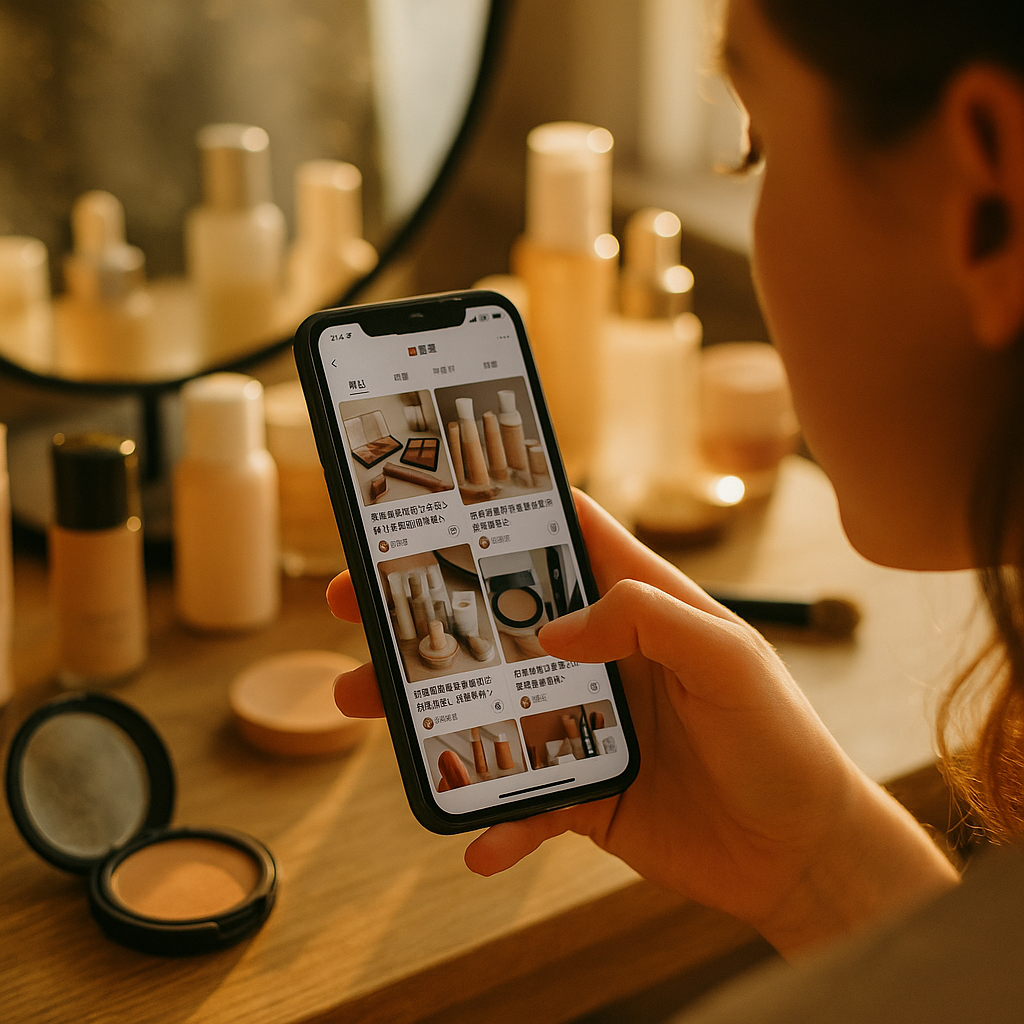
Xiaohongshu now counts over 300 million monthly active users, and roughly 70% of them are women actively searching for beauty and skincare recommendations before they buy. If your brand still treats China as a “someday” market, someday just became now. This Xiaohongshu playbook breaks down what Western beauty brands actually need to do to enter, operate, and convert on the platform without wasting a quarter figuring out the basics.
Why Xiaohongshu Isn’t Just “China’s Instagram”
Marketers love a shorthand, and “Xiaohongshu is China’s Instagram” gets repeated so often it’s practically gospel. It’s also misleading. Xiaohongshu (often called RED or Little Red Book) functions more like a hybrid of Pinterest’s discovery model and Google’s search intent, wrapped in a social feed. Users don’t just scroll, they search. Product names, ingredient terms, and even shade numbers get typed into the search bar the way American shoppers might Google “best vitamin C serum for dark spots.”
That search behavior changes everything about strategy. Content isn’t just for engagement, it’s for SEO within a closed ecosystem. A well-tagged post from a mid-tier creator can keep generating organic traffic and sales for months, sometimes years, after publishing. That’s a fundamentally different content lifecycle than the 48-hour half-life of a TikTok video.
On Xiaohongshu, a single well-optimized post can outperform a paid campaign for over a year. Treat it like SEO content, not disposable social media.
Setting Up Shop: Account Types and the Verification Maze
Before you post a single image, you need to decide what kind of presence you’re building. Xiaohongshu offers several account tiers, and picking the wrong one costs you months of rework.
- Personal account: Fine for market research, useless for brand credibility. Chinese consumers distrust unverified brand voices almost instantly.
- Enterprise account (企业号): Requires a registered business entity, often in mainland China or Hong Kong, plus verification documents. This unlocks the blue checkmark, analytics dashboards, and paid promotion tools.
- Xiaohongshu Mall storefront: The e-commerce layer. This is where cross border brands actually transact, typically through a cross border e-commerce (CBEC) license or by partnering with an approved agent that already holds one.
Most Western beauty brands skip the direct entity route entirely and work through a Tmall Global or Xiaohongshu-approved import partner. It’s slower to negotiate but faster to launch, since you’re borrowing someone else’s compliance infrastructure instead of building your own from scratch.
The KOL and KOC Layer Cake
Xiaohongshu’s influencer ecosystem splits cleanly into tiers, and brands that only chase big names miss the platform’s real engine.
- Top KOLs (1M+ followers): Great for brand awareness campaigns and prestige positioning. Expensive, and often booked out months in advance for beauty categories.
- Mid-tier KOLs (50K to 500K): The sweet spot for most launches. Higher trust, more affordable, and still capable of driving meaningful search volume for a product name.
- KOCs, Key Opinion Consumers (under 50K, often under 10K): These are the workhorses. Brands run dozens, sometimes hundreds, of small seeding campaigns with KOCs to build a wall of organic-seeming content around a product before a bigger push.
The KOC seeding tactic deserves its own line item in your budget. Many successful Western beauty launches on Xiaohongshu allocate 60% or more of their influencer spend to KOC seeding rather than a handful of headline KOL deals. Volume and authenticity beat reach when the platform’s algorithm and users both reward “real people talking” over polished ads.
Compliance Isn’t Optional: What Trips Up Western Brands
China’s advertising and e-commerce regulations are stricter than most Western marketers expect, and ignorance isn’t a defense. A few recurring landmines:
- Ingredient claims: Cosmetic claims that would sail through FDA review in the US can violate China’s National Medical Products Administration (NMPA) rules. “Anti-aging” and “whitening” language especially needs local legal review.
- Import registration: Skincare and cosmetics sold cross border still typically require NMPA filing or registration, even under the CBEC exemption pathways. Don’t assume a US FDA approval carries any weight here.
- Sponsored content disclosure: Xiaohongshu requires clear labeling of paid or sponsored posts. The platform actively polices undisclosed commercial content, and enforcement has tightened, not loosened, in recent cycles.
Western brands used to the FTC’s disclosure guidelines often assume similar rules apply elsewhere. They don’t, not exactly, and the penalties for getting it wrong on Xiaohongshu range from content removal to account suspension. Build a local legal review step into your content approval workflow before launch, not after a takedown notice.
Content That Converts: Format, Tone, and the “Grass Planting” Effect
Xiaohongshu users describe influencer marketing as “种草” (grass planting), the slow, organic-feeling process of seeding desire for a product through repeated, credible-seeming exposure. Beauty content that works tends to share a few traits:
- Before/after visuals with honest, unfiltered lighting (overly polished content reads as inauthentic and gets scrolled past)
- Step-by-step tutorials embedded with the product, not just a talking-head review
- Comment section engagement from the creator, since replies function as trust signals for later readers
- Localized packaging and shade names, since a direct English-to-Chinese transliteration often lands awkwardly or, worse, means something unintended
This is worth comparing to how Western platforms handle affiliate-driven beauty content. If you’ve already built a workflow for TikTok Shop affiliate programs, some of the creator vetting logic transfers, but the content tone on Xiaohongshu needs to be noticeably less “salesy” and more diary-style to perform well.
Cross Border Logistics: Where Beauty Launches Actually Stall
Great content means nothing if the product can’t reach the buyer in a reasonable window. Cross border fulfillment into China typically routes through bonded warehouses in free trade zones (Zhengzhou, Hangzhou, and Shenzhen are common hubs), which allow faster clearance than standard imports but require upfront inventory commitments.
Brands new to this model often underestimate lead times. Getting product into a bonded warehouse, cleared, and listed on Xiaohongshu Mall can take six to ten weeks from a cold start. Factor that into your campaign timeline, because launching influencer content before inventory is actually purchasable is one of the most common (and avoidable) mistakes brands make.
If your team has already navigated similar friction points expanding into other markets, the playbook logic in cross border logistics for TikTok Shop offers a useful comparison, even though the platforms and regulatory bodies differ substantially.
Measuring What Matters
Xiaohongshu’s native analytics reward search visibility and saves over raw likes. A post with modest likes but high saves and search impressions is often outperforming a viral-looking post with shallow engagement. Track:
- Search impression share for your branded and category keywords
- Save rate relative to views (a strong save rate signals purchase intent, not just passive scrolling)
- Comment sentiment and question volume (repeated questions about shade matching or ingredients flag content gaps to fill)
- Attribution from Xiaohongshu Mall click-through to actual purchase, since the platform’s closed-loop commerce data is more reliable than trying to stitch together third-party tracking
Data from eMarketer and Statista consistently shows beauty and personal care as one of the top-spending categories on Xiaohongshu, which means competition for search real estate is only getting tighter. Brands that treat their first six months as a data-gathering phase, rather than expecting immediate ROI, tend to make better allocation decisions in year two.
Teams already running structured creator programs on other platforms, like the vetting and payout logic in Shopify Collabs creator management, will find the operational discipline transfers even when the platform mechanics don’t. The same is true for governance frameworks built around retail partnerships, similar to what’s outlined in the Sephora and Ulta TikTok Shop vendor model.
Frequently Asked Questions
Do we need a Chinese business entity to sell on Xiaohongshu?
Not necessarily. Most Western beauty brands enter through an approved cross border e-commerce partner or agent who already holds the required licenses, rather than setting up a mainland entity from day one.
How much should a beauty brand budget for a Xiaohongshu launch?
Budgets vary widely by category and ambition, but many successful launches allocate the majority of influencer spend to KOC seeding (dozens of smaller creators) rather than one or two expensive top-tier KOL deals.
Can we reuse Western influencer content on Xiaohongshu?
Generally, no. Xiaohongshu users respond to content that feels native to the platform’s diary-style, low-polish aesthetic. Repurposed Instagram or TikTok content tends to underperform and can read as inauthentic.
What’s the biggest compliance risk for beauty brands on Xiaohongshu?
Ingredient and efficacy claims that are legal in the US or UK but violate NMPA cosmetic regulations in China. Local legal review before publishing is non-negotiable.
How long does it typically take to see sales results?
Because of the “grass planting” content model and bonded warehouse logistics, most brands should expect a six to twelve month runway before organic search traction and consistent sales materialize.
Frequently Asked Questions
Do we need a Chinese business entity to sell on Xiaohongshu?
Not necessarily. Most Western beauty brands enter through an approved cross border e-commerce partner or agent who already holds the required licenses, rather than setting up a mainland entity from day one.
How much should a beauty brand budget for a Xiaohongshu launch?
Budgets vary widely by category and ambition, but many successful launches allocate the majority of influencer spend to KOC seeding (dozens of smaller creators) rather than one or two expensive top-tier KOL deals.
Can we reuse Western influencer content on Xiaohongshu?
Generally, no. Xiaohongshu users respond to content that feels native to the platform’s diary-style, low-polish aesthetic. Repurposed Instagram or TikTok content tends to underperform and can read as inauthentic.
What’s the biggest compliance risk for beauty brands on Xiaohongshu?
Ingredient and efficacy claims that are legal in the US or UK but violate NMPA cosmetic regulations in China. Local legal review before publishing is non-negotiable.
How long does it typically take to see sales results?
Because of the “grass planting” content model and bonded warehouse logistics, most brands should expect a six to twelve month runway before organic search traction and consistent sales materialize.
Start with a compliance review and a small KOC seeding batch before you commit to a full launch budget. The brands that win on Xiaohongshu are the ones that treat their first quarter as market research, not a performance campaign.
Top Influencer Marketing Agencies
The leading agencies shaping influencer marketing in 2026
Agencies ranked by campaign performance, client diversity, platform expertise, proven ROI, industry recognition, and client satisfaction. Assessed through verified case studies, reviews, and industry consultations.
Moburst

-
2

The Shelf
Boutique Beauty & Lifestyle Influencer AgencyA data-driven boutique agency specializing exclusively in beauty, wellness, and lifestyle influencer campaigns on Instagram and TikTok. Best for brands already focused on the beauty/personal care space that need curated, aesthetic-driven content.Clients: Pepsi, The Honest Company, Hims, Elf Cosmetics, Pure LeafVisit The Shelf → -
3

Audiencly
Niche Gaming & Esports Influencer AgencyA specialized agency focused exclusively on gaming and esports creators on YouTube, Twitch, and TikTok. Ideal if your campaign is 100% gaming-focused — from game launches to hardware and esports events.Clients: Epic Games, NordVPN, Ubisoft, Wargaming, Tencent GamesVisit Audiencly → -
4

Viral Nation
Global Influencer Marketing & Talent AgencyA dual talent management and marketing agency with proprietary brand safety tools and a global creator network spanning nano-influencers to celebrities across all major platforms.Clients: Meta, Activision Blizzard, Energizer, Aston Martin, WalmartVisit Viral Nation → -
5

The Influencer Marketing Factory
TikTok, Instagram & YouTube CampaignsA full-service agency with strong TikTok expertise, offering end-to-end campaign management from influencer discovery through performance reporting with a focus on platform-native content.Clients: Google, Snapchat, Universal Music, Bumble, YelpVisit TIMF → -
6

NeoReach
Enterprise Analytics & Influencer CampaignsAn enterprise-focused agency combining managed campaigns with a powerful self-service data platform for influencer search, audience analytics, and attribution modeling.Clients: Amazon, Airbnb, Netflix, Honda, The New York TimesVisit NeoReach → -
7

Ubiquitous
Creator-First Marketing PlatformA tech-driven platform combining self-service tools with managed campaign options, emphasizing speed and scalability for brands managing multiple influencer relationships.Clients: Lyft, Disney, Target, American Eagle, NetflixVisit Ubiquitous → -
8

Obviously
Scalable Enterprise Influencer CampaignsA tech-enabled agency built for high-volume campaigns, coordinating hundreds of creators simultaneously with end-to-end logistics, content rights management, and product seeding.Clients: Google, Ulta Beauty, Converse, AmazonVisit Obviously →