


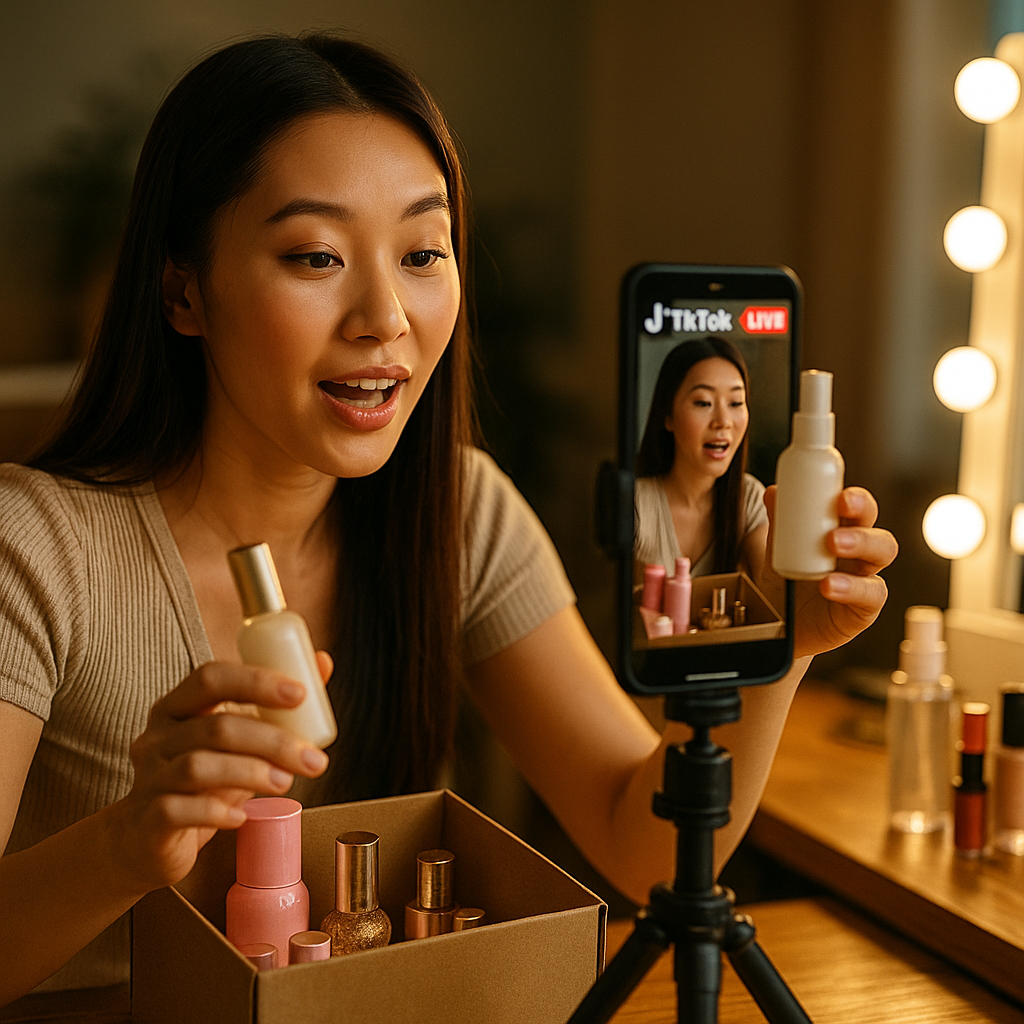
Restock livestreams routinely push TikTok Shop beauty listings to five-figure hourly sales, according to seller data shared by TikTok’s advertising platform. But the same countdown timers and “only 12 left” graphics that drive that velocity are also the exact tactics regulators scrutinize most. If your TikTok Shop beauty strategy leans on urgency, the question isn’t whether it works. It’s whether it survives a compliance review.
Beauty brands live and die by restock drama. Sold-out shades, cult-favorite serums, limited-batch skincare drops — scarcity is baked into the category. TikTok Shop just gave that scarcity a live, shoppable stage. The problem is that most brands are copying the urgency playbook from QVC-era infomercials without updating it for FTC guidance, platform policy, or the fact that everything is now recorded, clipped, and screenshotted by consumers who will absolutely call out a fake countdown.
Why Restock Livestreams Convert So Well (and Why That’s the Risk)
Scarcity works because it short-circuits deliberation. A shopper who’s been eyeing a serum for weeks doesn’t need convincing on product quality — they need a reason to buy now instead of adding to a wishlist they’ll forget about. Countdown clocks, limited-unit counters, and live “sold out” banners do exactly that.
TikTok’s own commerce data shows livestream shopping sessions convert at multiples of standard video-to-cart rates, and beauty is consistently one of the top-performing verticals on the platform. That’s not surprising given the category’s built-in restock culture — think Rare Beauty, e.l.f., or Bubble Skincare drops that sell out in minutes on their own sites.
The same urgency mechanics that drive beauty restock sales are the ones most likely to trigger an FTC inquiry if the scarcity claims aren’t real-time accurate.
The risk shows up when the countdown clock resets after hitting zero, when “only 3 left” displays for 40 minutes straight, or when a host claims a product is “almost gone forever” while a full pallet sits in the warehouse. That’s not just bad practice. It edges into deceptive scarcity marketing, the kind the FTC has flagged repeatedly in guidance on dark patterns and manufactured urgency.
The Legal Line: Real Scarcity vs. Manufactured Pressure
Here’s the distinction that matters, and it’s simpler than most legal teams make it sound: is the scarcity real, and can you prove it?
- Real scarcity: Inventory counts pulled live from your TikTok Shop backend, timers tied to an actual promotional window, restock alerts that reflect true stock-outs.
- Manufactured pressure: Fake countdowns that loop, inventory numbers that don’t move, claims of “last chance” on SKUs that restock weekly, or artificial batch limits invented purely for the stream.
The FTC’s stance on deceptive scarcity isn’t new — it long predates TikTok Shop — but enforcement attention on livestream and social commerce has sharpened. If your countdown graphic isn’t pulling from a real data feed, you’re one screen recording away from a consumer complaint or a platform strike. TikTok Shop’s own seller policies require accurate representation of product availability and prohibit misleading promotional claims, and repeat violations can trigger listing suspensions on top of any regulatory exposure.
Brands rebuilding trust after a shop suspension know this pain firsthand. If you’ve been through a compliance reset, the TikTok Shop re-entry playbook covers how advertiser confidence gets rebuilt after a policy strike — and manufactured urgency is one of the fastest ways to end up needing it.
Structuring a Countdown Livestream That’s Legally Sound
You don’t need to abandon urgency. You need to make it defensible. Here’s the structure that’s worked for beauty sellers running high-frequency restock shows.
1. Anchor every countdown to a real inventory feed
If you’re using overlay software or a third-party livestream tool, connect it directly to your TikTok Shop inventory API rather than a manually updated graphic. Manual updates are where most brands get sloppy — a host eyeballs “looks like maybe 20 left” and that becomes the on-screen claim. Automate it, or don’t display a specific number at all.
2. Separate “restock” from “limited edition” language
A restock implies more is coming. A limited edition implies it isn’t. Hosts blend these constantly, telling viewers a product is “back in stock, but not for long, this might be the last time we ever get it” — which is either true or it’s a legal problem. Script the distinction and train hosts not to freelance on availability claims. This is a script discipline issue as much as a legal one, and it overlaps with lessons from structuring TikTok Shop videos that convert, where scripted claim discipline also improved watch time.
3. Use tiered urgency instead of binary countdowns
Rather than one dramatic “gone in 10 minutes” clock, structure the stream in waves: an opening batch, a mid-stream restock reveal, a final-call segment. This mirrors actual warehouse fulfillment (most beauty brands do release in batches during high-demand drops) and gives you multiple honest urgency moments instead of one potentially fabricated one.
Tiered restock reveals convert nearly as well as a single dramatic countdown, but they’re built on inventory events you can actually document.
4. Document everything for compliance review
Record the backend inventory numbers alongside the stream recording. If a regulator or platform trust-and-safety team ever asks whether your “low stock” claim was accurate at 3:42pm on a Tuesday, you want a timestamped data log, not a shrug. This is a five-minute setup with most e-commerce analytics tools and it’s the single best insurance policy against a deceptive-scarcity complaint.
Scripting Urgency Without Overpromising
Language matters more than most beauty brands realize. Compare these two host lines:
- “This shade sells out every single time, grab it now before it’s gone” — vague, unverifiable, low risk but also low specificity.
- “We have 47 units left as of right now, and last restock sold out in 6 minutes” — specific, verifiable, high urgency, and legally sound if true.
The second line is more persuasive precisely because it’s specific. Specificity signals honesty to viewers who’ve grown skeptical of generic scarcity marketing. TikTok Shop audiences, particularly the beauty and skincare crowd, are savvy about spotting fake urgency — they’ve seen the “0 left” screenshots that later show the product back in stock an hour later. That erodes trust in the brand, not just the individual stream.
This is also where casual, unscripted-feeling delivery outperforms polished sales pitches. The platform’s own ranking behavior has shifted toward rewarding that tone — a trend covered in depth in how TikTok’s algorithm favors casual content. A host who sounds like they’re genuinely checking inventory (“hold on, let me look, okay we’re actually down to 30”) reads as more credible than a scripted dramatic reveal, and it happens to be safer legally because it reflects real-time checking rather than a pre-loaded claim.
Building the Restock Calendar Around Real Demand Signals
Urgency lands harder when it’s tied to a pattern your audience already recognizes. If a specific SKU genuinely sells out every Thursday restock, say so — and let the calendar itself do the persuading rather than invented countdown pressure.
Track sell-through velocity from prior streams using TikTok Shop analytics, and build your restock cadence around actual demand rather than an arbitrary schedule designed to manufacture scarcity. This dovetails with broader watch-time strategy: the algorithm rewards streams that hold attention, and predictable, trust-building restock patterns tend to bring back repeat viewers who watch longer because they know the drop is real. For a deeper look at how watch-time signals affect livestream and shoppable video reach, see TikTok’s watch-time algorithm shifts and how media buyers are adapting budgets accordingly.
A few operational notes worth building into your restock playbook:
- Pre-announce restock windows 24-48 hours ahead via TikTok posts and Shop notifications, rather than surprise-dropping and claiming false immediacy.
- Cap per-customer purchase quantities transparently, and state the cap on-screen rather than implying scarcity is due to demand alone.
- Train hosts with a claims checklist before every stream: no absolute language (“never restocking”), no unverified counts, no artificial deadline pressure not reflected in the actual promotion terms.
- Review FTC guidance on endorsements and scarcity claims quarterly, since enforcement priorities shift and platform policy tends to follow.
Brand and agency teams running multiple beauty SKUs across whitelisted creator accounts should also make sure claim discipline is baked into contracts, not just internal training. If your program relies on creator whitelisting infrastructure, urgency language needs to be part of the approved-claims list every whitelisted host works from, since a single rogue claim on a large paid account carries outsized risk.
What Good Measurement Looks Like
Don’t just track conversion rate during the countdown window. Track return rate and complaint rate in the 30 days after, segmented by stream. If a particular urgency tactic drives sales but also spikes returns or chargebacks, that’s a signal the persuasion outran the product reality — a classic sign of overpromising during the drop. Tools like Sprout Social or platform-native TikTok Shop analytics can help correlate stream-level tactics with downstream customer behavior, not just top-line GMV.
Benchmark against category data where you can. Reports from eMarketer and Statista continue to show social commerce and livestream shopping growth outpacing traditional e-commerce in the beauty vertical, which means the competitive pressure to lean into urgency tactics isn’t going away. The brands that win long-term won’t be the ones with the most dramatic countdown clocks. They’ll be the ones whose countdowns are real often enough that customers stop doubting them.
Next Step
Audit your last three restock streams: pull the recordings, check whether every scarcity claim on screen matches your actual inventory logs at that timestamp, and fix any gap before your next drop. That single audit will tell you more about your legal exposure than any policy memo.
FAQs
Is countdown-based urgency on TikTok Shop legal?
Yes, as long as the scarcity is real and verifiable. Countdown timers, low-stock alerts, and limited-time framing are legal marketing tools when they reflect actual inventory or promotional windows. They become risky when they’re fabricated, exaggerated, or inconsistent with real stock levels, which can trigger FTC scrutiny under deceptive marketing guidance.
What counts as a deceptive scarcity claim?
A claim is generally considered deceptive if it misrepresents availability, urgency, or limited-time status in a way that materially influences a purchase decision and isn’t true. Examples include countdown clocks that reset, “sold out” claims followed by immediate restock, or inventory counts that don’t reflect real backend data.
How can brands verify inventory claims during a livestream?
Connect countdown and stock-level overlays directly to your TikTok Shop inventory API rather than updating them manually. Keep a timestamped log of backend inventory during every stream so you can document that on-screen claims matched real stock levels at that moment.
Does urgency messaging actually hurt conversion if done wrong?
Poorly executed or obviously fake urgency can hurt both short-term trust and long-term brand credibility, especially with beauty audiences who are quick to call out manipulative tactics in comments and duets. Overpromising during a drop also tends to correlate with higher return and complaint rates afterward.
Should every beauty SKU use countdown urgency?
No. Reserve countdown urgency for SKUs with genuine restock volatility or documented sell-through history. Using it on every listing dilutes its effectiveness and increases the odds that a claim won’t hold up to scrutiny, since not every product has real scarcity behind it.
Top Influencer Marketing Agencies
The leading agencies shaping influencer marketing in 2026
Agencies ranked by campaign performance, client diversity, platform expertise, proven ROI, industry recognition, and client satisfaction. Assessed through verified case studies, reviews, and industry consultations.
Moburst

-
2

The Shelf
Boutique Beauty & Lifestyle Influencer AgencyA data-driven boutique agency specializing exclusively in beauty, wellness, and lifestyle influencer campaigns on Instagram and TikTok. Best for brands already focused on the beauty/personal care space that need curated, aesthetic-driven content.Clients: Pepsi, The Honest Company, Hims, Elf Cosmetics, Pure LeafVisit The Shelf → -
3

Audiencly
Niche Gaming & Esports Influencer AgencyA specialized agency focused exclusively on gaming and esports creators on YouTube, Twitch, and TikTok. Ideal if your campaign is 100% gaming-focused — from game launches to hardware and esports events.Clients: Epic Games, NordVPN, Ubisoft, Wargaming, Tencent GamesVisit Audiencly → -
4

Viral Nation
Global Influencer Marketing & Talent AgencyA dual talent management and marketing agency with proprietary brand safety tools and a global creator network spanning nano-influencers to celebrities across all major platforms.Clients: Meta, Activision Blizzard, Energizer, Aston Martin, WalmartVisit Viral Nation → -
5

The Influencer Marketing Factory
TikTok, Instagram & YouTube CampaignsA full-service agency with strong TikTok expertise, offering end-to-end campaign management from influencer discovery through performance reporting with a focus on platform-native content.Clients: Google, Snapchat, Universal Music, Bumble, YelpVisit TIMF → -
6

NeoReach
Enterprise Analytics & Influencer CampaignsAn enterprise-focused agency combining managed campaigns with a powerful self-service data platform for influencer search, audience analytics, and attribution modeling.Clients: Amazon, Airbnb, Netflix, Honda, The New York TimesVisit NeoReach → -
7

Ubiquitous
Creator-First Marketing PlatformA tech-driven platform combining self-service tools with managed campaign options, emphasizing speed and scalability for brands managing multiple influencer relationships.Clients: Lyft, Disney, Target, American Eagle, NetflixVisit Ubiquitous → -
8

Obviously
Scalable Enterprise Influencer CampaignsA tech-enabled agency built for high-volume campaigns, coordinating hundreds of creators simultaneously with end-to-end logistics, content rights management, and product seeding.Clients: Google, Ulta Beauty, Converse, AmazonVisit Obviously →