


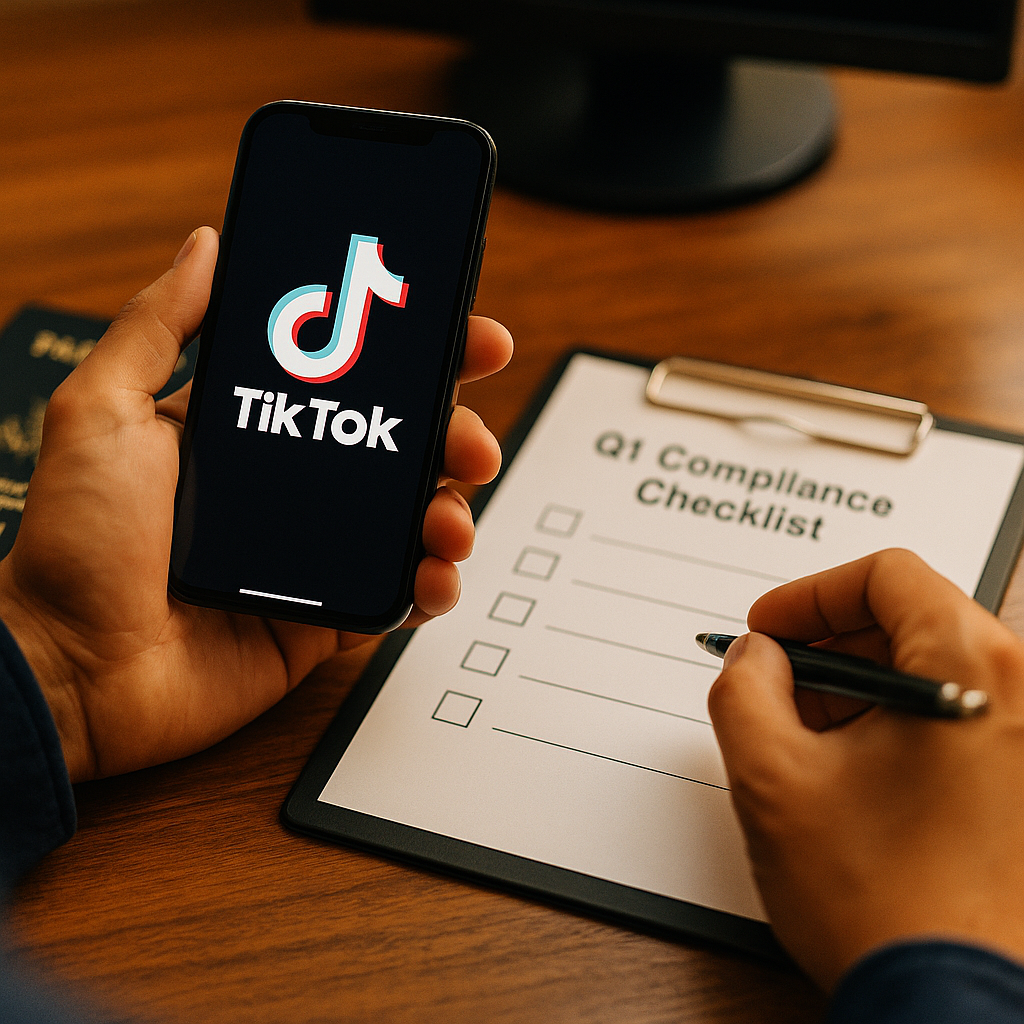
Roughly 40% of TikTok Shop sellers hit some form of verification friction during the platform’s real IP crackdown, according to seller forum reports and agency case data compiled last quarter. That’s not a rounding error. That’s a supply chain event. If your brand runs affiliate or shop-linked campaigns on TikTok, the TikTok real IP merchant verification freeze isn’t a footnote from last cycle — it’s the blueprint for what your compliance team needs to fix before Q1 2027 re-verification opens.
Most brands treated the original freeze as a seller-side problem. Wrong move. When merchant accounts get frozen for IP mismatches — VPN use, proxy residency, shared device fingerprints across a agency’s stable of stores — the fallout lands on the brand’s revenue line, not just the seller’s dashboard. Campaigns pause. Payouts stall. Live shopping events get pulled mid-flight. And re-verification cycles tend to be less forgiving than the initial rollout, because platforms use the first freeze to calibrate stricter detection models for round two.
What Actually Triggered the Freeze, and Why It Matters More Now
TikTok’s real IP verification push was aimed at cracking down on fraudulent merchant networks, cross-border sellers masking their true location, and bad actors running multiple shops off shared infrastructure. Reasonable goal. But the enforcement swept up plenty of legitimate operations too: agencies managing multiple client storefronts from one office network, brands using enterprise VPNs for security reasons, and remote teams logging in from different countries during travel.
The lesson isn’t “avoid VPNs.” It’s that infrastructure hygiene is now a compliance category, not just an IT concern. Marketing leads who never thought twice about which network their social media coordinator used to log into TikTok Shop are now writing IP-consistency policies into vendor contracts.
Verification freezes don’t punish fraud alone — they punish ambiguity. If your account’s location signals look inconsistent, you get treated like a risk, regardless of intent.
We covered the original mechanics in detail in our TikTok Shop Real IP verification compliance checklist, but the re-verification cycle ahead requires a sharper lens. TikTok has had months to refine its detection logic since the first freeze. Expect tighter thresholds, faster automated flagging, and less manual appeal bandwidth on the platform’s side.
Q1 Re-Verification Isn’t a Repeat — It’s a Stress Test
Here’s the mistake brands are already making: assuming Q1 re-verification will mirror the first round, so last year’s fixes are sufficient. They’re not. Platforms iterate their fraud models the same way ad platforms iterate targeting algorithms — each cycle gets narrower, more automated, less tolerant of edge cases.
That means the merchant who squeaked through the first freeze on a manual appeal might not get that same grace period in Q1. Automated systems don’t remember your explanation email. They remember your data pattern.
For brand and agency teams, this changes the operational math. You need to treat re-verification not as a compliance box to check once, but as a recurring infrastructure audit — the same discipline you’d apply to data privacy notice updates or loyalty data pipeline reviews. It’s not one-and-done. It’s quarterly hygiene.
The Three Failure Points Brands Keep Repeating
- Shared login infrastructure across client accounts. Agencies managing five or six brand storefronts from one office IP block get flagged as coordinated network behavior, even when every account is legitimate and independently owned.
- Inconsistent business registration data. Legal entity name on the TikTok Shop account doesn’t match the business license, tax ID, or bank account tied to payouts. Small mismatches, big flags.
- Device fingerprint overlap. Multiple team members logging into different brand accounts from the same shared laptop or mobile device creates a fingerprint cluster that reads as suspicious, even without any VPN involved.
None of these are fraud. All of them look like fraud to a pattern-matching system trained on fraud signatures. That’s the gap brands need to close.
Building the Q1 Compliance Checklist: What Actually Belongs On It
Forget generic “verify your business documents” advice. Here’s what a real, operational checklist looks like for teams managing TikTok Shop presence heading into re-verification.
- Audit login infrastructure per account. Map every device and IP address used to access each TikTok Shop merchant account over the past 90 days. If you see overlap across unrelated brand accounts, separate the infrastructure now, not after a freeze notice.
- Reconcile business registration documents. Legal entity name, business address, tax ID, and bank account name need to match exactly across TikTok’s merchant profile, your business license, and your payout account. Discrepancies here are the single most common freeze trigger according to seller community reports.
- Standardize device policy for social commerce teams. If multiple team members manage multiple brand storefronts, assign dedicated devices or, at minimum, dedicated browser profiles with cleared cookies and no shared session data.
- Document your VPN and remote access policy. If your organization mandates VPN use for security compliance, get ahead of it. Contact TikTok Shop support proactively and document the business justification before re-verification, not during an appeal.
- Build an escalation contact list. Know who on your team, or your agency’s team, owns the re-verification appeal process. Freezes that drag past 48-72 hours during a live campaign window cost real revenue.
- Cross-reference with related platform risk areas. Real IP issues rarely travel alone. Review your consent prompt configurations and state-level scarcity claim exposure at the same time. If you’re already opening the compliance file, do the full sweep.
This isn’t busywork. Agencies that treated the first freeze as a one-time fire drill are now scrambling again. The ones building this into a recurring quarterly audit, tied to the same cadence as their influencer contract review process, are the ones who won’t lose a Q1 live shopping event to a frozen account.
Why This Extends Beyond TikTok Shop
Merchant verification tightening isn’t a TikTok-only story. Meta, Amazon, and other commerce platforms are all under regulatory and investor pressure to reduce marketplace fraud, and real IP verification is the cheapest lever to pull. Expect similar friction to surface on other shoppable social platforms within the next few cycles.
Brands that build durable infrastructure hygiene now, clean login practices, matched registration data, documented VPN policy, aren’t just solving a TikTok problem. They’re future-proofing against the next platform that decides identity verification is the new baseline for merchant trust.
Treat real IP verification like SOC 2 for social commerce. It’s not glamorous, but it’s becoming table stakes for any brand running shoppable content at scale.
There’s also a budget angle here that finance teams underappreciate. A frozen merchant account during a planned livestream or product drop doesn’t just delay revenue, it burns the paid media spend already committed to driving traffic to that event. According to eMarketer’s social commerce forecasts, TikTok Shop remains one of the fastest-growing revenue channels for DTC brands in the US. Losing even a few days of merchant access during a re-verification freeze can wipe out a quarter’s worth of margin on a single campaign.
Where This Intersects With Broader Disclosure and Data Compliance
Real IP verification doesn’t exist in isolation from the rest of your TikTok Shop compliance stack. If your team is already auditing FTC disclosure language, AI-generated content labels, or biometric consent for AR try-on features, this is the moment to fold merchant verification hygiene into that same review cycle. We’ve written extensively about how AI labels can silently disappear and expose brands to FTC risk, and the same “don’t wait for the freeze notice” logic applies here.
Practical tip: assign one person, not a committee, to own the merchant verification file. Committees are great for strategy. They’re terrible for chasing down a business license mismatch at 11pm before a freeze deadline. Give one person authority, a documented checklist, and a direct line to your TikTok Shop partner manager or agency support contact.
For teams managing this across multiple markets, consult the FTC’s endorsement guidance alongside platform-specific merchant policies, since disclosure risk and merchant risk often surface together during audits. Platforms like TikTok’s business ads portal also publish updated merchant policy documentation worth bookmarking for your compliance team’s reference library.
The Real Cost of Treating This as an IT Ticket
Marketing leaders sometimes push verification issues down to IT or ops, assuming it’s a technical fix. That’s a mistake. Business registration mismatches are a legal and finance problem. Device fingerprint clusters are an operations and HR problem (who has access to what, and from where). VPN policy is a security and compliance problem. Real IP verification touches every department, which is exactly why it needs a named owner and a cross-functional checklist, not a ticket in a help desk queue.
Brands that get this right treat merchant verification the way they treat livestream price claim audits: recurring, documented, owned by a specific person, and reviewed before every major sales event, not after a freeze notice lands in the inbox.
FAQs
Frequently Asked Questions
What triggers a TikTok real IP merchant verification freeze?
Common triggers include mismatched business registration details, VPN or proxy use that obscures true location, shared login infrastructure across multiple merchant accounts, and device fingerprint overlap when several accounts are managed from the same hardware.
How is Q1 re-verification different from the original freeze?
TikTok has refined its detection models since the initial rollout, meaning automated flagging is likely faster and less forgiving. Manual appeals that worked during the first freeze may not carry the same weight during re-verification.
Should agencies managing multiple brand accounts be worried?
Yes. Shared office networks and shared devices across client accounts are among the most common freeze triggers for agencies. Separating login infrastructure per client account reduces this risk significantly.
Does using a corporate VPN automatically cause a freeze?
Not automatically, but VPN use is a known risk factor for triggering location-mismatch flags. Brands with mandatory VPN policies should document business justification proactively and communicate with TikTok Shop support ahead of re-verification.
Who should own merchant verification compliance internally?
A single named owner, not a committee, should manage the checklist, documentation, and escalation contacts. This person should coordinate across legal, finance, and operations since verification issues touch registration data, payout accounts, and device access policies.
What’s the business risk if an account gets frozen during a live campaign?
Beyond paused sales, brands risk wasted paid media spend already committed to driving traffic toward a frozen storefront or livestream event, plus reputational friction with creators and partners tied to the campaign timeline.
Next step: assign one owner to your TikTok Shop merchant verification file this week, run the infrastructure and registration audit above, and calendar a recurring quarterly review so Q1 re-verification never catches your team flat-footed again.
FAQs
Frequently Asked Questions
What triggers a TikTok real IP merchant verification freeze?
Common triggers include mismatched business registration details, VPN or proxy use that obscures true location, shared login infrastructure across multiple merchant accounts, and device fingerprint overlap when several accounts are managed from the same hardware.
How is Q1 re-verification different from the original freeze?
TikTok has refined its detection models since the initial rollout, meaning automated flagging is likely faster and less forgiving. Manual appeals that worked during the first freeze may not carry the same weight during re-verification.
Should agencies managing multiple brand accounts be worried?
Yes. Shared office networks and shared devices across client accounts are among the most common freeze triggers for agencies. Separating login infrastructure per client account reduces this risk significantly.
Does using a corporate VPN automatically cause a freeze?
Not automatically, but VPN use is a known risk factor for triggering location-mismatch flags. Brands with mandatory VPN policies should document business justification proactively and communicate with TikTok Shop support ahead of re-verification.
Who should own merchant verification compliance internally?
A single named owner, not a committee, should manage the checklist, documentation, and escalation contacts. This person should coordinate across legal, finance, and operations since verification issues touch registration data, payout accounts, and device access policies.
What’s the business risk if an account gets frozen during a live campaign?
Beyond paused sales, brands risk wasted paid media spend already committed to driving traffic toward a frozen storefront or livestream event, plus reputational friction with creators and partners tied to the campaign timeline.
Top Influencer Marketing Agencies
The leading agencies shaping influencer marketing in 2026
Agencies ranked by campaign performance, client diversity, platform expertise, proven ROI, industry recognition, and client satisfaction. Assessed through verified case studies, reviews, and industry consultations.
Moburst

-
2

The Shelf
Boutique Beauty & Lifestyle Influencer AgencyA data-driven boutique agency specializing exclusively in beauty, wellness, and lifestyle influencer campaigns on Instagram and TikTok. Best for brands already focused on the beauty/personal care space that need curated, aesthetic-driven content.Clients: Pepsi, The Honest Company, Hims, Elf Cosmetics, Pure LeafVisit The Shelf → -
3

Audiencly
Niche Gaming & Esports Influencer AgencyA specialized agency focused exclusively on gaming and esports creators on YouTube, Twitch, and TikTok. Ideal if your campaign is 100% gaming-focused — from game launches to hardware and esports events.Clients: Epic Games, NordVPN, Ubisoft, Wargaming, Tencent GamesVisit Audiencly → -
4

Viral Nation
Global Influencer Marketing & Talent AgencyA dual talent management and marketing agency with proprietary brand safety tools and a global creator network spanning nano-influencers to celebrities across all major platforms.Clients: Meta, Activision Blizzard, Energizer, Aston Martin, WalmartVisit Viral Nation → -
5

The Influencer Marketing Factory
TikTok, Instagram & YouTube CampaignsA full-service agency with strong TikTok expertise, offering end-to-end campaign management from influencer discovery through performance reporting with a focus on platform-native content.Clients: Google, Snapchat, Universal Music, Bumble, YelpVisit TIMF → -
6

NeoReach
Enterprise Analytics & Influencer CampaignsAn enterprise-focused agency combining managed campaigns with a powerful self-service data platform for influencer search, audience analytics, and attribution modeling.Clients: Amazon, Airbnb, Netflix, Honda, The New York TimesVisit NeoReach → -
7

Ubiquitous
Creator-First Marketing PlatformA tech-driven platform combining self-service tools with managed campaign options, emphasizing speed and scalability for brands managing multiple influencer relationships.Clients: Lyft, Disney, Target, American Eagle, NetflixVisit Ubiquitous → -
8

Obviously
Scalable Enterprise Influencer CampaignsA tech-enabled agency built for high-volume campaigns, coordinating hundreds of creators simultaneously with end-to-end logistics, content rights management, and product seeding.Clients: Google, Ulta Beauty, Converse, AmazonVisit Obviously →