


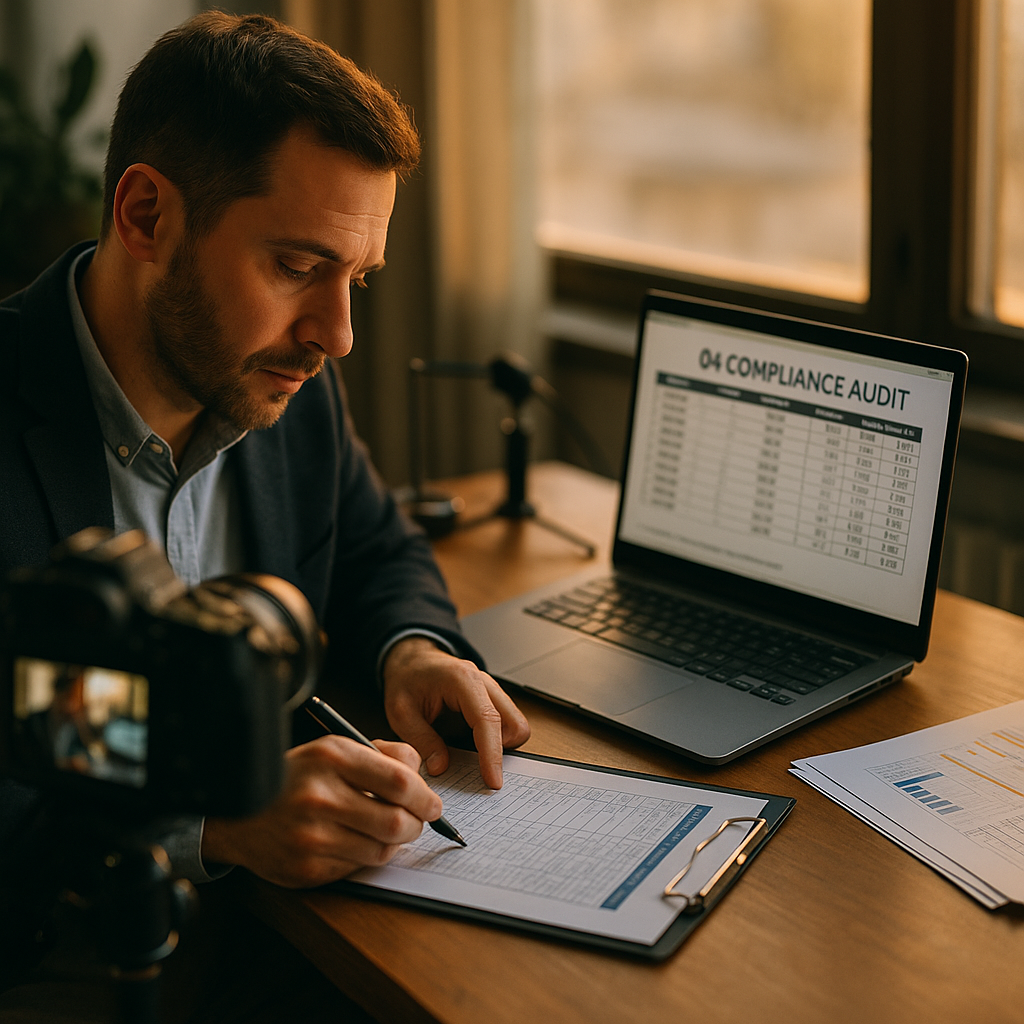
The FTC collected more consumer complaints about fake discounts in the last two years than in the previous five combined. Now overlay that trend on livestream shopping, a format built entirely on urgency, countdowns, and “lowest price ever” claims shouted over a chat scroll. If your compliance framework for auditing creator livestream price claims isn’t finalized before Q4, you’re not managing risk. You’re gambling with it.
Livestream commerce on TikTok Shop and Amazon Live is projected to keep growing through the holiday quarter, and with growth comes scrutiny. Regulators, state attorneys general, and plaintiffs’ attorneys have all signaled interest in pricing claims made in real time, unscripted, by creators who may not know the difference between a reference price violation and a compliant markdown. This piece lays out an operational framework brands and agencies can actually use before the Black Friday through Cyber Monday crunch.
Why Livestream Price Claims Are a Different Animal
Static ad copy goes through legal review. A banner that says “50% off” gets checked against pricing history, checked again by brand, sometimes checked a third time by the retailer’s compliance team. Livestream commentary skips all of that. A creator on TikTok Shop might say “this is the cheapest it’s ever been” thirty times in a two-hour stream, with zero pre-approval and no transcript until after the fact, if ever.
That’s the core problem: price claims in livestream format are extemporaneous, repetitive, and emotionally amplified by urgency mechanics. Combine that with countdown timers and limited-stock messaging, and you’ve got a format practically engineered to produce deceptive pricing claims, even when nobody intends to deceive anyone.
Livestream shopping turns pricing claims into performance. The more convincing the urgency, the higher the compliance risk — because urgency and accuracy rarely move in the same direction.
The Regulatory Backdrop You’re Working Against
The FTC’s rule on unfair or deceptive fee and pricing practices has made “reference pricing” — comparing a sale price to a supposed original price — a live enforcement priority. State-level junk fee and drip pricing laws add another layer, and several states have their own scarcity and countdown-timer statutes that intersect directly with livestream sales tactics. If you’ve already read our breakdown of countdown timer scarcity law risks, you know this isn’t hypothetical. Pricing claims and urgency claims are increasingly regulated as a single category of risk, not two separate issues.
Amazon and TikTok both have internal policies governing price claims made by sellers and creators on their platforms, but internal policy enforcement is inconsistent and reactive. Waiting for the platform to catch a bad claim after it’s aired to a six-figure audience is not a strategy. It’s an admission that you never had one.
Building the Audit Framework: Five Layers
A workable audit framework needs to function before, during, and after the stream. Treat it like a pipeline, not a checklist you run once.
Layer 1: Pre-Stream Price Verification
- Reference price documentation: Every “was” price cited in a script or talking points doc needs a documented sales history, not a manufacturer’s suggested retail price pulled from thin air. The FTC has been explicit that reference prices must reflect a genuine, recent selling price.
- Price history logs: Pull 90-day price history for every SKU going into a livestream. If a product hasn’t actually sold at the “original” price within a recent, defined window, the discount claim is vulnerable.
- Talking points sign-off: Any pricing language provided to creators should go through the same sign-off chain used for other brand claims. If you haven’t formalized this, our pre-Q4 livestream script audit guide is a good starting template.
Layer 2: Creator Briefing and Guardrails
Creators are not lawyers, and they shouldn’t have to be. But they do need clear, simple guardrails: approved comparison language, banned phrases (“lowest price ever,” “never this cheap again” unless verifiable), and a fallback script for when chat pressures them to make a claim they haven’t been briefed on. Bake this into the contract, not just the briefing deck. Our contract checklist for disclosure, timing and approval is a useful baseline to extend into pricing-specific clauses.
One brand we’ve spoken with in the beauty category now requires creators to read a standardized price disclosure card on screen at least once every fifteen minutes during Amazon Live sessions. It’s not elegant, but it’s auditable, and it gives the brand a defensible paper trail.
Layer 3: Real-Time Monitoring
This is where most Q4 programs fall apart. Nobody is watching the stream live, or the person watching doesn’t have pricing authority to intervene. At minimum, assign a compliance-trained monitor to flag pricing claims in real time using a shared log, with severity tiers (minor phrasing issue, moderate exaggeration, high-risk fabricated claim). High-risk claims should trigger an immediate on-stream correction, not a post-hoc apology.
TikTok Shop’s live dashboard and Amazon Live’s creator console both offer some moderation tooling, but neither is built specifically for pricing-claim compliance. Don’t outsource this to platform defaults; build your own monitoring layer on top.
Layer 4: Post-Stream Transcript Audit
Every stream should be transcribed and reviewed within 48 hours, full stop. Use transcription tools (many brands already run Rev, Otter, or platform-native captions) and run the transcript against a pricing-claim keyword list: “lowest,” “best price,” “never,” “always,” “guaranteed,” “biggest discount.” Flag every instance, cross-reference against the documented price history, and log discrepancies for remediation.
This is tedious. It’s also the single most important layer, because it’s the one that produces your compliance record if a regulator or plaintiff’s attorney ever comes asking.
Layer 5: Escalation and Remediation
Define, in advance, what happens when a claim fails audit. Does the brand issue a public correction? Does the SKU get pulled from future streams? Does the creator get a formal notice? Escalation without a pre-built protocol turns into a legal-versus-marketing argument in the middle of Q4, which is exactly when you have no time for it. If you already have a morality clause or crisis escalation protocol in place, extend it explicitly to cover pricing-claim violations — see our escalation protocol framework for creator crises for structure you can adapt.
TikTok Shop vs. Amazon Live: Different Risk Profiles
These platforms aren’t interchangeable, and your audit framework shouldn’t treat them that way.
TikTok Shop leans heavily on countdown timers, flash-sale badges, and algorithmically boosted urgency. The platform’s own merchant tools actively encourage scarcity messaging, which means your creators are being nudged toward exactly the language most likely to trigger regulatory attention. Combine this with the merchant verification issues we’ve covered around TikTok Shop merchant verification, and you have a platform where pricing risk compounds with identity and tax risk.
Amazon Live, by contrast, ties pricing claims more directly to the product detail page, which means a false claim in a livestream can be checked almost instantly against the listed price. That’s actually good for compliance teams: it creates a built-in verification mechanism, but it also means discrepancies are easier for outside parties to catch and screenshot.
If your monitoring team can’t answer, within five minutes, whether a livestream price claim was accurate at the moment it was made, your audit framework isn’t ready for Q4 volume.
What Q4 Volume Does to Your Risk Surface
Q4 isn’t just more of the same activity, it’s a different order of magnitude. More streams, more creators, more SKUs rotating in and out of promotional pricing, more overlapping sales events (Black Friday, Cyber Monday, pre-holiday, last-chance shipping deadlines). Each additional promotional layer increases the odds that a creator misstates a price, references a stale discount, or stacks claims that individually might be fine but collectively mislead.
According to eMarketer data on livestream shopping growth, retail media and creator-led commerce continue to take share from traditional ecommerce during the holiday quarter, meaning the volume problem is only getting bigger year over year. Your audit framework needs to scale with that volume, not just exist as a policy document nobody revisits until something breaks.
Staffing is the honest constraint here. If your compliance or legal team is sized for a normal month, Q4 will overwhelm it. Budget for temporary monitoring staff, or build automated keyword flagging into your transcript review so human reviewers are only looking at flagged segments, not full multi-hour streams.
Documentation Is Your Real Deliverable
Here’s the uncomfortable truth: you cannot prevent every bad claim a creator makes on a live, unscripted broadcast. What you can do is prove you had a reasonable, documented, consistently enforced compliance process. That’s what regulators and courts actually look for. The FTC’s guidance on endorsements repeatedly emphasizes reasonable oversight, not perfection.
Build a standing audit file per campaign: price history logs, creator briefing materials, real-time monitoring logs, transcript audits, and remediation records. Store it somewhere retrievable, not scattered across Slack threads and someone’s personal drive. If this framework overlaps with broader script-control questions on your team, our piece on creator contract audits for script control risk pairs well with this one.
Consider running a mock audit in October, before the Q4 rush, using a past livestream as the test case. If your team can’t reconstruct a clean compliance file from a stream that already happened, they won’t be able to do it live during Black Friday week either.
Next Step
Don’t wait for a viral screenshot of a false “lowest price ever” claim to force your hand. Build the five-layer audit framework now, run a mock transcript audit before October ends, and assign explicit escalation authority so someone can act mid-stream, not just after the damage is done.
FAQs
What counts as a deceptive price claim in a livestream?
Any comparative pricing statement — “was,” “originally,” “lowest ever” — that isn’t backed by a genuine, recent sales history at that reference price. The FTC treats fabricated or stale reference prices as deceptive regardless of intent.
Who is liable if a creator misstates a price during a livestream, the brand or the creator?
Both can face exposure. The FTC has held brands responsible for endorser claims made under brand direction or with brand-provided talking points, which is why documented briefing and monitoring matter so much.
How often should livestream transcripts be audited during Q4?
Within 48 hours of every stream, minimum. During peak Black Friday and Cyber Monday windows, same-day review is safer given the volume of overlapping promotions and faster escalation needs.
Do TikTok Shop and Amazon Live have their own pricing compliance tools?
Both offer basic seller policies and moderation dashboards, but neither provides a dedicated pricing-claim compliance system. Brands need to build their own monitoring and audit layer on top of platform defaults.
What’s the biggest Q4-specific risk with livestream pricing claims?
Volume. More streams, creators, and overlapping promotions increase the chance that stale or exaggerated claims slip through, especially when compliance teams are staffed for normal-month activity rather than holiday-quarter scale.
FAQs
What counts as a deceptive price claim in a livestream?
Any comparative pricing statement — “was,” “originally,” “lowest ever” — that isn’t backed by a genuine, recent sales history at that reference price. The FTC treats fabricated or stale reference prices as deceptive regardless of intent.
Who is liable if a creator misstates a price during a livestream, the brand or the creator?
Both can face exposure. The FTC has held brands responsible for endorser claims made under brand direction or with brand-provided talking points, which is why documented briefing and monitoring matter so much.
How often should livestream transcripts be audited during Q4?
Within 48 hours of every stream, minimum. During peak Black Friday and Cyber Monday windows, same-day review is safer given the volume of overlapping promotions and faster escalation needs.
Do TikTok Shop and Amazon Live have their own pricing compliance tools?
Both offer basic seller policies and moderation dashboards, but neither provides a dedicated pricing-claim compliance system. Brands need to build their own monitoring and audit layer on top of platform defaults.
What’s the biggest Q4-specific risk with livestream pricing claims?
Volume. More streams, creators, and overlapping promotions increase the chance that stale or exaggerated claims slip through, especially when compliance teams are staffed for normal-month activity rather than holiday-quarter scale.
Top Influencer Marketing Agencies
The leading agencies shaping influencer marketing in 2026
Agencies ranked by campaign performance, client diversity, platform expertise, proven ROI, industry recognition, and client satisfaction. Assessed through verified case studies, reviews, and industry consultations.
Moburst

-
2

The Shelf
Boutique Beauty & Lifestyle Influencer AgencyA data-driven boutique agency specializing exclusively in beauty, wellness, and lifestyle influencer campaigns on Instagram and TikTok. Best for brands already focused on the beauty/personal care space that need curated, aesthetic-driven content.Clients: Pepsi, The Honest Company, Hims, Elf Cosmetics, Pure LeafVisit The Shelf → -
3

Audiencly
Niche Gaming & Esports Influencer AgencyA specialized agency focused exclusively on gaming and esports creators on YouTube, Twitch, and TikTok. Ideal if your campaign is 100% gaming-focused — from game launches to hardware and esports events.Clients: Epic Games, NordVPN, Ubisoft, Wargaming, Tencent GamesVisit Audiencly → -
4

Viral Nation
Global Influencer Marketing & Talent AgencyA dual talent management and marketing agency with proprietary brand safety tools and a global creator network spanning nano-influencers to celebrities across all major platforms.Clients: Meta, Activision Blizzard, Energizer, Aston Martin, WalmartVisit Viral Nation → -
5

The Influencer Marketing Factory
TikTok, Instagram & YouTube CampaignsA full-service agency with strong TikTok expertise, offering end-to-end campaign management from influencer discovery through performance reporting with a focus on platform-native content.Clients: Google, Snapchat, Universal Music, Bumble, YelpVisit TIMF → -
6

NeoReach
Enterprise Analytics & Influencer CampaignsAn enterprise-focused agency combining managed campaigns with a powerful self-service data platform for influencer search, audience analytics, and attribution modeling.Clients: Amazon, Airbnb, Netflix, Honda, The New York TimesVisit NeoReach → -
7

Ubiquitous
Creator-First Marketing PlatformA tech-driven platform combining self-service tools with managed campaign options, emphasizing speed and scalability for brands managing multiple influencer relationships.Clients: Lyft, Disney, Target, American Eagle, NetflixVisit Ubiquitous → -
8

Obviously
Scalable Enterprise Influencer CampaignsA tech-enabled agency built for high-volume campaigns, coordinating hundreds of creators simultaneously with end-to-end logistics, content rights management, and product seeding.Clients: Google, Ulta Beauty, Converse, AmazonVisit Obviously →