


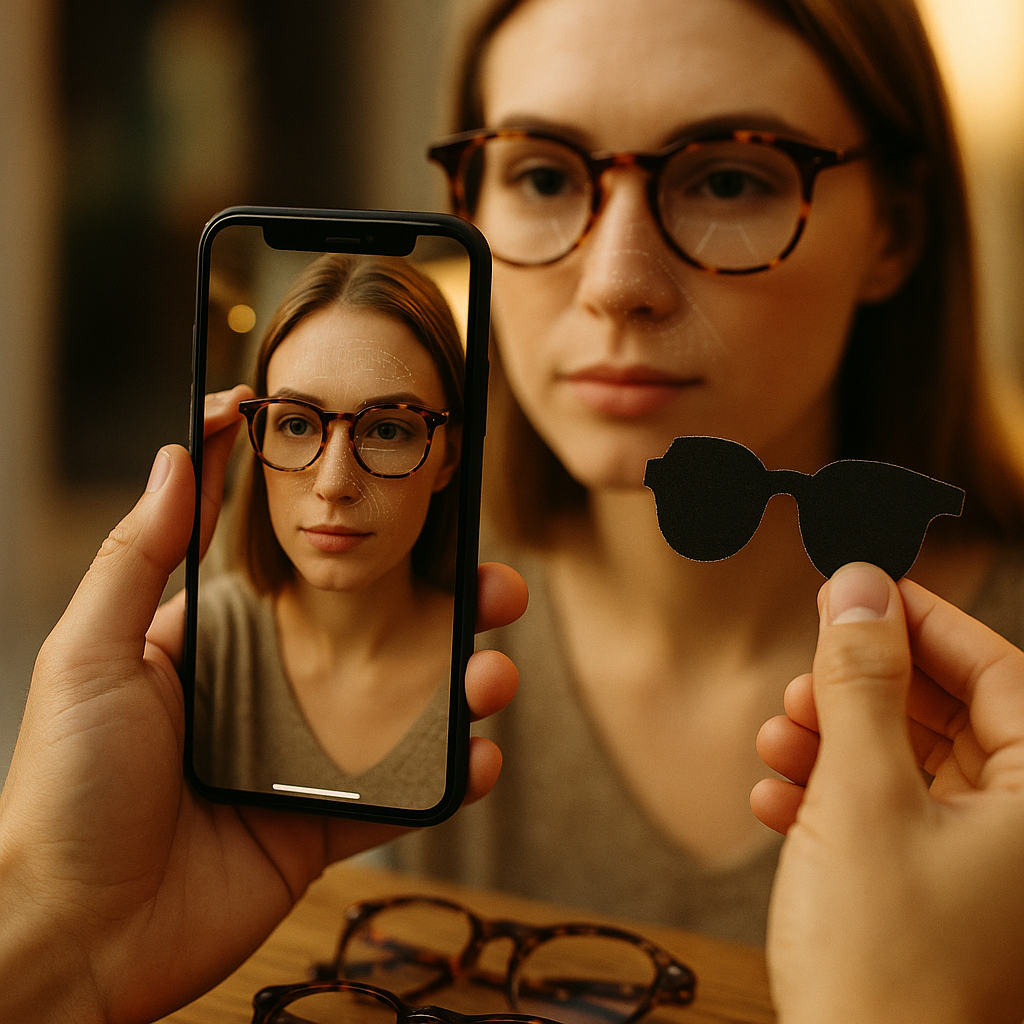
Illinois juries have handed down biometric privacy verdicts north of $200 million. Nine states now regulate biometric data outright, with more legislation pending every session. Yet most brands running AR try-on features in creator campaigns still can’t answer a basic question: how long do we keep the facial geometry data our virtual try-on vendor collected during last quarter’s lipstick launch? A data minimization policy isn’t optional anymore. It’s the difference between a compliant AR program and a class-action headline.
The Problem Nobody Budgeted For
AR try-on features feel like harmless fun. A creator holds up a phone, a filter maps their face, a shade of foundation or a pair of sunglasses appears in real time. Followers love it. Conversion rates on try-on-enabled product pages beat static images by wide margins, and brands from Sephora to Warby Parker have leaned hard into the format.
But here’s what marketing teams routinely miss: that face-mapping process usually involves capturing biometric identifiers, facial geometry, landmark points, sometimes even voiceprint data if the AR experience includes audio interaction. Under laws like Illinois’ BIPA, Texas’ CUBI, and Washington’s My Health My Data Act, that data carries specific handling obligations. Collect it without a retention schedule, and you’ve created a liability that sits on your books indefinitely.
The average biometric privacy settlement in retail and beauty now exceeds seven figures, and most stem not from malicious misuse but from brands simply not knowing what data their AR vendor was storing.
Influencers Time covered the mechanics of this exposure in detail after a recent $2.925M biometric settlement forced several beauty brands to rewrite their vendor contracts overnight. The lesson wasn’t “stop using AR.” It was “stop collecting more than you need, for longer than you need it.”
What Data Minimization Actually Means Here
Data minimization is a simple principle dressed up in legal language: collect only what’s necessary for the stated purpose, retain it only as long as that purpose requires, and delete it the moment it isn’t.
Applied to AR try-on in creator campaigns, that means asking hard questions about every step of the pipeline:
- Capture scope — does the try-on feature need full facial landmark mapping, or would a simplified overlay achieve the same visual result with less granular data?
- Storage duration — is biometric data cached only for the session, or is it persisted to train future rendering models?
- Creator-side exposure — when a creator uses the try-on filter in a sponsored post, does their device or the platform’s backend also retain a copy?
- Third-party access — does the AR vendor share derived data (facial measurements, skin tone classifications) with ad-targeting partners?
Most brands never audit these questions before launch. They trust the AR vendor’s default settings, which are almost always optimized for product improvement and model training, not privacy risk reduction. That’s a vendor’s business model working exactly as designed. It’s not your business model, or shouldn’t be.
Why Creator Campaigns Raise the Stakes
Standard e-commerce try-on tools live on a brand’s own website, where the brand controls the data flow end to end. Creator campaigns complicate this considerably. A creator might run the try-on filter through TikTok’s native AR tools, a third-party app the brand licensed, or even their own custom filter built on Spark AR successors. Each pathway has a different data controller, different retention defaults, and different consent mechanics.
Add in the fact that creators are often filming for multiple brands in a single sitting, sometimes reusing the same AR session across posts, and you get a tangle of biometric data with no clear ownership chain. If a regulator or plaintiff’s attorney asks “who is the data controller for this facial scan,” the honest answer in most creator campaigns right now is: nobody knows.
This is exactly the gap Influencers Time flagged in its breakdown of AR try-on biometric consent failures. Consent forms exist, but they’re rarely mapped to the actual data flow a creator campaign creates.
Building the Policy: A Practical Framework
A data minimization policy doesn’t need to be a fifty-page legal document. It needs to be operational, meaning your creative team and your creators can actually follow it without a law degree. Here’s a structure that works for mid-size and enterprise brand teams alike.
1. Map the Data Lifecycle Before You Sign the Vendor Contract
Before any AR try-on vendor gets a purchase order, require a written data flow diagram. What’s captured, where it’s processed (on-device versus cloud), how long it’s retained, and what happens to it after the campaign ends. If a vendor can’t produce this in plain language, that’s a red flag worth escalating before legal even gets involved.
2. Set a Hard Retention Ceiling
Pick a number and defend it. Many brands land on 24 to 72 hours of raw biometric retention for try-on sessions, enough to render the AR effect and troubleshoot technical issues, with immediate deletion afterward. Anything beyond that needs an explicit, documented business justification, not just “the vendor’s default is 90 days.”
3. Separate Consent From Disclosure
FTC endorsement disclosure and biometric consent are two different compliance obligations that brands frequently conflate. A creator saying “#ad” satisfies FTC rules. It does nothing for biometric consent, which requires the person whose face is being scanned (creator or viewer) to receive specific notice about data type, purpose, and retention. Influencers Time’s two-layer disclosure standard is a useful mental model here: one layer for sponsorship, one layer for data collection.
4. Extend Minimization Principles Beyond Biometrics
Brands running loyalty programs alongside creator campaigns face a parallel problem with behavioral and purchase data. The same minimization logic that applies to facial scans applies to loyalty data pipelines feeding AI personalization engines. If you’re already building governance for one, extend the framework rather than starting from scratch. See how this plays out in GDPR and CCPA compliance for AI loyalty pipelines, and in the FTC’s own data minimization guidance for TikTok Shop merchants.
5. Put Retention Terms in the Creator Contract
Most influencer agreements cover usage rights, exclusivity, and payment terms. Few mention biometric data at all. Add a clause requiring creators to confirm which AR tools they’re using, and to flag if a third-party filter retains facial data beyond the platform’s standard session cache. This pairs naturally with broader disclosure and timing obligations covered in Influencers Time’s influencer contract checklist.
6. Audit Quarterly, Not Annually
AR vendors update their SDKs constantly. A retention default that was compliant in Q1 might silently change in a Q3 product update. Build a recurring audit into your compliance calendar, the same way brands now audit livestream pricing claims ahead of Q4 promotional pushes, as outlined in the livestream price claim audit framework.
If your compliance calendar treats biometric data review as a one-time setup task instead of a recurring audit, you’re already behind.
Who Owns This Inside the Org?
This is where a lot of well-intentioned policies die. Legal writes the policy, marketing runs the campaign, and nobody owns the handoff. The workable model splits ownership three ways: legal defines the retention ceiling and consent language, marketing operations enforces vendor selection criteria against that ceiling, and the creator management team ensures contracts and briefings reflect the policy before a single AR asset gets shot.
Brands that get this right treat it like influencer crisis protocols: a named owner, a clear escalation path, and a review cadence that doesn’t rely on someone remembering to check. The morality clause escalation protocol Influencers Time documented for creator crises follows the same logic, and it’s worth modeling your biometric governance the same way.
What Regulators Are Actually Looking For
The FTC’s enforcement posture, per its own guidance on data collection practices, increasingly centers on whether a company’s stated privacy practices match its actual behavior. That’s a low bar in theory and a high bar in practice, because most brands don’t fully know their actual behavior until an audit forces the question.
State-level biometric laws add another dimension. Illinois’ BIPA requires written consent before collection, a publicly available retention schedule, and destruction of data once the purpose is fulfilled, no vague “we’ll keep it as long as needed” language allowed. The UK’s ICO guidance on biometric data pushes similar principles: necessity and proportionality as the test for any collection, not just consent as a checkbox.
Industry data from eMarketer shows AR-enabled shopping experiences continuing to grow across beauty, eyewear, and fashion verticals, meaning the volume of biometric data flowing through creator campaigns is only going up. Waiting for a regulator or plaintiff’s attorney to define your minimization standard for you is a losing strategy.
Next Step
Pull your last three AR-enabled creator campaigns and ask your vendor for a written retention schedule on the biometric data collected. If they can’t produce one in under a week, that’s your answer on whether a data minimization policy is overdue.
FAQs
What counts as biometric data in an AR try-on feature?
Facial landmark coordinates, geometry maps used for virtual overlays, and in some cases voiceprint data if the AR experience includes audio. Even temporary, session-based facial mapping can qualify under laws like BIPA if it’s used to identify or verify an individual.
Do brands need separate consent for biometric data versus FTC endorsement disclosure?
Yes. FTC disclosure rules (like “#ad” tags) address sponsorship transparency, not biometric data handling. Biometric consent requires specific notice about what data is collected, why, and for how long, independent of any sponsorship disclosure.
How long should brands retain biometric data from AR try-on sessions?
Many brands set a ceiling of 24 to 72 hours for raw biometric data used only to render the try-on effect, with immediate deletion afterward unless there’s a documented, narrow business need for longer retention.
Who is responsible for biometric data collected through a creator’s own AR filter?
It depends on the data flow, which is exactly why brands need to map it before a campaign launches. If a creator uses a third-party or platform-native AR tool, the brand should confirm in the contract who controls, stores, and can delete that data.
What’s the biggest mistake brands make with AR try-on data minimization?
Trusting the AR vendor’s default retention settings without review. Vendors often default to longer retention for model training and product improvement purposes, which may exceed what the brand actually needs or what regulators consider proportionate.
Top Influencer Marketing Agencies
The leading agencies shaping influencer marketing in 2026
Agencies ranked by campaign performance, client diversity, platform expertise, proven ROI, industry recognition, and client satisfaction. Assessed through verified case studies, reviews, and industry consultations.
Moburst

-
2

The Shelf
Boutique Beauty & Lifestyle Influencer AgencyA data-driven boutique agency specializing exclusively in beauty, wellness, and lifestyle influencer campaigns on Instagram and TikTok. Best for brands already focused on the beauty/personal care space that need curated, aesthetic-driven content.Clients: Pepsi, The Honest Company, Hims, Elf Cosmetics, Pure LeafVisit The Shelf → -
3

Audiencly
Niche Gaming & Esports Influencer AgencyA specialized agency focused exclusively on gaming and esports creators on YouTube, Twitch, and TikTok. Ideal if your campaign is 100% gaming-focused — from game launches to hardware and esports events.Clients: Epic Games, NordVPN, Ubisoft, Wargaming, Tencent GamesVisit Audiencly → -
4

Viral Nation
Global Influencer Marketing & Talent AgencyA dual talent management and marketing agency with proprietary brand safety tools and a global creator network spanning nano-influencers to celebrities across all major platforms.Clients: Meta, Activision Blizzard, Energizer, Aston Martin, WalmartVisit Viral Nation → -
5

The Influencer Marketing Factory
TikTok, Instagram & YouTube CampaignsA full-service agency with strong TikTok expertise, offering end-to-end campaign management from influencer discovery through performance reporting with a focus on platform-native content.Clients: Google, Snapchat, Universal Music, Bumble, YelpVisit TIMF → -
6

NeoReach
Enterprise Analytics & Influencer CampaignsAn enterprise-focused agency combining managed campaigns with a powerful self-service data platform for influencer search, audience analytics, and attribution modeling.Clients: Amazon, Airbnb, Netflix, Honda, The New York TimesVisit NeoReach → -
7

Ubiquitous
Creator-First Marketing PlatformA tech-driven platform combining self-service tools with managed campaign options, emphasizing speed and scalability for brands managing multiple influencer relationships.Clients: Lyft, Disney, Target, American Eagle, NetflixVisit Ubiquitous → -
8

Obviously
Scalable Enterprise Influencer CampaignsA tech-enabled agency built for high-volume campaigns, coordinating hundreds of creators simultaneously with end-to-end logistics, content rights management, and product seeding.Clients: Google, Ulta Beauty, Converse, AmazonVisit Obviously →