


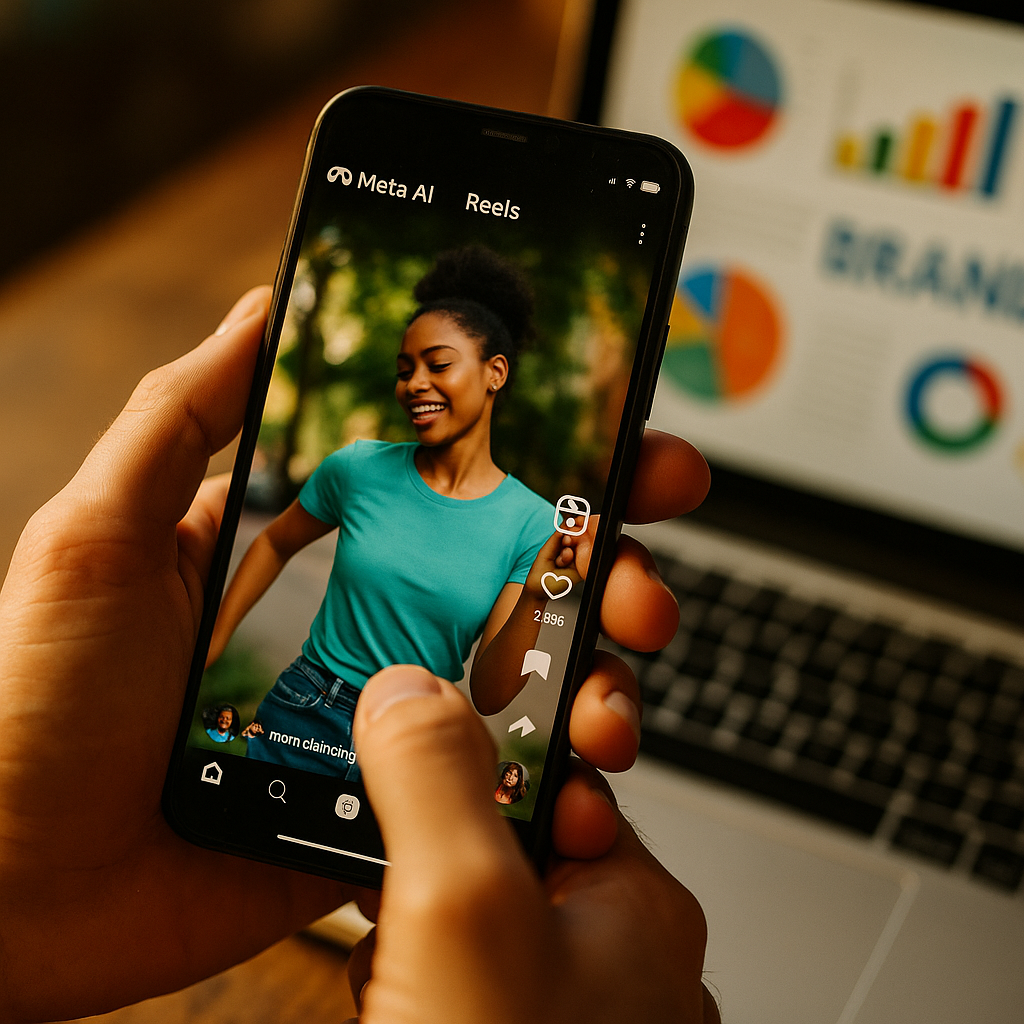
During Super Bowl weekend, Meta’s systems process cultural spikes in near real time, pushing relevant Reels to millions of feeds before halftime even starts. That’s not a fluke. It’s a deliberate architecture built to detect and reward cultural moments as they happen. If your brand’s content strategy still treats the Meta AI-curated Reels feed as a black box, you’re leaving reach on the table during exactly the windows that matter most.
The Feed Isn’t Chronological Anymore — It’s Predictive
Meta retired pure chronological ranking years ago, but what’s changed recently is the sophistication of how the system anticipates cultural relevance rather than just reacting to it. During Fashion Week or the Super Bowl, Meta’s recommendation models ingest signals well before peak engagement hits: search query spikes, hashtag velocity, cross-posting patterns from verified accounts, and even pre-event RSVP or event-page activity.
This is a shift from lagging indicators to leading ones. In the old model, a video needed engagement momentum before the algorithm would push it wider. Now, Meta’s systems use contextual classifiers — trained on audio, visual, and text metadata — to identify that a piece of content is about an event even before it goes viral. A Reel featuring a runway look tagged with the right audio and caption cues can get an early relevance boost simply because the system recognizes the moment it’s tied to.
Meta’s Reels ranking now weighs “moment relevance” as a distinct signal, separate from raw engagement velocity — meaning timing and context can outrank likes and shares during major cultural events.
What Signals Actually Drive Curation During Big Moments
Brands often assume it’s all about hashtags. It isn’t. Meta has been public about combining several layers of signal processing, and practitioners who’ve run paid and organic tests around major events report a consistent pattern:
- Audio matching — trending sounds tied to an event (a Super Bowl ad jingle, a runway soundtrack) get algorithmic priority, similar to how TikTok’s system works.
- Temporal proximity — content posted within a tight window around the live event outperforms identical content posted days later, even with lower initial engagement.
- Creator authority signals — accounts previously associated with fashion or sports content get a credibility multiplier during relevant moments, which is part of why celebrity and niche creator partnerships spike around these windows.
- Cross-platform velocity — Meta’s systems reportedly factor in whether a topic is trending across the broader web, not just within Instagram or Facebook.
- Visual scene detection — computer vision models can identify runway settings, stadium environments, or team colors, tagging content contextually even without explicit captions.
None of this is guesswork on Meta’s part anymore. The company has invested heavily in multimodal AI models capable of parsing video, audio, and text simultaneously, which is why a poorly captioned Reel can still get surfaced correctly during a big cultural window. That said, relying on the algorithm to “figure it out” is a losing strategy. Brands still need to feed the system clean signals.
Why This Matters More for Brands Than Creators
Individual creators can move fast and post spontaneously. Brands can’t — legal review, brand safety checks, and approval chains slow everything down. That lag is exactly why understanding how the Meta AI-curated Reels feed prioritizes content matters so much for marketing teams. If your content clears compliance three hours after the cultural moment peaks, you’ve likely missed the algorithmic window that rewards temporal proximity.
This is where operational efficiency becomes an ROI issue, not just a workflow annoyance. Brands running influencer programs around Fashion Week or the Super Bowl need pre-approved content templates, legal-cleared hashtag banks, and creator briefs that can be executed within minutes of a live moment. Compare this to the model outlined in our piece on countdown timer scripts — the same principle of pre-cleared, compliant urgency applies here, just on Meta’s timeline instead of TikTok’s.
The Compliance Trap Brands Keep Falling Into
Speed without guardrails is how brands end up in FTC territory. The temptation during a fast-moving cultural moment is to skip disclosure steps or rush creator content live without proper review. That’s a mistake. The FTC’s endorsement guidelines don’t relax just because a moment is time-sensitive. If anything, regulators pay closer attention during high-visibility events precisely because so much sponsored content floods feeds at once.
Brands should build disclosure language into pre-approved templates so creators aren’t making judgment calls live during the Super Bowl. This mirrors the approach we’ve covered for keeping sponsored content compliant under algorithmic pressure — the principle transfers directly to Meta’s fast-moving Reels environment.
Fashion Week: A Case Study in Micro-Moment Curation
Fashion Week isn’t one event — it’s dozens of overlapping micro-moments across four cities and several weeks. Meta’s curation system treats each show, each designer reveal, and each street-style burst as its own discrete cultural signal cluster. This is a meaningfully different curation challenge than the Super Bowl’s single concentrated peak.
Practically, this means brands running influencer programs during Fashion Week need a different cadence than a single “go live” moment. You need content spaced across the entire window, tagged specifically enough that Meta’s classifiers can map it to the right show or trend, but broad enough to catch adjacent search traffic. Street-style Reels, for instance, consistently outperform staged studio content during this period because Meta’s visual detection models reward authentic, in-the-moment footage — a pattern that echoes what we’ve seen with raw Reels outperforming polished ads across the broader Instagram ecosystem.
Brands partnering with creators for Fashion Week coverage should also consider whitelisting arrangements, since paid amplification of organic-feeling content tends to perform better than obvious ad units during these culturally saturated windows. Our creator whitelisting guide walks through the setup mechanics if your team hasn’t run this play before.
The Super Bowl: One Peak, Massive Volume
Unlike Fashion Week’s distributed structure, the Super Bowl is a single, brutal spike. According to Statista, Super Bowl viewership regularly tops 120 million across broadcast and streaming, and social engagement compresses almost entirely into a four-hour window plus a short pre- and post-game tail. Meta’s systems have to process an enormous volume of contextually similar content in a compressed timeframe, which raises the bar for differentiation.
This is where audio and visual matching become decisive. Brands whose Reels use the actual game audio, team colors, or trending ad-related sounds get prioritized over generic football-adjacent content. It’s not enough to post something vaguely sports-themed and hope the algorithm connects the dots. Specificity wins.
During single-peak cultural events like the Super Bowl, content posted within roughly 30 minutes of a triggering moment (a big play, a viral ad, a halftime surprise) sees measurably higher distribution than identical content posted an hour later.
Brands that succeeded here in past cycles typically had a live “war room” model: a small team monitoring the game and social chatter in real time, ready to greenlight creator content within minutes. This isn’t dissimilar to the reactive posture we’ve recommended for livestream urgency campaigns, where speed and compliance have to coexist without friction.
Building an Always-On System, Not a One-Off Push
Here’s the uncomfortable truth: most brands treat Fashion Week and the Super Bowl as isolated campaigns rather than stress tests for their broader content infrastructure. That’s backwards. If your team can execute a compliant, algorithm-aware Reels strategy during the highest-pressure cultural windows of the year, that same infrastructure works for every smaller cultural moment in between — award shows, product launches, even unplanned viral trends.
Start by auditing your creator brief templates. Do they include guidance on audio selection, posting windows, and visual composition tuned to how Meta’s classifiers actually work? If not, you’re relying on luck. According to Sprout Social’s ongoing research on platform algorithm shifts, brands that codify these operational details into creator briefs consistently outperform those that leave execution to individual creator judgment.
Second, build a rapid-approval legal and compliance path specifically for high-velocity cultural moments. This doesn’t mean abandoning FTC diligence. It means pre-drafting disclosure language, pre-clearing hashtag sets, and giving your social team explicit authority to greenlight content within a defined risk envelope during live events.
What This Means for Budget Allocation
If Meta’s system rewards timing and cultural specificity over raw production value, that has direct budget implications. Pouring resources into a single, highly polished branded Reel for the Super Bowl may underperform three or four lower-cost, creator-led Reels posted at the right moments with the right audio. This isn’t a call to abandon quality — it’s a call to reallocate spend toward speed, creator relationships, and real-time monitoring rather than pure production.
Agencies and in-house teams should also budget for monitoring tools that flag trending audio and hashtag velocity in real time. Waiting for a weekly report to notice a trend during Fashion Week means you’ve already missed the algorithmic window Meta rewards most heavily.
FAQs
Frequently Asked Questions
How does Meta’s AI decide what counts as a “cultural moment”?
Meta’s models combine search trend data, hashtag and audio velocity, cross-platform buzz, and visual scene recognition to identify when content clusters around a real-world event. The system doesn’t need explicit tagging to recognize a runway show or a stadium — computer vision and audio matching handle much of that detection automatically.
Does posting timing really affect Reels distribution during live events?
Yes. Content posted close to a triggering moment, such as a viral ad or a major play, tends to see measurably higher early distribution than the same content posted even an hour later. Temporal proximity is treated as a distinct ranking signal during high-velocity cultural windows.
Should brands prioritize polished branded content or creator-led Reels during these events?
Creator-led, authentic-feeling content generally outperforms highly polished branded videos during cultural moments, largely because Meta’s engagement models favor content that resembles organic behavior. This mirrors broader trends across Instagram’s ranking updates favoring raw, less produced content.
How can brands stay compliant while moving fast during live cultural events?
Pre-approve disclosure language, hashtag sets, and creator brief templates well before the event starts. This lets teams greenlight content within minutes without skipping FTC-required disclosures, avoiding the common trap of rushing compliance during high-pressure windows.
Does using trending audio actually improve Reels performance during events like the Super Bowl?
Audio matching is one of the stronger signals in Meta’s curation system. Reels using event-specific or trending audio consistently see better algorithmic pickup than those using generic or unrelated soundtracks during the same cultural window.
Frequently Asked Questions
How does Meta’s AI decide what counts as a “cultural moment”?
Meta’s models combine search trend data, hashtag and audio velocity, cross-platform buzz, and visual scene recognition to identify when content clusters around a real-world event. The system doesn’t need explicit tagging to recognize a runway show or a stadium — computer vision and audio matching handle much of that detection automatically.
Does posting timing really affect Reels distribution during live events?
Yes. Content posted close to a triggering moment, such as a viral ad or a major play, tends to see measurably higher early distribution than the same content posted even an hour later. Temporal proximity is treated as a distinct ranking signal during high-velocity cultural windows.
Should brands prioritize polished branded content or creator-led Reels during these events?
Creator-led, authentic-feeling content generally outperforms highly polished branded videos during cultural moments, largely because Meta’s engagement models favor content that resembles organic behavior. This mirrors broader trends across Instagram’s ranking updates favoring raw, less produced content.
How can brands stay compliant while moving fast during live cultural events?
Pre-approve disclosure language, hashtag sets, and creator brief templates well before the event starts. This lets teams greenlight content within minutes without skipping FTC-required disclosures, avoiding the common trap of rushing compliance during high-pressure windows.
Does using trending audio actually improve Reels performance during events like the Super Bowl?
Audio matching is one of the stronger signals in Meta’s curation system. Reels using event-specific or trending audio consistently see better algorithmic pickup than those using generic or unrelated soundtracks during the same cultural window.
The brands that win Fashion Week and Super Bowl moments on Reels aren’t the ones with the biggest production budgets — they’re the ones who pre-built the compliance and creative infrastructure to move at algorithmic speed. Audit your creator brief and approval workflow now, before the next cultural moment starts the clock.
Top Influencer Marketing Agencies
The leading agencies shaping influencer marketing in 2026
Agencies ranked by campaign performance, client diversity, platform expertise, proven ROI, industry recognition, and client satisfaction. Assessed through verified case studies, reviews, and industry consultations.
Moburst

-
2

The Shelf
Boutique Beauty & Lifestyle Influencer AgencyA data-driven boutique agency specializing exclusively in beauty, wellness, and lifestyle influencer campaigns on Instagram and TikTok. Best for brands already focused on the beauty/personal care space that need curated, aesthetic-driven content.Clients: Pepsi, The Honest Company, Hims, Elf Cosmetics, Pure LeafVisit The Shelf → -
3

Audiencly
Niche Gaming & Esports Influencer AgencyA specialized agency focused exclusively on gaming and esports creators on YouTube, Twitch, and TikTok. Ideal if your campaign is 100% gaming-focused — from game launches to hardware and esports events.Clients: Epic Games, NordVPN, Ubisoft, Wargaming, Tencent GamesVisit Audiencly → -
4

Viral Nation
Global Influencer Marketing & Talent AgencyA dual talent management and marketing agency with proprietary brand safety tools and a global creator network spanning nano-influencers to celebrities across all major platforms.Clients: Meta, Activision Blizzard, Energizer, Aston Martin, WalmartVisit Viral Nation → -
5

The Influencer Marketing Factory
TikTok, Instagram & YouTube CampaignsA full-service agency with strong TikTok expertise, offering end-to-end campaign management from influencer discovery through performance reporting with a focus on platform-native content.Clients: Google, Snapchat, Universal Music, Bumble, YelpVisit TIMF → -
6

NeoReach
Enterprise Analytics & Influencer CampaignsAn enterprise-focused agency combining managed campaigns with a powerful self-service data platform for influencer search, audience analytics, and attribution modeling.Clients: Amazon, Airbnb, Netflix, Honda, The New York TimesVisit NeoReach → -
7

Ubiquitous
Creator-First Marketing PlatformA tech-driven platform combining self-service tools with managed campaign options, emphasizing speed and scalability for brands managing multiple influencer relationships.Clients: Lyft, Disney, Target, American Eagle, NetflixVisit Ubiquitous → -
8

Obviously
Scalable Enterprise Influencer CampaignsA tech-enabled agency built for high-volume campaigns, coordinating hundreds of creators simultaneously with end-to-end logistics, content rights management, and product seeding.Clients: Google, Ulta Beauty, Converse, AmazonVisit Obviously →