


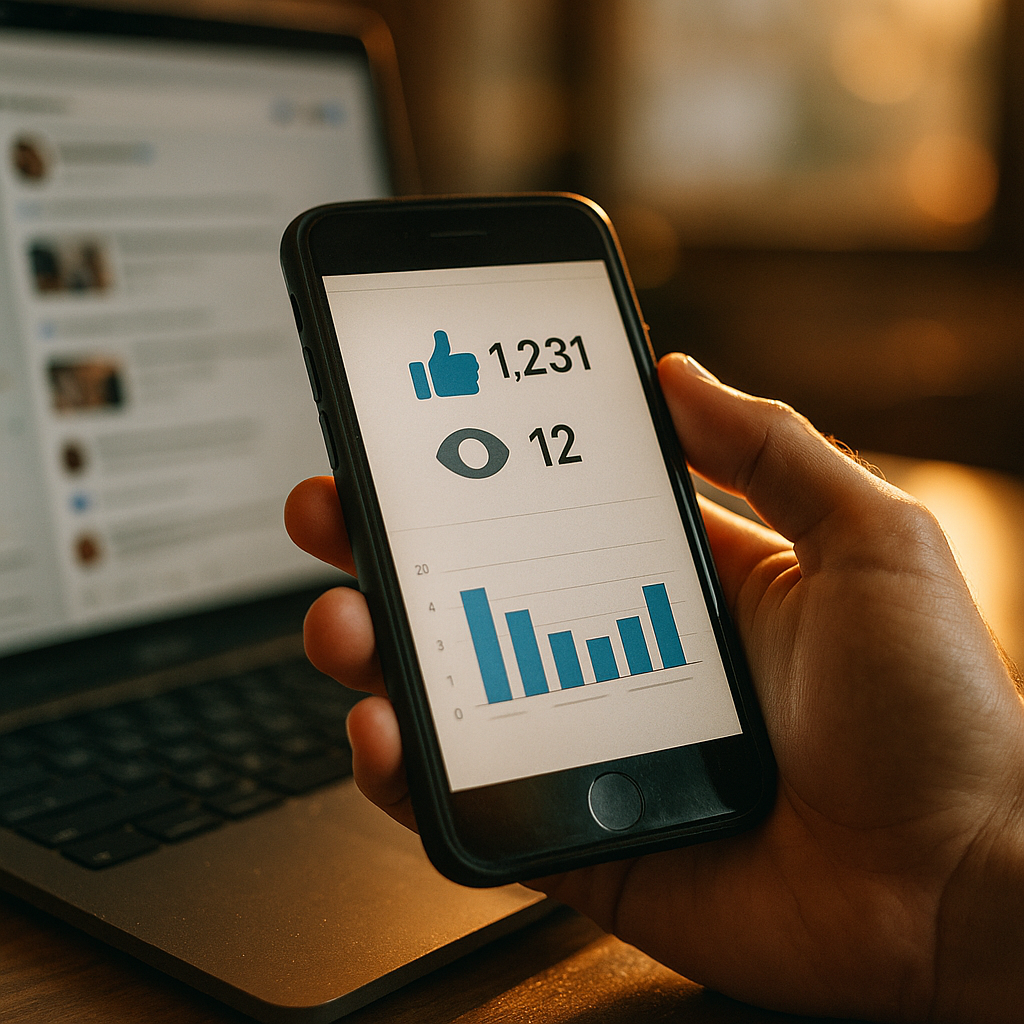
Reach is becoming the vanity metric nobody wants to admit they still report on. Meta’s newest attribution updates quietly downgrade raw impressions in favor of signals tied to genuine interaction, and that single change is forcing a rethink of how brands measure creator marketing across every platform, not just Meta’s own. If your reporting deck still leads with follower count and view totals, it’s time to ask whether you’re measuring marketing or measuring noise.
What Actually Changed in Meta’s Model
Meta’s revised attribution framework, rolling out across Instagram and Facebook’s business tools, weights conversion credit toward actions that show intent: saves, shares to DMs, profile visits after a view, and repeat interactions within a session. Passive reach and scroll-past impressions still get logged, but they no longer carry the same weight in determining which touchpoint gets credit for a sale. That’s a meaningful shift from a platform that, for a decade, built its ad business on the promise of scale.
The practical effect: a creator post with 40,000 views and heavy saves can now out-attribute a post with 400,000 views and low interaction, inside the same campaign dashboard. Brands running influencer campaigns through Meta’s ad tools will start seeing this play out in Business Manager reporting almost immediately, and agencies buying media against creator content will need to explain the shift to clients who are used to reach-first recaps.
A post that reaches 400,000 people but drives no saves, shares, or return visits is now worth less, in attribution terms, than a post that reaches a tenth of that audience and gets people to act.
Reach Was Always a Proxy, Not a Metric
Here’s the uncomfortable truth the industry has danced around for years: reach was never the goal. It was a stand-in for something harder to measure, attention and intent, back when platforms lacked the modeling sophistication to track it directly. Marketers adopted it because it was easy to report and easy to compare across campaigns. Easy, not accurate.
Now that Meta, and increasingly TikTok and YouTube, can model downstream behavior with more precision, reach’s usefulness as a proxy is collapsing. eMarketer’s ad spend research has tracked this trend for a while: budgets are migrating toward platforms and formats that can prove engagement quality, not just delivery. Meta’s attribution change is a symptom of that broader migration, not the cause of it.
This lines up with what we’ve already seen with watch time metrics. Active attention has already overtaken watch time as the preferred video KPI among sophisticated buyers, and the data backs it up: creator-led storytelling drives 22% longer watch time than algorithmically optimized content alone. The pattern is consistent across formats. Engagement depth beats delivery volume, every time you can actually measure it.
Why This Matters More for Creator Campaigns Than Brand Ads
Traditional brand advertising has always leaned on reach because the creative is controlled, tested, and repeated at scale. Creator content is different. It’s built on trust transferred from an individual to an audience, and that trust shows up in behavior, not just exposure. A save, a comment reply, a DM share, these are trust signals that reach simply cannot capture.
That’s exactly why creator budgets have been climbing even as overall reach-based buying gets scrutinized harder. Creator spend has crossed $12 billion and is now treated as core media budget, not an experimental line item. Goldman Sachs has projected the broader creator economy could hit $480 billion within a few years, and attribution models that can actually credit creator-driven engagement are a prerequisite for that growth, not a nice-to-have.
Brands running mixed media models are already recalibrating. Influencer spend now accounts for roughly a quarter of media budgets at many mid-market brands, which means the math on attribution errors gets expensive fast. A model that misattributes credit at that spending level isn’t a rounding error, it’s a budget-allocation problem with real P&L consequences.
The Measurement Gap Brands Still Haven’t Closed
Most brands are still reporting creator performance using a patchwork of platform-native analytics, UTM links, and promo codes, none of which talk to each other cleanly. Meta’s shift toward engagement-weighted attribution doesn’t fix that fragmentation. It just raises the bar for what “good” measurement looks like on the one platform that’s moving first.
Marketing leaders should expect TikTok and YouTube to follow with their own engagement-weighted models, given the competitive pressure to prove ROI to increasingly skeptical CMOs. Sprout Social’s annual index has shown for several cycles running that marketers rank “proving ROI” as their top reported challenge with social and influencer programs. That challenge doesn’t disappear with better platform tools. It shifts to whether your team knows how to interpret and act on the new signals.
There’s a real operational cost to this transition too. Teams built dashboards, forecasting models, and even compensation structures around reach and CPM benchmarks. Rebuilding those around engagement-weighted attribution takes time, and it takes people who understand what the new data is actually telling them.
Skills, Not Just Tools, Are the Bottleneck
This is where the AI fluency conversation intersects with measurement strategy. Teams that can interpret nuanced, engagement-weighted data and translate it into media decisions are pulling ahead, while teams stuck in reach-and-frequency habits are falling behind. It’s no coincidence that marketers with AI and data governance skills now command a 40% salary premium. The talent market is already pricing in this shift.
There’s also a widening divide inside marketing departments themselves. The AI fluency gap is splitting teams in two: one group comfortable reading and questioning model outputs, another still treating dashboards as gospel. Meta’s attribution change will expose that gap fast, because teams that don’t understand what changed will keep making budget decisions based on outdated benchmarks.
What Brands Should Actually Do About It
Don’t wait for a perfect cross-platform standard. It’s not coming soon, and Meta, TikTok, and YouTube all have incentives to keep their attribution logic at least partially proprietary. Instead, focus on what you can control right now.
- Audit your current reporting templates. If reach and impressions still lead the recap deck, push them down. Lead with saves, shares, comment sentiment, and repeat-visit rates instead.
- Renegotiate creator briefs around engagement outcomes, not just delivery guarantees. A creator who reliably drives saves and shares is worth more than one who guarantees views, even if their rate card is higher.
- Build in first-party tracking where platform attribution falls short, especially since passkey adoption is already complicating first-party data strategies across the industry.
- Train your analytics team on Meta’s new reporting fields before your next quarterly review. Ignorance here isn’t neutral, it actively distorts budget decisions.
- Pressure-test agency reporting. If your agency’s recap decks haven’t changed format since the update, ask why. That’s a sign they haven’t adapted either.
It’s also worth revisiting how you structure creator relationships in the first place. Brands betting on longer-term retainers rather than one-off posts tend to generate more of the repeat-engagement signals these new models reward. The shift toward retainer-based creator relationships isn’t just about cost predictability, it’s about building the kind of sustained audience trust that shows up favorably in engagement-weighted attribution.
The Bigger Pattern: Funnels Are Getting Flatter
Meta’s attribution change fits inside a larger trend that’s been building for a while: the traditional linear funnel doesn’t describe how people actually discover and buy things anymore. The funnel is effectively dead, replaced by loops where discovery, consideration, and purchase happen almost simultaneously, often triggered by a single piece of creator content and then continued through AI-mediated search and recommendation surfaces.
That’s part of why engagement signals matter more now. In a flattened, looped journey, a save or a share isn’t just an engagement metric, it’s a proxy for “this person is likely to act on this later, possibly through a completely different channel.” Reach can’t tell you that. Engagement-weighted attribution can, at least approximately. As Meta’s business platform documentation makes clear, the company is explicitly optimizing toward outcomes it can tie to business results, not just delivery.
None of this means reach becomes irrelevant overnight. Awareness campaigns still need scale, and there are legitimate use cases where broad exposure is the point. But treating reach as the primary success metric for creator campaigns was always a shortcut, and shortcuts get exposed when the underlying measurement tools get smarter.
Next Step
Pull your last three creator campaign recaps and check which metric led the summary slide. If it was reach or impressions, rebuild that template now, before your next planning cycle locks in budget against outdated benchmarks.
Frequently Asked Questions
What is Meta’s new attribution model actually measuring?
It weights conversion credit toward interaction-based signals like saves, shares, DM activity, and repeat profile visits, rather than crediting exposure or impressions as heavily as before.
Does this mean reach no longer matters for creator campaigns?
Reach still matters for awareness-stage goals, but it’s no longer a reliable proxy for campaign effectiveness. Brands should treat it as one input among several, not the headline metric.
Will other platforms follow Meta’s lead on engagement-weighted attribution?
It’s likely. Competitive pressure to prove ROI to marketers is pushing most major platforms toward more sophisticated, behavior-based attribution models over time.
How should brands adjust creator briefs in response?
Shift briefs to prioritize engagement outcomes like saves and shares over pure view or impression guarantees, and consider longer-term creator retainers that build sustained audience trust.
What’s the biggest risk of ignoring this shift?
Continuing to allocate budget based on reach-first reporting risks misdirecting spend toward content that performs poorly on the metrics platforms now actually use to determine ad value and campaign credit.
Top Influencer Marketing Agencies
The leading agencies shaping influencer marketing in 2026
Agencies ranked by campaign performance, client diversity, platform expertise, proven ROI, industry recognition, and client satisfaction. Assessed through verified case studies, reviews, and industry consultations.
Moburst

-
2

The Shelf
Boutique Beauty & Lifestyle Influencer AgencyA data-driven boutique agency specializing exclusively in beauty, wellness, and lifestyle influencer campaigns on Instagram and TikTok. Best for brands already focused on the beauty/personal care space that need curated, aesthetic-driven content.Clients: Pepsi, The Honest Company, Hims, Elf Cosmetics, Pure LeafVisit The Shelf → -
3

Audiencly
Niche Gaming & Esports Influencer AgencyA specialized agency focused exclusively on gaming and esports creators on YouTube, Twitch, and TikTok. Ideal if your campaign is 100% gaming-focused — from game launches to hardware and esports events.Clients: Epic Games, NordVPN, Ubisoft, Wargaming, Tencent GamesVisit Audiencly → -
4

Viral Nation
Global Influencer Marketing & Talent AgencyA dual talent management and marketing agency with proprietary brand safety tools and a global creator network spanning nano-influencers to celebrities across all major platforms.Clients: Meta, Activision Blizzard, Energizer, Aston Martin, WalmartVisit Viral Nation → -
5

The Influencer Marketing Factory
TikTok, Instagram & YouTube CampaignsA full-service agency with strong TikTok expertise, offering end-to-end campaign management from influencer discovery through performance reporting with a focus on platform-native content.Clients: Google, Snapchat, Universal Music, Bumble, YelpVisit TIMF → -
6

NeoReach
Enterprise Analytics & Influencer CampaignsAn enterprise-focused agency combining managed campaigns with a powerful self-service data platform for influencer search, audience analytics, and attribution modeling.Clients: Amazon, Airbnb, Netflix, Honda, The New York TimesVisit NeoReach → -
7

Ubiquitous
Creator-First Marketing PlatformA tech-driven platform combining self-service tools with managed campaign options, emphasizing speed and scalability for brands managing multiple influencer relationships.Clients: Lyft, Disney, Target, American Eagle, NetflixVisit Ubiquitous → -
8

Obviously
Scalable Enterprise Influencer CampaignsA tech-enabled agency built for high-volume campaigns, coordinating hundreds of creators simultaneously with end-to-end logistics, content rights management, and product seeding.Clients: Google, Ulta Beauty, Converse, AmazonVisit Obviously →