


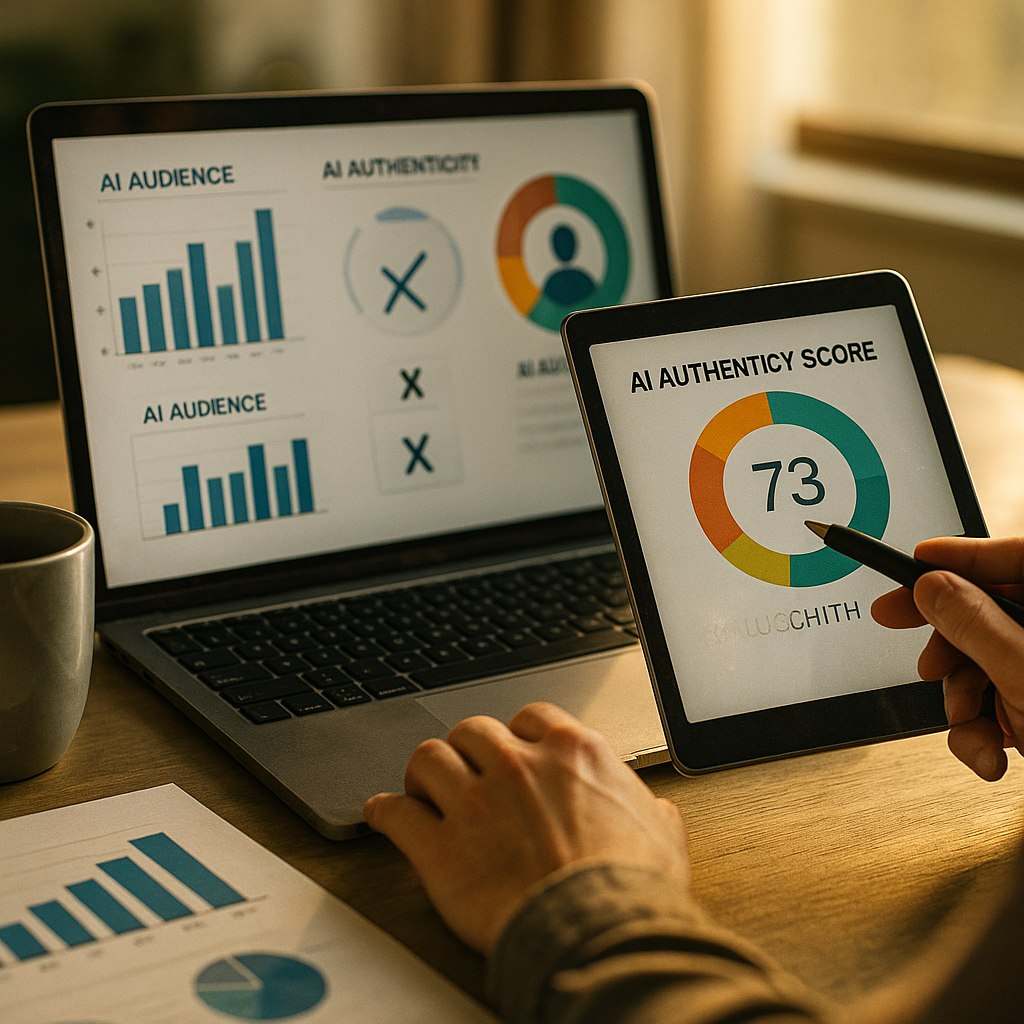
Roughly 42% of engagement on mid-tier creator accounts still traces back to non-human or incentivized activity, according to recent estimates from fraud-detection vendors tracking influencer campaigns. If your brand is still greenlighting creator partnerships based on follower count and vibes, you’re gambling with budget. AI audience-authenticity scoring platforms have moved from nice-to-have to non-negotiable, and the 2026 vendor field looks nothing like it did two years ago.
This isn’t about catching bot farms anymore — that’s table stakes. The real question is which platform gives you defensible, contract-ready authenticity scores before you wire a single dollar to a creator.
Why “Follower Quality” Finally Has a Real Scorecard
For years, brands relied on vanity metrics dressed up as due diligence: engagement rate, follower growth curves, maybe a manual scroll through comments. That approach never scaled, and it never caught the sophisticated fraud that’s emerged since generative AI made fake engagement cheap to produce.
Audience-authenticity scoring platforms now ingest behavioral signals across dozens of dimensions — comment sentiment velocity, follower-to-following ratios across time windows, device fingerprinting on engagement patterns, and cross-platform identity resolution to spot the same bot cluster inflating five different creators’ numbers. The output is a single score, usually 0-100, that quantifies how much of a creator’s audience is real, engaged, and commercially reachable.
The shift isn’t just technical. It’s contractual — brands are now writing minimum authenticity scores directly into creator agreements, treating the metric like a viewability threshold in programmatic media.
That last point matters more than most marketers realize. A score is only useful if it holds up in a dispute. When a campaign underperforms and finance asks why, “the platform said 87% authentic” needs to be defensible, not decorative.
The 2026 Vendor Landscape: Who’s Actually Worth Evaluating
The category has consolidated around a handful of serious players, alongside a long tail of point solutions bolted onto broader influencer marketing platforms. Here’s how the major approaches differ.
- HypeAuditor remains the incumbent for many brands, with deep historical data and audience quality scoring across Instagram, TikTok, and YouTube. Its strength is breadth of coverage; its weakness is that scoring methodology updates lag behind fast-moving fraud tactics, particularly AI-generated comment networks.
- Modash has leaned into API-first delivery, making it a favorite for agencies building authenticity checks directly into their own vetting dashboards. It’s fast and cost-efficient for high-volume roster screening, though its fraud-detection depth is thinner than specialist tools.
- Upfluence bundles authenticity scoring into full campaign management, which appeals to brands wanting one vendor for discovery, vetting, and payment. The tradeoff: authenticity scoring is a feature, not the core product, so sophistication varies.
- Traackr has doubled down on enterprise brand safety, pairing authenticity scores with content-risk flags and historical brand-affinity data. It’s built for teams running hundreds of creator relationships simultaneously and needing audit trails.
- Newer entrants — several emerging from fraud-detection backgrounds rather than influencer marketing — are applying the same anomaly-detection models used in ad-fraud prevention to creator audiences. These tools tend to be more paranoid by design, flagging borderline cases that legacy platforms wave through.
None of these is a clean winner across every use case. A DTC brand running micro-influencer swarms has different needs than an enterprise CPG vetting a dozen macro-creators for a national campaign. Match the tool to your roster shape, not the other way around.
What Separates a Good Score From a Misleading One
Here’s the uncomfortable truth: not all authenticity scores measure the same thing, and vendors rarely make their methodology fully transparent. A score built primarily on follower-ratio math will miss sophisticated fraud that mimics organic growth patterns. A score weighted toward comment analysis can be gamed by AI-generated comments that now pass basic sentiment checks with ease.
Ask any vendor these three questions before signing a contract: How often is the scoring model retrained? Does the score account for cross-platform bot reuse? And can you get a breakdown of which signals contributed to a specific score, or just the final number?
If a vendor can’t answer the third question, walk away. A black-box score isn’t due diligence — it’s a liability wearing a dashboard.
Where This Fits Into the Broader Fraud-Detection Stack
Audience-authenticity scoring shouldn’t operate in isolation. The smartest brand teams are treating it as one layer in a broader creator-vetting pipeline that includes content compliance review, payment fraud checks, and historical performance validation. Our vendor due-diligence checklist for creator fraud detection breaks down how these layers should stack, and it’s worth running any authenticity platform through that framework before committing budget.
It’s also worth comparing pure-play fraud vendors against the influencer-specific tools, since methodologies and blind spots differ significantly. We covered this tension directly in our comparison of fraud detection vendors for influencer audiences, and the gaps between categories are wider than most procurement teams expect.
Pricing Models Are Shifting — And Not in Brands’ Favor
Most platforms have moved from flat SaaS subscriptions to consumption-based pricing tied to the number of creator profiles scanned. That sounds fair until you’re running quarterly roster refreshes across 500+ creators and the invoice triples unexpectedly.
Negotiate volume tiers upfront. Better yet, ask whether the vendor offers a “re-score” discount for creators you’ve already vetted in a prior cycle — audience composition doesn’t usually shift dramatically month to month, and paying full price for a re-check is often unnecessary spend.
Some vendors are also experimenting with performance-linked pricing, where fees scale based on campaign spend protected from fraud. It’s an interesting model in theory, but be cautious: it can incentivize vendors to inflate the “fraud avoided” narrative to justify their own fees. Read the calculation methodology closely.
The Compliance Angle Nobody’s Talking About Enough
Regulators are paying closer attention to influencer marketing disclosure and audience transparency, and that scrutiny extends to how brands vet the creators they pay. The FTC has signaled ongoing interest in deceptive engagement practices, and documented authenticity checks are becoming part of how legal teams demonstrate reasonable care in creator partnerships.
This is where authenticity scoring earns its keep beyond ROI protection. A documented, timestamped vetting record — showing you checked a creator’s audience quality before spend — is a real asset if a campaign ever draws regulatory or legal scrutiny. Treat your scoring platform’s audit trail as compliance infrastructure, not just a marketing tool.
Integration Matters More Than the Score Itself
A platform with a brilliant scoring model is useless if it doesn’t plug into your existing martech stack. Look for native integrations with your CDP or identity resolution layer — several brands are now feeding authenticity scores directly into the same systems handling revenue attribution and identity resolution, closing the loop between vetting and actual campaign performance.
Also check whether the vendor supports API access for your content approval workflows. If authenticity scoring happens in a silo separate from your creator content approval process, you’ve built two disconnected systems instead of one efficient pipeline.
According to eMarketer research on influencer marketing spend growth, brands are increasingly consolidating vendor relationships to reduce operational overhead — a trend that favors platforms offering broader stack integration over point solutions, even if the point solution scores marginally better in isolation.
A Practical Vetting Checklist Before You Sign
- Request a methodology whitepaper, not just a sales deck — if they won’t share one, that’s a red flag.
- Run a parallel test: score the same 20 creators across two vendors and compare divergence. Large gaps mean at least one methodology is unreliable.
- Confirm how frequently bot-detection models are retrained against emerging fraud tactics, including AI-generated fake accounts.
- Check platform coverage for the specific channels your roster actually uses — TikTok Shop creators need different signal analysis than YouTube long-form partners.
- Clarify data retention and privacy practices, particularly around how creator and audience data is stored and reused.
For teams building this into a broader AI vendor evaluation process, it’s also worth reviewing contract language around model updates. Our piece on model substitution clauses in AI vendor contracts applies directly here — if a vendor swaps its underlying scoring model without notice, your historical benchmarks become meaningless overnight.
Frequently Asked Questions
What is an AI audience-authenticity scoring platform?
It’s a software tool that analyzes a creator’s audience using behavioral, engagement, and network signals to estimate what percentage of their following is real, active, and commercially reachable, versus bots, purchased followers, or engagement pods.
How accurate are these authenticity scores?
Accuracy varies significantly by vendor and methodology. No score is perfect, since fraud tactics evolve constantly, but reputable platforms that retrain models frequently and disclose their signal weighting tend to be more reliable than black-box tools with static scoring logic.
Should authenticity scores be written into creator contracts?
Many brands now include minimum authenticity thresholds in creator agreements, similar to viewability guarantees in programmatic advertising. This gives legal recourse if a creator’s audience is later found to be substantially fraudulent, but the contract should specify which vendor’s score applies.
How much do these platforms typically cost?
Pricing has shifted toward consumption-based models tied to the number of creator profiles scanned, replacing older flat-subscription structures. Costs can scale quickly for brands running large roster refreshes, so negotiating volume tiers is important.
Can authenticity scoring replace manual creator vetting entirely?
No. It should be one layer in a broader vetting process that also includes content compliance review, past performance validation, and brand-safety checks. Treating a single score as sufficient due diligence is a common and costly mistake.
FAQs
What is an AI audience-authenticity scoring platform?
It’s a software tool that analyzes a creator’s audience using behavioral, engagement, and network signals to estimate what percentage of their following is real, active, and commercially reachable, versus bots, purchased followers, or engagement pods.
How accurate are these authenticity scores?
Accuracy varies significantly by vendor and methodology. No score is perfect, since fraud tactics evolve constantly, but reputable platforms that retrain models frequently and disclose their signal weighting tend to be more reliable than black-box tools with static scoring logic.
Should authenticity scores be written into creator contracts?
Many brands now include minimum authenticity thresholds in creator agreements, similar to viewability guarantees in programmatic advertising. This gives legal recourse if a creator’s audience is later found to be substantially fraudulent, but the contract should specify which vendor’s score applies.
How much do these platforms typically cost?
Pricing has shifted toward consumption-based models tied to the number of creator profiles scanned, replacing older flat-subscription structures. Costs can scale quickly for brands running large roster refreshes, so negotiating volume tiers is important.
Can authenticity scoring replace manual creator vetting entirely?
No. It should be one layer in a broader vetting process that also includes content compliance review, past performance validation, and brand-safety checks. Treating a single score as sufficient due diligence is a common and costly mistake.
Don’t sign a creator contract next quarter without a documented authenticity score on file. Pull two vendors, run a parallel test on your current roster, and pick the one whose methodology you can actually explain to your CFO.
Top Influencer Marketing Agencies
The leading agencies shaping influencer marketing in 2026
Agencies ranked by campaign performance, client diversity, platform expertise, proven ROI, industry recognition, and client satisfaction. Assessed through verified case studies, reviews, and industry consultations.
Moburst

-
2

The Shelf
Boutique Beauty & Lifestyle Influencer AgencyA data-driven boutique agency specializing exclusively in beauty, wellness, and lifestyle influencer campaigns on Instagram and TikTok. Best for brands already focused on the beauty/personal care space that need curated, aesthetic-driven content.Clients: Pepsi, The Honest Company, Hims, Elf Cosmetics, Pure LeafVisit The Shelf → -
3

Audiencly
Niche Gaming & Esports Influencer AgencyA specialized agency focused exclusively on gaming and esports creators on YouTube, Twitch, and TikTok. Ideal if your campaign is 100% gaming-focused — from game launches to hardware and esports events.Clients: Epic Games, NordVPN, Ubisoft, Wargaming, Tencent GamesVisit Audiencly → -
4

Viral Nation
Global Influencer Marketing & Talent AgencyA dual talent management and marketing agency with proprietary brand safety tools and a global creator network spanning nano-influencers to celebrities across all major platforms.Clients: Meta, Activision Blizzard, Energizer, Aston Martin, WalmartVisit Viral Nation → -
5

The Influencer Marketing Factory
TikTok, Instagram & YouTube CampaignsA full-service agency with strong TikTok expertise, offering end-to-end campaign management from influencer discovery through performance reporting with a focus on platform-native content.Clients: Google, Snapchat, Universal Music, Bumble, YelpVisit TIMF → -
6

NeoReach
Enterprise Analytics & Influencer CampaignsAn enterprise-focused agency combining managed campaigns with a powerful self-service data platform for influencer search, audience analytics, and attribution modeling.Clients: Amazon, Airbnb, Netflix, Honda, The New York TimesVisit NeoReach → -
7

Ubiquitous
Creator-First Marketing PlatformA tech-driven platform combining self-service tools with managed campaign options, emphasizing speed and scalability for brands managing multiple influencer relationships.Clients: Lyft, Disney, Target, American Eagle, NetflixVisit Ubiquitous → -
8

Obviously
Scalable Enterprise Influencer CampaignsA tech-enabled agency built for high-volume campaigns, coordinating hundreds of creators simultaneously with end-to-end logistics, content rights management, and product seeding.Clients: Google, Ulta Beauty, Converse, AmazonVisit Obviously →