


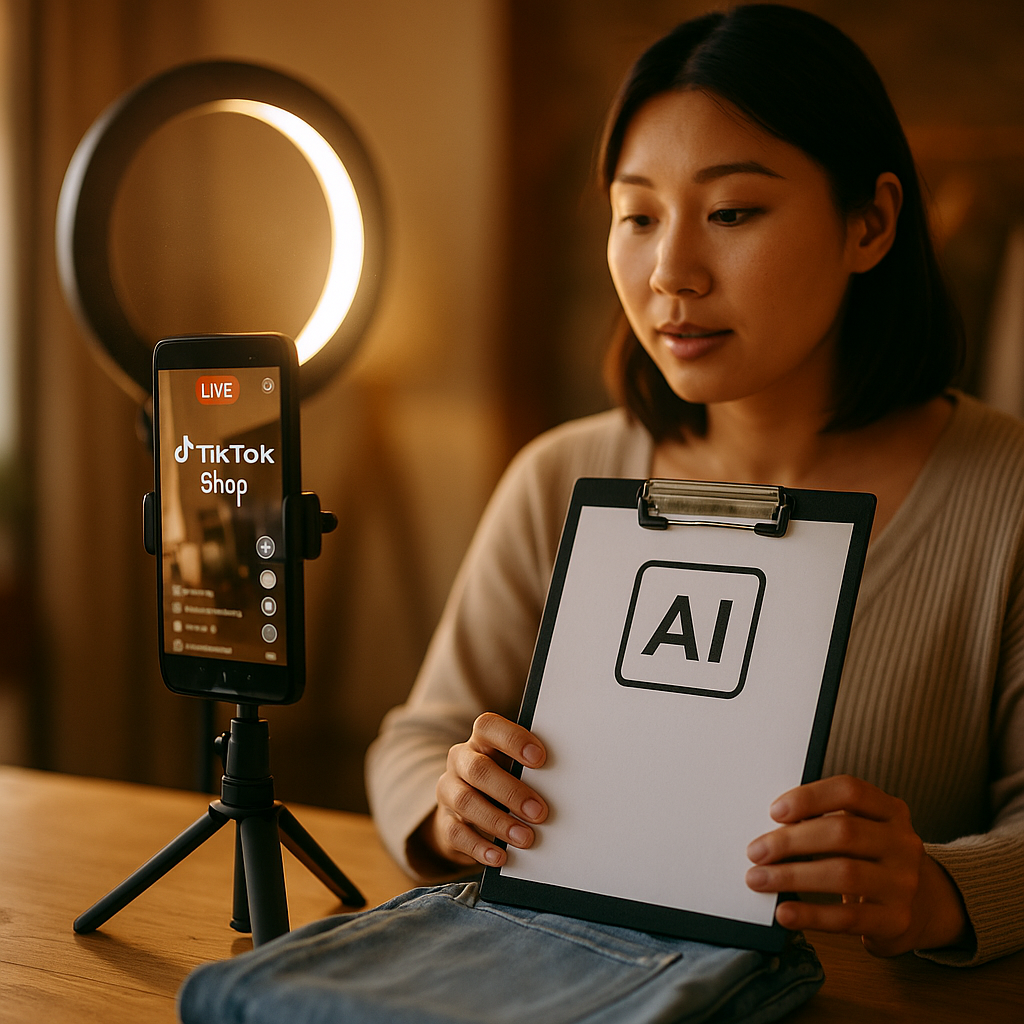
The FTC issued more than $2.5 million in penalties tied to undisclosed endorsements last year, and TikTok Shop’s live commerce boom has multiplied the surface area for violations by the hour. If your brand runs livestream shopping without pre-flight disclosure checks, you’re one careless host away from a regulatory headache. AI tools that auto-flag non-compliant affiliate disclosures before a stream starts are no longer a nice-to-have. They’re becoming table stakes.
The question isn’t whether you need one. It’s which one actually works, and how you evaluate a category that’s changing every quarter.
Why Livestream Disclosure Is Its Own Beast
Static post compliance is hard enough. A brand can review a caption, check for #ad, approve it, done. Livestream commerce breaks that model entirely. Hosts improvise. Scripts drift. Guest creators jump on camera without briefing. And once a stream goes live on TikTok Shop, there’s no undo button — viewers have already seen it, screenshotted it, or made a purchase decision based on it.
Add affiliate mechanics into the mix and the risk compounds. A host promoting a product through TikTok’s affiliate program has a material connection to that sale. The FTC’s Endorsement Guides require that connection be disclosed clearly and conspicuously, not buried in a bio link or mumbled once forty minutes into a two-hour stream. Regulators have made clear that “I’ll say it once at the top” doesn’t cut it if the stream runs long and new viewers keep joining.
A disclosure that only appears once, at the start of a three-hour stream, is functionally invisible to 90% of the audience who joins later. Compliance has to be continuous, not a one-time checkbox.
This is exactly the gap AI monitoring tools are built to close. They watch audio transcripts, on-screen text, and product-link timing in real time, then flag gaps before the stream airs or, in more advanced setups, while it’s still running.
What “Auto-Flag Before Going Live” Actually Means
Vendors use this phrase loosely, so let’s define it properly. There are really three tiers of capability on the market right now:
- Pre-stream script and asset review: The tool scans your planned script, product cards, and overlay graphics before you hit “go live,” checking for required disclosure language and correct placement.
- Rehearsal-mode simulation: Some platforms let you run a dry stream that mimics live conditions, transcribing speech and flagging missing verbal disclosures in near real time, so hosts can fix habits before the real thing.
- Live in-stream monitoring with kill-switch alerts: The most advanced tools continue listening after go-live, pinging a compliance manager or muting affiliate product tags if a disclosure lapses mid-stream.
Most brands assume they’re buying tier three. Most tools on the market actually deliver tier one. That mismatch is where a lot of budget gets wasted.
The Core Evaluation Criteria
When you’re comparing vendors, run them through the following filters. Skip any of these and you’ll find out the hard way, usually after a regulator inquiry or a viral screenshot.
1. Does it understand TikTok Shop’s specific affiliate disclosure requirements, or just generic FTC language? TikTok’s own Creator Marketplace guidelines and its in-app disclosure tools (like the “Paid Partnership” label) have quirks that differ from broader FTC guidance. A tool trained only on generic endorsement rules will miss platform-specific nuances, like when the built-in label satisfies disclosure and when it doesn’t.
2. Real-time transcription accuracy under noisy conditions. Livestreams aren’t studio recordings. Hosts talk over background music, product demos, and audience call-outs. If the tool’s speech-to-text engine chokes on cross-talk, it’ll miss disclosures that were actually said, generating false negatives that erode host trust in the system.
3. Latency between speech and flag. A tool that identifies a missing disclosure 90 seconds after the moment has passed is only useful for post-hoc audit trails, not prevention. For genuine “before it airs” protection, you need sub-10-second detection windows if you want a compliance manager to intervene mid-segment.
4. Multimodal coverage, not just audio. Disclosures increasingly live in on-screen banners, pinned comments, and product card copy. A tool that only listens to speech is blind to half the disclosure surface on a modern TikTok Shop stream.
5. Integration with your existing creator ops stack. Does the flagging tool talk to your CRM, your affiliate management platform, your attribution dashboard? If compliance data lives in a silo, you can’t correlate flagged incidents with creator performance or payout decisions. Brands already tracking affiliate performance through platforms like those covered in our TikTok Shop attribution comparison should prioritize vendors that plug into the same data layer.
Build vs. Buy: A Question Worth Asking Twice
Some larger retail brands are tempted to build in-house, especially those already running custom AI agents for other commerce workflows. Resist that urge unless you have serious ML infrastructure. Disclosure compliance isn’t a static classification problem, it’s a moving regulatory target. The FTC updates guidance periodically, and TikTok’s own platform policies shift more often than most brands can track internally.
Buying from a vendor that maintains a dedicated compliance/legal team monitoring these changes is almost always more defensible than an internal model trained once and left to drift. This is the same logic that applies to auditing AI-generated creative for brand voice drift — models degrade without active maintenance, and compliance models degrade in ways that carry legal exposure, not just brand embarrassment.
That said, if your org already runs agentic orchestration for other marketing workflows, ask your vendor whether the disclosure-flagging module can slot into that broader system rather than existing as a bolt-on. Fragmented tooling is its own risk. Teams juggling five disconnected point solutions for creator ops tend to have worse compliance outcomes than teams running fewer, better-integrated platforms — a pattern we’ve seen play out across unified ad-ops versus point solutions comparisons more broadly.
What the Vendors Actually Offer Right Now
The category is young, and consolidation hasn’t happened yet. Broadly, you’ll encounter three types of providers:
- Platform-native tools: TikTok has been expanding its own Shop compliance dashboards, including automated disclosure prompts inside the Seller/Creator interface. These are free but limited, they generally only enforce TikTok’s own labeling requirements, not the full breadth of FTC obligations.
- Influencer marketing platform add-ons: Several established influencer marketing suites have bolted on compliance-monitoring modules as an upsell. Coverage quality varies wildly, so demand a live demo using an actual noisy stream recording, not a scripted vendor pitch.
- Specialized compliance-AI startups: A newer wave of vendors focuses exclusively on regulatory monitoring across livestream and social video, often with legal advisory boards shaping their flagging logic. These tend to have the deepest FTC-specific rule sets but weaker integration with commerce attribution tools.
Ask every vendor for their false-positive and false-negative rates on a benchmark set of real streams, not synthetic test data. Vendors who can’t produce this number honestly probably haven’t measured it, which tells you something too.
A Quick Gut-Check Before You Sign a Contract
Run a 90-day pilot with a small subset of your affiliate hosts before rolling out brand-wide. Track three numbers: flagged incidents caught before airing, incidents that slipped through anyway, and host complaints about false alarms interrupting their flow. If a tool generates too many false positives, hosts will start ignoring the alerts altogether, which defeats the entire purpose. Compliance tooling that annoys your creators into disabling it is worse than no tooling at all.
It’s also worth stress-testing how the tool handles multilingual streams. TikTok Shop’s fastest-growing markets include non-English-speaking audiences, and disclosure detection models trained primarily on English speech patterns often perform worse on Spanish, Portuguese, or Southeast Asian language streams. If your affiliate program spans multiple regions, this gap alone can eliminate half the vendors on your shortlist. According to eMarketer, live shopping continues to grow fastest outside the U.S., which makes multilingual coverage a genuine dealbreaker, not a nice-to-have feature.
Where This Fits Into Your Broader Risk Framework
Disclosure compliance shouldn’t sit in isolation from your other creator-risk workflows. If you’re already running fraud detection on nano-creators or vetting affiliate partners before onboarding, the disclosure-flagging layer should feed into the same risk dashboard. A host who’s had three flagged disclosure incidents in ninety days is a signal worth surfacing alongside engagement fraud indicators, not a separate spreadsheet nobody checks.
Brands running mature creator vetting programs, similar to approaches outlined in our piece on AI fraud-detection tools for creator vetting, are starting to treat disclosure compliance as another dimension of creator risk scoring rather than a bolt-on legal checkbox. That shift in mindset, from “compliance team problem” to “creator ops data point,” is probably the biggest operational change coming to this space over the next year.
Legal teams should also stay current on regulatory guidance directly. The FTC’s own endorsement resources are updated periodically and remain the authoritative source, no AI vendor’s interpretation should override your legal team’s reading of current guidance. Treat vendor tools as an operational layer that enforces policy, not the source of the policy itself.
The Real Cost of Getting This Wrong
A single undisclosed affiliate promotion during a viral livestream can generate more negative press than the sale ever generated in revenue. Regulators have shown increasing willingness to pursue enforcement against brands, not just individual creators, when disclosure failures are systemic. That liability sits with the brand’s marketing and legal teams, not with the AI vendor you hired.
Budget for this the way you’d budget for any other risk-mitigation line item: not as a cost center to minimize, but as insurance against a much larger downside. The tools reviewed here typically run a few hundred to a few thousand dollars monthly depending on stream volume, a rounding error compared to potential FTC penalties or the reputational cost of a viral compliance failure caught by a competitor or watchdog account.
Next Step
Pull your last quarter of livestream recordings and run them through a vendor’s trial detection engine before renewing any existing compliance contract. If the tool misses disclosures your own team can spot by ear, it’s not ready for your brand’s live commerce program, no matter how polished the sales deck looked.
FAQs
What counts as a non-compliant affiliate disclosure on TikTok Shop?
A disclosure is non-compliant when it’s missing, unclear, buried in a bio or description, shown only once during a long stream, or contradicted by casual language suggesting the endorsement is unpaid. The FTC requires disclosures to be clear and conspicuous throughout the relevant content, not just at the start.
Can AI tools fully replace human compliance review for livestreams?
No. AI tools are best used to catch obvious gaps and flag risk in real time, but final judgment calls, especially on ambiguous or context-dependent disclosures, still need human legal or compliance review. Treat AI flagging as a first line of defense, not a final verdict.
How accurate are current AI disclosure-detection tools?
Accuracy varies significantly by vendor and by language. Tools trained specifically on live commerce audio tend to outperform generic speech-recognition compliance add-ons, but even the best tools have measurable false-positive and false-negative rates that brands should request before purchasing.
Does TikTok’s built-in “Paid Partnership” label satisfy FTC disclosure rules on its own?
Not always. TikTok’s native label helps but doesn’t automatically satisfy every FTC requirement, particularly around clarity and placement during long-form live content. Brands should treat platform labels as one layer of compliance, not the entire solution.
What should a pilot program for one of these tools look like?
Run a 90-day pilot with a handful of affiliate hosts, tracking caught incidents, missed incidents, and false-positive rates that disrupt hosts mid-stream. Compare those numbers against your legal team’s manual review of the same streams before committing to a brand-wide rollout.
FAQs
What counts as a non-compliant affiliate disclosure on TikTok Shop?
A disclosure is non-compliant when it’s missing, unclear, buried in a bio or description, shown only once during a long stream, or contradicted by casual language suggesting the endorsement is unpaid. The FTC requires disclosures to be clear and conspicuous throughout the relevant content, not just at the start.
Can AI tools fully replace human compliance review for livestreams?
No. AI tools are best used to catch obvious gaps and flag risk in real time, but final judgment calls, especially on ambiguous or context-dependent disclosures, still need human legal or compliance review. Treat AI flagging as a first line of defense, not a final verdict.
How accurate are current AI disclosure-detection tools?
Accuracy varies significantly by vendor and by language. Tools trained specifically on live commerce audio tend to outperform generic speech-recognition compliance add-ons, but even the best tools have measurable false-positive and false-negative rates that brands should request before purchasing.
Does TikTok’s built-in “Paid Partnership” label satisfy FTC disclosure rules on its own?
Not always. TikTok’s native label helps but doesn’t automatically satisfy every FTC requirement, particularly around clarity and placement during long-form live content. Brands should treat platform labels as one layer of compliance, not the entire solution.
What should a pilot program for one of these tools look like?
Run a 90-day pilot with a handful of affiliate hosts, tracking caught incidents, missed incidents, and false-positive rates that disrupt hosts mid-stream. Compare those numbers against your legal team’s manual review of the same streams before committing to a brand-wide rollout.
Top Influencer Marketing Agencies
The leading agencies shaping influencer marketing in 2026
Agencies ranked by campaign performance, client diversity, platform expertise, proven ROI, industry recognition, and client satisfaction. Assessed through verified case studies, reviews, and industry consultations.
Moburst

-
2

The Shelf
Boutique Beauty & Lifestyle Influencer AgencyA data-driven boutique agency specializing exclusively in beauty, wellness, and lifestyle influencer campaigns on Instagram and TikTok. Best for brands already focused on the beauty/personal care space that need curated, aesthetic-driven content.Clients: Pepsi, The Honest Company, Hims, Elf Cosmetics, Pure LeafVisit The Shelf → -
3

Audiencly
Niche Gaming & Esports Influencer AgencyA specialized agency focused exclusively on gaming and esports creators on YouTube, Twitch, and TikTok. Ideal if your campaign is 100% gaming-focused — from game launches to hardware and esports events.Clients: Epic Games, NordVPN, Ubisoft, Wargaming, Tencent GamesVisit Audiencly → -
4

Viral Nation
Global Influencer Marketing & Talent AgencyA dual talent management and marketing agency with proprietary brand safety tools and a global creator network spanning nano-influencers to celebrities across all major platforms.Clients: Meta, Activision Blizzard, Energizer, Aston Martin, WalmartVisit Viral Nation → -
5

The Influencer Marketing Factory
TikTok, Instagram & YouTube CampaignsA full-service agency with strong TikTok expertise, offering end-to-end campaign management from influencer discovery through performance reporting with a focus on platform-native content.Clients: Google, Snapchat, Universal Music, Bumble, YelpVisit TIMF → -
6

NeoReach
Enterprise Analytics & Influencer CampaignsAn enterprise-focused agency combining managed campaigns with a powerful self-service data platform for influencer search, audience analytics, and attribution modeling.Clients: Amazon, Airbnb, Netflix, Honda, The New York TimesVisit NeoReach → -
7

Ubiquitous
Creator-First Marketing PlatformA tech-driven platform combining self-service tools with managed campaign options, emphasizing speed and scalability for brands managing multiple influencer relationships.Clients: Lyft, Disney, Target, American Eagle, NetflixVisit Ubiquitous → -
8

Obviously
Scalable Enterprise Influencer CampaignsA tech-enabled agency built for high-volume campaigns, coordinating hundreds of creators simultaneously with end-to-end logistics, content rights management, and product seeding.Clients: Google, Ulta Beauty, Converse, AmazonVisit Obviously →