


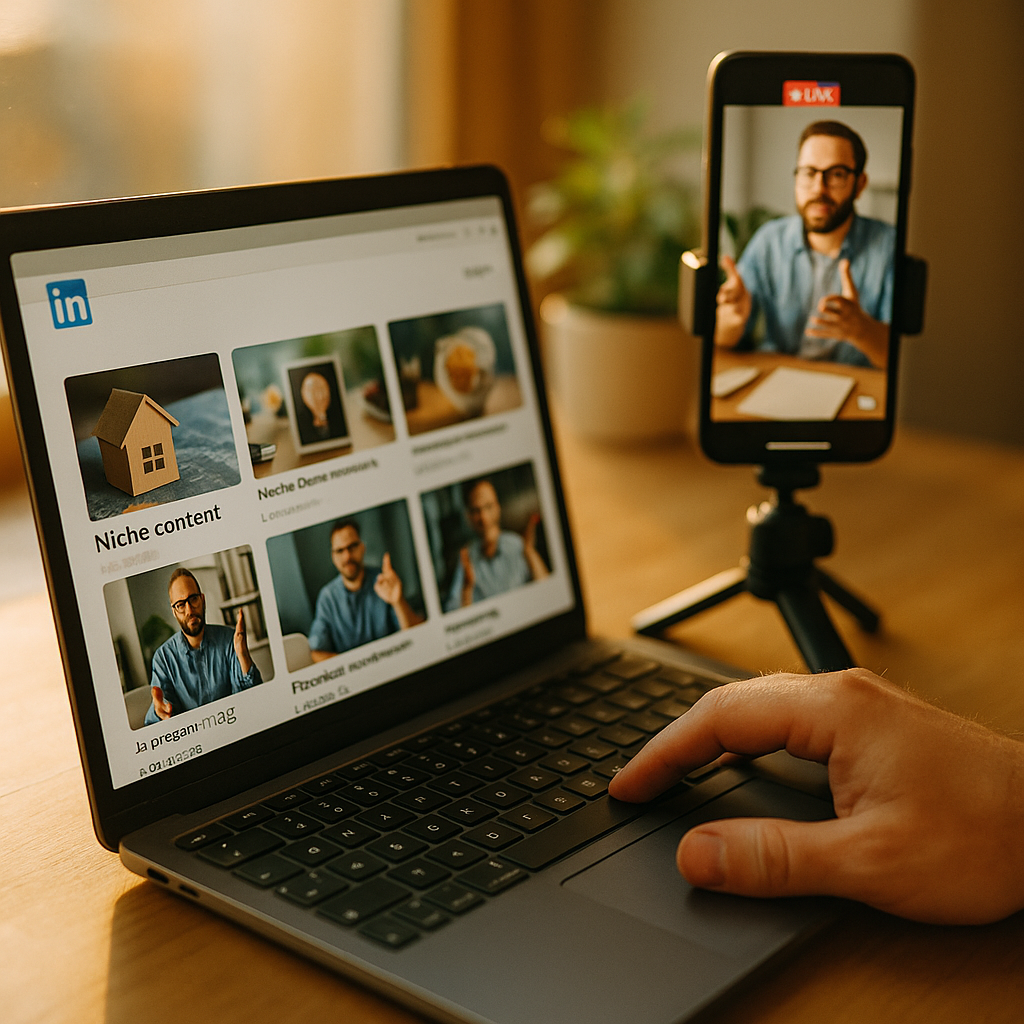
LinkedIn’s algorithm now buries generic thought leadership faster than a stale sales pitch. With over 1.2 billion members and creator-mode adoption climbing every quarter, the platform has quietly shifted its ranking signals toward specificity, live interaction, and demonstrated subject-matter depth. If your LinkedIn industry-specific content playbook still treats the feed like a press release channel, you’re already losing distribution to competitors who figured this out months ago.
This shift isn’t cosmetic. It’s structural. And it means brand and agency teams need to rethink how they brief creators, structure live video, and tag content for niche discovery — before Q1 budgets lock in.
What Actually Changed in the Feed
LinkedIn has spent the better part of the last two years pushing what it calls “knowledge and advice” content, favoring posts that demonstrate real expertise over posts that simply announce something. The platform’s own product updates confirm a heavier weighting toward dwell time, meaningful comments (not “Great post!” spam), and — increasingly — attendance and engagement on live video sessions.
The 2026 shift adds a new layer: topical clustering. LinkedIn’s recommendation system is getting better at identifying which niche a piece of content belongs to and matching it against a member’s demonstrated professional interests, not just their job title or industry field. That means a fintech compliance post no longer competes in a generic “finance” bucket. It competes — and wins or loses — within a much narrower audience of people who’ve shown interest in regulatory content specifically.
Generic B2B content is being algorithmically sorted into smaller and smaller rooms. If your content isn’t sharp enough to earn a seat in the right room, it simply won’t show up.
We covered the early signs of this in our LinkedIn feed shift analysis, and the trend has only accelerated since. Brands still briefing creators for broad reach are optimizing for a feed that no longer exists.
Why Live Video Is the New Distribution Lever
Here’s the uncomfortable truth for marketing teams that deprioritized live formats: LinkedIn Live and Audio Events are now some of the highest-leverage content types on the platform, and the algorithm treats them differently than static posts.
Live sessions get pre-event promotion in followers’ feeds, real-time engagement signals (comments, reactions, question submissions), and — critically — a post-event replay that inherits some of that engagement momentum. Static posts don’t get any of that scaffolding.
According to LinkedIn’s own marketing solutions data, live video on the platform consistently generates engagement rates several multiples higher than pre-recorded video. That gap is widening, not narrowing, as LinkedIn continues investing in live infrastructure to compete with the creator-economy pull of TikTok and YouTube.
For B2B brands, this is an operational problem as much as a creative one. Live video requires scheduling discipline, a host who can actually field unscripted questions, and a promotion plan that starts days before the event — not an hour before.
- Pick a narrow topic, not a broad theme. “The Future of Marketing” gets ignored. “How mid-market SaaS teams are restructuring attribution models” gets watched.
- Recruit a credible co-host. A single spokesperson reading talking points feels like a webinar. Two practitioners in dialogue feels like insight.
- Repurpose the replay within 48 hours. Clip the sharpest three minutes into a native video post. The algorithm treats it as fresh, standalone content.
Niche Posts Beat Broad Reach — Here’s the Data Behind It
Marketing teams raised on vanity metrics still chase impressions. That instinct is now actively counterproductive on LinkedIn. The platform’s own creator guidance increasingly nudges toward “niche-down” content — posts that speak to a specific role, industry pain point, or regulatory moment rather than a general audience.
Why? Because niche content produces higher comment-to-view ratios, and comments (especially from people outside the poster’s immediate network) are one of the strongest ranking signals LinkedIn’s algorithm currently uses.
Sprout Social’s industry benchmarking has repeatedly shown that posts addressing a specific professional pain point outperform generic industry commentary on engagement rate, even when the niche post reaches a smaller absolute audience.
Think about it from the algorithm’s perspective. A post that gets shared broadly but sparks no real discussion signals low relevance. A post that gets forty comments from healthcare compliance officers, even with a fraction of the reach, signals exactly the kind of topical authority LinkedIn wants to reward and redistribute.
This is the same logic we outlined in building B2B trust before the sale — trust compounds through specificity, not volume.
Building the Industry-Specific Content Matrix
Practically, this means brands need to stop briefing creators for “LinkedIn content” as a single category and start building a matrix: industry vertical on one axis, content format on the other. A cybersecurity brand’s matrix might look like incident-response breakdowns (text posts), CISO panel discussions (live audio), and compliance deadline explainers (carousel documents). Each cell gets tagged, tracked, and evaluated separately, because the algorithm is evaluating them separately.
Skip this step and you’re back to spray-and-pray content that the 2026 algorithm is specifically designed to suppress.
Where the LinkedIn Creator Marketplace Fits
LinkedIn’s Creator Marketplace has matured into a genuine sourcing channel for brands that need niche voices they don’t have in-house. Instead of hiring a generalist content agency, brands are increasingly contracting subject-matter creators — a former compliance officer, a practicing supply-chain manager — who bring built-in credibility to a narrow vertical.
This matters more under the 2026 algorithm because LinkedIn’s topical-relevance scoring seems to weigh a creator’s historical posting pattern. An account that’s posted consistently about healthcare regulation for a year carries more algorithmic trust in that lane than a brand account posting about it for the first time.
We broke down the mechanics of sourcing and vetting these partnerships in our Creator Marketplace playbook, and it’s worth revisiting if your current creator roster is still generalist-heavy.
The ROI case is straightforward: a niche creator with 8,000 highly relevant followers will often out-convert a generalist influencer with 80,000 loosely related ones, especially for lead-gen and demo-request campaigns where intent matters more than raw reach.
Operationalizing the Shift: What Your Team Needs to Change This Quarter
None of this works if it stays theoretical. Here’s the operational checklist marketing leads should be running through before the next content cycle:
- Audit your last twenty posts for topical breadth. If they span five different themes with no discernible pattern, LinkedIn’s algorithm has no consistent signal to associate with your page.
- Build a live video cadence — monthly minimum. Even one well-promoted live session per month establishes the engagement pattern the algorithm rewards.
- Reassign creator briefs around verticals, not campaigns. A creator briefed to “cover fintech” consistently builds more algorithmic equity than one briefed for a single campaign burst.
- Track comment quality, not just comment count. Set up a monthly review of which posts generated substantive discussion versus generic praise. This is a leading indicator of what the algorithm will amplify next.
- Coordinate with compliance early on live formats. Unscripted Q&A carries more legal exposure than pre-approved posts, particularly in regulated industries. Loop in legal before your first live event, not after a stray comment causes a headache.
For teams managing this alongside other platform shifts, it’s worth benchmarking against how other channels are handling similar algorithmic recalibrations. TikTok’s move toward discovery-driven distribution follows a comparable logic: platforms are increasingly rewarding depth and relevance signals over raw reach metrics, across the board. If your organization is rebuilding briefs for one platform, it’s an efficient moment to audit the others too.
Data on this remains directional rather than exhaustive — LinkedIn doesn’t publish granular ranking-factor weightings, and third-party benchmarking from sources like eMarketer and HubSpot should be treated as directional guidance, not gospel. Test against your own account’s performance before overhauling a full content calendar.
The brands that win this shift won’t be the ones posting more. They’ll be the ones posting narrower, live more often, and with creators who’ve earned topical trust the algorithm can actually recognize. Start with one vertical, one monthly live session, and one niche creator partnership — then expand once you see the engagement pattern the algorithm rewards.
FAQs
What is the biggest change in LinkedIn’s algorithm affecting B2B content?
The clearest shift is topical clustering — LinkedIn is getting better at matching niche content to audiences with demonstrated interest in that specific subject, rather than ranking posts within broad industry categories.
Does LinkedIn Live actually outperform recorded video?
Yes, based on LinkedIn’s own marketing data, live sessions generate significantly higher engagement rates than pre-recorded video, partly due to pre-event promotion and real-time interaction signals that static content doesn’t receive.
How often should brands run LinkedIn Live sessions?
A monthly cadence is a reasonable minimum for most B2B teams. Consistency matters more than frequency — irregular live activity doesn’t build the engagement pattern the algorithm rewards.
Should brands hire niche creators instead of generalist influencers for LinkedIn?
For most B2B use cases, yes. Niche creators with smaller but highly relevant audiences tend to outperform generalist influencers on conversion metrics, and their consistent topical posting history carries more algorithmic trust.
What compliance risks come with LinkedIn Live for regulated industries?
Unscripted Q&A during live events carries more legal exposure than pre-approved static posts. Legal and compliance teams should review live event formats and moderation plans before the first session, not after an issue arises.
FAQs
What is the biggest change in LinkedIn’s algorithm affecting B2B content?
The clearest shift is topical clustering — LinkedIn is getting better at matching niche content to audiences with demonstrated interest in that specific subject, rather than ranking posts within broad industry categories.
Does LinkedIn Live actually outperform recorded video?
Yes, based on LinkedIn’s own marketing data, live sessions generate significantly higher engagement rates than pre-recorded video, partly due to pre-event promotion and real-time interaction signals that static content doesn’t receive.
How often should brands run LinkedIn Live sessions?
A monthly cadence is a reasonable minimum for most B2B teams. Consistency matters more than frequency — irregular live activity doesn’t build the engagement pattern the algorithm rewards.
Should brands hire niche creators instead of generalist influencers for LinkedIn?
For most B2B use cases, yes. Niche creators with smaller but highly relevant audiences tend to outperform generalist influencers on conversion metrics, and their consistent topical posting history carries more algorithmic trust.
What compliance risks come with LinkedIn Live for regulated industries?
Unscripted Q&A during live events carries more legal exposure than pre-approved static posts. Legal and compliance teams should review live event formats and moderation plans before the first session, not after an issue arises.
Top Influencer Marketing Agencies
The leading agencies shaping influencer marketing in 2026
Agencies ranked by campaign performance, client diversity, platform expertise, proven ROI, industry recognition, and client satisfaction. Assessed through verified case studies, reviews, and industry consultations.
Moburst

-
2

The Shelf
Boutique Beauty & Lifestyle Influencer AgencyA data-driven boutique agency specializing exclusively in beauty, wellness, and lifestyle influencer campaigns on Instagram and TikTok. Best for brands already focused on the beauty/personal care space that need curated, aesthetic-driven content.Clients: Pepsi, The Honest Company, Hims, Elf Cosmetics, Pure LeafVisit The Shelf → -
3

Audiencly
Niche Gaming & Esports Influencer AgencyA specialized agency focused exclusively on gaming and esports creators on YouTube, Twitch, and TikTok. Ideal if your campaign is 100% gaming-focused — from game launches to hardware and esports events.Clients: Epic Games, NordVPN, Ubisoft, Wargaming, Tencent GamesVisit Audiencly → -
4

Viral Nation
Global Influencer Marketing & Talent AgencyA dual talent management and marketing agency with proprietary brand safety tools and a global creator network spanning nano-influencers to celebrities across all major platforms.Clients: Meta, Activision Blizzard, Energizer, Aston Martin, WalmartVisit Viral Nation → -
5

The Influencer Marketing Factory
TikTok, Instagram & YouTube CampaignsA full-service agency with strong TikTok expertise, offering end-to-end campaign management from influencer discovery through performance reporting with a focus on platform-native content.Clients: Google, Snapchat, Universal Music, Bumble, YelpVisit TIMF → -
6

NeoReach
Enterprise Analytics & Influencer CampaignsAn enterprise-focused agency combining managed campaigns with a powerful self-service data platform for influencer search, audience analytics, and attribution modeling.Clients: Amazon, Airbnb, Netflix, Honda, The New York TimesVisit NeoReach → -
7

Ubiquitous
Creator-First Marketing PlatformA tech-driven platform combining self-service tools with managed campaign options, emphasizing speed and scalability for brands managing multiple influencer relationships.Clients: Lyft, Disney, Target, American Eagle, NetflixVisit Ubiquitous → -
8

Obviously
Scalable Enterprise Influencer CampaignsA tech-enabled agency built for high-volume campaigns, coordinating hundreds of creators simultaneously with end-to-end logistics, content rights management, and product seeding.Clients: Google, Ulta Beauty, Converse, AmazonVisit Obviously →