


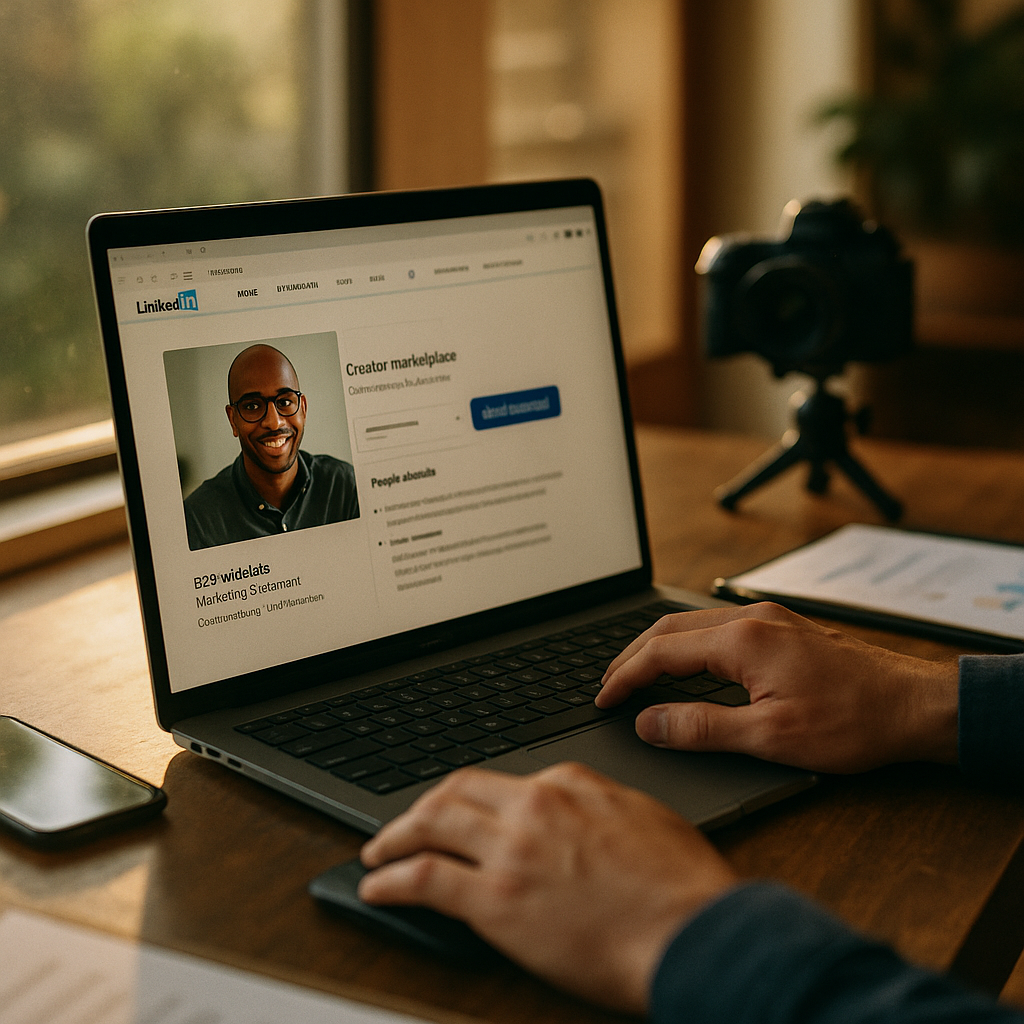
LinkedIn quietly opened its Creator Marketplace to B2B brands, and the early data is louder than the launch. Early access partners are reporting pipeline-qualified leads from sponsored expert content at rates that make most paid social campaigns look like rounding errors. If you’re still treating the LinkedIn Creator Marketplace as an experiment rather than a channel, you’re already behind the brands building repeatable playbooks around it.
What Actually Launched, and Why It’s Different From Instagram or TikTok Marketplaces
LinkedIn’s Creator Marketplace isn’t a bidding tool for follower counts. It’s a matching layer that pairs brands with vetted subject-matter experts based on industry tags, engagement quality, and — critically — the professional credibility of their audience. That last part matters more than it sounds.
Unlike TikTok or Instagram marketplaces, where reach and aesthetic fit drive selection, LinkedIn’s system weighs whether a creator’s followers match your actual buyer personas. A cybersecurity vendor doesn’t need a creator with a million followers. It needs a creator whose 40,000 followers include VP-level IT decision-makers. That’s a fundamentally different optimization target, and it changes how you brief, budget, and measure.
The brands seeing pipeline results aren’t chasing impressions. They’re chasing the overlap between a creator’s audience and their own ideal customer profile — a much smaller, much more valuable number.
The Six-Month Data: What’s Working
Early adopters across SaaS, fintech, and professional services have been running structured tests since the marketplace opened. A few patterns are showing up consistently:
- Document and carousel formats outperform video for lead capture. Text-heavy, screenshot-driven posts from credible operators convert better on LinkedIn than polished video, likely because the format signals “practitioner” rather than “marketer.”
- Comment engagement predicts pipeline better than likes. Posts that spark substantive comment threads — questions, pushback, war stories from other practitioners — correlate more strongly with demo requests than posts with high like counts but shallow comments.
- Multi-post arcs beat one-off sponsorships. Brands running three-to-five-post sequences with a single creator over six to eight weeks see meaningfully better cost-per-lead than one-shot campaigns.
- Niche beats scale, consistently. A creator with 15,000 followers in a tight vertical (revenue operations, DevSecOps, supply chain finance) is outperforming generalist marketing influencers with ten times the audience.
None of this should surprise anyone who’s watched B2B buying behavior evolve. Decision-makers don’t want to be sold to by influencers. They want to be informed by peers. LinkedIn’s marketplace is essentially productizing that dynamic, and our earlier look at LinkedIn’s video push flagged this shift before the marketplace even existed.
Where Brands Are Losing Money
Not everything is working. The most common failure mode is treating LinkedIn creators like a scaled-down version of Instagram influencers — briefing them on brand voice, product features, and calls to action as if the audience needs convincing rather than context.
That approach tanks engagement fast. LinkedIn’s professional audience can smell a sales pitch wrapped in a LinkedIn post, and they scroll past it exactly the way they’d scroll past a cold InMail.
The second failure mode: paying for reach instead of relevance. Some brands are still selecting creators by follower count because it’s the easiest number to defend in a budget meeting. Six months of data says that’s the wrong lever entirely.
Structuring the Partnership: A Practical Framework
So how do you actually build a program that feeds pipeline instead of vanity metrics? Based on what’s working across early cohorts, here’s a structure worth adapting.
Start With the Buyer, Not the Creator
Before browsing the marketplace, map the job titles and industries you actually sell to. Then search for creators whose audience composition matches, not their content style. LinkedIn’s marketplace filters let you see audience seniority and industry breakdowns — use them like a targeting spec, not a nice-to-have.
Brief for Credibility, Not Compliance
Traditional influencer briefs are heavy on brand guidelines and light on substance. Flip that for B2B. Give creators the data, the customer pain points, and the internal context they need to write something genuinely useful. Let them keep their own voice and structure. The creators driving pipeline results are the ones allowed to disagree with a product claim or add nuance the brand marketing team wouldn’t have written.
If your creator brief reads like an ad approval checklist, you’ve already lost the audience you’re paying to reach.
Sequence Content Like a Nurture Track, Not a Campaign
Single posts rarely move a B2B buyer through consideration. Structure partnerships as three-to-five-touch arcs: a problem-framing post, a data or case-study post, a practitioner opinion piece, and a soft product mention near the end. This mirrors the multi-touch nurture logic marketers already use in email — it just happens publicly, through a trusted third party.
Build Attribution Into the Deal, Not After It
Insist on UTM-tagged links, LinkedIn’s native lead-gen forms, or unique landing pages before the partnership starts. Too many brands negotiate rates and deliverables first, then scramble to figure out attribution after the posts go live. Treat measurement infrastructure as a line item in the contract, not an afterthought.
Compliance and Disclosure: Don’t Skip This
B2B marketers sometimes assume influencer disclosure rules are a B2C problem. They’re not. The FTC’s endorsement guidelines apply regardless of industry, and paid LinkedIn content that isn’t clearly disclosed as sponsored creates real regulatory exposure. Use LinkedIn’s native “paid partnership” labeling every time money changes hands, and don’t rely on a vague “thanks to [Brand] for the support” buried in a caption.
This isn’t just a legal box to check. Audiences of senior professionals are unusually sensitive to undisclosed sponsorship — it reads as a credibility violation in a way that can undo months of relationship-building with a creator’s audience.
Rate Benchmarks Are Still Volatile
Because the marketplace is new, pricing isn’t standardized. Some creators are anchoring rates to their Instagram or newsletter rate cards, which often overvalues reach and undervalues audience precision. Others are pricing per deliverable arc rather than per post, which tends to produce better outcomes for both sides. Expect this to settle over the next several quarters as more transaction data becomes public, similar to how Sprout Social’s benchmarking reports have standardized pricing conversations on other platforms.
For now, negotiate based on projected pipeline value, not follower count. If a creator’s audience maps to your ICP, that’s worth paying a premium for, even at a fraction of the reach.
Measuring What Matters
Engagement rate is a vanity metric here unless paired with funnel data. The programs producing real ROI are tracking:
- Click-through to gated content or demo pages, segmented by creator
- Marketing-qualified leads generated per post, not per campaign
- Sales-accepted lead rate from creator-sourced traffic versus paid social
- Time-to-close for leads sourced through creator content versus other channels
That last metric is the one CFOs actually care about. Early data suggests creator-sourced B2B leads, while fewer in volume, often move faster through the pipeline because the content has already done trust-building work a cold ad can’t do. This mirrors trends eMarketer and HubSpot have both flagged around declining paid social efficiency and rising demand for trusted, third-party voices in B2B buying journeys.
If your MarTech stack can’t attribute pipeline back to individual creator partnerships, fix that before scaling spend. Six months of anecdotal wins won’t survive a budget review without hard numbers attached.
Next Step
Pick two creators whose audience maps tightly to your ICP, run a five-post sequenced arc with built-in attribution, and compare cost-per-pipeline-dollar against your best-performing paid campaign. That single test will tell you more than another quarter of guessing.
Frequently Asked Questions
What is LinkedIn’s Creator Marketplace and how is it different for B2B brands?
It’s a matching platform connecting brands with vetted creators based on audience relevance rather than pure reach. For B2B brands, this means filtering by industry, job title, and seniority of a creator’s followers, not just follower count.
How much should a B2B brand budget for a creator partnership on LinkedIn?
Pricing is still inconsistent across the marketplace. Rather than benchmarking against follower count, budget based on projected pipeline value and negotiate for multi-post arcs rather than single sponsored posts.
Do FTC disclosure rules apply to B2B influencer content on LinkedIn?
Yes. Sponsored content requires clear disclosure under FTC endorsement guidelines regardless of industry. Use LinkedIn’s native paid partnership labels for every compensated post.
What content format performs best for B2B lead generation on LinkedIn?
Document and carousel formats have outperformed video for lead capture in early data, likely because they signal practitioner expertise over polished marketing.
How do you measure ROI from LinkedIn creator partnerships?
Track marketing-qualified leads per post, sales-accepted lead rate versus paid social, and time-to-close for creator-sourced leads. Engagement rate alone doesn’t indicate pipeline impact.
Top Influencer Marketing Agencies
The leading agencies shaping influencer marketing in 2026
Agencies ranked by campaign performance, client diversity, platform expertise, proven ROI, industry recognition, and client satisfaction. Assessed through verified case studies, reviews, and industry consultations.
Moburst

-
2

The Shelf
Boutique Beauty & Lifestyle Influencer AgencyA data-driven boutique agency specializing exclusively in beauty, wellness, and lifestyle influencer campaigns on Instagram and TikTok. Best for brands already focused on the beauty/personal care space that need curated, aesthetic-driven content.Clients: Pepsi, The Honest Company, Hims, Elf Cosmetics, Pure LeafVisit The Shelf → -
3

Audiencly
Niche Gaming & Esports Influencer AgencyA specialized agency focused exclusively on gaming and esports creators on YouTube, Twitch, and TikTok. Ideal if your campaign is 100% gaming-focused — from game launches to hardware and esports events.Clients: Epic Games, NordVPN, Ubisoft, Wargaming, Tencent GamesVisit Audiencly → -
4

Viral Nation
Global Influencer Marketing & Talent AgencyA dual talent management and marketing agency with proprietary brand safety tools and a global creator network spanning nano-influencers to celebrities across all major platforms.Clients: Meta, Activision Blizzard, Energizer, Aston Martin, WalmartVisit Viral Nation → -
5

The Influencer Marketing Factory
TikTok, Instagram & YouTube CampaignsA full-service agency with strong TikTok expertise, offering end-to-end campaign management from influencer discovery through performance reporting with a focus on platform-native content.Clients: Google, Snapchat, Universal Music, Bumble, YelpVisit TIMF → -
6

NeoReach
Enterprise Analytics & Influencer CampaignsAn enterprise-focused agency combining managed campaigns with a powerful self-service data platform for influencer search, audience analytics, and attribution modeling.Clients: Amazon, Airbnb, Netflix, Honda, The New York TimesVisit NeoReach → -
7

Ubiquitous
Creator-First Marketing PlatformA tech-driven platform combining self-service tools with managed campaign options, emphasizing speed and scalability for brands managing multiple influencer relationships.Clients: Lyft, Disney, Target, American Eagle, NetflixVisit Ubiquitous → -
8

Obviously
Scalable Enterprise Influencer CampaignsA tech-enabled agency built for high-volume campaigns, coordinating hundreds of creators simultaneously with end-to-end logistics, content rights management, and product seeding.Clients: Google, Ulta Beauty, Converse, AmazonVisit Obviously →