


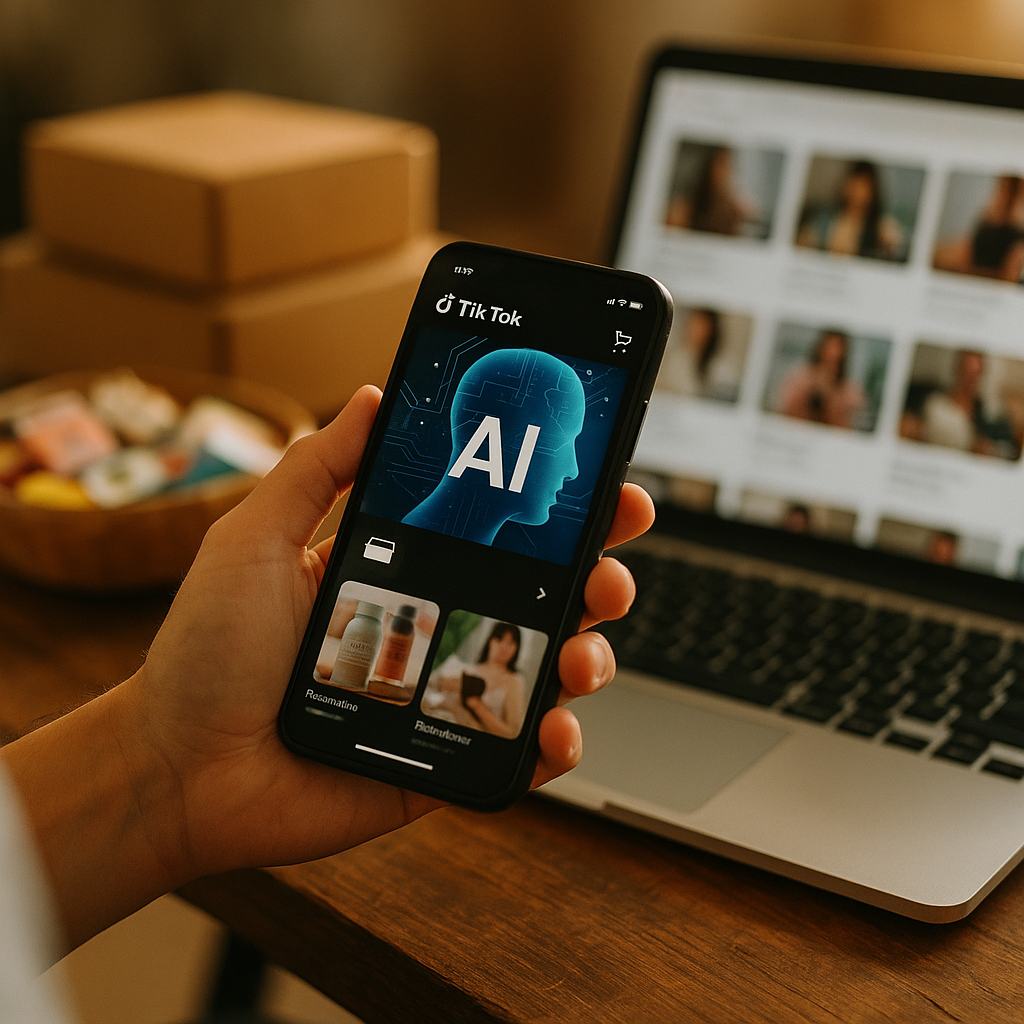
One brand ran 14 livestreams in a single week across six creators and hit a 3.2x return on ad spend. Another ran one livestream with one creator and lost money on production costs alone. The difference wasn’t the product. It was the system behind TikTok Shop livestream operations. If you’re still booking streamers one deal at a time, you’re not running a program, you’re gambling on individual performances.
Scale changes everything about live commerce. What works for a single hero livestream collapses under the weight of daily or weekly cadence. Brands that win at volume treat creators as an interchangeable, data-ranked pool rather than a rolodex of favorites. That shift, from relationship management to pool management, is what separates six-figure TikTok Shop programs from seven-figure ones.
Why One-Off Creator Deals Break at Scale
Here’s the uncomfortable truth: the creator discovery process that works for a single campaign becomes a bottleneck the moment you try to run five livestreams a week. Manually vetting, negotiating, briefing, and reconciling payouts for dozens of streamers is a full-time job for an entire team. Most mid-market brands don’t have that team. They have one or two people trying to do it alongside everything else.
The operational math gets brutal fast. If each livestream needs a creator, a backup creator, a briefing document, inventory confirmation, and a post-stream reconciliation, then scaling from 2 livestreams a month to 20 doesn’t multiply your workload by 10. It multiplies it by something closer to 15 or 20, because coordination overhead grows nonlinearly. This is the exact problem covered in our affiliate dashboard workflow guide, where manual brief management becomes the hidden cost center nobody budgets for.
Scaling livestream frequency without scaling creator sourcing infrastructure is the single most common reason brands abandon TikTok Shop after a promising first quarter.
The AI Creator Pool Model, Explained
An AI creator pool isn’t a futuristic concept. It’s a practical operational layer that most serious TikTok Shop sellers already use, even if they don’t call it that. The idea is simple: instead of relying on gut instinct or personal relationships to pick who goes live next, you build a ranked, continuously scored roster of creators based on actual performance data.
What gets scored? Conversion rate per stream, average order value, viewer retention curves, chat engagement, return/refund rate on products they’ve sold, and reliability (did they show up on time, did they follow the script, did inventory match what they promised). AI tools, often built into platforms like GRIN, Aspire, or TikTok’s own Creator Marketplace integrations, ingest this data automatically and produce a live leaderboard. You’re not guessing who your best livestream talent is. You know, with a number attached.
This matters because livestream performance is wildly uneven. Industry benchmarking from eMarketer has consistently shown that a small fraction of creators drive the majority of live commerce GMV on any platform. If you’re not identifying and prioritizing that fraction, you’re wasting budget on mediocre streams that drain inventory without moving it efficiently.
Tiering the Pool
Most mature programs split their creator pool into three tiers:
- Tier 1, anchor talent. High-conversion, high-reliability creators who get the premium slots, new product launches, and highest commission rates. Usually 10 to 15 percent of the total pool.
- Tier 2, volume operators. Solid, consistent performers who fill the bulk of your weekly livestream calendar. They won’t post a record-breaking stream, but they won’t embarrass you either.
- Tier 3, test and rotate. New or unproven creators you’re trialing with smaller product sets and lower stakes. This is your farm system, and the AI scoring is what lets you promote or cut them quickly instead of waiting a quarter to find out they’re underperforming.
The tiering itself isn’t new. Agencies have ranked talent informally for years. What’s new is doing it at the speed and volume that daily livestream cadence demands, with data refreshing after every single stream instead of every quarter.
Building the Operational Backbone
Running livestreams at scale requires four systems working in sync: creator scoring, inventory sync, scheduling, and payout reconciliation. Miss any one of these and the whole operation stalls.
Inventory sync is the most underrated risk. A creator promoting a product that goes out of stock mid-stream is a credibility disaster, and it happens more often than brands admit. Our inventory sync guide breaks down how to connect your product feed directly to creator briefing tools so nobody promotes a stockout live on camera.
Scheduling needs to account for creator fatigue and audience overlap. Running three streams in the same week with creators who share 60 percent of their audience is just cannibalization dressed up as volume. AI pool tools increasingly flag audience overlap automatically, something that was nearly impossible to track manually a few years ago.
Payout reconciliation is where trust gets built or destroyed. Livestream GMV attribution across multiple creators, multiple products, and overlapping promo windows is genuinely messy. If a creator feels shorted on commission even once, they’re done with your brand, and word travels fast in creator circles. For the attribution mechanics specifically, see our GMV attribution guide, which covers how to prove revenue back to the specific stream and creator.
Creator scoring ties it all together, feeding the other three systems with the data they need to make decisions without a human manually pulling spreadsheets every Monday morning.
What the Briefing Process Looks Like When You Scale
Briefing one creator for one livestream is a conversation. Briefing 30 creators for a week of overlapping streams requires standardization, or everything falls apart.
The brands doing this well build modular brief templates: a core script with mandatory disclosure language, product talking points, pricing and promo codes, and a flexible section creators personalize for their own voice. This isn’t about stripping creators of authenticity. It’s about making sure the FTC-mandated disclosures and the accurate pricing information don’t get lost when a creator is riffing live for 90 minutes. The FTC’s endorsement guidelines apply fully to livestream commerce, and sloppy disclosure practices at scale multiply your compliance exposure, not just your revenue.
Compare this to the dashboard-versus-brief tension explored in our brand briefs workflow piece, where the core tension is autonomy versus control. At scale, you need both: enough standardization to protect compliance and brand voice, enough flexibility that creators don’t sound like they’re reading a legal document on air.
Measuring What Actually Matters
Vanity metrics kill livestream programs faster than bad creators do. Peak concurrent viewers feels good in a recap deck. It doesn’t pay rent. The metrics that actually predict program health are conversion rate per unique viewer, average order value trending over time, and repeat purchase rate from livestream-acquired customers.
Repeat purchase rate deserves special attention because it’s the metric most brands ignore entirely. A livestream that converts well but acquires one-time bargain hunters is building a leaky bucket. Compare that against a stream with a lower immediate conversion rate but higher customer lifetime value, and the second one is the better business decision even though it looks worse on the day-one dashboard.
Tools like Sprout Social and TikTok’s native analytics now surface post-stream engagement decay, letting brands see how quickly interest drops after a stream ends. That data should feed directly back into your creator scoring model. A creator who generates a short-term spike but no lasting brand affinity should rank lower than one who builds a durable audience relationship, even if their live numbers look less flashy.
How does this compare to other live commerce channels? If you’re weighing TikTok Shop against alternatives, our live commerce risk guide and the Amazon influencer payout comparison both offer useful benchmarks for where your budget goes further.
Common Mistakes Brands Make When Scaling
A few patterns show up again and again when programs stumble:
- Overloading Tier 1 creators. Burning out your best talent with daily streams leads to declining performance and eventual churn. Rotate even your top performers.
- Ignoring the test tier. Brands that stop recruiting new creators because their current roster “works fine” end up with an aging, fatigued pool within two quarters.
- Treating AI scoring as fully automated. The data informs decisions, it doesn’t replace human judgment on brand fit, tone, or audience alignment. A creator can score well numerically and still be wrong for a sensitive product launch.
- Underfunding production basics. Lighting, audio, and connection stability sound trivial until a stream buffers during the highest-traffic promo window.
None of these are exotic failures. They’re predictable, and that’s exactly why an AI-informed pool model helps: predictable problems are the ones systems can actually solve.
FAQs
Frequently Asked Questions
What is an AI creator pool for TikTok Shop livestreams?
It’s a continuously scored roster of creators ranked by livestream performance data such as conversion rate, reliability, and audience engagement, allowing brands to assign the right talent to the right livestream slot without manual guesswork.
How many creators do I need to run livestreams at scale?
Most mid-market brands need a pool of 20 to 40 creators split across three tiers to sustain a weekly or daily livestream cadence without over-relying on a handful of top performers.
What tools support AI creator scoring for TikTok Shop?
Platforms like GRIN, Aspire, and TikTok’s own Creator Marketplace integrations offer performance scoring features, though many brands supplement these with custom dashboards pulling directly from TikTok Shop’s affiliate data.
How do I prevent stockouts during live streams?
Connect your inventory feed directly to your creator briefing tools so product availability updates in real time, and build buffer stock rules for any product featured in a scheduled livestream.
What’s the biggest compliance risk in scaled livestream commerce?
Inconsistent or missing FTC-required disclosures across a large creator pool, since standardized briefs reduce the risk but live, unscripted moments still require creator training on disclosure language.
How often should I re-score creators in the pool?
After every livestream, ideally, since performance data refreshes fastest that way and lets you catch declining performers or rising stars before committing to long-term contracts.
Scaling TikTok Shop livestreams isn’t about finding more creators, it’s about building the scoring and operational infrastructure that tells you which creators deserve more airtime. Start by auditing your last ten livestreams against conversion rate and repeat purchase rate, not viewer count, and let that data build your first real tier list.
Top Influencer Marketing Agencies
The leading agencies shaping influencer marketing in 2026
Agencies ranked by campaign performance, client diversity, platform expertise, proven ROI, industry recognition, and client satisfaction. Assessed through verified case studies, reviews, and industry consultations.
Moburst

-
2

The Shelf
Boutique Beauty & Lifestyle Influencer AgencyA data-driven boutique agency specializing exclusively in beauty, wellness, and lifestyle influencer campaigns on Instagram and TikTok. Best for brands already focused on the beauty/personal care space that need curated, aesthetic-driven content.Clients: Pepsi, The Honest Company, Hims, Elf Cosmetics, Pure LeafVisit The Shelf → -
3

Audiencly
Niche Gaming & Esports Influencer AgencyA specialized agency focused exclusively on gaming and esports creators on YouTube, Twitch, and TikTok. Ideal if your campaign is 100% gaming-focused — from game launches to hardware and esports events.Clients: Epic Games, NordVPN, Ubisoft, Wargaming, Tencent GamesVisit Audiencly → -
4

Viral Nation
Global Influencer Marketing & Talent AgencyA dual talent management and marketing agency with proprietary brand safety tools and a global creator network spanning nano-influencers to celebrities across all major platforms.Clients: Meta, Activision Blizzard, Energizer, Aston Martin, WalmartVisit Viral Nation → -
5

The Influencer Marketing Factory
TikTok, Instagram & YouTube CampaignsA full-service agency with strong TikTok expertise, offering end-to-end campaign management from influencer discovery through performance reporting with a focus on platform-native content.Clients: Google, Snapchat, Universal Music, Bumble, YelpVisit TIMF → -
6

NeoReach
Enterprise Analytics & Influencer CampaignsAn enterprise-focused agency combining managed campaigns with a powerful self-service data platform for influencer search, audience analytics, and attribution modeling.Clients: Amazon, Airbnb, Netflix, Honda, The New York TimesVisit NeoReach → -
7

Ubiquitous
Creator-First Marketing PlatformA tech-driven platform combining self-service tools with managed campaign options, emphasizing speed and scalability for brands managing multiple influencer relationships.Clients: Lyft, Disney, Target, American Eagle, NetflixVisit Ubiquitous → -
8

Obviously
Scalable Enterprise Influencer CampaignsA tech-enabled agency built for high-volume campaigns, coordinating hundreds of creators simultaneously with end-to-end logistics, content rights management, and product seeding.Clients: Google, Ulta Beauty, Converse, AmazonVisit Obviously →