


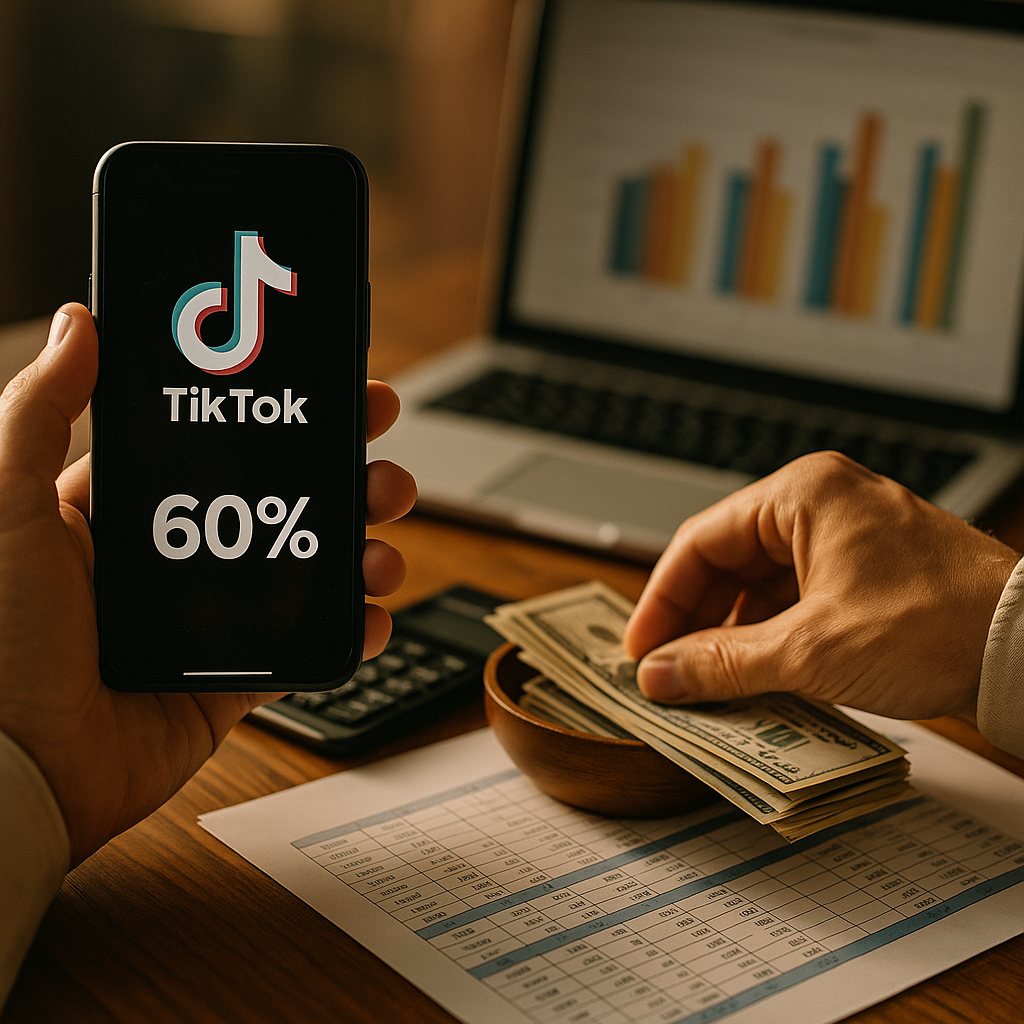
Sixty percent. That’s the share of short form video engagement now flowing through a single platform, according to recent social analytics data pooled across major networks. If you’re still splitting creative budgets evenly across TikTok, Reels, and Shorts like it’s 2022, you’re optimizing for a market that no longer exists. Short form video dominance by platform isn’t a trend anymore. It’s a concentration problem, and it changes how brands should plan, budget, and hedge risk.
The Number Behind the Headline
Let’s sit with that 60 percent figure for a second, because it’s doing a lot of work. It doesn’t mean TikTok has 60 percent of all social users, or even 60 percent of video views. It means that when you aggregate likes, comments, shares, and saves across short form formats on the three dominant platforms, TikTok is absorbing the majority of audience attention and response. Reels and Shorts still post respectable view counts, but engagement, the stuff that actually signals purchase intent and community response, skews hard toward one app.
That’s not a minor statistical quirk. Engagement rate is the metric most brands still use to justify creator spend, even as more sophisticated teams shift toward GMV as the primary KPI. But for awareness and top of funnel campaigns, engagement concentration tells you exactly where the audience is actually paying attention, not just where content gets uploaded.
When engagement concentrates this heavily on one platform, “diversified presence” starts to look like “diluted budget.” Brands need to decide whether they’re chasing reach or chasing response.
Why Reels and Shorts Keep Losing the Engagement Fight
Meta and Google have thrown enormous resources at short form video. Reels gets prime real estate on Instagram. Shorts gets a dedicated tab on YouTube with billions of daily views. So why does engagement still lag?
Part of it is cultural. TikTok’s algorithm was built from day one as a discovery engine, not a social graph extension. It doesn’t care who you follow. It cares what you watch, rewatch, and comment on. Reels and Shorts, by contrast, still carry the DNA of their parent platforms: feeds weighted toward existing connections, comment sections less primed for public discourse, and creator incentives that historically lagged TikTok’s Creator Fund and Shop ecosystem.
There’s also a content-native gap. TikTok trends, sounds, and formats are built for remixing and reaction. A trending TikTok sound shows up in thousands of duets and stitches within 48 hours. Try tracking that same velocity on Shorts. It’s slower, and the comment culture is thinner. For brands running livestream and commerce-driven content, that difference in engagement loop speed directly affects conversion windows.
The Budget Allocation Problem
Here’s where it gets uncomfortable for media planners. Most influencer programs still allocate spend using a legacy “presence everywhere” model: a third on TikTok, a third on Reels, a third on Shorts, maybe with a YouTube long-form kicker. That model made sense when platform performance was roughly comparable. It makes far less sense now.
- Reach-weighted budgets still make sense for brand awareness campaigns where impressions matter more than response.
- Engagement-weighted budgets should tilt hard toward TikTok for campaigns measuring sentiment, comment volume, or community building.
- Conversion-weighted budgets need platform-specific attribution, not blended cross-platform averages that mask where the actual sales lift happened.
Brands running supplement, beauty, and DTC categories have already adjusted. The TikTok Shop pivot among supplement brands wasn’t a trend chase. It was a rational response to where lower funnel engagement and purchase behavior were actually concentrating.
Is Platform Concentration a Risk, Not Just an Opportunity?
Any marketer who lived through the 2024 TikTok ban uncertainty in the United States knows exactly why “put everything in one platform” is a dangerous sentence to say out loud in a budget meeting. Regulatory risk hasn’t disappeared. It’s just quieter right now.
That’s the tension every brand strategist is sitting with. The engagement data says concentrate. The risk management instinct says diversify. Both are correct, which is exactly why this requires more nuance than a simple budget split.
A smarter approach: treat TikTok as your primary engagement and testing engine, where you learn what resonates fastest, and use Reels and Shorts as distribution and durability plays, places where that validated content gets repurposed for audiences less exposed to trend velocity. This isn’t new thinking. It’s the same logic behind creator powered distribution as owned reach, treating platform presence as a portfolio rather than a single bet.
Concentration risk and engagement opportunity aren’t opposites. They’re the same data point viewed from different departments: marketing sees upside, legal and finance see exposure.
What This Means for Measurement and Attribution
If engagement is concentrating on one platform, your measurement stack needs to reflect that weighting, not just your spend. A lot of brands are still running the same blended engagement dashboard across all three platforms, which quietly overweights the platforms where engagement is naturally lower and makes TikTok performance look proportionally smaller than it is.
This matters because measurement confusion is already a documented problem. Recent data shows 61 percent of CMOs can’t confidently measure ROI even as creator spend keeps climbing. Adding platform-blended metrics on top of an already shaky measurement foundation compounds the problem. Separate your dashboards by platform before you try to compare them. Averaging first and segmenting later is backwards.
Teams serious about attribution are also leaning on third-party platform benchmarking data to sanity-check in-platform analytics, since TikTok, Meta, and Google all have incentive to present their own numbers favorably.
Where Does This Leave Agency and In-House Teams?
Operationally, platform concentration changes how creative teams should be staffed and briefed. If TikTok is absorbing the majority of engagement, your fastest, most TikTok-fluent creative talent should be getting first priority on brief assignments, not your most “polished” talent. TikTok rewards speed and cultural fluency over production value. That’s a staffing and workflow decision, not just a creative one, and it connects directly to the broader shift toward creator operations roles built around systems rather than ad hoc content requests.
There’s also an AI production angle worth noting. As more brands lean on AI-assisted content pipelines to keep pace with TikTok’s publishing cadence, the AI adoption gap in creator workflows becomes a competitive disadvantage for brands still producing content manually at Reels or Shorts speed while competitors iterate at TikTok speed.
Practical Moves for the Next Budget Cycle
None of this means abandoning Reels or Shorts. It means being honest about what each platform is actually doing for your program.
- Audit your engagement data by platform, not blended. Find out what percentage of your total creator engagement is actually coming from TikTok versus the rest.
- Reallocate testing budget toward TikTok first. Validate messaging and creative hooks there, then push winning formats to Reels and Shorts for extended reach.
- Build a platform contingency plan. If regulatory or algorithmic shifts hit TikTok again, know which creators and content types can pivot fastest to other platforms without losing momentum.
- Separate awareness and conversion KPIs by platform instead of using one blended scorecard that obscures where the real response is happening.
- Brief creators on platform-native behavior, not a single cross-posted asset. A clip optimized for TikTok’s comment culture often underperforms when dropped unchanged into Shorts.
For brands weighing whether to double down or diversify, the Sprout Social engagement benchmarking tools and eMarketer’s platform usage data are worth checking quarterly, not annually. Platform dominance shifts faster than most budget cycles account for.
Frequently Asked Questions
Does a 60 percent engagement share mean TikTok has 60 percent of social media users?
No. The figure refers to engagement share, meaning likes, comments, shares, and saves within short form video, not overall platform user base or total video views. TikTok’s user base is large but not dominant in raw numbers compared to Instagram or YouTube combined.
Should brands pull spend out of Reels and Shorts entirely?
Not necessarily. Reach and distribution still matter for awareness campaigns, and Reels and Shorts remain valuable for repurposing content validated on TikTok first. The smarter move is reallocating testing budget and creative priority, not eliminating platforms outright.
How does platform concentration affect influencer marketing risk?
Heavy reliance on one platform increases exposure to regulatory, algorithmic, and policy changes outside a brand’s control. Programs should diversify creator relationships and content formats even while concentrating spend where engagement is strongest.
What metrics should brands track to confirm this trend for their own category?
Segment engagement rate, comment volume, and share rate by platform rather than using blended dashboards. Compare conversion attribution separately per platform, since engagement concentration doesn’t always translate evenly into purchase behavior across categories.
Is short form video engagement concentration likely to shift again?
Platform dominance in social media has shifted before and will again. Brands should treat current data as a planning input for the next budget cycle, not a permanent structural fact, and revisit platform allocation quarterly using updated benchmarking data.
The practical next step: pull your last quarter’s engagement data, segment it by platform instead of blending it, and see how close your actual results track to that 60 percent split. If your budget allocation doesn’t match your engagement reality, that’s your next planning meeting agenda.
Top Influencer Marketing Agencies
The leading agencies shaping influencer marketing in 2026
Agencies ranked by campaign performance, client diversity, platform expertise, proven ROI, industry recognition, and client satisfaction. Assessed through verified case studies, reviews, and industry consultations.
Moburst

-
2

The Shelf
Boutique Beauty & Lifestyle Influencer AgencyA data-driven boutique agency specializing exclusively in beauty, wellness, and lifestyle influencer campaigns on Instagram and TikTok. Best for brands already focused on the beauty/personal care space that need curated, aesthetic-driven content.Clients: Pepsi, The Honest Company, Hims, Elf Cosmetics, Pure LeafVisit The Shelf → -
3

Audiencly
Niche Gaming & Esports Influencer AgencyA specialized agency focused exclusively on gaming and esports creators on YouTube, Twitch, and TikTok. Ideal if your campaign is 100% gaming-focused — from game launches to hardware and esports events.Clients: Epic Games, NordVPN, Ubisoft, Wargaming, Tencent GamesVisit Audiencly → -
4

Viral Nation
Global Influencer Marketing & Talent AgencyA dual talent management and marketing agency with proprietary brand safety tools and a global creator network spanning nano-influencers to celebrities across all major platforms.Clients: Meta, Activision Blizzard, Energizer, Aston Martin, WalmartVisit Viral Nation → -
5

The Influencer Marketing Factory
TikTok, Instagram & YouTube CampaignsA full-service agency with strong TikTok expertise, offering end-to-end campaign management from influencer discovery through performance reporting with a focus on platform-native content.Clients: Google, Snapchat, Universal Music, Bumble, YelpVisit TIMF → -
6

NeoReach
Enterprise Analytics & Influencer CampaignsAn enterprise-focused agency combining managed campaigns with a powerful self-service data platform for influencer search, audience analytics, and attribution modeling.Clients: Amazon, Airbnb, Netflix, Honda, The New York TimesVisit NeoReach → -
7

Ubiquitous
Creator-First Marketing PlatformA tech-driven platform combining self-service tools with managed campaign options, emphasizing speed and scalability for brands managing multiple influencer relationships.Clients: Lyft, Disney, Target, American Eagle, NetflixVisit Ubiquitous → -
8

Obviously
Scalable Enterprise Influencer CampaignsA tech-enabled agency built for high-volume campaigns, coordinating hundreds of creators simultaneously with end-to-end logistics, content rights management, and product seeding.Clients: Google, Ulta Beauty, Converse, AmazonVisit Obviously →