


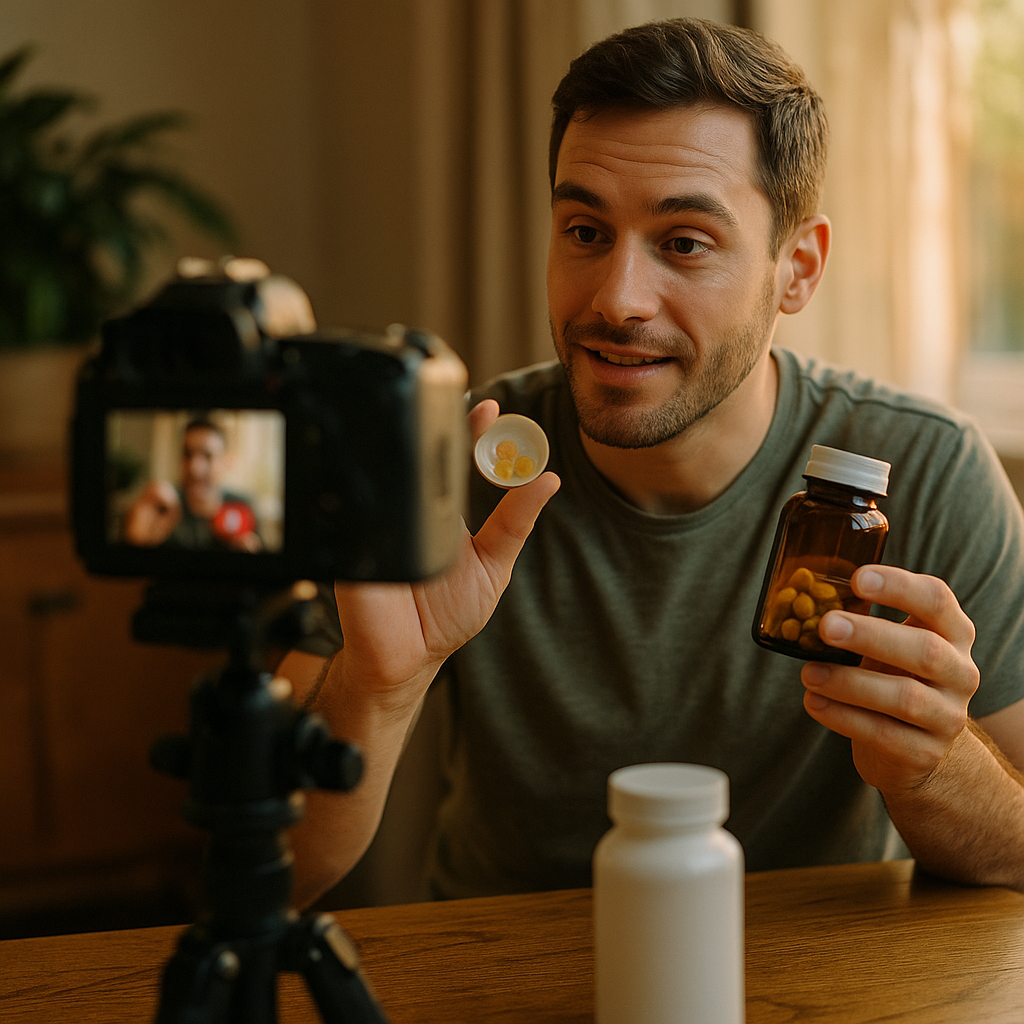
Only 9% of consumers say they trust supplement claims made in short-form video, according to recent wellness-industry sentiment surveys — yet supplement marketers keep pouring budget into 15-second TikToks that can’t legally or physically explain a clinical study. If you’re in a regulated category, the format you choose isn’t a creative preference. It’s a risk decision. And YouTube’s long-form trust advantage is the one lever most supplement brands still aren’t pulling hard enough.
Why Regulated Categories Break in Short-Form
Supplements, nutraceuticals, and wellness products live under a compliance microscope that skincare and apparel simply don’t. The FTC’s endorsement guidelines require substantiation for health claims, and the agency has made it clear it’s watching influencer content closely — not just brand-owned ads. A 6-second hook can’t carry a mechanism-of-action explanation, a dosage caveat, and a disclosure. Something gets cut, and it’s usually the nuance that keeps you out of trouble.
Short-form platforms reward compression. That’s fine for a lipstick swatch. It’s a liability for a magnesium glycinate claim about sleep architecture. When creators are forced to summarize in ten words what actually requires ten sentences, brands end up with content that’s technically posted but practically indefensible if the FTC or a state AG comes asking.
Long-form video isn’t just better for storytelling — it’s the only format that gives supplement brands enough room to substantiate a claim in the same piece of content where the claim is made.
The Trust Mechanics Behind Long-Form YouTube Content
YouTube viewers don’t stumble into a 14-minute ingredient breakdown. They choose it. That single behavioral difference changes everything about how the content gets processed.
Someone searching “ashwagandha cortisol study explained” or “creatine kidney safety myth” has already self-selected into a research mindset. They’re not scrolling for dopamine. They’re comparison-shopping credibility. A format that lets a creator cite a study, show the abstract on screen, address the counterargument, and then link the product in the description mirrors how people actually evaluate health decisions — slowly, with skepticism, looking for the catch.
This is also why watch time and audience retention on YouTube function as a trust proxy. If viewers stick around for eight of twelve minutes on a deep-dive video, that’s a much stronger signal of persuasion than a completion rate on a 20-second Reel that was going to finish regardless. Our earlier breakdown of watch-time equivalence covers how brands should be recalibrating briefs around this exact metric.
What “Deep-Dive” Actually Means (Not Just Longer Video)
A lot of brands hear “long-form” and think “same script, stretched out.” Wrong move. A deep-dive isn’t padding — it’s structural completeness. Here’s what separates a genuine ingredient deep-dive from a bloated ad:
- Mechanism first, benefit second. Explain how the ingredient works biologically before claiming what it does for the viewer.
- Cited, on-screen sourcing. Study names, sample sizes, and publication dates visible, not just mentioned verbally.
- Addressed limitations. Acknowledge conflicting research or dosage thresholds — this is what makes the piece feel like journalism, not marketing.
- Comparative context. How does this ingredient stack against alternatives the viewer might already be considering?
- Clear, spoken disclosure. Not buried in a description — stated in the video itself.
Skip any of these and you’ve made a longer ad, not a deep-dive. Viewers can tell the difference, and so can regulators.
Structuring the Content: A Practical Framework
Brands ask us constantly: how long should this actually be? The honest answer is it depends on ingredient complexity, but there’s a workable range. Single-ingredient explainers (say, a magnesium form comparison) tend to land well between 8 and 12 minutes. Multi-ingredient formula breakdowns — think a full pre-workout stack — often need 15 to 20 minutes to do the science justice without feeling rushed.
A structure that consistently performs for supplement and wellness ingredient content:
- Hook (0:00–0:30): State the question the video answers. “Does creatine actually cause hair loss?” not “Let’s talk about creatine.”
- Credibility establishment (0:30–2:00): Who is speaking, why they’re qualified, and what sources will be referenced.
- Mechanism explanation (2:00–6:00): The biological or chemical “how it works” section, ideally with visual aids or on-screen text.
- Evidence review (6:00–10:00): Study citations, sample sizes, and honest caveats about what the research does and doesn’t show.
- Practical application (10:00–13:00): Dosage, timing, who should avoid it, interaction warnings.
- Disclosure and CTA (final 60–90 seconds): Spoken material connection disclosure, plus a link to the product or affiliate offer.
Note where the disclosure sits. Too many brands frontload a rushed disclaimer and then spend twelve minutes building unbranded trust before the ask. Regulators want disclosure to be clear and conspicuous throughout, not just once at the start when nobody’s paying attention yet.
Should You Use Long-Form for Every Ingredient?
No. Not every ingredient warrants 12 minutes. A well-established, low-controversy ingredient like vitamin C doesn’t need a deep-dive — save that format for ingredients with genuine complexity, mixed research, or consumer skepticism. Save long-form for the ingredients people are actually googling doubts about: melatonin dependency, collagen bioavailability, berberine’s “nature’s Ozempic” claims. That’s where trust-building content earns its runtime. For simpler claims, a shorter YouTube Short or even a TikTok clip pointing to the full video works better — our Shorts vs. long-form budget framework breaks down exactly where to draw that line.
Creator Selection: Credentials Now Matter More Than Reach
This is where supplement marketing diverges hardest from beauty or fashion influencer strategy. A creator with 40,000 subscribers who’s a registered dietitian or has a biochem background will outperform a 2-million-subscriber lifestyle creator on trust metrics, and increasingly on conversion, too.
Vet for these before signing anyone to an ingredient deep-dive brief:
- Relevant credentials (RD, PhD, NASM-certified, MD) or demonstrable subject-matter depth
- History of citing sources in prior content, not just claiming things
- Comfort on camera discussing nuance and limitations, not just benefits
- No history of FTC warning letters or platform strikes for unsubstantiated claims
Brands should treat this vetting the way they’d treat hiring a medical advisory board member, not the way they treat booking a dance-trend creator. The reputational and legal downside of getting it wrong in this category is simply higher.
Compliance Isn’t Optional Polish — It’s the Content Strategy
Every ingredient deep-dive should go through a compliance review before publishing, the same way a paid ad would. That means checking claims against the FTC’s endorsement guidance for substantiation standards, confirming the material connection disclosure is spoken (not just captioned), and cross-referencing any clinical claims against actual published research rather than a supplement brand’s internal white paper.
If you’re operating in the UK or serving UK audiences, the ICO’s guidance on data and marketing practices adds another compliance layer worth building into your creator brief checklist, particularly around how viewer data from lead magnets or quizzes embedded in video descriptions gets handled.
Build a standing compliance checklist into every brief:
- Is every health claim traceable to a specific, named study?
- Is the disclosure spoken within the first two minutes, not just in the description?
- Does the video acknowledge who should NOT take this ingredient?
- Has legal reviewed the script, not just the final cut?
Measuring ROI Beyond Views
Standard influencer marketing metrics undersell long-form ingredient content. Views and CPMs matter less here than:
- Average view duration as a trust and comprehension proxy
- Branded search lift in the days following publish (check Google Trends or Search Console for ingredient + brand queries)
- Assisted conversions via affiliate links embedded in descriptions, tracked through UTM parameters
- Comment sentiment — are viewers asking follow-up dosage questions (good sign) or challenging the science (review the script)
Platforms like Sprout Social and HubSpot both offer attribution reporting that can tie long-form YouTube content to downstream site traffic and conversion, which matters because these videos often influence purchases weeks after the view, not within the same session. According to eMarketer, long-form video consistently shows longer purchase-consideration windows than short-form, which lines up with what supplement marketers see anecdotally: someone watches a 14-minute deep-dive, doesn’t buy that day, then converts three weeks later after a retargeting ad reminds them.
Next Step
Pick your three most-searched, most-skeptically-discussed ingredients this quarter, brief a credentialed creator on the six-part structure above, and run compliance review before a single frame gets published — that’s the whole playbook, and it scales from there.
Frequently Asked Questions
Why is YouTube better than TikTok or Instagram for supplement marketing?
YouTube’s long-form format gives creators enough time to explain mechanisms, cite studies, and disclose limitations within the same video where a health claim is made — something short-form formats structurally can’t support without cutting corners on substantiation.
How long should an ingredient deep-dive video be?
Single-ingredient explainers typically work best between 8 and 12 minutes, while multi-ingredient formula breakdowns often need 15 to 20 minutes to properly cover mechanism, evidence, and application.
Do all ingredients need long-form content?
No. Reserve deep-dive treatment for ingredients with genuine scientific complexity or consumer skepticism (melatonin, berberine, collagen). Well-established, low-controversy ingredients are better served by shorter content formats.
What FTC requirements apply to influencer supplement content?
Creators must clearly and conspicuously disclose material connections to the brand, and any health claims made must be substantiated by competent scientific evidence, per FTC endorsement guidelines.
How should brands vet creators for regulated health content?
Prioritize relevant credentials (dietitians, PhDs, certified trainers), a track record of citing sources, comfort discussing research limitations on camera, and a clean compliance history free of prior FTC action or platform strikes.
Top Influencer Marketing Agencies
The leading agencies shaping influencer marketing in 2026
Agencies ranked by campaign performance, client diversity, platform expertise, proven ROI, industry recognition, and client satisfaction. Assessed through verified case studies, reviews, and industry consultations.
Moburst

-
2

The Shelf
Boutique Beauty & Lifestyle Influencer AgencyA data-driven boutique agency specializing exclusively in beauty, wellness, and lifestyle influencer campaigns on Instagram and TikTok. Best for brands already focused on the beauty/personal care space that need curated, aesthetic-driven content.Clients: Pepsi, The Honest Company, Hims, Elf Cosmetics, Pure LeafVisit The Shelf → -
3

Audiencly
Niche Gaming & Esports Influencer AgencyA specialized agency focused exclusively on gaming and esports creators on YouTube, Twitch, and TikTok. Ideal if your campaign is 100% gaming-focused — from game launches to hardware and esports events.Clients: Epic Games, NordVPN, Ubisoft, Wargaming, Tencent GamesVisit Audiencly → -
4

Viral Nation
Global Influencer Marketing & Talent AgencyA dual talent management and marketing agency with proprietary brand safety tools and a global creator network spanning nano-influencers to celebrities across all major platforms.Clients: Meta, Activision Blizzard, Energizer, Aston Martin, WalmartVisit Viral Nation → -
5

The Influencer Marketing Factory
TikTok, Instagram & YouTube CampaignsA full-service agency with strong TikTok expertise, offering end-to-end campaign management from influencer discovery through performance reporting with a focus on platform-native content.Clients: Google, Snapchat, Universal Music, Bumble, YelpVisit TIMF → -
6

NeoReach
Enterprise Analytics & Influencer CampaignsAn enterprise-focused agency combining managed campaigns with a powerful self-service data platform for influencer search, audience analytics, and attribution modeling.Clients: Amazon, Airbnb, Netflix, Honda, The New York TimesVisit NeoReach → -
7

Ubiquitous
Creator-First Marketing PlatformA tech-driven platform combining self-service tools with managed campaign options, emphasizing speed and scalability for brands managing multiple influencer relationships.Clients: Lyft, Disney, Target, American Eagle, NetflixVisit Ubiquitous → -
8

Obviously
Scalable Enterprise Influencer CampaignsA tech-enabled agency built for high-volume campaigns, coordinating hundreds of creators simultaneously with end-to-end logistics, content rights management, and product seeding.Clients: Google, Ulta Beauty, Converse, AmazonVisit Obviously →