


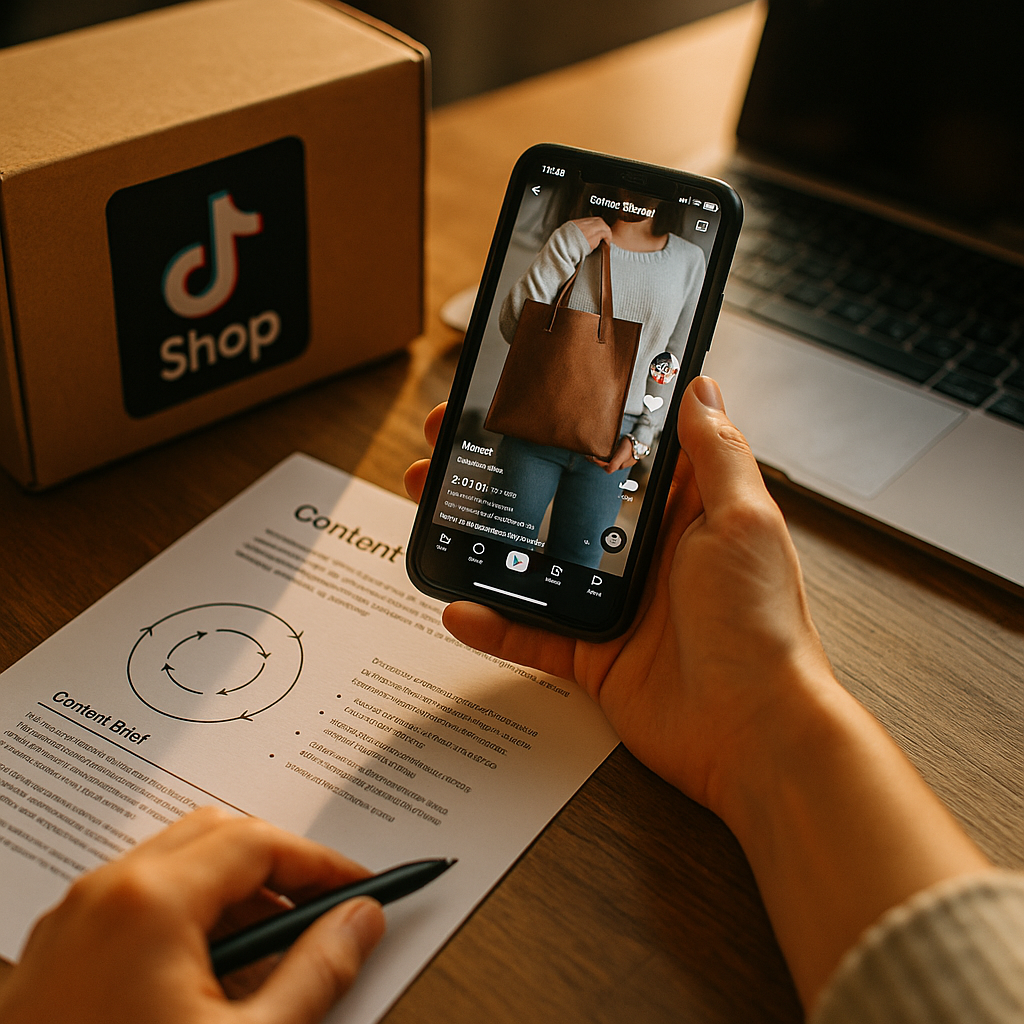
73% of TikTok Shop sellers optimize a single video for a single goal, then wonder why their repeat purchase rate looks like a rounding error. The full-lifecycle user value format fixes that by treating content sequencing as a system, not a series of one-off posts. If your creative brief stops at “make it convert,” you’re leaving retention revenue on the table.
Most TikTok Shop programs are built around a single content archetype: the conversion-hungry unboxing or the flash-sale livestream clip. That works, briefly. Then the algorithm cools, the novelty fades, and your CAC creeps upward because every video is chasing the same cold audience over and over. Nobody’s briefing for what happens after the first sale.
Why Single-Stage Briefs Leave Money on the Table
TikTok Shop’s own merchant data has repeatedly shown that repeat buyers spend more per order and convert faster than first-time shoppers. Yet most seller creative operations are staffed and briefed as if every viewer is meeting the brand for the first time. That’s a structural blind spot, not a small one.
Here’s the uncomfortable math: if your average customer needs three touchpoints to convert and two more to become a repeat buyer, but your content library only ever produces “discovery” style videos, you’re asking one format to do the job of five. It can’t. Different funnel stages need different creative jobs — different hooks, different proof points, different calls to action.
Treating every TikTok Shop video as a top-of-funnel discovery asset is like running a store where every employee only knows how to greet customers at the door — nobody’s trained to close the sale or handle the return visit.
What the Full-Lifecycle Format Actually Looks Like
The full-lifecycle user value format organizes content production around five discrete buyer stages, each with its own creative brief, KPI, and posting cadence. It’s not a new content type — it’s a sequencing discipline layered on top of formats you likely already use.
- Discovery: Cold-audience hooks built for scroll-stopping, algorithm-friendly watch time. Think fast cuts, pattern interrupts, and a problem statement inside the first two seconds.
- Consideration: Proof-driven content — comparisons, ingredient breakdowns, or price-per-use math that answers the “is this worth it” objection.
- Conversion: Livestream demos, urgency overlays, and shop-tab-optimized CTAs designed to close the sale in-session.
- Onboarding/Activation: Post-purchase content that teaches proper use, sets expectations, and prevents returns or refund requests.
- Retention/Repeat Purchase: Loyalty-triggering content — restock alerts, “why I repurchase” testimonials, and bundle upsells aimed at existing customers.
Each stage gets its own brief. Not a variation of the same brief with a different CTA slapped on — a genuinely distinct creative mandate, because the psychological job of the content changes completely once someone has already bought.
Stage One: Discovery Has to Earn the Scroll-Stop
Discovery content lives or dies in the first three seconds. This is well-trodden ground for performance marketers, and the principles from winning the first three seconds apply directly here. The brief should specify: no logo in frame for the first two seconds, no brand name spoken before the hook lands, and a visual or verbal pattern interrupt tied to a real customer pain point.
Discovery briefs should also lean into TikTok’s native watch-time signals rather than fighting them. A watch-time-first approach tends to outperform hard-sell openers because the algorithm rewards completion rate before it rewards clicks. Your discovery-stage creators should never be briefed to mention price or push the shop tab hard — that’s a job for later-stage content.
Consideration Content Needs to Answer Objections Before They’re Asked
This is the stage most sellers skip entirely, jumping straight from cold hook to hard sell. Big mistake. Consideration-stage content should function like a pre-emptive FAQ, addressing the three or four objections your customer service inbox sees most often.
Ingredient callouts, side-by-side comparisons, and price-per-use breakdowns all belong here. The price-per-use breakdown format is particularly effective for TikTok Shop sellers in beauty, supplements, and home goods, where sticker shock is the single biggest drop-off point between video view and cart add.
Briefs for this stage should require creators to name the objection out loud. “This looks expensive, but here’s what it actually costs per use” performs better than vague value claims because it mirrors how the viewer is already thinking.
Conversion Is Where Livestream and Urgency Do the Heavy Lifting
By the time a viewer reaches conversion-stage content, they’ve likely seen your brand at least once, maybe twice. This is not the moment for a soft, brand-story video. It’s the moment for demonstrable proof and urgency.
Livestream selling remains one of TikTok Shop’s strongest conversion mechanisms, and briefs here should borrow heavily from proven livestream selling brief structures — on-screen text overlays, real-time Q&A prompts, and countdown-driven scarcity messaging.
Pair livestream with short-form conversion clips that use countdown mechanics for restocks or limited drops. The countdown-driven hype approach was built for Instagram but the underlying urgency psychology transfers cleanly to TikTok Shop’s live and short-form inventory.
A conversion-stage video without a specific, time-bound reason to buy today is just a discovery video wearing a “shop now” button.
Nobody Briefs for Onboarding. That’s the Gap.
Here’s where the full-lifecycle format earns its keep. Onboarding content — the stuff that lands in a buyer’s feed after they’ve already purchased — is almost never briefed as a distinct category. Sellers treat post-purchase communication as an email or SMS problem, not a content problem.
But think about how many TikTok Shop returns and negative reviews stem from misuse, wrong expectations, or simply not knowing how to get the product’s full value. A short “how to use this the right way” video, seeded via retargeting or organic follow-up, can meaningfully cut refund rates.
The unboxing brief format can be adapted for this purpose — same reveal energy, but redirected toward setup and first use instead of the purchase decision. Brief creators to answer: what’s the most common mistake new customers make with this product, and how do we prevent it on camera?
Retention Content: The Stage Everyone Underfunds
Retention-stage videos target people who’ve already bought. That means the brief can assume product knowledge and skip the pitch entirely. Instead, focus on habit formation and social proof from repeat behavior.
“Why I’ve reordered this four times” testimonials, bundle-and-save upsell reveals, and customer cameo content all work well here. The customer cameo format is particularly well-suited to retention because it uses real buyers, not paid creators, which reads as more credible to an audience that’s already skeptical of ad-driven content.
Consider building a lightweight multi-episode series around repeat purchase moments — a “restock day” recurring format, for instance, that trains your existing customers to expect and look forward to new content tied to reordering.
Sequencing in Practice: What the Brief Document Should Contain
A full-lifecycle brief isn’t one document. It’s a family of five briefs, tagged by funnel stage, that share a common visual identity but diverge sharply in messaging job. Each stage-specific brief should specify:
- The single KPI that stage is optimized for (watch time, click-through, conversion rate, return rate, repeat purchase rate)
- The assumed prior knowledge of the viewer (cold, warm, or existing customer)
- The required CTA language and placement
- Which creator type is best suited (UGC creator, affiliate, live host, or actual customer)
- Posting cadence relative to product lifecycle (pre-launch, launch week, ongoing, restock)
Tag your content calendar by these five stages and audit it quarterly. If 80% of your output clusters in discovery and conversion, you’ve confirmed the exact gap this format is designed to close. Most TikTok Shop sellers, when they actually run this audit, find that onboarding and retention combined make up less than 10% of their content spend, despite repeat customers driving a disproportionate share of lifetime revenue according to eMarketer’s retail commerce research.
This isn’t a call to abandon discovery content. Cold reach still fuels the top of the funnel and TikTok’s algorithm still rewards fresh, native-feeling video. It’s a call to stop treating discovery as the whole strategy. Platforms like TikTok’s ad platform and Shop analytics dashboards already give sellers the stage-level data needed to see where the drop-off happens. Most just aren’t looking.
Compliance Doesn’t Disappear Once the Sale Closes
One operational note that gets missed: FTC disclosure obligations don’t stop at the point of purchase. If you’re compensating creators for onboarding or retention content — including customers who receive free product or credit for cameo appearances — those relationships still require clear disclosure under FTC endorsement guidelines. Build disclosure requirements into every stage of the brief family, not just the top-of-funnel ones.
Measuring the Format’s Actual Impact
Track cohort-level data, not just aggregate video performance. Pull viewers who engaged with discovery content, then measure how many converted after seeing a consideration-stage or conversion-stage asset. TikTok Shop’s Seller Center and third-party tools like Sprout Social can help stitch together engagement data across content types if you tag videos by funnel stage from the start.
Give the format at least one full product cycle — six to eight weeks — before judging results. Retention content in particular takes longer to show impact because it depends on accumulating a base of existing customers large enough to move the needle.
Next step: Audit your last 30 days of TikTok Shop content, tag each video by funnel stage, and see where the gaps actually sit. If onboarding and retention are empty categories, that’s your next brief — not another discovery video.
Frequently Asked Questions
What is the full-lifecycle user value format for TikTok Shop?
It’s a content sequencing framework that assigns distinct creative briefs to five buyer stages — discovery, consideration, conversion, onboarding, and retention — instead of producing one style of video for every audience.
How many creators do I need to run this format?
You don’t need five separate creators. Many sellers use two or three creators who rotate through stages, plus real customers for cameo-style retention content. The key is matching the brief to the stage, not staffing volume.
Which stage should I prioritize if I have limited budget?
Audit your existing content mix first. Most sellers already over-invest in discovery and conversion. If that’s true for you, redirect budget toward onboarding and retention content, since those stages are usually empty and often deliver stronger ROI per dollar spent.
Does this format work for livestream selling too?
Yes. Livestream sits primarily in the conversion stage but can incorporate consideration-style objection handling and retention-style repeat-buyer shoutouts within the same session.
How do I measure whether the format is working?
Tag content by funnel stage and track cohort behavior: how many discovery viewers move to consideration content, how many conversion-stage viewers return for onboarding or retention content. Give it a full product cycle, typically six to eight weeks, before evaluating results.
FAQPage Schema
Top Influencer Marketing Agencies
The leading agencies shaping influencer marketing in 2026
Agencies ranked by campaign performance, client diversity, platform expertise, proven ROI, industry recognition, and client satisfaction. Assessed through verified case studies, reviews, and industry consultations.
Moburst

-
2

The Shelf
Boutique Beauty & Lifestyle Influencer AgencyA data-driven boutique agency specializing exclusively in beauty, wellness, and lifestyle influencer campaigns on Instagram and TikTok. Best for brands already focused on the beauty/personal care space that need curated, aesthetic-driven content.Clients: Pepsi, The Honest Company, Hims, Elf Cosmetics, Pure LeafVisit The Shelf → -
3

Audiencly
Niche Gaming & Esports Influencer AgencyA specialized agency focused exclusively on gaming and esports creators on YouTube, Twitch, and TikTok. Ideal if your campaign is 100% gaming-focused — from game launches to hardware and esports events.Clients: Epic Games, NordVPN, Ubisoft, Wargaming, Tencent GamesVisit Audiencly → -
4

Viral Nation
Global Influencer Marketing & Talent AgencyA dual talent management and marketing agency with proprietary brand safety tools and a global creator network spanning nano-influencers to celebrities across all major platforms.Clients: Meta, Activision Blizzard, Energizer, Aston Martin, WalmartVisit Viral Nation → -
5

The Influencer Marketing Factory
TikTok, Instagram & YouTube CampaignsA full-service agency with strong TikTok expertise, offering end-to-end campaign management from influencer discovery through performance reporting with a focus on platform-native content.Clients: Google, Snapchat, Universal Music, Bumble, YelpVisit TIMF → -
6

NeoReach
Enterprise Analytics & Influencer CampaignsAn enterprise-focused agency combining managed campaigns with a powerful self-service data platform for influencer search, audience analytics, and attribution modeling.Clients: Amazon, Airbnb, Netflix, Honda, The New York TimesVisit NeoReach → -
7

Ubiquitous
Creator-First Marketing PlatformA tech-driven platform combining self-service tools with managed campaign options, emphasizing speed and scalability for brands managing multiple influencer relationships.Clients: Lyft, Disney, Target, American Eagle, NetflixVisit Ubiquitous → -
8

Obviously
Scalable Enterprise Influencer CampaignsA tech-enabled agency built for high-volume campaigns, coordinating hundreds of creators simultaneously with end-to-end logistics, content rights management, and product seeding.Clients: Google, Ulta Beauty, Converse, AmazonVisit Obviously →