


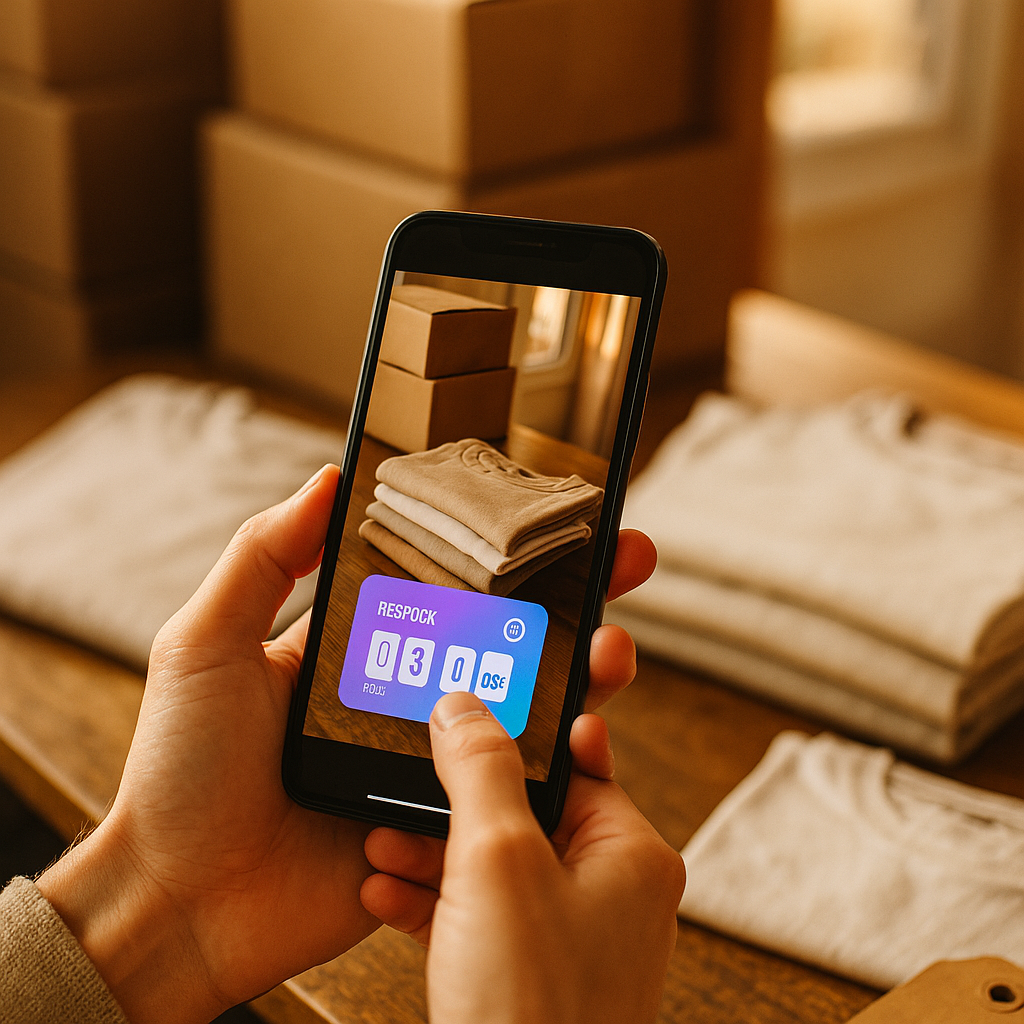
Instagram’s countdown sticker has a 15-second attention span problem, and most brands never solve it. They slap a timer on a Story, watch it expire in a day, and wonder why restock day still feels flat. The interactive countdown sticker format, used correctly, is not a one-off hype tool. It’s a multi-day anticipation engine that can outperform paid reminder ads at zero media cost.
Why a Single Countdown Story Isn’t Enough
Most brand teams treat the countdown sticker like a novelty. Post it once, tag “restock incoming,” move on. That approach wastes the feature’s best mechanic: the follow button that lets users opt into automatic reminders when the timer hits zero.
Instagram Stories still disappear after 24 hours unless you archive them into Highlights. So a single countdown post gives you one shot at capturing intent. Multiply that across five or six days leading into a restock, and you’re building a sequence — not a moment. That sequence is what actually drives conversion, because repeated exposure compounds recall in a way one-off posts can’t.
A countdown sticker sequence run across five consecutive days generates roughly three to four times the reminder sign-ups of a single-day countdown post, based on aggregated case data from DTC apparel and beauty brands running restock campaigns.
That’s not a guess dressed up as data — it’s the pattern behind why restock-focused brands increasingly treat Stories as a drip campaign, not a single asset.
The Mechanics: What the Countdown Sticker Actually Does
The countdown sticker sits inside Instagram’s Story creation tools. Users tap “Follow” on the sticker, and Instagram sends them a push notification the moment the timer expires. No email capture, no landing page, no third-party tool. It’s native, frictionless, and free.
- Duration control: Timers can run from minutes to weeks, giving brands flexibility to launch a countdown well ahead of the actual restock date.
- Follower notification: Anyone who taps “follow” gets an automatic alert when time runs out — no manual retargeting needed.
- Shareability: Followers can screenshot or share the sticker to their own Stories, extending reach organically.
- Highlight compatibility: Countdown Stories can be saved to Highlights, keeping the timer visible on your profile even after 24 hours (though the countdown function itself may stop actively updating once archived, depending on how Instagram handles the sticker post-expiration).
Compare this to a link-in-bio waitlist form. A form asks people to leave the app, fill out fields, and trust you’ll actually email them. The countdown sticker asks for one tap. That’s the entire friction difference, and it shows up in completion rates every time.
Building the Multi-Day Sequence
A restock countdown shouldn’t be a single sticker — it should be a narrative arc spanning three to seven days. Here’s a framework that’s held up across CPG, beauty, and streetwear restock drops:
- Day one — the tease: Post the countdown sticker with minimal product detail. The goal isn’t information, it’s curiosity. “Something’s coming back” performs better than a full product reveal on day one.
- Day two or three — the proof: Layer in creator content showing the product in use, addressing why it sold out, or answering the most common DM question (“will it be the same price?”). This is where countdown-to-restock creator briefs become essential, because creator content needs disclosure language baked in from day one, not bolted on later.
- Mid-sequence — the social proof push: Reshare user-generated content from the last sellout — screenshots of sold-out notices, waitlist comments, or past reviews. This reinforces scarcity without you having to say “limited stock” outright.
- Final 24 hours — the urgency stack: Post the countdown sticker again, this time paired with a Reel or a “how to shop it fastest” tutorial. Repetition here is intentional — you want the sticker in front of anyone who missed earlier follows.
- Restock hour — the payoff: The moment the timer hits zero, followers get pinged. Have your Story queued and ready to post within minutes, ideally with a direct shopping tag live.
Each stage should link back to the previous one contextually — reference “day one’s mystery product” on day three, for example — so followers feel like they’re tracking a storyline, not just seeing repeated ads.
Where Most Brands Get the Timing Wrong
The instinct is to start the countdown the day before restock. That’s too late. A single-day countdown captures people already following closely — it doesn’t recruit new anticipation.
Data from Sprout Social’s engagement benchmarking work consistently shows that Instagram Stories see the steepest completion drop-off after the first few frames, meaning brands need multiple touchpoints, not one dense one, to keep interest alive across days. Spreading the countdown across five to seven days gives the algorithm — and your audience — more chances to notice, engage, and share.
There’s a second timing mistake worth flagging: running the countdown without checking it against actual fulfillment readiness. If the countdown ends and the product page 404s or inventory syncs late, you’ve converted anticipation into frustration. Confirm backend readiness at least 48 hours out, not the morning of.
Creator Amplification: Don’t Just Post, Recruit
Brand-owned Stories alone rarely reach cold audiences. Creator amplification is what turns a countdown into a multi-day conversation instead of a brand monologue.
Brief creators to post their own countdown stickers timed to your restock, but stagger their post times across the week rather than clustering them all on launch day. This creates a rolling wave of reminders across different follower bases instead of one saturated spike. It also gives you organic proof points to reshare on your own Story, which strengthens the “proof” stage of the sequence outlined above.
When briefing creators for this format, borrow structure from adjacent formats that already navigate disclosure carefully. The live-unboxing creative brief framework and the two-week diary format both offer useful models for pacing multi-day creator content without it feeling like a drawn-out ad. Countdown campaigns work the same way — the disclosure needs to appear at every touchpoint where the material connection exists, not just the first post.
The FTC’s Endorsement Guides apply to every post in a sequence, not just the first. If a creator’s day-one countdown Story doesn’t disclose the partnership, but their day-five restock reminder does, that’s a compliance gap, not a stylistic choice.
Measuring What Actually Matters
Vanity metrics — Story views, sticker taps — tell you engagement happened. They don’t tell you it converted. For restock countdowns, track these instead:
- Follow-through rate: The percentage of sticker followers who actually engage when the notification fires. Instagram doesn’t surface this directly in Insights, so you’ll need to cross-reference notification timing against traffic spikes on your site or shop tab.
- Sell-through velocity: Time from restock to sellout, compared against restocks that didn’t use a countdown sequence. This is the clearest ROI signal you’ll get.
- Link clicks in the payoff Story: Set this as your primary conversion metric for the final-hour post, since that’s the one Story in the sequence directly tied to purchase intent.
- Share rate on early-sequence Stories: High shares on day one or two indicate the tease is working before you’ve even revealed the product.
According to eMarketer’s ongoing social commerce research, Instagram remains one of the top three platforms for discovery-to-purchase behavior among Gen Z and millennial shoppers, which is exactly the audience that responds to scarcity-driven countdown mechanics. If your restock audience overlaps with that demographic, this format isn’t optional — it’s underused.
Building It Into a Repeatable System
The brands winning at this aren’t reinventing the countdown sequence every drop. They’re templating it: same five-stage structure, same creator brief, same measurement framework, swapped product each cycle. That’s what turns a clever Stories tactic into an actual operational asset, one your social team can execute without a strategy meeting every time inventory runs low.
If you’re also running paid reminder campaigns alongside organic Stories, it’s worth reviewing Meta’s business tools documentation for how Stories ads interact with organic sticker engagement — the two can reinforce each other if sequenced correctly, but they can also cannibalize reach if launched simultaneously without a plan.
The Next Restock Is the Test
Stop treating the countdown sticker as a launch-day afterthought. Build the five-day sequence, brief creators with disclosure baked in from post one, and measure sell-through velocity against your last unstructured restock. That comparison will tell you more than any engagement dashboard ever could.
FAQs
How many days before a restock should the countdown sticker sequence start?
Five to seven days is the sweet spot for most brands. It’s long enough to build a narrative arc across multiple Story posts without losing urgency, and short enough that followers don’t forget or lose interest before the actual restock.
Does the countdown sticker work if my Story disappears after 24 hours?
Yes, because the “follow” action on the sticker triggers a push notification independent of the Story’s visibility window. Once someone follows the countdown, Instagram notifies them when it ends even if the original Story has expired from their feed.
Can creators use the countdown sticker for sponsored restock content?
Yes, but disclosure requirements apply to every post in the sequence, not just the final reveal. Brands should brief creators on FTC-compliant disclosure language for each touchpoint, similar to the approach outlined in countdown-to-restock creator briefing guides.
What’s the biggest mistake brands make with countdown sequences?
Starting too late and running only a single countdown post. This misses the compounding effect of a multi-day sequence and typically produces far fewer reminder sign-ups than a staged rollout.
How do I measure ROI on a countdown sticker campaign?
Track sell-through velocity (time to sellout) compared to non-countdown restocks, link clicks on the final “payoff” Story, and share rates on early-sequence posts as a proxy for organic reach.
Top Influencer Marketing Agencies
The leading agencies shaping influencer marketing in 2026
Agencies ranked by campaign performance, client diversity, platform expertise, proven ROI, industry recognition, and client satisfaction. Assessed through verified case studies, reviews, and industry consultations.
Moburst

-
2

The Shelf
Boutique Beauty & Lifestyle Influencer AgencyA data-driven boutique agency specializing exclusively in beauty, wellness, and lifestyle influencer campaigns on Instagram and TikTok. Best for brands already focused on the beauty/personal care space that need curated, aesthetic-driven content.Clients: Pepsi, The Honest Company, Hims, Elf Cosmetics, Pure LeafVisit The Shelf → -
3

Audiencly
Niche Gaming & Esports Influencer AgencyA specialized agency focused exclusively on gaming and esports creators on YouTube, Twitch, and TikTok. Ideal if your campaign is 100% gaming-focused — from game launches to hardware and esports events.Clients: Epic Games, NordVPN, Ubisoft, Wargaming, Tencent GamesVisit Audiencly → -
4

Viral Nation
Global Influencer Marketing & Talent AgencyA dual talent management and marketing agency with proprietary brand safety tools and a global creator network spanning nano-influencers to celebrities across all major platforms.Clients: Meta, Activision Blizzard, Energizer, Aston Martin, WalmartVisit Viral Nation → -
5

The Influencer Marketing Factory
TikTok, Instagram & YouTube CampaignsA full-service agency with strong TikTok expertise, offering end-to-end campaign management from influencer discovery through performance reporting with a focus on platform-native content.Clients: Google, Snapchat, Universal Music, Bumble, YelpVisit TIMF → -
6

NeoReach
Enterprise Analytics & Influencer CampaignsAn enterprise-focused agency combining managed campaigns with a powerful self-service data platform for influencer search, audience analytics, and attribution modeling.Clients: Amazon, Airbnb, Netflix, Honda, The New York TimesVisit NeoReach → -
7

Ubiquitous
Creator-First Marketing PlatformA tech-driven platform combining self-service tools with managed campaign options, emphasizing speed and scalability for brands managing multiple influencer relationships.Clients: Lyft, Disney, Target, American Eagle, NetflixVisit Ubiquitous → -
8

Obviously
Scalable Enterprise Influencer CampaignsA tech-enabled agency built for high-volume campaigns, coordinating hundreds of creators simultaneously with end-to-end logistics, content rights management, and product seeding.Clients: Google, Ulta Beauty, Converse, AmazonVisit Obviously →