


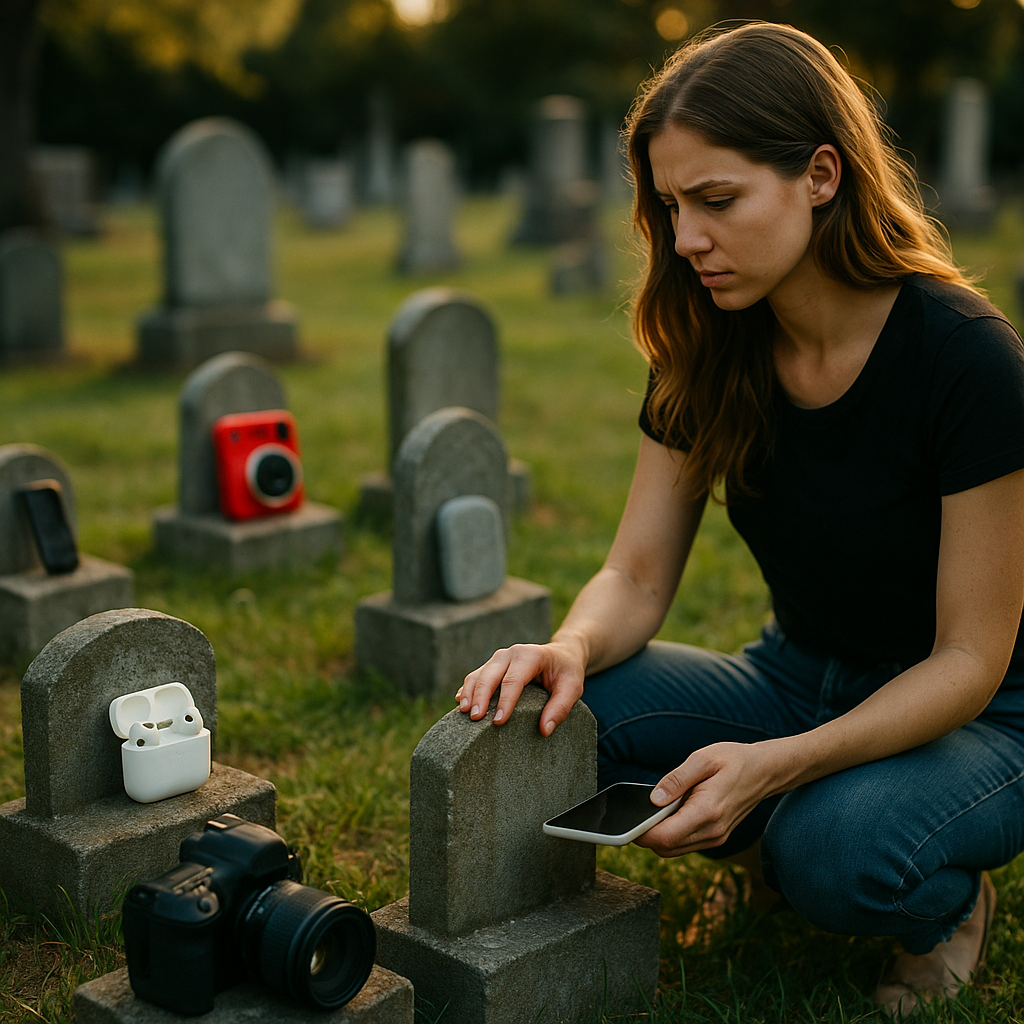
Eighty percent of new consumer products fail within two years, according to HubSpot’s research on product marketing. So why does almost every branded unboxing video pretend the product exists in a vacuum, with no history and no competitors? The product graveyard format flips that script — it asks creators to line up a new launch against the failed attempts that came before it, and let the audience judge for themselves.
It’s an uncomfortable brief to write. Most brand marketers spend their careers avoiding any mention of competitors, let alone competitors that flopped in the same category their own product just entered. But that discomfort is exactly why the format works. Skepticism is the default emotional state of anyone watching sponsored content in 2026. A brand willing to say “here’s what didn’t work, and here’s why we’re different” borrows credibility that no amount of polished b-roll can buy.
What the Product Graveyard Format Actually Is
Strip away the cleverness and it’s a simple structure: a creator presents the new product alongside two or three previous products in the same category that failed to deliver, went viral for the wrong reasons, or quietly disappeared from shelves. The creator walks through specific failure points — bad ingredients, gimmicky mechanisms, poor value, exaggerated claims — and then demonstrates how the new product addresses each one.
Think of it as a comparison video with a memorial theme. Instead of “Product A vs Product B,” it’s “Product A vs the three products that already tried and lost.” The tone can be playful (literal tombstone graphics, “RIP” captions) or clinical (a whiteboard breakdown), depending on the platform and audience. TikTok and Instagram Reels lean toward the playful version; LinkedIn and YouTube longform lean clinical.
The format works because it reframes the brand’s confidence as evidence, not as marketing copy. Saying “we’re better” is a claim. Showing exactly what three competitors got wrong, on camera, is a demonstration.
Why This Resonates in a Zero-Trust Feed
Consumers have been burned by category hype before — think fidget gadgets, “revolutionary” skincare devices, or the endless parade of protein products that promised the world and delivered chalky disappointment. When a creator names that history out loud, it signals two things simultaneously: the creator has done research, and the brand isn’t afraid of scrutiny.
This lands especially well in categories with high failure visibility — supplements, kitchen gadgets, beauty tools, subscription apps. Audiences already have graveyard candidates in mind. The format just gives them permission to relive the disappointment, then hands them a reason to try again.
There’s also a format-fatigue angle. Straight unboxings, first impressions, and “day in my life” integrations have saturated feeds for years. Comparative and confessional formats like this one, or the taste-test ranking format, perform better precisely because they ask the creator to take a stance rather than just narrate a product.
The Legal Tightrope: Comparative Claims and FTC Exposure
This is where marketing teams need to slow down. Naming competitor products, even ones that are discontinued or widely mocked, introduces legal risk that a standard product demo doesn’t carry.
The FTC’s endorsement guidelines require that comparative claims be truthful, substantiated, and not misleading by omission. If a creator says “this old formula caused breakouts” without data to back it up, that’s a disparagement claim your legal team will have to defend, not the creator’s. Brands are increasingly liable for what influencers say on their behalf, a lesson many teams have already learned the hard way with exaggerated before-and-afters.
- Stick to documented failures. Recalls, verified customer complaint patterns, discontinued SKUs, or independently reported issues are fair game. Rumors and creator opinion dressed as fact are not.
- Avoid naming specific competitor brands unless your legal team has cleared it. Generic “past attempts in this category” framing (unbranded packaging, blurred logos, composite descriptions) reduces exposure significantly.
- Require substantiation language in the brief. If a creator claims the new product “actually works,” the brief should specify what data or personal testing backs that claim.
- Keep receipts. Save briefs, script approvals, and any claims documentation for at least the FTC’s typical lookback period. This isn’t optional anymore, especially with increased 2026 enforcement activity around undisclosed comparative claims.
For a deeper walkthrough of how to structure claims-heavy briefs without inviting a compliance headache, the approach used in price-match challenge briefs is a useful template — same logic, different comparison axis.
Building the Brief: Structure Before Style
A graveyard video that feels spontaneous is almost always tightly scripted underneath. Here’s the skeleton that tends to convert best:
- Cold open with the graveyard visual. Three to four failed products (real, composite, or category-representative) laid out like evidence at a crime scene. Five seconds, no narration yet.
- Name the pattern, not just the products. “Every one of these promised X and failed at Y.” This is where the creator earns trust — by diagnosing a category problem, not just trashing competitors.
- Introduce the new product as the response to that pattern. Not as a superior alternative in isolation, but as something engineered specifically to solve what came before.
- Demonstrate, don’t just claim. A live test, a side-by-side, a measurable outcome. This is the section most briefs underwrite — give creators an actual mechanism to show, not just a script to read.
- Close with a caveat. “This won’t work for everyone, but here’s why it worked for the specific problem those other products couldn’t solve.” Honesty at the close increases perceived credibility more than any other single edit choice.
Notice what’s missing: a hard sell. The format’s persuasive power comes from restraint. If the creator oversells the win, the whole comparison collapses into another ad. Brief the CTA as a soft, single line — a link in bio or a discount code mention — not a repeated pitch.
Sourcing “Failed Attempts” Without Fabricating a Villain
You don’t need to trash a named competitor to make this format land. Three legitimate sourcing routes work well:
- Your own brand’s history. If you’re launching version 3.0 of a product, your own version 1.0 is fair, low-risk graveyard material. Nobody can accuse you of disparagement when you’re roasting your past self.
- Category archetypes. “The gadget that needed batteries you could never find,” described generically, taps shared audience memory without naming names.
- Publicly documented failures. Recalled products, products with public FTC actions, or widely reported news stories are safer to reference directly because the claims are already substantiated by a third party.
The first route is often the strongest, honestly. Brands that can say “we already failed at this once, here’s what we learned” get an enormous credibility bump. It’s the corporate equivalent of a founder admitting a mistake on camera. Pair it with an approach similar to the customer voicemail format, where real complaints about the old version become the script for what changed.
Picking Creators Who Can Sell Skepticism Convincingly
This format punishes creators who are visibly uncomfortable being critical. If someone’s entire feed is unrelentingly positive, asking them to dissect category failures will read as forced. Look instead for creators who already do comparison or “why I switched” content organically. Beauty and skincare creators who do ingredient breakdowns, tech reviewers who do teardown content, and finance creators who do “why this app failed” explainers all have the muscle memory this format demands.
Micro and mid-tier creators (50K–500K followers) tend to outperform bigger names here. Audiences expect scale creators to be paid to say nice things; they extend more trust to smaller creators who seem to be sharing genuine research.
A creator who already builds trust through skepticism is a better fit for the graveyard format than one who simply has more followers. Fit beats reach in comparison-driven content.
Measuring What Actually Matters Here
Standard engagement metrics undersell this format’s real value. Comments are the tell. Look specifically for:
- Comparison-seeking comments (“does this actually fix the smell issue the old one had?”) — these indicate the graveyard framing landed and created a specific question your product answers.
- Confession comments (“I still have three of these in a drawer”) — a sign of emotional recognition, which correlates strongly with purchase intent in comparative content according to Sprout Social’s engagement benchmarking work.
- Save rate relative to like rate. Comparison content gets saved for later research more than it gets liked in the moment. A high save-to-like ratio is a stronger signal here than raw likes.
Track these against a control group of standard product demo content from the same creator tier. If graveyard-format content isn’t outperforming on saves and comparison comments, the brief probably played it too safe, or the “failures” chosen weren’t specific enough to trigger recognition.
Where This Format Breaks Down
It’s not universal. Categories with low public failure-awareness (niche B2B software, industrial products, new-to-world inventions) don’t have a graveyard to dig up, so the format falls flat or feels manufactured. It also struggles in categories with strong brand loyalty, where fans of a “failed” past product may take the comparison personally and turn into detractors in the comments.
And it absolutely does not work if your new product is only marginally different from what came before. The format sets an expectation of a real fix, not an iterative tweak. Overpromise the differentiation and you’ll generate the exact skepticism you were trying to defuse.
If your team is still building the muscle for claims-based comparative content, start smaller. Formats like the ingredient-label translation format or behind-the-price-tag format build the same transparency muscle with lower legal exposure before you graduate to naming category failures directly.
Next step: before briefing a single creator, get legal sign-off on exactly which claims about past products are substantiated, generic, or off-limits — that document, not the script, is what actually protects you when this format performs well and starts getting scrutinized.
FAQs
What is the product graveyard format in influencer marketing?
It’s a creator content format where a new product is presented alongside past failed products in the same category, with the creator explaining specific failure points and showing how the new launch addresses them.
Is it legal to compare a product against named competitors?
Comparative claims are legal under FTC guidelines if they’re truthful and substantiated. Risk increases when claims about a named competitor’s failures aren’t backed by documentation, so brands should default to generic or self-referential comparisons unless legal has cleared specific claims.
Which product categories work best for this format?
Categories with high public failure-awareness perform best: supplements, beauty tools, kitchen gadgets, wellness tech, and subscription apps. Categories with low consumer familiarity or niche B2B products generally lack the shared “graveyard” recognition needed to make the format land.
How do brands avoid disparagement claims in this format?
Stick to documented, verifiable failures such as recalls or discontinued products, avoid naming specific competitor brands without legal clearance, and require creators to substantiate any critical claim included in the script.
What size creators perform best with this format?
Micro and mid-tier creators (roughly 50K to 500K followers) with an existing pattern of comparison or critique content tend to outperform larger creators, since audiences extend more trust to smaller creators making skeptical or research-based claims.
FAQs
What is the product graveyard format in influencer marketing?
It’s a creator content format where a new product is presented alongside past failed products in the same category, with the creator explaining specific failure points and showing how the new launch addresses them.
Is it legal to compare a product against named competitors?
Comparative claims are legal under FTC guidelines if they’re truthful and substantiated. Risk increases when claims about a named competitor’s failures aren’t backed by documentation, so brands should default to generic or self-referential comparisons unless legal has cleared specific claims.
Which product categories work best for this format?
Categories with high public failure-awareness perform best: supplements, beauty tools, kitchen gadgets, wellness tech, and subscription apps. Categories with low consumer familiarity or niche B2B products generally lack the shared “graveyard” recognition needed to make the format land.
How do brands avoid disparagement claims in this format?
Stick to documented, verifiable failures such as recalls or discontinued products, avoid naming specific competitor brands without legal clearance, and require creators to substantiate any critical claim included in the script.
What size creators perform best with this format?
Micro and mid-tier creators (roughly 50K to 500K followers) with an existing pattern of comparison or critique content tend to outperform larger creators, since audiences extend more trust to smaller creators making skeptical or research-based claims.
Top Influencer Marketing Agencies
The leading agencies shaping influencer marketing in 2026
Agencies ranked by campaign performance, client diversity, platform expertise, proven ROI, industry recognition, and client satisfaction. Assessed through verified case studies, reviews, and industry consultations.
Moburst

-
2

The Shelf
Boutique Beauty & Lifestyle Influencer AgencyA data-driven boutique agency specializing exclusively in beauty, wellness, and lifestyle influencer campaigns on Instagram and TikTok. Best for brands already focused on the beauty/personal care space that need curated, aesthetic-driven content.Clients: Pepsi, The Honest Company, Hims, Elf Cosmetics, Pure LeafVisit The Shelf → -
3

Audiencly
Niche Gaming & Esports Influencer AgencyA specialized agency focused exclusively on gaming and esports creators on YouTube, Twitch, and TikTok. Ideal if your campaign is 100% gaming-focused — from game launches to hardware and esports events.Clients: Epic Games, NordVPN, Ubisoft, Wargaming, Tencent GamesVisit Audiencly → -
4

Viral Nation
Global Influencer Marketing & Talent AgencyA dual talent management and marketing agency with proprietary brand safety tools and a global creator network spanning nano-influencers to celebrities across all major platforms.Clients: Meta, Activision Blizzard, Energizer, Aston Martin, WalmartVisit Viral Nation → -
5

The Influencer Marketing Factory
TikTok, Instagram & YouTube CampaignsA full-service agency with strong TikTok expertise, offering end-to-end campaign management from influencer discovery through performance reporting with a focus on platform-native content.Clients: Google, Snapchat, Universal Music, Bumble, YelpVisit TIMF → -
6

NeoReach
Enterprise Analytics & Influencer CampaignsAn enterprise-focused agency combining managed campaigns with a powerful self-service data platform for influencer search, audience analytics, and attribution modeling.Clients: Amazon, Airbnb, Netflix, Honda, The New York TimesVisit NeoReach → -
7

Ubiquitous
Creator-First Marketing PlatformA tech-driven platform combining self-service tools with managed campaign options, emphasizing speed and scalability for brands managing multiple influencer relationships.Clients: Lyft, Disney, Target, American Eagle, NetflixVisit Ubiquitous → -
8

Obviously
Scalable Enterprise Influencer CampaignsA tech-enabled agency built for high-volume campaigns, coordinating hundreds of creators simultaneously with end-to-end logistics, content rights management, and product seeding.Clients: Google, Ulta Beauty, Converse, AmazonVisit Obviously →