


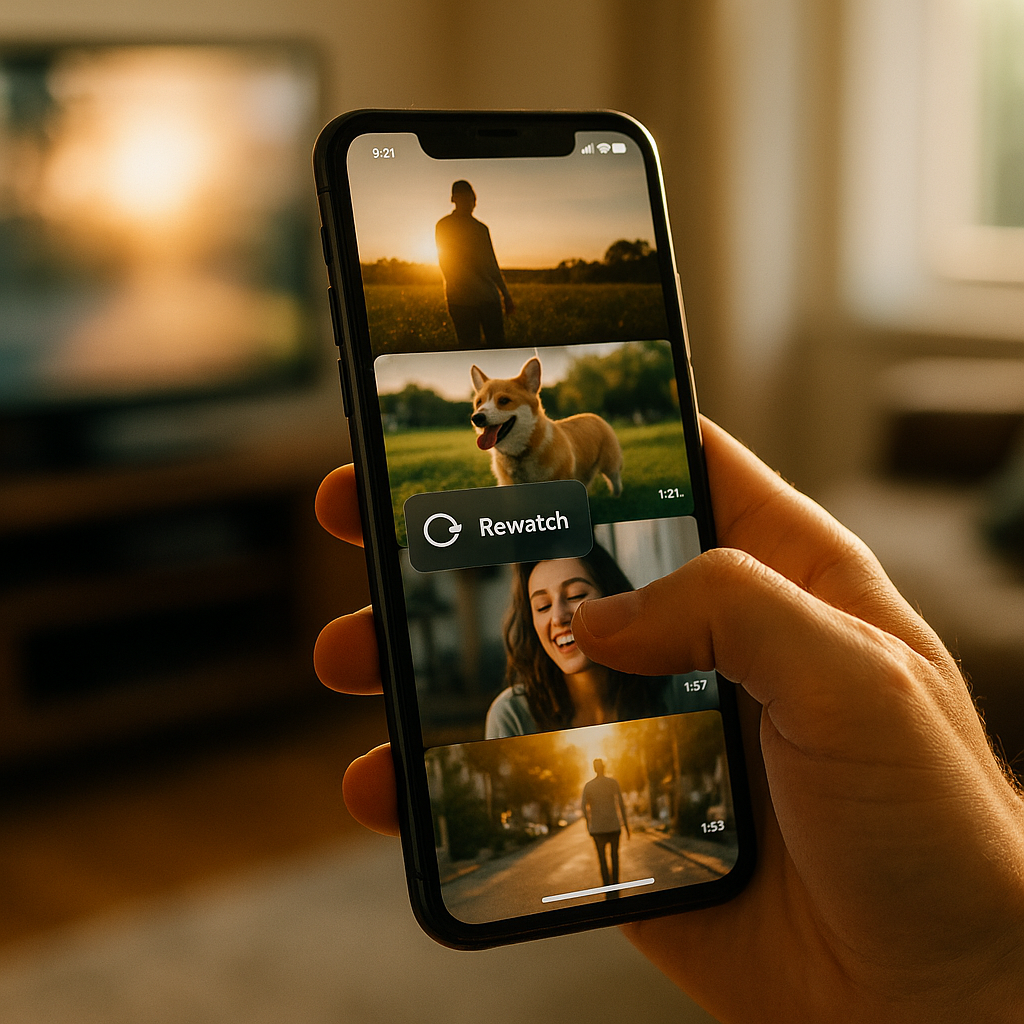
Only 9% of branded content posted this year is getting meaningful organic reach — the rest is dying in the feed before it ever meets a human eye. If that number stings, good. It should. The AI-curated recommendation feed has quietly rewritten the rules of organic distribution, and most brand content teams are still optimizing for a game that no longer exists.
This isn’t another “the algorithm changed” post. It’s a structural shift in what gets surfaced, why, and what that means for your content mix, your creator briefs, and your budget allocation.
The feed doesn’t rank content anymore. It predicts behavior.
Platforms like TikTok, Instagram, and YouTube stopped ranking content chronologically or even by engagement rate years ago. What’s different now is the sophistication of the prediction layer. Recommendation systems in 2026 are trained to forecast watch-through probability, rewatch likelihood, and session extension — not just whether you liked something, but whether that piece of content kept you on the app longer than the next best alternative would have.
This matters because it changes the unit of competition. You’re no longer competing against other brands in your category. You’re competing against every piece of content the algorithm could have shown that user in that exact moment, including a stranger’s dog video and a stand-up clip from three years ago. That’s a brutal, undifferentiated battlefield, and format choice is now doing more work than message or budget.
Content isn’t judged against your competitors anymore. It’s judged against everything the platform could have shown instead — and most branded content loses that comparison instantly.
Which formats are actually winning right now
Short-form video hasn’t lost ground, but the definition of “winning short-form” has narrowed considerably. The formats getting disproportionate organic lift share a few traits:
- Loopable structure — content designed to be rewatched without the viewer consciously choosing to rewatch it. Recipe reveals, transformation reveals, punchline-delayed formats.
- Native-feeling UGC — content that doesn’t announce itself as an ad in the first two seconds. This is why UGC creators moving to retainer models are seeing stronger platform performance than one-off influencer drops.
- Comment-bait pacing — content that leaves a deliberate gap or ambiguity, prompting a comment rather than just a like. Comments carry more predictive weight than likes in most current recommendation models.
- Series continuity — episodic content that trains the algorithm to associate your account with repeat session behavior.
Static image posts and traditional carousel ads, meanwhile, are getting squeezed hardest. Not because the format is dead, but because the AI has almost no rewatch or dwell-time signal to work with from a static image. A carousel gets maybe three seconds of attention before a swipe-away. Compare that to a 40-second video with a strong hook, and the algorithm has ten times the behavioral data to justify further distribution.
Long-form is quietly making a comeback
Here’s the part that surprises a lot of media planners: long-form video, particularly 8-20 minute YouTube content, is getting stronger organic push than it has in years. Why? Watch-time-per-session is a heavily weighted signal, and a single long-form view can deliver 15x the session data of a 12-second Reel. YouTube’s recommendation engine has always rewarded session extension, but the gap between long-form and short-form performance is widening as AI models get better at predicting which long videos will actually hold attention versus which ones will get abandoned at the 40-second mark.
This is forcing a rethink in influencer briefs. Brands that spent three years cutting everything down to 15-second clips are now asking creators for long-form breakdowns, tutorials, and “get ready with me” style content that runs well past the old attention-span assumptions.
Zero-click discovery changes what “distribution” even means
Organic reach used to imply a click, a visit, a conversion path. Increasingly, it doesn’t. AI Overviews, TikTok’s in-app search, and Instagram’s AI-generated content summaries are answering user queries directly inside the feed or search results, without sending traffic anywhere. This mirrors what’s already happened in search, where zero-click search has hit 50% of queries, gutting the traditional funnel assumption that reach leads to clicks leads to conversion.
If your content strategy still assumes a click-through as the success metric, you’re measuring against a funnel that’s shrinking every quarter. The smarter brands are now optimizing for share of AI answer and share of feed presence rather than click volume alone, treating visibility inside the recommendation layer as the new top-of-funnel win, not a means to an immediate click.
Why brand-safe polish is now a liability
This is uncomfortable for a lot of legacy brand teams, but it needs saying plainly: heavily produced, obviously-branded content underperforms in most 2026 recommendation environments. Not because quality doesn’t matter, but because production polish is a strong signal to the algorithm (and to viewers) that content is an ad, and ads get lower predicted watch-through than content that feels organic.
This is part of why TikTok’s algorithm has shifted pricing power toward micro-creators — their content simply reads as more native, and the platform’s AI rewards that authenticity signal with more distribution, regardless of production budget behind it. A $50,000 branded film and a $200 creator selfie video can get wildly different organic reach, and the deciding factor often isn’t quality. It’s format-fit with what the model has learned to predict as “watchable.”
What this means for your content calendar
If you’re a brand strategist or paid social lead reading this and wondering how to actually act on it, here’s the practical shift:
- Rebalance toward loop-friendly and series formats over one-off polished spots. Budget for a content system, not a campaign flight.
- Reinvest in long-form where your category supports it, especially for YouTube and creator-led explainer content.
- Brief creators for native pacing, not brand-safe scripts. This means loosening approval workflows, which is its own internal battle worth having.
- Track dwell time and rewatch rate as leading indicators, not just engagement rate or CTR. Most platform analytics dashboards now surface these metrics; if your reporting stack doesn’t, that’s a gap worth closing before your next planning cycle.
- Stop measuring success purely by click-through and start tracking share of feed presence and AI-answer visibility, similar to how brands are adapting to zero-click search funnel changes.
This isn’t a minor tactical tweak. It’s a shift in what “good content” means at the production brief stage, months before anything gets posted.
A $200 creator video can outperform a $50,000 branded film in organic reach — not on quality, but on how well it fits what the AI has learned to predict as watchable.
The compliance angle nobody’s talking about enough
There’s a risk hiding inside this shift. As brands lean harder into native-feeling, low-polish content to win algorithmic favor, disclosure often gets sloppier. Content that’s designed to not look like an ad is, by definition, working against the instinct to clearly label it as one. Regulators haven’t slowed down on this front, and 68% of YouTube affiliate videos already violate FTC disclosure rules even before this native-content push accelerates further.
If your team is chasing algorithmic reach by making content look less like an ad, make sure your disclosure practices aren’t quietly eroding at the same time. The FTC’s endorsement guidance hasn’t gotten more lenient just because the content style has gotten more casual. Build disclosure into the creative brief itself, not as an afterthought bolted on before publishing.
A quick note on measurement tools
Most brands are still using martech stacks built for a click-based, engagement-rate world. That’s changing fast as AI-native martech suites replace fragmented point solutions, bundling in the dwell-time and rewatch analytics that legacy tools never tracked. If your reporting still can’t tell you rewatch rate by format, that’s a stack problem worth flagging to your ops team this quarter, not next year.
Third-party data from eMarketer and Statista increasingly break out watch-time and completion metrics separately from engagement rate, which is a useful sanity check if your internal dashboards haven’t caught up yet.
Next step: audit your last quarter of organic content by format, not campaign, and map rewatch rate against production cost. If your highest-cost content has your lowest rewatch signal, you already know where next quarter’s budget needs to move.
FAQs
What is an AI-curated recommendation feed?
It’s a content distribution system, used by platforms like TikTok, Instagram, and YouTube, that ranks and serves content based on predicted user behavior, such as watch-through rate, rewatch likelihood, and session extension, rather than chronological order or simple engagement counts.
Why is static image content losing organic reach in 2026?
Static posts generate very little behavioral data for the algorithm to work with, typically just a few seconds of attention before a swipe. Video formats, especially loopable or series-based ones, give recommendation systems far more signal to justify continued distribution.
Is long-form video making a comeback?
Yes, particularly on YouTube. Long-form content that holds attention delivers significantly more session data per view than short-form clips, and platforms are rewarding that with stronger organic push, especially for tutorial, breakdown, and creator-led explainer formats.
Does polished, high-production branded content still work?
It can, but it’s increasingly disadvantaged in organic distribution because heavy production often reads as “ad-like” to both the algorithm and viewers, lowering predicted watch-through. Native-feeling, creator-shot content frequently outperforms it on reach despite far lower production cost.
How should brands measure success if clicks are declining?
Track dwell time, rewatch rate, and share of feed presence as leading indicators. As zero-click discovery grows, visibility inside the recommendation layer itself matters more than immediate click-through.
Does this shift create compliance risk?
Yes. Content designed to feel native and unbranded can lead to weaker FTC disclosure practices. Brands should build clear, compliant disclosure into the creative brief rather than treating it as a post-production checkbox.
Top Influencer Marketing Agencies
The leading agencies shaping influencer marketing in 2026
Agencies ranked by campaign performance, client diversity, platform expertise, proven ROI, industry recognition, and client satisfaction. Assessed through verified case studies, reviews, and industry consultations.
Moburst

-
2

The Shelf
Boutique Beauty & Lifestyle Influencer AgencyA data-driven boutique agency specializing exclusively in beauty, wellness, and lifestyle influencer campaigns on Instagram and TikTok. Best for brands already focused on the beauty/personal care space that need curated, aesthetic-driven content.Clients: Pepsi, The Honest Company, Hims, Elf Cosmetics, Pure LeafVisit The Shelf → -
3

Audiencly
Niche Gaming & Esports Influencer AgencyA specialized agency focused exclusively on gaming and esports creators on YouTube, Twitch, and TikTok. Ideal if your campaign is 100% gaming-focused — from game launches to hardware and esports events.Clients: Epic Games, NordVPN, Ubisoft, Wargaming, Tencent GamesVisit Audiencly → -
4

Viral Nation
Global Influencer Marketing & Talent AgencyA dual talent management and marketing agency with proprietary brand safety tools and a global creator network spanning nano-influencers to celebrities across all major platforms.Clients: Meta, Activision Blizzard, Energizer, Aston Martin, WalmartVisit Viral Nation → -
5

The Influencer Marketing Factory
TikTok, Instagram & YouTube CampaignsA full-service agency with strong TikTok expertise, offering end-to-end campaign management from influencer discovery through performance reporting with a focus on platform-native content.Clients: Google, Snapchat, Universal Music, Bumble, YelpVisit TIMF → -
6

NeoReach
Enterprise Analytics & Influencer CampaignsAn enterprise-focused agency combining managed campaigns with a powerful self-service data platform for influencer search, audience analytics, and attribution modeling.Clients: Amazon, Airbnb, Netflix, Honda, The New York TimesVisit NeoReach → -
7

Ubiquitous
Creator-First Marketing PlatformA tech-driven platform combining self-service tools with managed campaign options, emphasizing speed and scalability for brands managing multiple influencer relationships.Clients: Lyft, Disney, Target, American Eagle, NetflixVisit Ubiquitous → -
8

Obviously
Scalable Enterprise Influencer CampaignsA tech-enabled agency built for high-volume campaigns, coordinating hundreds of creators simultaneously with end-to-end logistics, content rights management, and product seeding.Clients: Google, Ulta Beauty, Converse, AmazonVisit Obviously →