


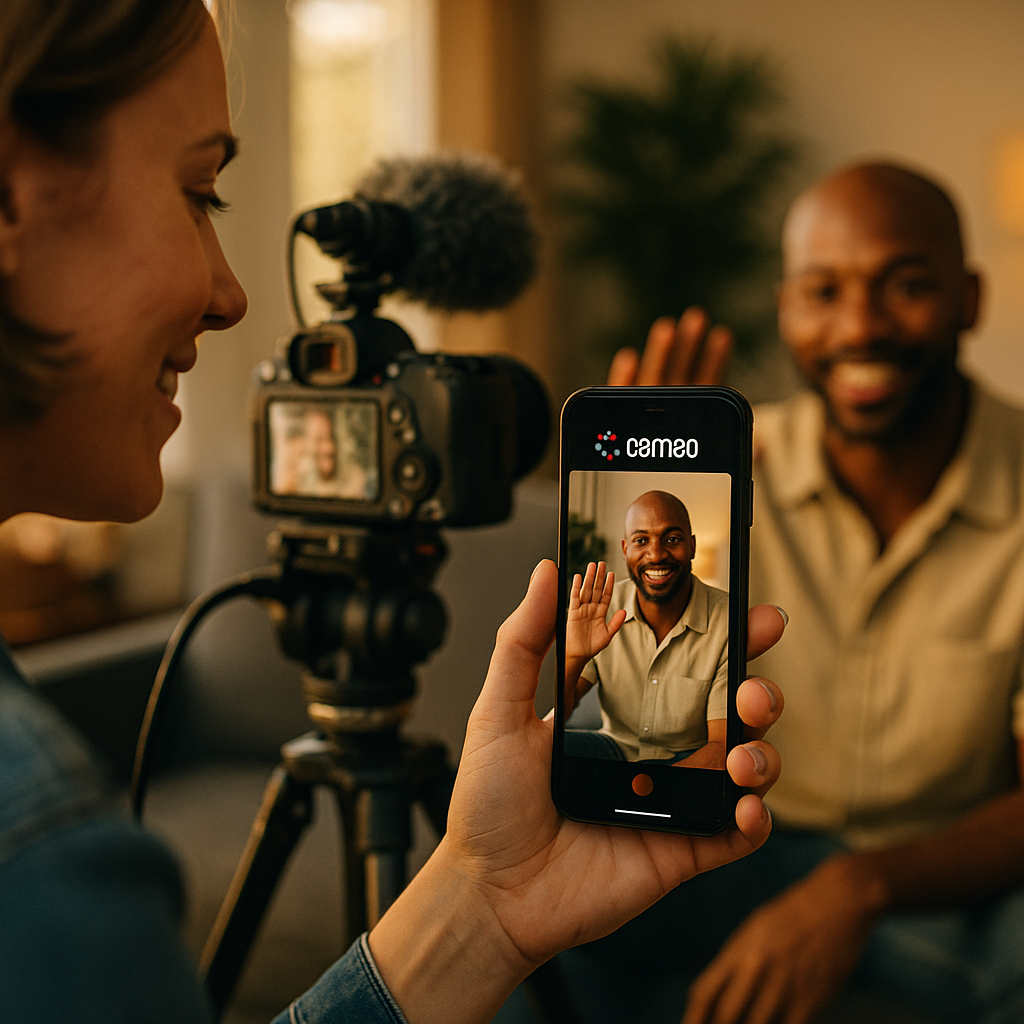
Only 34% of consumers trust brand-created content, yet HubSpot’s research keeps confirming what marketers already suspect: people trust other customers more than anyone on the payroll. So why do most influencer demos still feature a single creator talking to a camera, alone? The customer cameo format fixes that gap by putting a real, unpaid customer next to the creator, on screen, reacting in real time.
This isn’t testimonial marketing repackaged. It’s a directed format with its own briefing logic, its own risks, and its own production math. Let’s get into it.
What the Customer Cameo Format Actually Is
Picture a skincare creator doing a normal product demo. Now picture that same creator turning to a customer sitting next to them, someone who’s used the product for three months, and asking unscripted questions on camera. That’s the format. The creator directs and frames; the customer supplies unscripted proof.
It works because it splits the labor of persuasion. Creators are good at pacing, hooks, and camera presence. Customers are good at credibility. Neither replaces the other. Brands that have tried bolting a customer testimonial onto a standard demo (cutting between two separately filmed clips) get a worse version of this. The cameo format demands they share the frame, in the same take, reacting to each other. That’s what makes it feel unproduced even though it’s fully directed.
The format’s power comes from proximity: a real customer’s face, in the same shot as the creator, saying something the brand didn’t write.
Why Now?
Audiences have gotten sharp at spotting paid talking points. Sprout Social’s consumer trust data has repeatedly shown skepticism toward influencer content rising even as spend increases. Brands need a format that resets that skepticism without abandoning the creator relationship entirely. Customer cameos do exactly that: they keep the reach and production value of a creator partnership, while injecting a credibility source advertising money literally can’t buy.
It also fits neatly with where the broader format landscape is heading. Formats like real product use demos and customer voicemail content are all chasing the same thing: proof that feels harder to fake. Customer cameos just push that proof further into the frame.
Sourcing Real Customers Without Turning It Into a Casting Nightmare
Here’s the part that trips up most brand teams. Where do you even find a customer willing to appear on camera with a creator, on short notice, who also happens to be articulate and camera-comfortable?
Three sourcing paths work reliably:
- CRM mining: Pull repeat purchasers or high-NPS respondents from your customer database and offer them a small incentive plus creator content credit for showing up.
- Creator’s own network: Some creators already have engaged commenters who bought the product because of their content. This is the highest-trust path since the relationship predates the brand deal.
- Community callouts: Post in owned channels (email, Discord, subreddit, private Facebook groups) asking for volunteers. Slower, but yields the most unscripted enthusiasm.
Avoid the temptation to use employees’ friends or agency staff dressed down as “real customers.” It’s tempting because it’s fast. It’s also a compliance landmine, which we’ll get to shortly.
Pro tip from production teams who’ve run this repeatedly: source two backup customers per shoot. Real people cancel, get camera-shy, or freeze once the lights go on. A backup means you’re not scrapping the shoot.
Briefing the Creator to Direct, Not Perform
The creator’s job shifts in this format. Instead of being the sole performer, they become an interviewer and pacer. That’s a different skill, and not every creator does it naturally.
Your brief should specify:
- Three to five open-ended questions the creator asks the customer (never yes/no prompts)
- A rough runtime per beat, so the demo doesn’t sprawl into a 12-minute ramble
- Permission for the creator to follow up organically if the customer says something interesting
- A clear signal for when to cut back to product close-ups or demo footage
What you should NOT script: the customer’s actual answers. The moment a customer sounds rehearsed, the entire format collapses. This is similar to the guardrails used in raw reaction briefing, where over-direction kills the authenticity that makes the format work in the first place.
Some brands run a light pre-call with the customer, not to script answers, but to confirm they’re comfortable on camera and to flag any claims that could raise FTC disclosure concerns before the shoot, not after.
The Disclosure Question Nobody Wants to Answer
Does a customer cameo need an ad disclosure? Usually yes, and here’s why: if the customer received any compensation, product, or even a content usage credit for appearing, the FTC’s endorsement guidance treats that as a material connection. It doesn’t matter that they’re a “real” customer and not a professional creator.
The safest move is a blanket disclosure on the full video (creator’s standard #ad tag) plus a verbal or on-screen note when the customer segment starts, something like “customer received free product for this shoot.” It’s two seconds of screen time. It’s also the difference between a defensible campaign and a regulatory headache.
Brands running EU or UK campaigns should cross-check against ICO guidance as well, since disclosure expectations for consumer testimonials aren’t identical across regions.
Where This Format Breaks: Common Failure Modes
Not every product category or campaign goal suits this format. It tends to fail in a few predictable ways:
- Awkward customer, no editing safety net. Because the format leans on unscripted dialogue, a stiff or nervous customer can flatten the whole video. Budget for a reshoot or a second customer option.
- Over-coached answers. If a brand’s legal or marketing team insists on pre-approving customer statements, you lose the authenticity that justified the format in the first place. At that point, just make a standard testimonial ad.
- Mismatched pacing. Creators used to solo-camera monologues sometimes talk over customers or rush the interview. This needs to be flagged explicitly in the brief and reviewed in a rough cut before final delivery.
- Weak product fit. High-consideration B2B software or financial products can struggle here unless the “customer” is a genuine practitioner who can speak with authority. For those categories, formats like executive visibility content or social-first webinar clips may deliver more credibility per minute.
The format shines brightest for consumer physical products with visible before/after results: skincare, fitness equipment, home goods, food and beverage. It’s weaker for abstract services where “using” the product isn’t visually demonstrable.
Measuring Whether It’s Actually Working
Don’t just track view counts. Customer cameo content should be evaluated against a slightly different scorecard than standard influencer demos, because the value proposition is trust, not just reach.
Track these specifically:
- Comment sentiment ratio: Look for comments referencing the customer directly (“she looks like she actually uses it”) as a proxy for perceived authenticity.
- Save and share rate relative to your format baseline: Trust-driven content tends to get saved and sent to friends more than it gets liked.
- Conversion lift on retargeted audiences: Run this content specifically to warm audiences who’ve already seen a standard demo, and compare click-through against a control ad.
- Repeat customer volunteer rate: If customers keep saying yes to future shoots, that’s a strong signal the format is building genuine community goodwill, not just extracting content.
eMarketer’s ongoing influencer ROI benchmarks are a useful external anchor for comparing your trust-format performance against category norms, especially if you’re trying to justify the extra production complexity to finance.
Building It Into an Always-On Content System
The biggest operational win here is that customer cameo shoots pair naturally with multi-format capture days. If you’ve already got a creator and a willing customer on set, don’t just shoot one demo video and wrap.
Capture vertical cuts for TikTok and Reels, a longer horizontal cut for YouTube, and a handful of quote graphics pulled from the customer’s best lines. This is the same logic behind remixable asset briefs and the multi-format UGC shoot template: one production day, multiple deliverables, lower blended cost per asset.
Build a rotating calendar of one or two customer cameo shoots per quarter per major product line. It keeps the format from feeling like a one-off stunt and instead builds a recognizable content series your audience starts to expect and trust.
FAQs
Frequently Asked Questions
What is the customer cameo format in influencer marketing?
It’s a production format where a brand-partnered creator features a real, unpaid or lightly compensated customer as a co-star in a product demonstration video, using unscripted dialogue to add credibility beyond the creator’s own endorsement.
Do customer cameos require FTC disclosure?
Yes, if the customer received any compensation, free product, or content credit, that counts as a material connection under FTC guidance and should be disclosed on screen, not just in the caption.
How do brands find real customers willing to appear on camera?
The most reliable sources are CRM lists of repeat or high-NPS purchasers, the creator’s own engaged commenter base, and volunteer callouts through owned community channels like email or Discord.
What products work best for this format?
Visible-result consumer products like skincare, fitness gear, food, and home goods perform best. Abstract services or high-consideration B2B products generally need a different format, such as executive-led content or webinar clips.
How is this different from a standard testimonial ad?
Testimonial ads are typically scripted and filmed separately, then edited together. Customer cameos require the creator and customer to share the same frame and interact live, which produces a less polished but more credible result.
What’s the biggest risk when producing this format?
Over-coaching the customer. The moment their answers sound rehearsed, the format loses the authenticity that justifies using it in the first place.
Run one customer cameo shoot this quarter, disclose it properly, and measure comment sentiment against your last standard demo. The gap will tell you whether this format earns a permanent slot in your content calendar.
Top Influencer Marketing Agencies
The leading agencies shaping influencer marketing in 2026
Agencies ranked by campaign performance, client diversity, platform expertise, proven ROI, industry recognition, and client satisfaction. Assessed through verified case studies, reviews, and industry consultations.
Moburst

-
2

The Shelf
Boutique Beauty & Lifestyle Influencer AgencyA data-driven boutique agency specializing exclusively in beauty, wellness, and lifestyle influencer campaigns on Instagram and TikTok. Best for brands already focused on the beauty/personal care space that need curated, aesthetic-driven content.Clients: Pepsi, The Honest Company, Hims, Elf Cosmetics, Pure LeafVisit The Shelf → -
3

Audiencly
Niche Gaming & Esports Influencer AgencyA specialized agency focused exclusively on gaming and esports creators on YouTube, Twitch, and TikTok. Ideal if your campaign is 100% gaming-focused — from game launches to hardware and esports events.Clients: Epic Games, NordVPN, Ubisoft, Wargaming, Tencent GamesVisit Audiencly → -
4

Viral Nation
Global Influencer Marketing & Talent AgencyA dual talent management and marketing agency with proprietary brand safety tools and a global creator network spanning nano-influencers to celebrities across all major platforms.Clients: Meta, Activision Blizzard, Energizer, Aston Martin, WalmartVisit Viral Nation → -
5

The Influencer Marketing Factory
TikTok, Instagram & YouTube CampaignsA full-service agency with strong TikTok expertise, offering end-to-end campaign management from influencer discovery through performance reporting with a focus on platform-native content.Clients: Google, Snapchat, Universal Music, Bumble, YelpVisit TIMF → -
6

NeoReach
Enterprise Analytics & Influencer CampaignsAn enterprise-focused agency combining managed campaigns with a powerful self-service data platform for influencer search, audience analytics, and attribution modeling.Clients: Amazon, Airbnb, Netflix, Honda, The New York TimesVisit NeoReach → -
7

Ubiquitous
Creator-First Marketing PlatformA tech-driven platform combining self-service tools with managed campaign options, emphasizing speed and scalability for brands managing multiple influencer relationships.Clients: Lyft, Disney, Target, American Eagle, NetflixVisit Ubiquitous → -
8

Obviously
Scalable Enterprise Influencer CampaignsA tech-enabled agency built for high-volume campaigns, coordinating hundreds of creators simultaneously with end-to-end logistics, content rights management, and product seeding.Clients: Google, Ulta Beauty, Converse, AmazonVisit Obviously →