


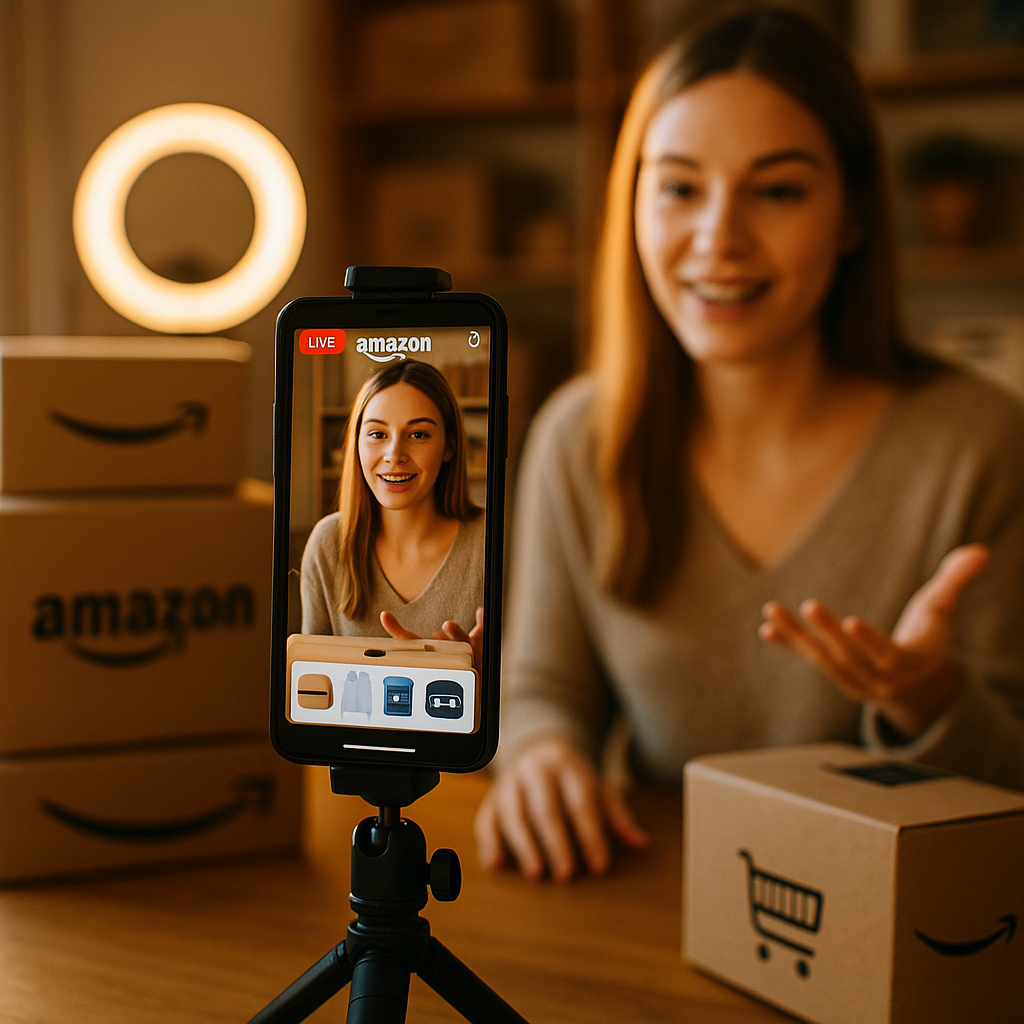
Prime Day drives more than a third of Amazon’s Q3 traffic surges, yet most brands treat Amazon Live like a switch they flip twice a year. That’s the mistake. An Amazon Live playbook built only around Prime Day and October Deal Days leaves discovery dead for the other ten months — and Amazon’s own algorithm punishes inconsistency.
This isn’t about producing more shows. It’s about sequencing them so the platform keeps surfacing your brand between the big spikes, not just during them.
Why Most Amazon Live Calendars Fail
Walk into almost any brand’s Amazon Live dashboard and you’ll see the same pattern: a burst of shows in June, a bigger burst in early July, silence through August, then a scramble in October. Deal Day performance data gets celebrated in a Slack channel, and then the channel goes quiet until the next event.
The problem is structural. Amazon Live’s discovery surface — the “Live Now” carousel on the storefront, category rows, and the shopping app’s live tab — rewards accounts with consistent broadcast cadence. Sporadic activity resets your visibility baseline every single time. You’re not building on momentum; you’re restarting from zero.
Brands that broadcast on Amazon Live at least twice weekly see meaningfully higher repeat placement in category carousels than brands that only show up during named sales events, according to seller community reporting shared across Amazon’s own seller forums.
Compare that to how creators build audiences on other platforms. A TikTok Shop or YouTube channel that goes dark for two months loses subscribers and algorithmic trust. Amazon Live works the same way, just with less visible feedback. You don’t get a follower-drop notification. You just quietly stop showing up.
**The fix isn’t more budget. It’s better sequencing.**
The Four-Phase Structure Around Major Deal Events
Think of your Amazon Live calendar in four repeating phases, not two states (event/no-event). Each phase has a different job.
Phase 1: Pre-event seeding (4-6 weeks out). This is where most brands under-invest. Start light — one or two shows weekly — focused on product education, not discounting. Amazon’s discovery algorithm needs signal that your storefront is active before it will reward you with visibility during the high-competition event window. Waiting until the week before Prime Day to ramp up is like trying to rank a new YouTube video the day it publishes; you’re competing against channels with months of accumulated authority.
Phase 2: Ramp week (7-10 days pre-event). Increase frequency to three to four shows weekly. Start teasing deal mechanics without revealing exact pricing (Amazon’s policies restrict pre-announcing discount amounts outside approved windows). Use this phase to test hosts, formats, and CTAs so you know what converts before the stakes get high.
Phase 3: Event window. Daily or near-daily shows during Prime Day and Deal Days themselves. This is the phase everyone already plans for — but its success is entirely dependent on Phases 1 and 2 having built the audience and algorithmic trust to make Phase 3 visible in the first place.
Phase 4: Post-event sustain (2-4 weeks after). This is the phase brands skip entirely, and it’s the costliest mistake in the calendar. Drop back to two shows weekly, shift messaging from “deal” to “value” and “use case,” and keep the account active. Skipping this phase is what causes the algorithmic reset that makes the next event’s Phase 1 harder than it needed to be.
What a Realistic Weekly Cadence Looks Like
- Off-peak baseline: 2 shows/week, 20-30 minutes each, evergreen product demos
- Pre-event seeding: 2-3 shows/week, adding Q&A and comparison formats
- Ramp week: 3-4 shows/week, testing hosts and hooks
- Event window: Daily shows, 30-45 minutes, deal-focused
- Post-event sustain: 2 shows/week, reverting to education and use-case content
Notice what never happens: zero shows. That’s the entire point.
Creator Selection: Match Cadence to Commitment
A brand’s biggest scheduling failure isn’t the calendar — it’s staffing it with a single creator who burns out by August. If your Amazon Live strategy depends on one host doing daily shows through Prime Day and Deal Days, you have a single point of failure.
Build a rotation of at least two to three hosts, each with defined roles. One might specialize in the pre-event education phase (slower pace, more detail, good for building trust). Another handles the high-energy event window (fast pacing, urgency, deal literacy). A third can cover the sustain phase, where the tone needs to shift back to relaxed, advisory content.
This mirrors what’s already working in adjacent live commerce channels. The livestream compliance discipline TikTok Shop sellers have had to adopt — clear host guidelines, consistent disclosure practices, documented return policies — translates almost directly to Amazon Live, where FTC endorsement guidance applies just as strictly. Creators need briefs, not just a call time.
Treat your Amazon Live host bench the way a broadcast network treats on-air talent rotation: redundancy isn’t a luxury, it’s the thing that keeps the schedule alive when someone gets sick during Prime Day week.
Content Differentiation: Don’t Run the Same Show Twice
Repetition kills discovery. If your pre-event shows and event-window shows look identical except for the price sticker, viewers (and the algorithm) notice. Amazon Live’s engagement signals — watch time, comment rate, add-to-cart clicks during the stream — feed directly into whether you get carousel placement next time. A stale format tanks those signals regardless of how good the discount is.
Vary the format across phases:
- Educational deep-dives during seeding phases — ingredient breakdowns, use-case walkthroughs, comparison to competitor SKUs
- Interactive Q&A during ramp week — pull real customer questions from reviews and answer them live
- Fast-paced deal countdowns during the event window — urgency-driven, tight segments, frequent CTA repetition
- Behind-the-scenes or restock content during sustain — this is where you can borrow techniques from restock alert strategies that build urgency without relying on a countdown clock
The hook matters as much on Amazon Live as it does anywhere else creators broadcast. The opening 15 seconds of a stream determine whether a browser stays or scrolls past — the same principle covered in hook architecture for video content applies just as directly to live commerce, where the stakes for losing a viewer in the first moments are even higher because there’s no algorithm to resurface the stream later.
Measurement: What to Actually Track Between Events
Most Amazon Live reporting obsesses over Prime Day GMV and ignores everything in between. That’s backwards. The off-peak weeks are where you diagnose whether your discovery strategy is working, because the event window masks bad fundamentals with sheer traffic volume.
Track these metrics weekly, not just during named events:
- Average concurrent viewers — a leading indicator of algorithmic surfacing, independent of paid traffic
- Watch time per session — directly tied to carousel eligibility
- Follow/subscribe growth on your storefront — the compounding asset most brands ignore
- Add-to-cart rate during stream vs. post-stream — tells you whether urgency or education is converting better
- Repeat viewer percentage — proof that sustain-phase content is retaining an audience, not just refreshing new eyeballs each time
If average concurrent viewers is flat or declining across your off-peak baseline shows, that’s your early warning sign that Prime Day performance will underdeliver relative to spend. Fix it in Phase 1, not during the event.
Compliance Isn’t Optional — Especially During High-Volume Weeks
Amazon’s live shopping guidelines require clear disclosure of paid partnerships and accurate deal pricing at all times, and the FTC’s endorsement guidance applies regardless of platform. During Deal Days, when hosts are moving fast and covering multiple SKUs per segment, disclosure slips happen more easily. Build a pre-show checklist for every host: disclosure language at stream open, accurate strike-through pricing, and no promises about stock levels you can’t verify in real time.
This is the same operational discipline required in livestream compliance for returns and shipping claims — the platform changes, but the regulatory exposure doesn’t.
Budgeting the Calendar, Not Just the Event
Finance teams love to fund Prime Day and Deal Days because the ROI story is clean and immediate. Selling them on off-peak seeding budget is harder — there’s no discount event to point to, just a slower-building discovery curve.
Make the case with data comparisons, not vibes. Pull your own historical Amazon Live reporting (available in Seller Central) and compare Prime Day performance in years with sustained pre-event cadence against years without. According to eMarketer’s ongoing research into retail media and live commerce growth, platforms that reward consistency are becoming the norm across social commerce, not the exception — Amazon Live is following a pattern already visible on TikTok Shop’s product tag algorithm and Instagram’s commerce discovery logic alike.
A reasonable budget split: 60% of Amazon Live spend on event-window production and host fees, 40% distributed across seeding and sustain phases. Brands that flip that ratio — pouring almost everything into the event window — are the ones showing up in seller forums asking why their Prime Day carousel placement got worse this year despite spending more.
Next Step
Audit your last twelve months of Amazon Live activity against the four-phase structure above. If you find gaps longer than two weeks anywhere outside a named event, that’s your discovery leak — plug it before you plan next quarter’s Deal Day spend.
Frequently Asked Questions
How far in advance should brands start Amazon Live shows before Prime Day?
Begin seeding shows four to six weeks before Prime Day at a low cadence of one to two sessions weekly, focused on product education rather than discounting. This builds the audience and algorithmic trust needed for visibility during the event window itself.
How many Amazon Live shows should a brand run per week during off-peak periods?
A baseline of two shows weekly is enough to maintain discovery signal without overextending host resources. Consistency matters more than volume during off-peak periods.
Does Amazon Live penalize brands for irregular broadcast schedules?
Amazon hasn’t published an explicit penalty framework, but seller-reported data and carousel placement patterns strongly suggest that inconsistent broadcasting resets discovery momentum, requiring brands to rebuild visibility each time they resume.
What’s the biggest mistake brands make with Amazon Live scheduling around Deal Days?
Stopping shows immediately after the event ends. The two-to-four week sustain phase after Prime Day or Deal Days is critical for retaining the audience and algorithmic standing built during the event window.
Can one host manage an entire Amazon Live calendar around Prime Day?
It’s risky. Relying on a single host creates a point of failure during high-stakes weeks. A rotation of two to three hosts with defined roles across the seeding, ramp, event, and sustain phases is more resilient and often performs better creatively.
What metrics matter most for Amazon Live outside of named sales events?
Average concurrent viewers, watch time per session, storefront follow growth, and repeat viewer percentage are the strongest leading indicators of whether your discovery strategy is working between major deal events.
Frequently Asked Questions
How far in advance should brands start Amazon Live shows before Prime Day?
Begin seeding shows four to six weeks before Prime Day at a low cadence of one to two sessions weekly, focused on product education rather than discounting. This builds the audience and algorithmic trust needed for visibility during the event window itself.
How many Amazon Live shows should a brand run per week during off-peak periods?
A baseline of two shows weekly is enough to maintain discovery signal without overextending host resources. Consistency matters more than volume during off-peak periods.
Does Amazon Live penalize brands for irregular broadcast schedules?
Amazon hasn’t published an explicit penalty framework, but seller-reported data and carousel placement patterns strongly suggest that inconsistent broadcasting resets discovery momentum, requiring brands to rebuild visibility each time they resume.
What’s the biggest mistake brands make with Amazon Live scheduling around Deal Days?
Stopping shows immediately after the event ends. The two-to-four week sustain phase after Prime Day or Deal Days is critical for retaining the audience and algorithmic standing built during the event window.
Can one host manage an entire Amazon Live calendar around Prime Day?
It’s risky. Relying on a single host creates a point of failure during high-stakes weeks. A rotation of two to three hosts with defined roles across the seeding, ramp, event, and sustain phases is more resilient and often performs better creatively.
What metrics matter most for Amazon Live outside of named sales events?
Average concurrent viewers, watch time per session, storefront follow growth, and repeat viewer percentage are the strongest leading indicators of whether your discovery strategy is working between major deal events.
Top Influencer Marketing Agencies
The leading agencies shaping influencer marketing in 2026
Agencies ranked by campaign performance, client diversity, platform expertise, proven ROI, industry recognition, and client satisfaction. Assessed through verified case studies, reviews, and industry consultations.
Moburst

-
2

The Shelf
Boutique Beauty & Lifestyle Influencer AgencyA data-driven boutique agency specializing exclusively in beauty, wellness, and lifestyle influencer campaigns on Instagram and TikTok. Best for brands already focused on the beauty/personal care space that need curated, aesthetic-driven content.Clients: Pepsi, The Honest Company, Hims, Elf Cosmetics, Pure LeafVisit The Shelf → -
3

Audiencly
Niche Gaming & Esports Influencer AgencyA specialized agency focused exclusively on gaming and esports creators on YouTube, Twitch, and TikTok. Ideal if your campaign is 100% gaming-focused — from game launches to hardware and esports events.Clients: Epic Games, NordVPN, Ubisoft, Wargaming, Tencent GamesVisit Audiencly → -
4

Viral Nation
Global Influencer Marketing & Talent AgencyA dual talent management and marketing agency with proprietary brand safety tools and a global creator network spanning nano-influencers to celebrities across all major platforms.Clients: Meta, Activision Blizzard, Energizer, Aston Martin, WalmartVisit Viral Nation → -
5

The Influencer Marketing Factory
TikTok, Instagram & YouTube CampaignsA full-service agency with strong TikTok expertise, offering end-to-end campaign management from influencer discovery through performance reporting with a focus on platform-native content.Clients: Google, Snapchat, Universal Music, Bumble, YelpVisit TIMF → -
6

NeoReach
Enterprise Analytics & Influencer CampaignsAn enterprise-focused agency combining managed campaigns with a powerful self-service data platform for influencer search, audience analytics, and attribution modeling.Clients: Amazon, Airbnb, Netflix, Honda, The New York TimesVisit NeoReach → -
7

Ubiquitous
Creator-First Marketing PlatformA tech-driven platform combining self-service tools with managed campaign options, emphasizing speed and scalability for brands managing multiple influencer relationships.Clients: Lyft, Disney, Target, American Eagle, NetflixVisit Ubiquitous → -
8

Obviously
Scalable Enterprise Influencer CampaignsA tech-enabled agency built for high-volume campaigns, coordinating hundreds of creators simultaneously with end-to-end logistics, content rights management, and product seeding.Clients: Google, Ulta Beauty, Converse, AmazonVisit Obviously →