


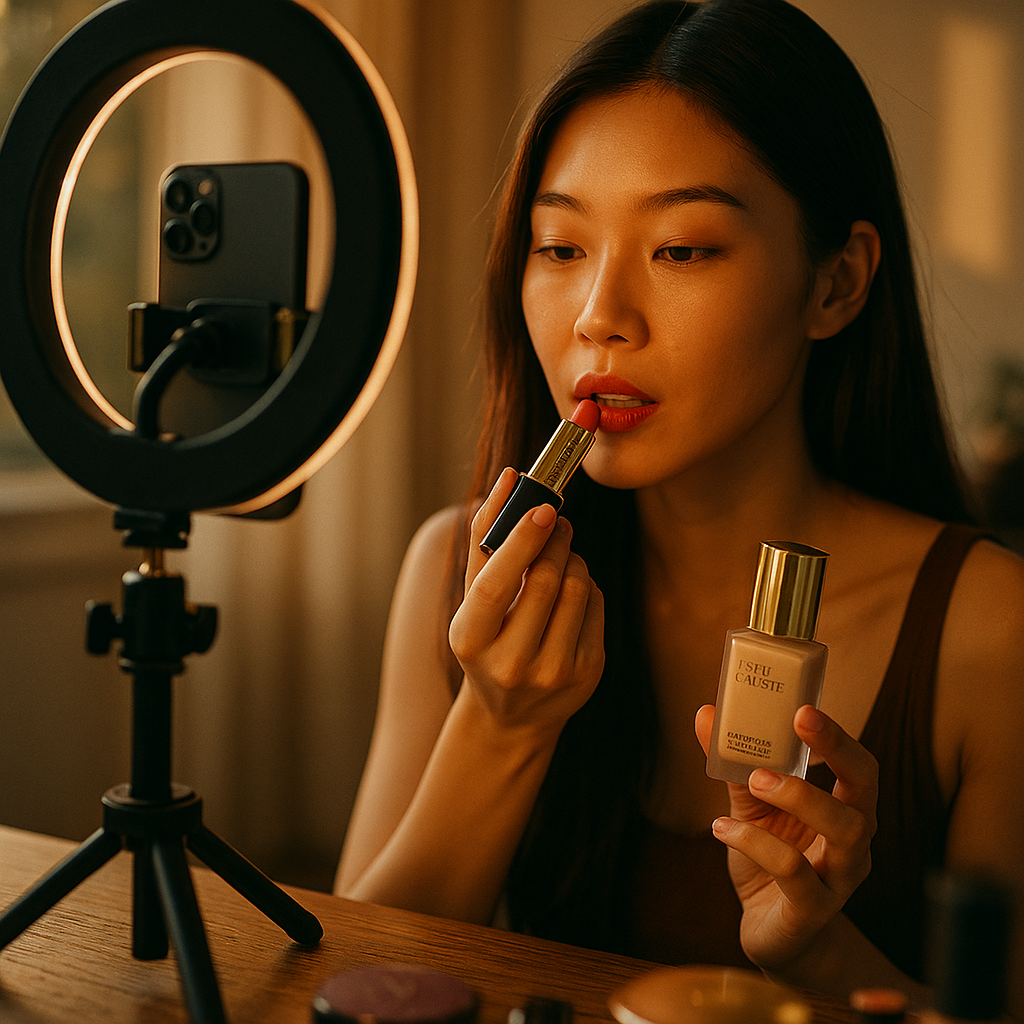
One executive. Twenty-plus brands. A single procurement stack for creator technology across a $14 billion beauty empire. If that sounds like consolidation, it is — and it’s forcing every CMO watching from the sidelines to ask why their own influencer marketing tech budget still looks like a garage sale. Estée Lauder Companies’ move to centralize creator technology decisions under one global influencer executive isn’t just an org chart tweak. It’s a signal that the era of every brand team picking its own platform is ending.
The Role That’s Quietly Reshaping Martech Budgets
Estée Lauder Companies owns brands spanning MAC, Clinique, La Mer, Bobbi Brown, Too Faced, and more — each with its own regional teams, budgets, and historically, its own vendor relationships. That fragmentation is expensive. Not just in dollars, but in data. When 20-plus brand teams are each licensing separate influencer discovery tools, running separate contracts with measurement vendors, and negotiating separate rates with the same creator agencies, the parent company loses leverage and visibility at the same time.
The new global influencer executive role changes that math. Instead of each brand president approving their own creator tech stack, procurement now flows through a centralized function that evaluates, negotiates, and standardizes tools across the portfolio. Think of it as the beauty conglomerate’s answer to what CFOs have done with cloud computing for a decade: stop letting business units buy redundant infrastructure.
When one company runs 20+ brands through fragmented influencer tech stacks, it’s not just inefficient — it’s an audit and compliance liability waiting to surface.
Why Centralization Beats the “Let Every Brand Choose” Model
There’s a romantic idea in marketing that brand-level autonomy always produces better creative outcomes. Sometimes it does. But autonomy on strategy is different from autonomy on infrastructure. Estée Lauder’s approach separates the two: brand teams still pick their creators, still shape campaign briefs, still own creative direction. What’s standardized is the plumbing — the influencer relationship management platforms, the payment and contracting systems, the disclosure and compliance workflows, the measurement methodology.
This matters because influencer marketing has quietly become one of the largest line items in brand budgets, yet it’s remained one of the least governed. According to eMarketer, influencer marketing spend in the US has climbed past $9 billion annually, and beauty is consistently among the top-spending categories. When that much money moves through dozens of disconnected systems, finance teams lose the ability to answer basic questions: What’s our blended cost per engagement across brands? Are we paying three different rates to the same creator through three different subsidiaries? Are all our disclosure practices actually compliant with FTC guidelines?
Centralized procurement answers those questions by default, because the data lives in one place.
The Redundancy Problem, Quantified
Multi-brand holding companies have historically underestimated how much money leaks through duplicate vendor contracts. Picture this: MAC’s team licenses a creator discovery platform. Clinique’s team, unaware, licenses a near-identical one. Both are paying enterprise rates for overlapping functionality, and neither is getting a volume discount because neither knows the other exists. Multiply that across 20 brands and multiple regions, and the waste compounds fast.
This is precisely the redundancy that Estée Lauder’s broader influencer framework has been built to eliminate — a shift we covered in detail when examining how the company’s influencer framework ends multi-brand redundancy. The global executive role is the next layer on top of that framework: it’s the person (and team) actually enforcing the standard, not just designing it on paper.
What “Standardized Procurement” Actually Looks Like
Standardization doesn’t mean one tool for everything. It means a rationalized stack with clear ownership. Based on how similar centralization efforts have played out at other large consumer companies, here’s roughly what it involves:
- Preferred vendor lists — a shortlist of approved influencer relationship management and discovery platforms that brand teams choose from, rather than an open market.
- Unified contracting templates — standardized creator agreements, usage rights language, and disclosure requirements applied globally, reducing legal review time per campaign.
- Centralized rate benchmarking — visibility into what creators are being paid across brands, preventing rate inflation and internal bidding wars.
- Shared measurement infrastructure — one attribution methodology instead of 20 brand-specific dashboards that can’t be compared apples-to-apples.
- Compliance oversight — a single team responsible for FTC disclosure standards, platform policy changes, and regional regulatory differences (the EU and UK have their own rules that don’t map neatly onto US practice).
That last point deserves more attention than it usually gets. Regulatory risk in influencer marketing isn’t hypothetical anymore. The UK’s ICO has become increasingly active on data and disclosure issues, and brands operating across multiple markets can’t afford 20 different interpretations of what “adequate disclosure” means. Centralizing compliance under one executive removes that ambiguity.
The ROI Case: Fewer Tools, Better Data, Faster Decisions
Skeptics will say centralization slows things down — more approval layers, less brand agility. Fair concern. But the counterargument is stronger: fragmented systems slow things down more, they just hide the friction inside each brand silo instead of surfacing it at the corporate level.
Consider measurement. L’Oréal Luxe has been public about building unified attribution systems to prove creator ROI across its portfolio, a move we detailed in our look at L’Oréal Luxe’s AI attribution graph. The lesson generalizes: when a holding company standardizes measurement, it stops evaluating influencer performance brand-by-brand and starts identifying which creator types, content formats, and platforms actually move revenue across categories. That’s data no single brand team could generate on its own.
Procurement standardization pays off in three concrete ways for brands watching this trend:
- Negotiating leverage. A single enterprise contract across 20 brands gets better pricing than 20 separate contracts, full stop. Vendors like Sprout Social and other social management platforms increasingly build enterprise tiers specifically for this kind of multi-brand procurement.
- Faster vendor evaluation cycles. Instead of each brand running its own RFP process for creator tech, one team does it once and brands opt in.
- Cleaner compliance audit trails. When disclosure practices and contracts are standardized, legal review time per campaign drops significantly — a real cost saving that rarely shows up in marketing reports but matters enormously to finance and legal teams.
Not Every Brand Needs a Global Executive — But Every Brand Needs the Discipline
Most companies reading this aren’t running 20 brands. Maybe they’re running one, or three, or a regional portfolio. Does any of this apply? Yes, actually — the principle scales down even if the org structure doesn’t.
Any brand running influencer programs across multiple regions, product lines, or agency relationships should ask the same questions Estée Lauder’s centralization effort is answering: Do we know our blended cost per creator relationship? Are our disclosure practices consistent everywhere we operate? Could we consolidate two or three tools into one without losing functionality?
You don’t need a global executive title to run centralized procurement discipline — you need someone with the authority to say no to redundant tools.
Smaller and mid-market brands can borrow the logic without the bureaucracy. Appoint one person (even part-time) as the owner of creator tech decisions. Require every new tool request to justify why an existing tool in the stack can’t do the job. Build one master vendor and rate-card spreadsheet instead of letting it live in five people’s inboxes. It’s not glamorous work, but it’s the same instinct driving Estée Lauder’s much larger version of this project.
What This Signals for the Creator Tech Market
Vendors selling into beauty, CPG, and other multi-brand portfolios should read this as an early warning. The buyer is changing. It used to be that a platform could win a deal by impressing one brand manager. Now, increasingly, the decision-maker is a centralized procurement function evaluating fit across an entire portfolio, with much higher expectations around integration, reporting, and compliance features. Point solutions that only serve one use case well are going to struggle against platforms that can standardize across brand needs.
This mirrors a broader shift in how brands evaluate marketing technology generally — HubSpot’s own research on martech consolidation has shown similar patterns outside the influencer space, where companies are actively shrinking their tool count even as they increase spend per tool. Influencer tech is simply catching up to a consolidation trend that’s already reshaped CRM, email, and analytics stacks.
Watch the Follow-On Moves
Estée Lauder won’t be the only holding company to make this move. Expect L’Oréal, Unilever, P&G, and other multi-brand giants to formalize similar roles if they haven’t already started quietly doing so. The pattern tends to spread fast in categories where marginal efficiency gains at scale are worth millions — and influencer marketing has crossed that threshold.
For competitors and smaller brands alike, the practical takeaway isn’t “hire a global influencer executive.” It’s “audit your creator tech stack for redundancy before someone in finance does it for you.”
Frequently Asked Questions
What does a global influencer executive role actually control?
Typically vendor selection, contract negotiation, rate benchmarking, measurement standards, and compliance oversight for influencer marketing across all brands in a portfolio — while individual brand teams retain control over creative strategy and creator selection.
Why would a company centralize influencer technology procurement?
Centralization eliminates redundant vendor contracts, gives finance and legal teams unified visibility into spend and compliance, and creates negotiating leverage that individual brand teams can’t achieve on their own.
Does centralizing creator tech procurement slow down campaign execution?
Not typically, if implemented well. It shifts friction earlier in the process (vendor selection, contracting) and reduces it later (legal review, compliance checks), which usually speeds up overall campaign timelines rather than slowing them.
Can smaller brands apply the same procurement discipline without a dedicated executive role?
Yes. Smaller brands can assign one owner for creator tech decisions, require justification before adding new tools, and maintain a single master vendor and rate document to capture most of the same efficiency gains at a fraction of the organizational complexity.
How does this trend affect influencer marketing platform vendors?
Vendors increasingly need to prove multi-brand scalability, integration depth, and compliance features rather than winning deals brand-by-brand, since procurement decisions are shifting toward centralized buyers evaluating portfolio-wide fit.
FAQs
What does a global influencer executive role actually control?
Typically vendor selection, contract negotiation, rate benchmarking, measurement standards, and compliance oversight for influencer marketing across all brands in a portfolio — while individual brand teams retain control over creative strategy and creator selection.
Why would a company centralize influencer technology procurement?
Centralization eliminates redundant vendor contracts, gives finance and legal teams unified visibility into spend and compliance, and creates negotiating leverage that individual brand teams can’t achieve on their own.
Does centralizing creator tech procurement slow down campaign execution?
Not typically, if implemented well. It shifts friction earlier in the process (vendor selection, contracting) and reduces it later (legal review, compliance checks), which usually speeds up overall campaign timelines rather than slowing them.
Can smaller brands apply the same procurement discipline without a dedicated executive role?
Yes. Smaller brands can assign one owner for creator tech decisions, require justification before adding new tools, and maintain a single master vendor and rate document to capture most of the same efficiency gains at a fraction of the organizational complexity.
How does this trend affect influencer marketing platform vendors?
Vendors increasingly need to prove multi-brand scalability, integration depth, and compliance features rather than winning deals brand-by-brand, since procurement decisions are shifting toward centralized buyers evaluating portfolio-wide fit.
The next move for any multi-brand marketer isn’t waiting for a headline about a new executive title — it’s pulling your own vendor list, spotting the overlap, and asking who at your company has the authority to consolidate it.
Top Influencer Marketing Agencies
The leading agencies shaping influencer marketing in 2026
Agencies ranked by campaign performance, client diversity, platform expertise, proven ROI, industry recognition, and client satisfaction. Assessed through verified case studies, reviews, and industry consultations.
Moburst

-
2

The Shelf
Boutique Beauty & Lifestyle Influencer AgencyA data-driven boutique agency specializing exclusively in beauty, wellness, and lifestyle influencer campaigns on Instagram and TikTok. Best for brands already focused on the beauty/personal care space that need curated, aesthetic-driven content.Clients: Pepsi, The Honest Company, Hims, Elf Cosmetics, Pure LeafVisit The Shelf → -
3

Audiencly
Niche Gaming & Esports Influencer AgencyA specialized agency focused exclusively on gaming and esports creators on YouTube, Twitch, and TikTok. Ideal if your campaign is 100% gaming-focused — from game launches to hardware and esports events.Clients: Epic Games, NordVPN, Ubisoft, Wargaming, Tencent GamesVisit Audiencly → -
4

Viral Nation
Global Influencer Marketing & Talent AgencyA dual talent management and marketing agency with proprietary brand safety tools and a global creator network spanning nano-influencers to celebrities across all major platforms.Clients: Meta, Activision Blizzard, Energizer, Aston Martin, WalmartVisit Viral Nation → -
5

The Influencer Marketing Factory
TikTok, Instagram & YouTube CampaignsA full-service agency with strong TikTok expertise, offering end-to-end campaign management from influencer discovery through performance reporting with a focus on platform-native content.Clients: Google, Snapchat, Universal Music, Bumble, YelpVisit TIMF → -
6

NeoReach
Enterprise Analytics & Influencer CampaignsAn enterprise-focused agency combining managed campaigns with a powerful self-service data platform for influencer search, audience analytics, and attribution modeling.Clients: Amazon, Airbnb, Netflix, Honda, The New York TimesVisit NeoReach → -
7

Ubiquitous
Creator-First Marketing PlatformA tech-driven platform combining self-service tools with managed campaign options, emphasizing speed and scalability for brands managing multiple influencer relationships.Clients: Lyft, Disney, Target, American Eagle, NetflixVisit Ubiquitous → -
8

Obviously
Scalable Enterprise Influencer CampaignsA tech-enabled agency built for high-volume campaigns, coordinating hundreds of creators simultaneously with end-to-end logistics, content rights management, and product seeding.Clients: Google, Ulta Beauty, Converse, AmazonVisit Obviously →