


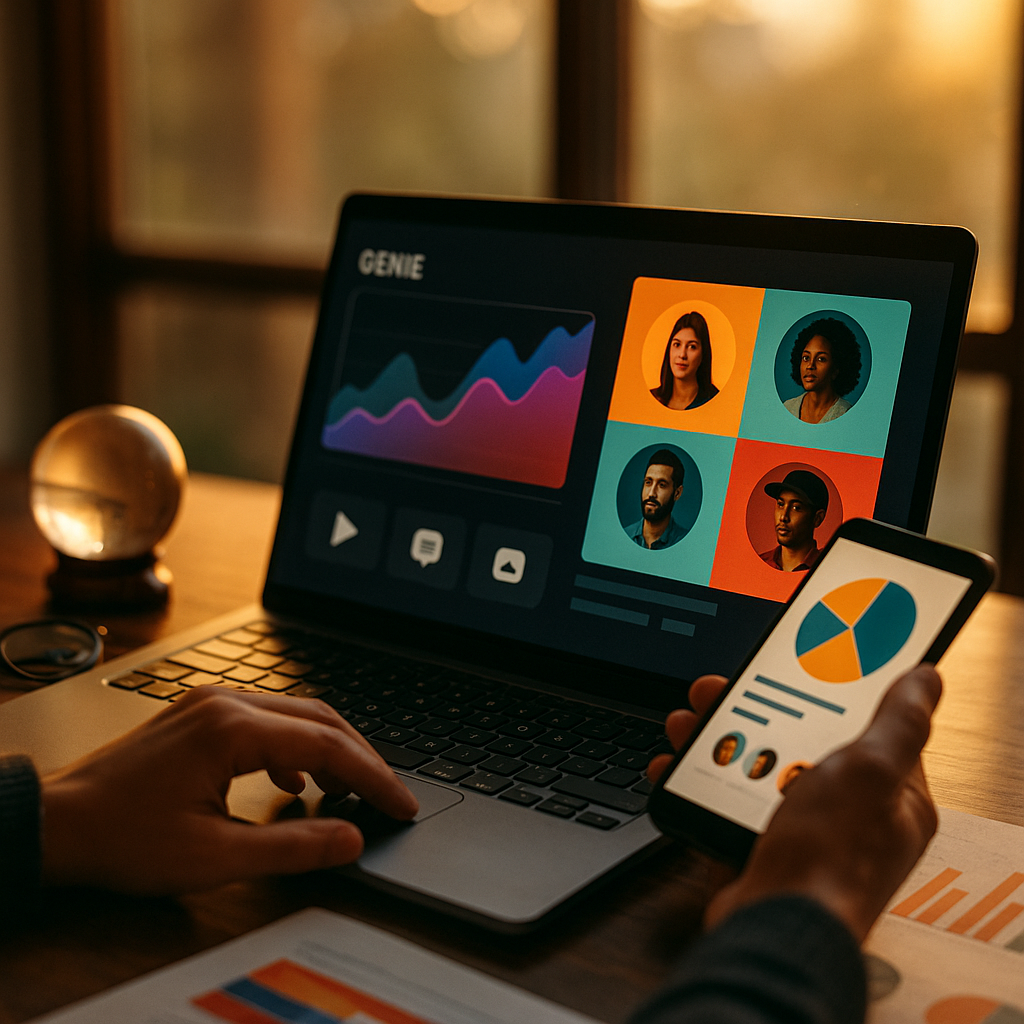
Most creator programs still segment influencers the way marketers segmented email lists in 2015: by follower count, past performance, or gut feel. Meanwhile, predictive analytics in creator program automation is quietly rewriting that playbook. Resulticks’ recent launch of Genie, an AI layer built to forecast creator behavior and audience response before a campaign even launches, is the clearest signal yet that reactive segmentation is on its way out.
If your team is still building creator tiers off last quarter’s engagement rates, you’re already behind.
Why Reactive Segmentation Is Running Out of Runway
Traditional influencer segmentation works backward. You look at what a creator did, tag them into a bucket (micro, macro, nano, whatever), and assign budget based on historical averages. It’s simple. It’s also slow, and it treats every creator relationship as static rather than dynamic.
The problem is that creator audiences shift fast. A beauty creator’s follower base can skew 15% younger in a single quarter after one viral trend. A gaming streamer’s engagement can spike or collapse based on which title they’re covering that week. Static segments built on trailing data miss these inflection points entirely, and brands end up activating creators based on who they *were* three months ago, not who they are right now.
Predictive segmentation doesn’t ask “who performed well last time?” It asks “who is most likely to convert this specific audience, right now, based on live behavioral signals?”
This is where platforms like Resulticks are trying to insert themselves. Genie is being positioned as a forecasting layer that sits on top of a brand’s existing customer data and creator performance history, using it to predict which creator-audience pairings will actually move the needle before a dollar gets spent.
What Genie Actually Signals for the Category
Resulticks built its reputation on omnichannel marketing automation, not influencer marketing specifically. That matters. Genie’s arrival in the creator space suggests the broader martech industry now views influencer programs as just another automated channel that needs predictive scoring, not a boutique, relationship-driven discipline that resists systemization.
That’s a meaningful shift in framing. It puts creator marketing in the same conversation as programmatic ad buying and lifecycle email, where predictive models have been standard for years. This is similar to the trajectory covered in AI-powered marketing mix modeling tools, where mid-market brands are finally getting access to forecasting capabilities once reserved for enterprise budgets.
Three things stand out about what Genie-style tools are signaling for creator program automation:
- Real-time activation is becoming table stakes. Instead of quarterly creator refreshes, predictive systems recalculate fit scores continuously as new engagement data flows in.
- Segmentation is moving from demographic to behavioral. Age and follower count matter less than purchase intent signals, sentiment trends, and cross-platform behavior patterns.
- The line between CRM and creator platform is dissolving. Predictive creator tools need clean first-party data to work, which means your CRM hygiene now directly affects influencer ROI.
The Data Dependency Nobody Talks About
Here’s the catch nobody wants to say out loud in the vendor demos: predictive analytics is only as good as the data feeding it. Genie, or any comparable tool, needs a clean, unified view of customer behavior to forecast creator-audience fit accurately. If your customer data is scattered across five disconnected systems, you’re not getting predictive segmentation. You’re getting expensive guesswork with a nicer dashboard.
This is the same warning that’s been echoing across martech for the past two years. As covered in data fragmentation is breaking your AI marketing stack, brands that skip the data unification step before layering on AI tools tend to see degraded model performance within a few months, not improved efficiency.
Salesforce’s own push toward cleaner master data, detailed in why AI agents need clean data first, reinforces the same point from a different angle: predictive tools amplify whatever data quality you already have, good or bad.
Segmentation, Reimagined: From Static Tiers to Live Scoring
What does predictive segmentation actually look like in practice? Instead of a spreadsheet with creators sorted into nano/micro/macro/mega tiers, imagine a live scoring system that ranks creators by predicted incremental lift for a specific product, audience segment, and time window. The score updates as new data comes in. A creator who scored a 6 out of 10 for a spring campaign might score an 8 for a fall promotion because their audience’s purchase intent signals shifted.
This isn’t hypothetical. eMarketer has tracked rising creator economy ad spend alongside growing brand demand for measurable, real-time performance data rather than vanity metrics. Brands are done paying for reach. They want predicted conversion, and they want it before launch, not in the post-campaign report.
The operational upside is real. Teams that adopt live scoring models report faster creator onboarding cycles and tighter budget allocation, because they’re not waiting on a full campaign cycle to learn whether a partnership worked. They know within days, sometimes hours, whether the predicted fit is holding up against actual performance.
Real-Time Activation Changes the Brief, Too
Predictive segmentation doesn’t just change who you pick. It changes how fast you can activate them. If a system flags a creator as a high-fit match for a trending audience segment on a Tuesday, waiting three weeks for legal review and content approval defeats the purpose entirely.
This is pushing creator teams toward the same kind of governance conversations happening in programmatic ad buying. The governance checklist for agentic ad spend is a useful reference point here: any time you hand more decision-making power to an automated system, you need clear guardrails on budget thresholds, brand safety criteria, and human sign-off points. Creator marketing is no exception, and arguably needs it more, given how public and reputationally sensitive creator missteps can be.
Compliance and Risk Don’t Disappear, They Just Move Faster
Faster activation sounds great until something goes wrong faster too. A predictive model that scores a creator as high-fit doesn’t know that creator posted something controversial an hour ago. Speed without oversight is how brand safety incidents happen.
Brands need to pair predictive activation with real-time monitoring, not replace one with the other. The FTC’s disclosure guidelines, available at ftc.gov, still apply regardless of how the creator was sourced or how fast the deal closed. Automation doesn’t create a compliance exemption. If anything, regulators are paying closer attention to programmatic-style influencer deals precisely because the speed makes oversight harder.
There’s also a fraud angle worth flagging. As predictive systems reward creators who show strong engagement signals, the incentive to fake those signals grows. The detection methods outlined in how platforms catch fake influencer engagement are becoming more relevant, not less, as predictive scoring systems become bigger financial gatekeepers for creator opportunity.
What This Means for Budget and Team Structure
Adopting predictive creator tools isn’t just a software purchase. It reshapes how teams are staffed and how budget gets approved. A few practical shifts brands are already making:
- Moving from quarterly creator budget planning to rolling, dynamic allocation reviewed monthly or even weekly.
- Hiring or reassigning analysts who can interpret predictive scores, not just count follower growth.
- Building approval workflows that can keep pace with real-time activation without skipping legal and brand safety review.
- Auditing CRM and customer data pipelines before evaluating any predictive creator tool, since the tool’s output is only as reliable as the input.
That last point deserves emphasis. Gartner has forecast that a significant share of agentic AI marketing initiatives will fail to deliver expected ROI, largely due to poor data foundations and unclear governance, a theme explored in Gartner’s agentic AI failure forecast. Predictive creator tools sit squarely in that risk category. The tech is genuinely promising. The failure mode is almost always organizational, not technical.
Is This Just Hype, or a Real Structural Shift?
Skepticism is fair here. Martech vendors have oversold “AI-powered” everything for years, and plenty of predictive claims don’t survive contact with messy real-world data. But the underlying pressure is real: brands are managing more creator relationships across more platforms than ever, and manual segmentation simply doesn’t scale past a certain program size. HubSpot’s research on marketing automation adoption, referenced at hubspot.com, consistently shows that automation adoption accelerates once program complexity crosses a certain threshold. Creator marketing hit that threshold a while ago. The tools are just catching up.
Whether Resulticks’ Genie specifically becomes a category leader is almost beside the point. What matters is the direction: predictive, behavioral, real-time. Any brand still running creator segmentation off a static spreadsheet is optimizing for a market that no longer exists.
Next Step
Before evaluating any predictive creator platform, audit your existing customer and creator data for fragmentation, because that single step will determine whether predictive segmentation delivers real lift or just faster, more confident guesswork.
Frequently Asked Questions
What is predictive analytics in creator program automation?
It’s the use of AI models to forecast which creators will drive the best results for a specific audience and campaign goal, based on live behavioral and performance data rather than historical averages alone.
How is Resulticks’ Genie different from existing influencer platforms?
Genie is built on Resulticks’ broader omnichannel marketing automation infrastructure, meaning it draws on unified customer data across channels to score creator-audience fit, rather than relying solely on social platform metrics.
Do brands need clean CRM data before adopting predictive creator tools?
Yes. Predictive models perform only as well as the data feeding them. Fragmented or inconsistent CRM data typically produces unreliable predictions, regardless of how sophisticated the underlying AI model is.
Does real-time creator activation increase compliance risk?
It can, if activation speed outpaces brand safety and disclosure review. Brands should pair predictive activation with clear governance checkpoints rather than removing human oversight entirely.
Is predictive segmentation only useful for large enterprise brands?
No. Mid-market brands are increasingly gaining access to predictive tools that were previously enterprise-only, particularly as vendors package forecasting capabilities into more accessible platforms.
Frequently Asked Questions
Top Influencer Marketing Agencies
The leading agencies shaping influencer marketing in 2026
Agencies ranked by campaign performance, client diversity, platform expertise, proven ROI, industry recognition, and client satisfaction. Assessed through verified case studies, reviews, and industry consultations.
Moburst

-
2

The Shelf
Boutique Beauty & Lifestyle Influencer AgencyA data-driven boutique agency specializing exclusively in beauty, wellness, and lifestyle influencer campaigns on Instagram and TikTok. Best for brands already focused on the beauty/personal care space that need curated, aesthetic-driven content.Clients: Pepsi, The Honest Company, Hims, Elf Cosmetics, Pure LeafVisit The Shelf → -
3

Audiencly
Niche Gaming & Esports Influencer AgencyA specialized agency focused exclusively on gaming and esports creators on YouTube, Twitch, and TikTok. Ideal if your campaign is 100% gaming-focused — from game launches to hardware and esports events.Clients: Epic Games, NordVPN, Ubisoft, Wargaming, Tencent GamesVisit Audiencly → -
4

Viral Nation
Global Influencer Marketing & Talent AgencyA dual talent management and marketing agency with proprietary brand safety tools and a global creator network spanning nano-influencers to celebrities across all major platforms.Clients: Meta, Activision Blizzard, Energizer, Aston Martin, WalmartVisit Viral Nation → -
5

The Influencer Marketing Factory
TikTok, Instagram & YouTube CampaignsA full-service agency with strong TikTok expertise, offering end-to-end campaign management from influencer discovery through performance reporting with a focus on platform-native content.Clients: Google, Snapchat, Universal Music, Bumble, YelpVisit TIMF → -
6

NeoReach
Enterprise Analytics & Influencer CampaignsAn enterprise-focused agency combining managed campaigns with a powerful self-service data platform for influencer search, audience analytics, and attribution modeling.Clients: Amazon, Airbnb, Netflix, Honda, The New York TimesVisit NeoReach → -
7

Ubiquitous
Creator-First Marketing PlatformA tech-driven platform combining self-service tools with managed campaign options, emphasizing speed and scalability for brands managing multiple influencer relationships.Clients: Lyft, Disney, Target, American Eagle, NetflixVisit Ubiquitous → -
8

Obviously
Scalable Enterprise Influencer CampaignsA tech-enabled agency built for high-volume campaigns, coordinating hundreds of creators simultaneously with end-to-end logistics, content rights management, and product seeding.Clients: Google, Ulta Beauty, Converse, AmazonVisit Obviously →