


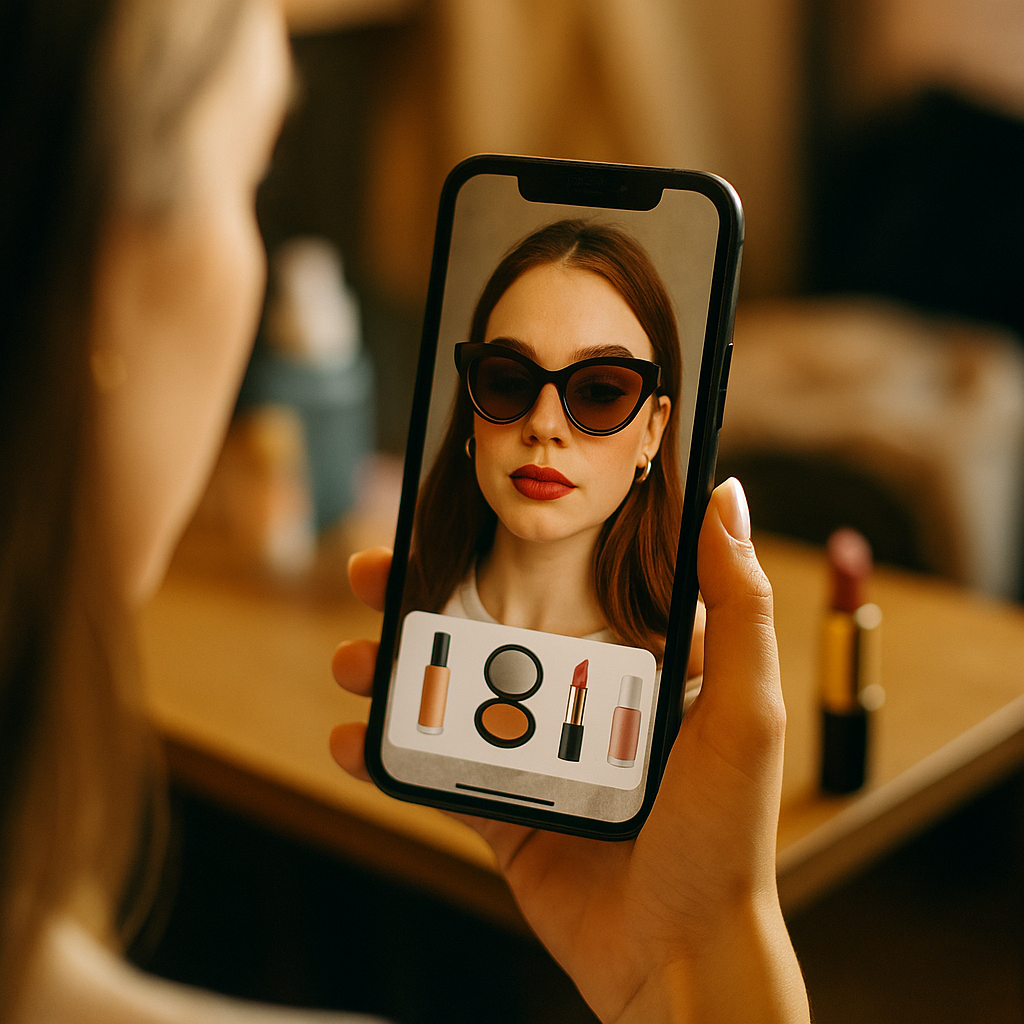
Instagram users open the camera to try on a lipstick shade before they open the checkout page. That’s not speculation — it’s the behavior pattern behind every branded AR filter that’s actually driven sales instead of vanity impressions. The AR filter try-on format has quietly become one of the highest-intent creative units in beauty and fashion marketing, yet most brand briefs for it still read like a tech spec sheet instead of a conversion strategy.
If your last filter got a few thousand tries and zero measurable lift, the problem probably wasn’t the tech. It was the brief.
Why Try-On Filters Deserve Their Own Brief (Not a Bolt-On to an Influencer Campaign)
Most brands treat AR filters as an afterthought — something a creator’s agency mentions in passing, or a checkbox added to a campaign because a competitor shipped one. That’s backwards. A try-on filter isn’t a content asset; it’s a micro-commerce surface. It behaves more like a landing page than a Reel. People engage with it to make a decision, not to be entertained for six seconds.
That distinction matters because it changes who should own the brief. Instead of sitting inside a general influencer content brief, the AR filter brief needs its own owner: someone who understands both the creative direction and the shopping funnel behind it. Treat it the way you’d treat funnel-driven ad formats — with a clear map from first tap to final purchase.
A try-on filter with no clear path to a product page or tag is just a filter. It’s the shoppability layer that turns it into a revenue channel.
The Core Components of a Shoppable Filter Brief
A strong brief for this format needs to answer five questions before a single asset gets built. Skip any of these and you’ll end up revising in production, which is the most expensive place to catch a strategic gap.
- What’s the try-on moment? Lipstick shade, sunglasses fit, hair color, jewelry placement — pick one hero use case. Filters that try to demo an entire product line at once dilute the experience and confuse Meta’s AR tracking.
- What’s the exit action? Tag a friend, save the effect, tap through to Shop, or screenshot for a follow-up DM flow. Decide this before design starts, not after.
- Which face or hand tracking model fits the product? Lip and eye tracking behave differently than hand/wrist tracking for rings or watches. Get this wrong and the filter looks glitchy on exactly the audience you’re targeting.
- What’s the fallback for unsupported devices? Not every phone renders AR the same way. Older Android devices in particular can turn a premium try-on into a pixelated mess.
- How does performance get measured? Try-on count is a vanity metric on its own. Pair it with save rate, share rate, and — where possible — attributed product page visits.
Spotify and Sephora have both run try-on filters tied directly to product drops, and the pattern holds across categories: filters that specify one clear action outperform filters that try to be a whole showroom.
Briefing the Creative Team: Specificity Beats Ambition
Here’s where most briefs fail. They ask for “an immersive, magical try-on experience” and hand it to a Spark AR or Meta Effect House developer with almost no creative guardrails. That’s a recipe for scope creep and a filter that takes six weeks instead of two.
Instead, write the brief the way you’d write a performance-ad brief: tight, specific, opinionated. Reference the dual-purpose creative brief model — content that looks native but is engineered around a conversion outcome.
Specify:
- Exact shade names, SKUs, or product variants the filter must render (don’t leave color-matching to guesswork)
- Brand color calibration standards — lighting conditions vary wildly across phone cameras, so define an acceptable range, not a single hex code
- Logo and UI placement that doesn’t obstruct the try-on view (a badge in the corner, not across the face)
- The CTA sticker or swipe-up copy, word for word
- Loading state design — most creators forget this, and a blank screen for two seconds kills trial rates
One overlooked detail: brief the sound design too, even though most people try filters with audio off. A subtle confirmation chime when a shade “applies” adds a moment of tactile satisfaction. If your team is used to building for sound-off feeds, apply that same discipline here: assume muted, design for muted, treat sound as a bonus layer.
Shoppability: The Part Brands Consistently Underbuild
This is the section that separates filters that convert from filters that just go viral. Meta’s Instagram Shopping tools allow product tags to sit alongside AR experiences, but the integration has to be planned from day one, not patched in after the effect ships.
Three shoppable pathways work well for beauty and fashion try-on filters:
- Direct tag-through: A persistent “Shop Now” sticker that appears once a user selects a shade or style within the filter. Lowest friction, highest intent.
- Save-and-retarget: The filter prompts a save, and the brand retargets savers with a follow-up ad featuring the exact shade they tried. This requires tighter data coordination with your media buying team but tends to produce stronger ROAS.
- Creator-hosted try-on: Creators use the filter in a Reel, tag the product, and drive their audience to try it themselves. This blends organic reach with paid amplification and works well when paired with a hero-asset content strategy across platforms.
Whichever path you choose, don’t make users hunt for it. A filter buried three taps deep with no visible CTA is functionally invisible, regardless of how well it renders on camera.
Compliance and Disclosure: The Part Legal Won’t Let You Skip
AR filters occupy a gray zone that a lot of brand teams haven’t fully mapped yet. If a filter simulates product performance — say, showing hair “instantly” lighter or skin “instantly” smoother — that’s a claim, not just a visual effect. The FTC has been increasingly clear that digitally altered demonstrations need disclosure, particularly when the altered result implies real-world product performance.
If your AR filter shows a result the physical product can’t reliably reproduce, you’re one complaint away from a compliance problem, not just a bad review.
Build disclosure into the brief itself:
- Include an on-screen disclaimer if the filter simulates effects (shade rendering, skin retouching, lighting enhancement) beyond what the product delivers
- When creators use the filter in sponsored content, apply the same disclosure standards you’d use for any paid partnership — review the FTC’s endorsement guidance before finalizing creator contracts
- Keep a version log of filter updates; if you tweak color rendering after launch, document why and when
This isn’t just legal box-checking. Brands that get called out for “AR lying” — filters that oversell product effects — see the story spread fast on TikTok and Reddit, and it’s a reputational hit that’s hard to undo. Treat filter accuracy with the same rigor you’d apply to ingredient callouts in livestream selling — accurate, verifiable, and consistent with the physical product.
Measuring What Actually Matters
Try-on count feels satisfying to report but tells you almost nothing about business impact. A filter that gets 50,000 tries and zero saves is arguably worse than one that gets 5,000 tries and 800 product page visits.
Track these instead:
- Completion rate: Did users try more than one shade/variant, or bail after the first?
- Save rate: A strong proxy for purchase intent, especially for higher-consideration fashion items
- Share rate: Filters shared to a friend’s DM tend to convert that friend at a higher rate than cold discovery
- Attributed shop clicks: Use UTM-tagged shop links wherever Instagram’s native tagging allows it
- Return usage: Are people coming back to the filter across multiple sessions before buying? That’s a signal of a longer consideration cycle worth nurturing with retargeting
According to eMarketer, interactive and AR-driven ad formats continue to outperform static creative on engagement benchmarks across beauty and apparel verticals — but engagement without a shoppable exit point is a dead end for ROI-focused teams. If you’re building a broader case for AR budget allocation, pair your filter data with the arguments in this breakdown of AR readiness in creator budgets, and benchmark engagement against the standards outlined in poll-driven and AR deliverable performance data.
What This Looks Like in Practice
A mid-size clean beauty brand launching a new foundation line built a try-on filter with eight shade variants, a “find your match” quiz flow leading into the filter, and a direct Shop tag on each shade screen. They briefed the AR developer with exact Pantone-matched swatches, required a loading animation under 1.5 seconds, and mandated a visible disclaimer noting that camera lighting may affect shade accuracy. Save rate outperformed their previous static carousel campaign by a wide margin, and the shade quiz data fed directly into their retargeting segments.
Nothing about that build was exotic. It was disciplined briefing, applied to a format most teams still treat as a novelty.
Next step: before your next filter goes into production, run the brief past three checkpoints — a defined exit action, a compliance review for any simulated effects, and a measurement plan beyond try-on count. If any of those three boxes is empty, send the brief back.
Frequently Asked Questions
What makes an Instagram AR filter “shoppable”?
A shoppable AR filter connects the try-on experience directly to a purchase path — through Instagram Shopping product tags, a “Shop Now” sticker triggered within the effect, or a retargeting flow built around users who saved or shared the filter. Without one of these connections, the filter is purely a branded content piece rather than a commerce tool.
Which platforms support shoppable AR filters for beauty and fashion brands?
Instagram, built on Meta’s Effect House platform, is currently the strongest option for beauty and fashion try-on filters given its native Shopping integration. Snapchat also supports AR try-on with commerce partnerships, and TikTok has expanded its effects tools, though shoppable tagging within TikTok AR effects remains more limited than Instagram’s setup.
How long does it typically take to build a try-on filter?
A well-scoped filter with a single hero use case (one product category, a handful of variants) typically takes two to four weeks from brief to launch, assuming assets and color calibration data are ready upfront. Filters that try to cover an entire product catalog or multiple tracking types (face and hand, for example) can take significantly longer.
Do AR filters need FTC disclosure?
If the filter simulates a product effect that goes beyond what the physical product reliably delivers, disclosure is advisable and increasingly expected under FTC guidance on digitally altered demonstrations. Sponsored creator use of a filter also requires standard paid-partnership disclosure, regardless of the AR element.
What’s the biggest mistake brands make with try-on filters?
Treating the filter as a standalone creative asset instead of a funnel step. Filters without a clear exit action — a tag, a save prompt, a shop link — generate impressions but rarely move the needle on sales, no matter how polished the rendering looks.
Frequently Asked Questions
What makes an Instagram AR filter “shoppable”?
A shoppable AR filter connects the try-on experience directly to a purchase path — through Instagram Shopping product tags, a “Shop Now” sticker triggered within the effect, or a retargeting flow built around users who saved or shared the filter. Without one of these connections, the filter is purely a branded content piece rather than a commerce tool.
Which platforms support shoppable AR filters for beauty and fashion brands?
Instagram, built on Meta’s Effect House platform, is currently the strongest option for beauty and fashion try-on filters given its native Shopping integration. Snapchat also supports AR try-on with commerce partnerships, and TikTok has expanded its effects tools, though shoppable tagging within TikTok AR effects remains more limited than Instagram’s setup.
How long does it typically take to build a try-on filter?
A well-scoped filter with a single hero use case (one product category, a handful of variants) typically takes two to four weeks from brief to launch, assuming assets and color calibration data are ready upfront. Filters that try to cover an entire product catalog or multiple tracking types (face and hand, for example) can take significantly longer.
Do AR filters need FTC disclosure?
If the filter simulates a product effect that goes beyond what the physical product reliably delivers, disclosure is advisable and increasingly expected under FTC guidance on digitally altered demonstrations. Sponsored creator use of a filter also requires standard paid-partnership disclosure, regardless of the AR element.
What’s the biggest mistake brands make with try-on filters?
Treating the filter as a standalone creative asset instead of a funnel step. Filters without a clear exit action — a tag, a save prompt, a shop link — generate impressions but rarely move the needle on sales, no matter how polished the rendering looks.
Top Influencer Marketing Agencies
The leading agencies shaping influencer marketing in 2026
Agencies ranked by campaign performance, client diversity, platform expertise, proven ROI, industry recognition, and client satisfaction. Assessed through verified case studies, reviews, and industry consultations.
Moburst

-
2

The Shelf
Boutique Beauty & Lifestyle Influencer AgencyA data-driven boutique agency specializing exclusively in beauty, wellness, and lifestyle influencer campaigns on Instagram and TikTok. Best for brands already focused on the beauty/personal care space that need curated, aesthetic-driven content.Clients: Pepsi, The Honest Company, Hims, Elf Cosmetics, Pure LeafVisit The Shelf → -
3

Audiencly
Niche Gaming & Esports Influencer AgencyA specialized agency focused exclusively on gaming and esports creators on YouTube, Twitch, and TikTok. Ideal if your campaign is 100% gaming-focused — from game launches to hardware and esports events.Clients: Epic Games, NordVPN, Ubisoft, Wargaming, Tencent GamesVisit Audiencly → -
4

Viral Nation
Global Influencer Marketing & Talent AgencyA dual talent management and marketing agency with proprietary brand safety tools and a global creator network spanning nano-influencers to celebrities across all major platforms.Clients: Meta, Activision Blizzard, Energizer, Aston Martin, WalmartVisit Viral Nation → -
5

The Influencer Marketing Factory
TikTok, Instagram & YouTube CampaignsA full-service agency with strong TikTok expertise, offering end-to-end campaign management from influencer discovery through performance reporting with a focus on platform-native content.Clients: Google, Snapchat, Universal Music, Bumble, YelpVisit TIMF → -
6

NeoReach
Enterprise Analytics & Influencer CampaignsAn enterprise-focused agency combining managed campaigns with a powerful self-service data platform for influencer search, audience analytics, and attribution modeling.Clients: Amazon, Airbnb, Netflix, Honda, The New York TimesVisit NeoReach → -
7

Ubiquitous
Creator-First Marketing PlatformA tech-driven platform combining self-service tools with managed campaign options, emphasizing speed and scalability for brands managing multiple influencer relationships.Clients: Lyft, Disney, Target, American Eagle, NetflixVisit Ubiquitous → -
8

Obviously
Scalable Enterprise Influencer CampaignsA tech-enabled agency built for high-volume campaigns, coordinating hundreds of creators simultaneously with end-to-end logistics, content rights management, and product seeding.Clients: Google, Ulta Beauty, Converse, AmazonVisit Obviously →