


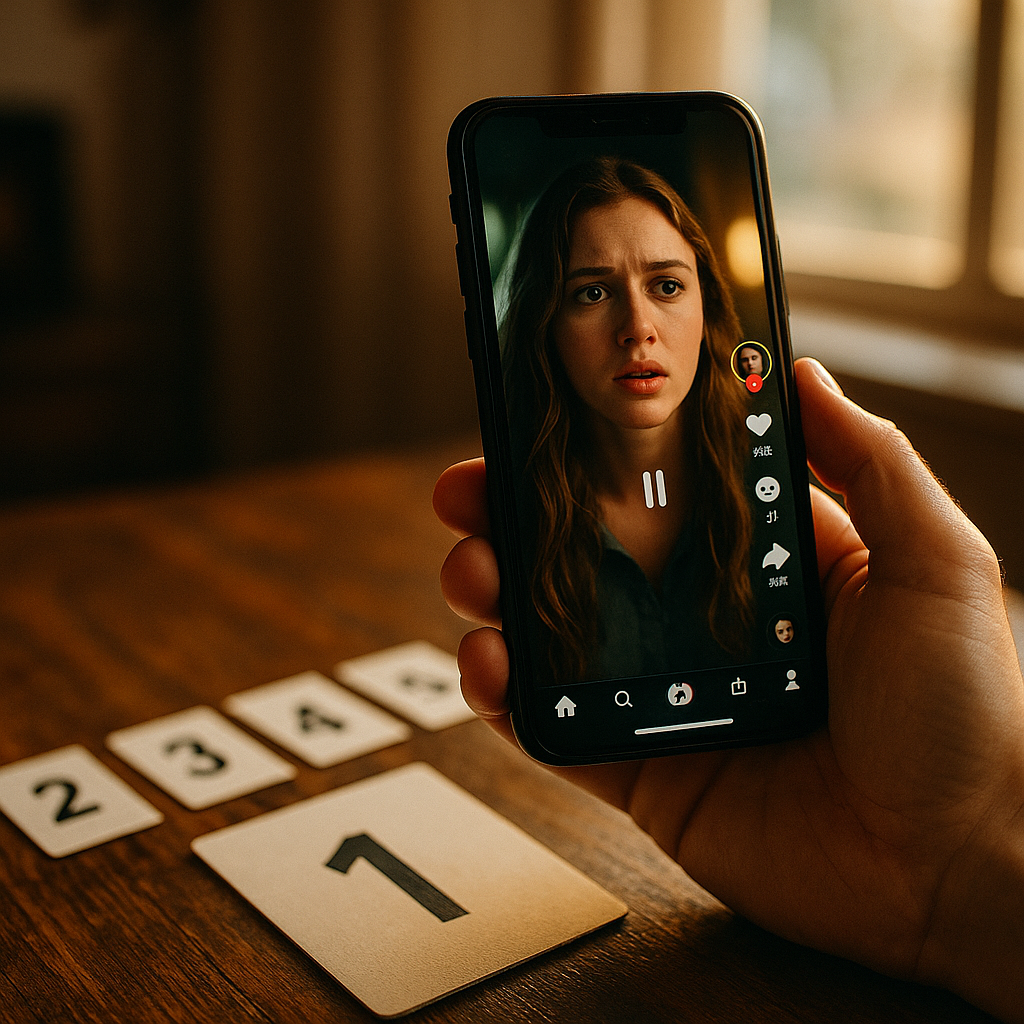
TikTok’s own creators have noticed it: single videos plateau, but series don’t. Accounts running a TikTok content arc across multiple linked posts routinely see follow-through rates north of 60% between episodes, according to internal benchmarking shared by top-performing creator agencies. One video is a pitch. Five videos, structured right, is a retention machine.
Most brands still brief TikTok content one asset at a time. That’s the mistake. A single 30-second video has to earn everything in one shot: the hook, the payoff, the CTA. A five-episode arc spreads that burden across a narrative, and narrative is the one thing TikTok’s algorithm rewards disproportionately — because it drives session length, return visits, and comment threads that stretch for days.
Why Cliffhangers Outperform Standalone Posts
TikTok ranks content partly on completion rate and session continuation. A cliffhanger series doesn’t just ask “did they watch this video” — it asks “did they come back for the next one.” That’s a fundamentally different signal, and it’s one the algorithm treats as high-intent engagement.
Think about what happens when Episode 1 ends on an unresolved question. The viewer doesn’t just scroll away satisfied. They follow the account, they check the comments for spoilers, they search the sound or hashtag to find Episode 2 before it’s even suggested to them. That behavior — active-seeking rather than passive-scrolling — is exactly what platforms like TikTok’s ad platform flags as high-value engagement when allocating organic reach.
A cliffhanger series converts passive viewers into active seekers — and active seekers are the audience segment every algorithm rewards with disproportionate reach.
Compare this to a traditional single-post brief. Even a great one — see our breakdown on winning TikTok’s algorithm — tops out at the ceiling of that one video’s own performance. A series compounds. Episode 3’s performance is boosted by Episode 1 and 2’s audience already primed to watch.
The Five-Episode Arc: Structure Before Story
Before you write a single script, map the arc’s shape. Most successful five-part series follow a version of this structure:
- Episode 1 — The Hook Setup: Introduce a problem, product mystery, or transformation promise. End on an open loop, not a resolution.
- Episode 2 — Escalation: Raise stakes or complexity. This is where you can introduce a twist related to the product’s real differentiator.
- Episode 3 — The Midpoint Reveal: Give viewers a partial payoff. Enough to feel rewarded, not enough to end the series early.
- Episode 4 — Complication: Introduce doubt, an objection, or a “but wait” moment. This is your soft-sell placement for pricing or comparison content.
- Episode 5 — Resolution and CTA: Deliver the payoff and the clearest purchase or follow action of the series.
Notice the CTA doesn’t appear until Episode 5. That’s deliberate. Front-loading a hard sell kills the narrative tension that makes viewers return. Save it. Let curiosity do the selling for four episodes first.
Where Most Brands Break the Arc
The most common failure isn’t weak scripting — it’s inconsistent posting cadence. TikTok’s own creator guidance and third-party studies from eMarketer both point to the same pattern: audience recall drops sharply after 48 hours without a follow-up post. If Episode 2 lands five days after Episode 1, you’ve lost the compounding effect entirely. You’re back to five standalone videos wearing a series costume.
Plan the full arc’s shoot and publishing calendar before Episode 1 goes live. Batch-produce if you can. A creator improvising Episode 4 based on Episode 3’s comment section is a nice bonus, not a strategy.
Briefing Creators for Serialized Content
This is where most influencer briefs fall short — they’re built for one-off assets, not arcs. A serialized brief needs to specify things a single-post brief never touches:
- The emotional or narrative “hook” that must survive from episode to episode
- Which product detail is reserved for which episode (don’t let a creator spoil the Episode 3 reveal in Episode 1’s caption)
- Consistent visual or audio motifs that signal “this is part of the series” within the first two seconds
- A shared hashtag or series title so TikTok’s search and recommendation systems can cluster the episodes
- FTC disclosure language that must appear in every episode, not just the first — a compliance detail brands frequently miss
On that last point: the FTC’s endorsement guidance doesn’t grant a pass on episode two just because episode one carried a #ad tag. Every sponsored installment needs its own clear, unavoidable disclosure. We’ve covered this in detail in our piece on multi-episode creator series briefs, and it’s worth treating as a non-negotiable checklist item, not a legal afterthought.
Good serialized briefs also assign a “continuity owner” — usually the creator, sometimes an in-house strategist — whose job is making sure Episode 4 doesn’t contradict a claim made in Episode 2. Sounds obvious. Gets missed constantly, especially when a series runs over two or three weeks and involves back-and-forth creative revisions.
Measuring an Arc, Not Just a Video
Standard TikTok analytics weren’t built with series in mind. You’ll need to track a few metrics beyond the usual views-and-likes dashboard:
- Episode-to-episode follow-through rate: what percentage of Episode 1 viewers watched Episode 2 within 72 hours
- Series completion rate: the share of the initial audience that made it to Episode 5
- Comment-driven speculation volume: a strong proxy for organic anticipation between episodes
- CTA conversion delta: compare Episode 5’s conversion rate against a control single-post CTA from the same creator
If you’re running this through TikTok Shop or a linked storefront, cross-reference with the retention patterns we outlined in full-lifecycle content briefs for TikTok Shop retention — a lot of the same drop-off diagnostics apply. Series content tends to convert better at the final CTA moment precisely because viewers have self-selected through four episodes of qualification.
Watch-time itself deserves a specific note. Sprout Social’s platform research consistently shows that average session length is one of the strongest predictors of algorithmic distribution on short-form video platforms. A five-part arc, watched in sequence within a single sitting by a chunk of your audience, can materially lift average session duration for your account — which then benefits the distribution of everything you post afterward, not just the series itself.
What Format Actually Works Best?
Not every product story deserves a five-part arc. Cliffhanger series work best for:
- Product transformations with a visible before/after (skincare, home goods, fitness)
- Comparison or “which one wins” formats stretched across multiple rounds
- Origin stories with a genuine plot — founder journeys, sourcing mysteries, behind-the-scenes builds
- Problem-solution reveals where the “problem” episode alone generates strong standalone engagement
They work poorly for straightforward utility products with no inherent narrative tension. Forcing a cliffhanger onto a five-part series about a phone charger is going to feel gimmicky fast, and TikTok audiences punish gimmick with an unfollow. If your product doesn’t have a natural story arc, a format like the unboxing brief or a silent product demo will likely outperform a forced series.
It’s also worth considering creator fit. Not every creator can sustain narrative tension across five posts without it feeling manufactured. Look for creators who already post in a serialized, ongoing-story style organically — they’ll understand pacing instinctively, and you’ll spend less time in brief revisions.
Budgeting the Arc Differently Than a Single Post
Pricing five linked videos like five independent deliverables misreads the value exchange. The series as a whole is worth more than the sum of its parts, both to you and to the creator, because it demands sustained creative continuity and carries higher creative risk if any episode underperforms.
Structure compensation with a partial holdback tied to series completion metrics: base pay per episode, plus a bonus if the series hits a target completion rate by Episode 5. This aligns incentives without punishing the creator for factors outside their control, like TikTok’s shifting distribution algorithm mid-series.
FAQs
Frequently Asked Questions
How many episodes should a TikTok cliffhanger series have?
Five is the sweet spot for most brand campaigns. It’s long enough to build real narrative momentum and compound watch-time, but short enough that audience attention doesn’t fully decay between episodes. Series longer than seven or eight parts see steep drop-off unless the creator has an unusually loyal following.
How often should episodes be posted?
Every 24 to 48 hours is ideal. Waiting longer than that risks losing the audience recall needed to keep completion rates high across the series.
Does every episode need its own FTC disclosure?
Yes. The FTC’s endorsement guidelines require clear, conspicuous disclosure on each sponsored piece of content, not just the first installment of a series. Assume every episode needs its own #ad or paid partnership label.
Can this format work for products without an obvious storyline?
It’s harder, but not impossible. Comparison formats, “problem of the week” structures, or countdown-style reveals can create narrative tension even for straightforward products. If there’s genuinely no angle, a single strong standalone post will usually outperform a forced series.
How do I measure whether the series actually outperformed single posts?
Compare episode-to-episode follow-through rate, total series completion rate, and final-episode CTA conversion against a control group of standalone posts from the same creator or account. Session length and account-level distribution lift in the days following the series are also worth tracking.
Stop briefing TikTok content one video at a time. Map the five-episode arc first, lock the disclosure and continuity rules into the brief, and pay for series completion, not just posts — that’s where the watch-time compounding actually happens.
Top Influencer Marketing Agencies
The leading agencies shaping influencer marketing in 2026
Agencies ranked by campaign performance, client diversity, platform expertise, proven ROI, industry recognition, and client satisfaction. Assessed through verified case studies, reviews, and industry consultations.
Moburst

-
2

The Shelf
Boutique Beauty & Lifestyle Influencer AgencyA data-driven boutique agency specializing exclusively in beauty, wellness, and lifestyle influencer campaigns on Instagram and TikTok. Best for brands already focused on the beauty/personal care space that need curated, aesthetic-driven content.Clients: Pepsi, The Honest Company, Hims, Elf Cosmetics, Pure LeafVisit The Shelf → -
3

Audiencly
Niche Gaming & Esports Influencer AgencyA specialized agency focused exclusively on gaming and esports creators on YouTube, Twitch, and TikTok. Ideal if your campaign is 100% gaming-focused — from game launches to hardware and esports events.Clients: Epic Games, NordVPN, Ubisoft, Wargaming, Tencent GamesVisit Audiencly → -
4

Viral Nation
Global Influencer Marketing & Talent AgencyA dual talent management and marketing agency with proprietary brand safety tools and a global creator network spanning nano-influencers to celebrities across all major platforms.Clients: Meta, Activision Blizzard, Energizer, Aston Martin, WalmartVisit Viral Nation → -
5

The Influencer Marketing Factory
TikTok, Instagram & YouTube CampaignsA full-service agency with strong TikTok expertise, offering end-to-end campaign management from influencer discovery through performance reporting with a focus on platform-native content.Clients: Google, Snapchat, Universal Music, Bumble, YelpVisit TIMF → -
6

NeoReach
Enterprise Analytics & Influencer CampaignsAn enterprise-focused agency combining managed campaigns with a powerful self-service data platform for influencer search, audience analytics, and attribution modeling.Clients: Amazon, Airbnb, Netflix, Honda, The New York TimesVisit NeoReach → -
7

Ubiquitous
Creator-First Marketing PlatformA tech-driven platform combining self-service tools with managed campaign options, emphasizing speed and scalability for brands managing multiple influencer relationships.Clients: Lyft, Disney, Target, American Eagle, NetflixVisit Ubiquitous → -
8

Obviously
Scalable Enterprise Influencer CampaignsA tech-enabled agency built for high-volume campaigns, coordinating hundreds of creators simultaneously with end-to-end logistics, content rights management, and product seeding.Clients: Google, Ulta Beauty, Converse, AmazonVisit Obviously →