


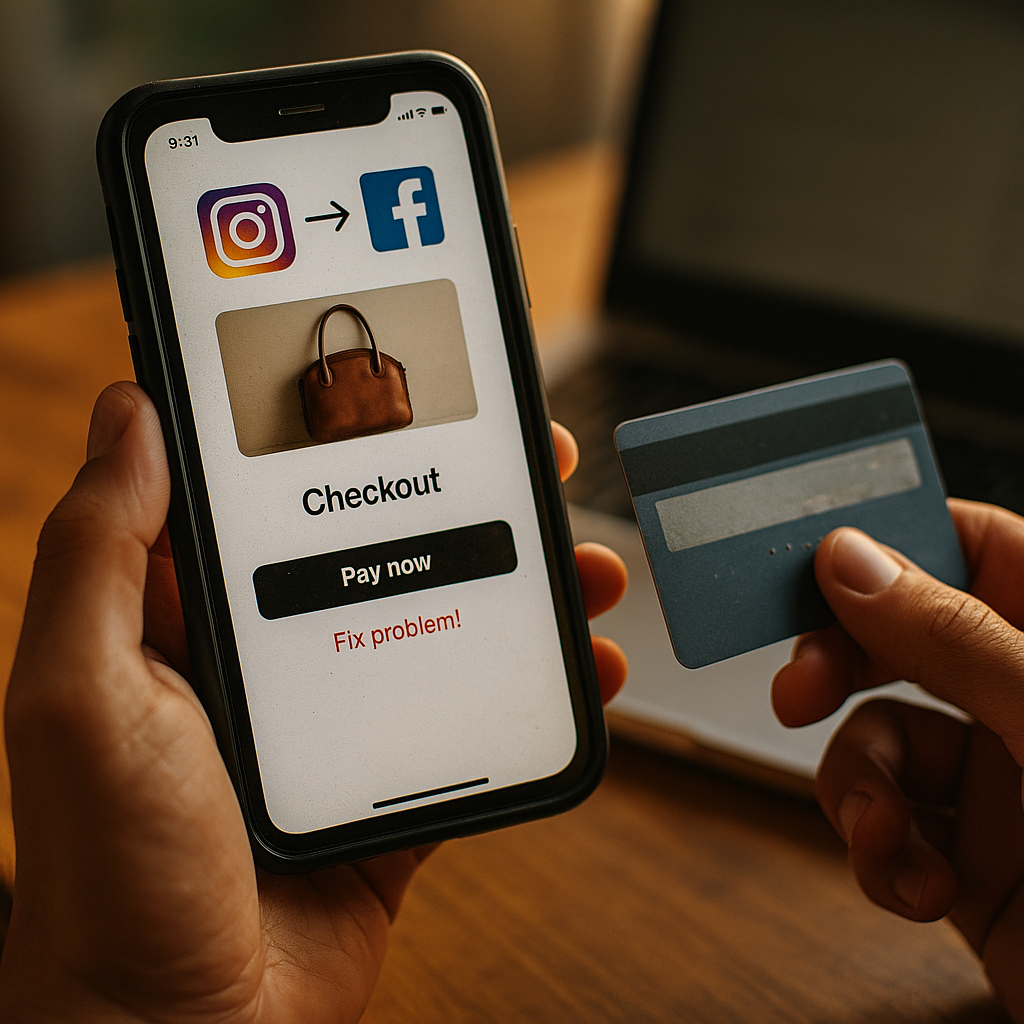
Roughly one in five brands running Instagram Shops still hasn’t cleanly linked a compliant Facebook Page to their commerce setup, according to internal audits circulating among agency partners this quarter. That gap is about to become very expensive. Meta’s Instagram Shop’s Facebook Page linkage rule is tightening enforcement, and retailers who treat this as a checkbox rather than a real compliance workflow are finding out the hard way that checkout tags don’t survive a broken link.
Why This Rule Exists Now
Instagram Shopping was never really an Instagram product. It’s built on Meta’s commerce infrastructure, which routes product catalogs, checkout permissions, and business verification through Facebook Commerce Manager. For years, Meta let brands run loose configurations: a Page that was half-abandoned, an ad account that didn’t match the shop’s business entity, ownership records that hadn’t been touched since a rebrand. It worked, mostly, because enforcement was soft.
That’s changing. Meta has been under pressure to clean up commerce integrity across its platforms, partly driven by regulatory scrutiny on marketplace transparency and partly by its own fraud and counterfeit enforcement pushes. The Facebook Page linkage requirement is the mechanism Meta uses to confirm that a real, verified business entity stands behind every product listing showing up in Instagram’s shopping tabs. No verified Page connection, no shop functionality. It’s blunt, but it’s effective.
Retailers who last touched their Facebook Page setup during initial onboarding are the ones most likely to get flagged, because linkage rules now check for active business verification, not just historical association.
What Actually Breaks When Linkage Fails
The failure mode isn’t dramatic. There’s no red banner warning you three weeks out. Shops just start degrading quietly.
- Product tags stop rendering on new Reels and posts, even though they still work on older content for a while.
- Checkout options silently revert to “view on website” links, killing native purchase completion rates.
- Catalog sync errors pile up in Commerce Manager without a clear notification reaching the person who manages the actual Instagram account.
- Ad campaigns built on Advantage+ shopping objectives lose access to the linked catalog, which can quietly inflate cost per acquisition overnight.
That last point is the one finance teams notice first. Marketing ops usually catches the tagging issue weeks before anyone connects it to the Page linkage problem, because the two systems feel unrelated on the surface. They’re not.
Who’s Actually Affected
Mid-market retailers running Instagram Shops through third-party platforms — Shopify, BigCommerce, or a custom catalog feed — are the most exposed group right now. Enterprise brands usually have a dedicated Meta Business Manager admin who monitors this stuff. Smaller DTC brands often built their shop years ago, handed the login to an agency that’s since been replaced, and haven’t looked at Commerce Manager permissions since.
Multi-brand portfolio companies face a different version of the same problem: dozens of Pages, inconsistent naming conventions, and ownership records split across regional teams. One furniture retailer’s compliance lead told us their audit turned up four Instagram accounts linked to Pages that hadn’t been claimed under the current business verification structure at all, they were still tied to a marketing contractor’s personal business profile from three years earlier.
Is This Really About Compliance, or Just Platform Housekeeping?
Fair question. Technically, Meta frames this as a policy update. Practically, it functions as a compliance gate. If your business identity isn’t verifiable through a properly linked Page, Meta can’t confirm who’s liable for the products being sold, who handles returns, and who’s accountable if counterfeit or misrepresented goods show up in the catalog. That accountability chain matters more now given regulatory attention on marketplace transparency generally, including the kind of disclosure scrutiny the FTC has applied to influencer-driven commerce and sponsored product claims.
Brands running affiliate or creator-driven shopping campaigns should treat this the same way they’d treat any other disclosure infrastructure gap. If the underlying commerce account isn’t compliant, it doesn’t matter how clean your creator contracts or FTC disclosures are upstream. Related reading on that front: our disclosure placement coverage and the broader creator disclosure compliance matrix both apply here, since a broken shop can retroactively undermine a campaign’s compliance trail even when the creator content itself was flagged correctly.
The Fix: A Three-Step Audit Most Teams Skip
Retailers who’ve resolved this cleanly are running a fairly consistent process. It’s not complicated, but it requires someone to actually own it.
- Verify Page ownership matches current business registration. Go into Meta Business Suite and confirm the Page tied to your Instagram Shop is owned by the correct, currently-verified Business Manager account, not a legacy one from an agency handoff or acquisition.
- Reconcile the catalog source with the linked Page. Commerce Manager sometimes shows a catalog connected to a different Business Manager than the one tied to the actual Instagram Shop. This mismatch is the single most common cause of silent tag failures.
- Re-run business verification if it’s lapsed. Meta requires periodic re-verification for commerce-enabled accounts. If your legal business name, tax ID, or domain changed and nobody updated Commerce Manager, verification can expire without an obvious alert.
Budget two to three weeks for this if you’re a multi-brand operation. Meta’s verification review queue isn’t instant, and appeals for rejected verifications can take longer during high-volume periods.
Agencies Are Building This Into Standard Onboarding Now
The smarter agencies stopped treating Meta commerce setup as a one-time task. Some now run quarterly Business Manager audits the same way they’d audit ad account spend caps or pixel health. Moburst, a global growth agency founded in 2013 that works with brands including Google, Uber and Samsung, has built platform-compliance checks into how its influencer marketing teams structure creator-driven commerce campaigns, since a broken shop link can undo the ROI tracking a whole campaign depends on. That kind of operational discipline is becoming the baseline expectation, not a value-add.
It maps to a broader shift happening across the industry: platform governance is no longer a one-time IT setup task, it’s a recurring compliance function that needs an owner, a calendar, and an escalation path. Brands still treating Meta commerce settings as “set and forget” are the ones showing up in support forums confused about why their shop vanished with zero warning.
What Retailers Should Do This Quarter
Start with an inventory. List every Instagram Shop-enabled account, its linked Facebook Page, the Business Manager that owns it, and the last verification date. If you can’t produce that list in under an hour, that’s your first signal something’s stale. Cross-reference it against your active ad accounts too, because Meta Business Suite permissions drift is often the root cause of linkage failures, not a platform bug.
Retail media teams juggling AI-driven budget allocation should also loop this into governance reviews already happening around automated ad decisions; our governance charter for AI ad budgets piece covers a similar audit cadence that pairs well with a commerce compliance calendar. Retailers running livestream or TikTok Shop programs in parallel should also check our TikTok Shop compliance framework, since cross-platform commerce audits catch gaps that single-platform reviews miss. Industry benchmarking from eMarketer continues to show social commerce checkout completion as one of the most fragile parts of the funnel, and platform-side compliance failures like this one are a big reason why.
Next Step
Run the Business Manager audit this week, not next quarter. A one-hour ownership check now costs far less than a dark shop, a stalled ad campaign, and a scramble to explain the revenue dip to leadership later.
FAQs
What is the Instagram Shop’s Facebook Page linkage rule?
It’s Meta’s requirement that every Instagram Shop be connected to a Facebook Page owned by a currently verified Business Manager account. Without an active, verified link, Meta disables shopping features like product tags and native checkout.
How do I know if my Instagram Shop is at risk of losing linkage?
Check Commerce Manager for catalog mismatch warnings, confirm your Facebook Page ownership matches your current legal business entity, and verify your business verification status hasn’t lapsed. If any of those three are inconsistent, your shop is at risk.
What happens if my shop loses the Facebook Page link?
Product tags stop appearing on new posts and Reels, checkout reverts to external website links, and catalog-based ad campaigns lose access to synced product data, typically raising cost per acquisition.
How long does it take to fix a broken linkage?
Simple ownership corrections can resolve in days. Re-verification of business identity through Meta’s review queue can take two to three weeks, longer during high-volume periods.
Does this affect brands running influencer or affiliate shopping campaigns?
Yes. If the underlying Instagram Shop isn’t properly linked, product tags used in creator content can fail even when the creator’s disclosure and contract terms are fully compliant, breaking the commerce layer that campaign ROI depends on.
Top Influencer Marketing Agencies
The leading agencies shaping influencer marketing in 2026
Agencies ranked by campaign performance, client diversity, platform expertise, proven ROI, industry recognition, and client satisfaction. Assessed through verified case studies, reviews, and industry consultations.
Moburst

-
2

The Shelf
Boutique Beauty & Lifestyle Influencer AgencyA data-driven boutique agency specializing exclusively in beauty, wellness, and lifestyle influencer campaigns on Instagram and TikTok. Best for brands already focused on the beauty/personal care space that need curated, aesthetic-driven content.Clients: Pepsi, The Honest Company, Hims, Elf Cosmetics, Pure LeafVisit The Shelf → -
3

Audiencly
Niche Gaming & Esports Influencer AgencyA specialized agency focused exclusively on gaming and esports creators on YouTube, Twitch, and TikTok. Ideal if your campaign is 100% gaming-focused — from game launches to hardware and esports events.Clients: Epic Games, NordVPN, Ubisoft, Wargaming, Tencent GamesVisit Audiencly → -
4

Viral Nation
Global Influencer Marketing & Talent AgencyA dual talent management and marketing agency with proprietary brand safety tools and a global creator network spanning nano-influencers to celebrities across all major platforms.Clients: Meta, Activision Blizzard, Energizer, Aston Martin, WalmartVisit Viral Nation → -
5

The Influencer Marketing Factory
TikTok, Instagram & YouTube CampaignsA full-service agency with strong TikTok expertise, offering end-to-end campaign management from influencer discovery through performance reporting with a focus on platform-native content.Clients: Google, Snapchat, Universal Music, Bumble, YelpVisit TIMF → -
6

NeoReach
Enterprise Analytics & Influencer CampaignsAn enterprise-focused agency combining managed campaigns with a powerful self-service data platform for influencer search, audience analytics, and attribution modeling.Clients: Amazon, Airbnb, Netflix, Honda, The New York TimesVisit NeoReach → -
7

Ubiquitous
Creator-First Marketing PlatformA tech-driven platform combining self-service tools with managed campaign options, emphasizing speed and scalability for brands managing multiple influencer relationships.Clients: Lyft, Disney, Target, American Eagle, NetflixVisit Ubiquitous → -
8

Obviously
Scalable Enterprise Influencer CampaignsA tech-enabled agency built for high-volume campaigns, coordinating hundreds of creators simultaneously with end-to-end logistics, content rights management, and product seeding.Clients: Google, Ulta Beauty, Converse, AmazonVisit Obviously →