


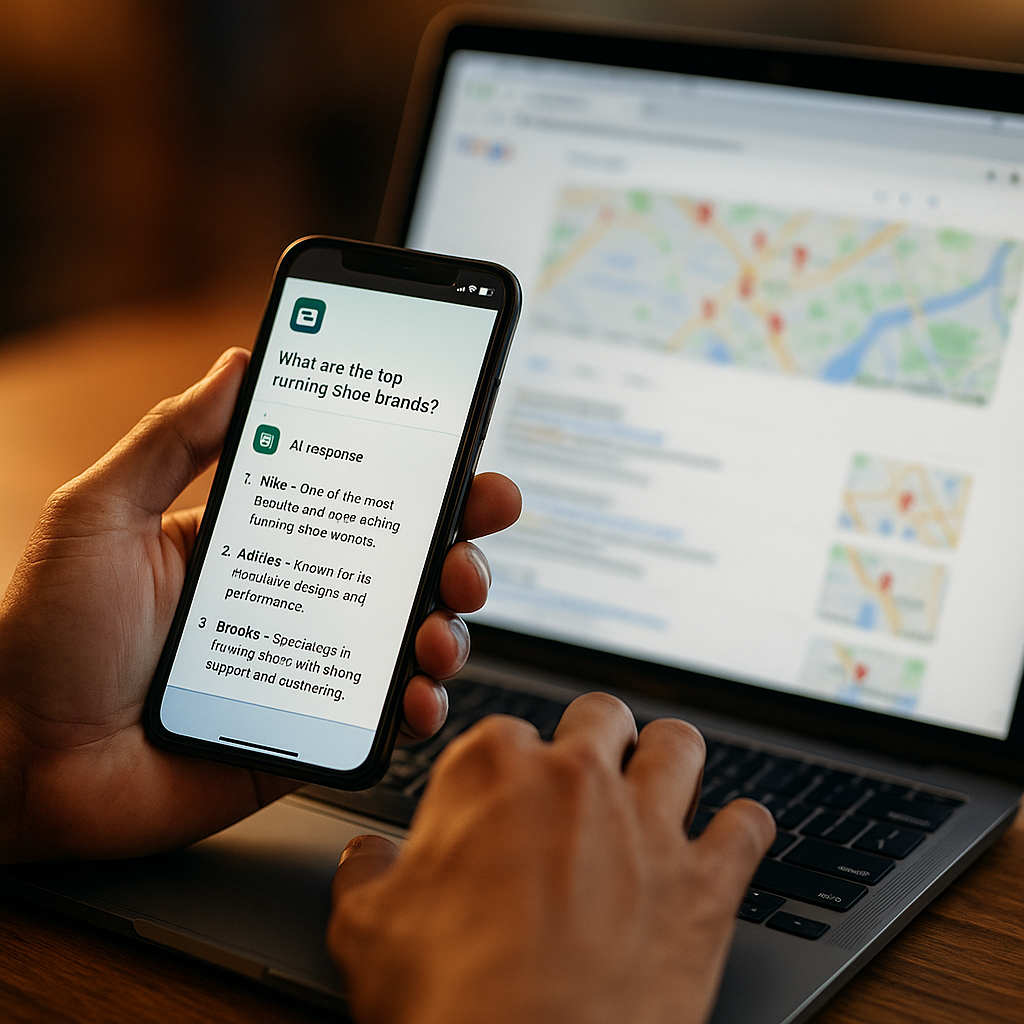
Only 7% of marketing teams have a formal way to measure whether their brand even shows up in ChatGPT, Gemini, or Perplexity answers. Everyone else is flying blind. That’s the uncomfortable starting point for generative engine optimization benchmarks this year — a discipline that barely existed eighteen months ago and is now a board-level question at any company that still cares about organic discovery.
If your CMO asked you right now, “what’s our visibility score in AI Overviews,” could you answer with a number? Most teams can’t. That’s the gap this article is here to close.
Why Traditional Rank Tracking Broke
Rank tracking assumed a stable, linear list of ten blue links. LLM-generated answers don’t work that way. A single query might synthesize five sources into one paragraph, cite none of them by name, and never produce a URL a rank tracker can log. Google’s own AI Overviews frequently answer the query so completely that zero-click search becomes the default outcome, not the exception.
This is why GEO benchmarks look nothing like traditional SEO KPIs. Instead of position 1 through 10, brands are now tracking:
- Citation frequency — how often a brand is named or linked across a sample set of prompts
- Share of voice — the brand’s mention rate relative to named competitors in the same answer
- Sentiment accuracy — whether the LLM’s characterization of the brand matches reality
- Source attribution — which pages, if any, the model pulls from to generate the answer
- Answer persistence — whether visibility holds steady across repeated, slightly reworded prompts
None of these map cleanly to Google Search Console. That’s the operational headache most in-house teams are quietly wrestling with right now.
A brand can rank #1 organically and still be invisible in an AI-generated answer, because the model isn’t ranking pages — it’s synthesizing an answer and deciding, on its own logic, who deserves credit.
What a GEO Benchmark Actually Looks Like
Forget vanity dashboards. A working generative engine optimization benchmark needs three components: a fixed prompt set, a measurement cadence, and a competitive baseline.
Start with the prompt set. Most mature programs run 50 to 200 representative queries — a mix of branded, category, and comparison prompts (“best CRM for mid-market SaaS,” “Zig.ai vs traditional CDP,” etc.) — across ChatGPT, Gemini, Perplexity, and Copilot. Run them weekly or biweekly, log the raw output, and code each response for mentions, links, and framing. Teams comparing retrieval quality across models have found meaningful differences in how sources get surfaced; see our breakdown of enterprise retrieval tools for a sense of how model choice affects what gets cited.
Second, cadence matters more than most teams expect. LLMs update their retrieval indexes and weighting on rolling cycles, not fixed schedules like Google’s core updates. A brand that shows up in 40% of relevant prompts this month could quietly drop to 15% next month with zero warning and no algorithm update to blame. Monthly benchmarking is table stakes now; anything slower and you’re benchmarking history, not reality.
Third, competitive baselining. Visibility numbers mean nothing in isolation. If your brand appears in 30% of category prompts but your top three competitors average 55%, that 30% suddenly looks like a crisis rather than a win. This is the piece most internal reporting skips, mostly because it’s tedious to run the same prompt set against five competitor brand names by hand.
The Tools Filling the Gap
A cottage industry of GEO measurement platforms has emerged to automate exactly this. Tools like Profound, Otterly.AI, and Peec AI now offer prompt-tracking dashboards purpose-built for LLM visibility, and legacy SEO platforms are racing to bolt on similar features. None of them are perfect — citation logic inside GPT-5-class models and Gemini’s grounding layer changes often enough that even vendor dashboards lag by days. But directionally, they’re giving brands something they didn’t have a year ago: a repeatable number to report upward.
Worth noting: these tools measure correlation, not causation. Seeing your visibility improve after a content push is encouraging, but it’s rarely possible to prove the content push caused it, given how opaque model retrieval and ranking logic remains. Treat GEO benchmarks as directional signals for prioritization, not precision instruments for attribution.
Where the Budget Debate Gets Real
Every CMO asks some version of the same question: how much of our search budget should shift from traditional SEO to GEO? There’s no universal answer, but the framework matters more than the exact split. Our earlier piece on splitting AI search budget lays out a practical allocation model based on category maturity and query volume through LLM interfaces versus traditional search.
A rough industry rule emerging from early adopters: if more than 20% of your category’s search volume is already flowing through AI-generated answers (checkable via tools like Semrush or Ahrefs AI-overview tracking features), it’s time to formalize a GEO line item in the budget, separate from traditional content SEO. Below that threshold, folding GEO tactics into existing SEO workflows is usually sufficient.
eMarketer data has repeatedly shown that AI-assisted search usage keeps climbing across demographics, and B2B buyers researching vendors are increasingly starting that research inside a chat interface rather than a search bar. If your buyer journey starts with a prompt instead of a query, your measurement strategy needs to start there too.
Structuring Content So Models Can Actually Cite You
Benchmarking tells you where you stand. It doesn’t fix the problem. The content side of GEO is where most of the real work happens, and it looks different from classic on-page SEO.
LLMs favor content that’s structurally unambiguous: clear claims, defined terms, direct answers to implied questions, and minimal fluff between the question and the answer. Long narrative intros that “set the scene” before getting to the point tend to get skipped over by retrieval systems that are scanning for extractable facts. Our framework on winning AI answer engines breaks this down into a repeatable content structure that’s held up across multiple model updates.
Schema markup still matters, arguably more than it did for traditional SEO. FAQPage, HowTo, and Product schema give models structured signals they can lift with confidence. Brands running comparison or review content have seen particularly strong lift — one analysis found that the vast majority of supplement sites now appear in AI Overviews specifically because of structured, comparison-heavy content formats.
The Overlap With Answer Engine Optimization
GEO and AEO get used interchangeably, but they’re not identical. AEO is largely about winning the featured snippet or AI Overview box on Google. GEO is broader — it covers visibility across the entire LLM ecosystem, including standalone chat interfaces that never touch Google’s search results page at all. A brand can win AEO and lose GEO, or vice versa, and the tactics only partially overlap. If you’re deciding where to focus first, our comparison of Google AI Overviews and OpenAI citation dynamics is a useful starting point for splitting effort intelligently.
Attribution and Reporting: The Part Nobody Solved Yet
Here’s the honest part: nobody has fully solved GEO attribution. When a user reads about your product in a ChatGPT answer and later converts through a direct visit, that GEO-influenced conversion shows up in analytics as “direct” or “unattributed,” with zero connection back to the AI interaction that actually drove it.
Teams are patching this with referral-pattern analysis, branded search lift studies, and platform-level workarounds. If you haven’t already isolated AI-driven referral traffic in your analytics stack, start there — our guide on how to separate ChatGPT traffic from GA4 organic search walks through the segment configuration most GA4 setups still lack out of the box.
Some brands are running old-school lift studies instead: measuring branded search volume and direct traffic before and after a concentrated GEO content push, using that as a proxy for AI-driven awareness even without perfect click-level attribution. It’s imprecise. It’s also currently the best option available, and it beats reporting nothing at all.
What to Do This Quarter
Build a 50-prompt benchmark set across your top three category terms, run it monthly across at least three LLM platforms, and report visibility and share of voice alongside your existing SEO metrics — not as a replacement, as a parallel line item your leadership team can actually watch move.
Frequently Asked Questions
What is generative engine optimization (GEO)?
GEO is the practice of optimizing content and brand presence so it gets cited, mentioned, or recommended by AI systems like ChatGPT, Gemini, and Perplexity when they generate answers to user queries, rather than optimizing purely for traditional search engine rankings.
How is GEO different from traditional SEO?
Traditional SEO targets ranked positions on a search results page. GEO targets inclusion and framing inside a synthesized AI answer, where there’s no fixed list of positions, citations may not include links, and visibility can shift without any public algorithm update.
What metrics should brands track for GEO benchmarks?
The core metrics are citation frequency, share of voice against named competitors, sentiment accuracy in how the brand is described, source attribution (which pages the model pulls from), and answer persistence across repeated prompt variations.
How often should GEO visibility be measured?
Monthly, at minimum. LLM retrieval and weighting logic shifts on rolling, often undisclosed cycles, so quarterly benchmarking risks measuring outdated visibility data by the time it’s reported.
Can GEO performance be directly attributed to revenue?
Not with full precision yet. Most teams rely on proxy signals — branded search lift, referral traffic patterns, and direct traffic increases following content pushes — since AI-driven conversions typically show up as unattributed or direct traffic in standard analytics platforms.
FAQs
What is generative engine optimization (GEO)?
GEO is the practice of optimizing content and brand presence so it gets cited, mentioned, or recommended by AI systems like ChatGPT, Gemini, and Perplexity when they generate answers to user queries, rather than optimizing purely for traditional search engine rankings.
How is GEO different from traditional SEO?
Traditional SEO targets ranked positions on a search results page. GEO targets inclusion and framing inside a synthesized AI answer, where there’s no fixed list of positions, citations may not include links, and visibility can shift without any public algorithm update.
What metrics should brands track for GEO benchmarks?
The core metrics are citation frequency, share of voice against named competitors, sentiment accuracy in how the brand is described, source attribution (which pages the model pulls from), and answer persistence across repeated prompt variations.
How often should GEO visibility be measured?
Monthly, at minimum. LLM retrieval and weighting logic shifts on rolling, often undisclosed cycles, so quarterly benchmarking risks measuring outdated visibility data by the time it’s reported.
Can GEO performance be directly attributed to revenue?
Not with full precision yet. Most teams rely on proxy signals — branded search lift, referral traffic patterns, and direct traffic increases following content pushes — since AI-driven conversions typically show up as unattributed or direct traffic in standard analytics platforms.
Top Influencer Marketing Agencies
The leading agencies shaping influencer marketing in 2026
Agencies ranked by campaign performance, client diversity, platform expertise, proven ROI, industry recognition, and client satisfaction. Assessed through verified case studies, reviews, and industry consultations.
Moburst

-
2

The Shelf
Boutique Beauty & Lifestyle Influencer AgencyA data-driven boutique agency specializing exclusively in beauty, wellness, and lifestyle influencer campaigns on Instagram and TikTok. Best for brands already focused on the beauty/personal care space that need curated, aesthetic-driven content.Clients: Pepsi, The Honest Company, Hims, Elf Cosmetics, Pure LeafVisit The Shelf → -
3

Audiencly
Niche Gaming & Esports Influencer AgencyA specialized agency focused exclusively on gaming and esports creators on YouTube, Twitch, and TikTok. Ideal if your campaign is 100% gaming-focused — from game launches to hardware and esports events.Clients: Epic Games, NordVPN, Ubisoft, Wargaming, Tencent GamesVisit Audiencly → -
4

Viral Nation
Global Influencer Marketing & Talent AgencyA dual talent management and marketing agency with proprietary brand safety tools and a global creator network spanning nano-influencers to celebrities across all major platforms.Clients: Meta, Activision Blizzard, Energizer, Aston Martin, WalmartVisit Viral Nation → -
5

The Influencer Marketing Factory
TikTok, Instagram & YouTube CampaignsA full-service agency with strong TikTok expertise, offering end-to-end campaign management from influencer discovery through performance reporting with a focus on platform-native content.Clients: Google, Snapchat, Universal Music, Bumble, YelpVisit TIMF → -
6

NeoReach
Enterprise Analytics & Influencer CampaignsAn enterprise-focused agency combining managed campaigns with a powerful self-service data platform for influencer search, audience analytics, and attribution modeling.Clients: Amazon, Airbnb, Netflix, Honda, The New York TimesVisit NeoReach → -
7

Ubiquitous
Creator-First Marketing PlatformA tech-driven platform combining self-service tools with managed campaign options, emphasizing speed and scalability for brands managing multiple influencer relationships.Clients: Lyft, Disney, Target, American Eagle, NetflixVisit Ubiquitous → -
8

Obviously
Scalable Enterprise Influencer CampaignsA tech-enabled agency built for high-volume campaigns, coordinating hundreds of creators simultaneously with end-to-end logistics, content rights management, and product seeding.Clients: Google, Ulta Beauty, Converse, AmazonVisit Obviously →