


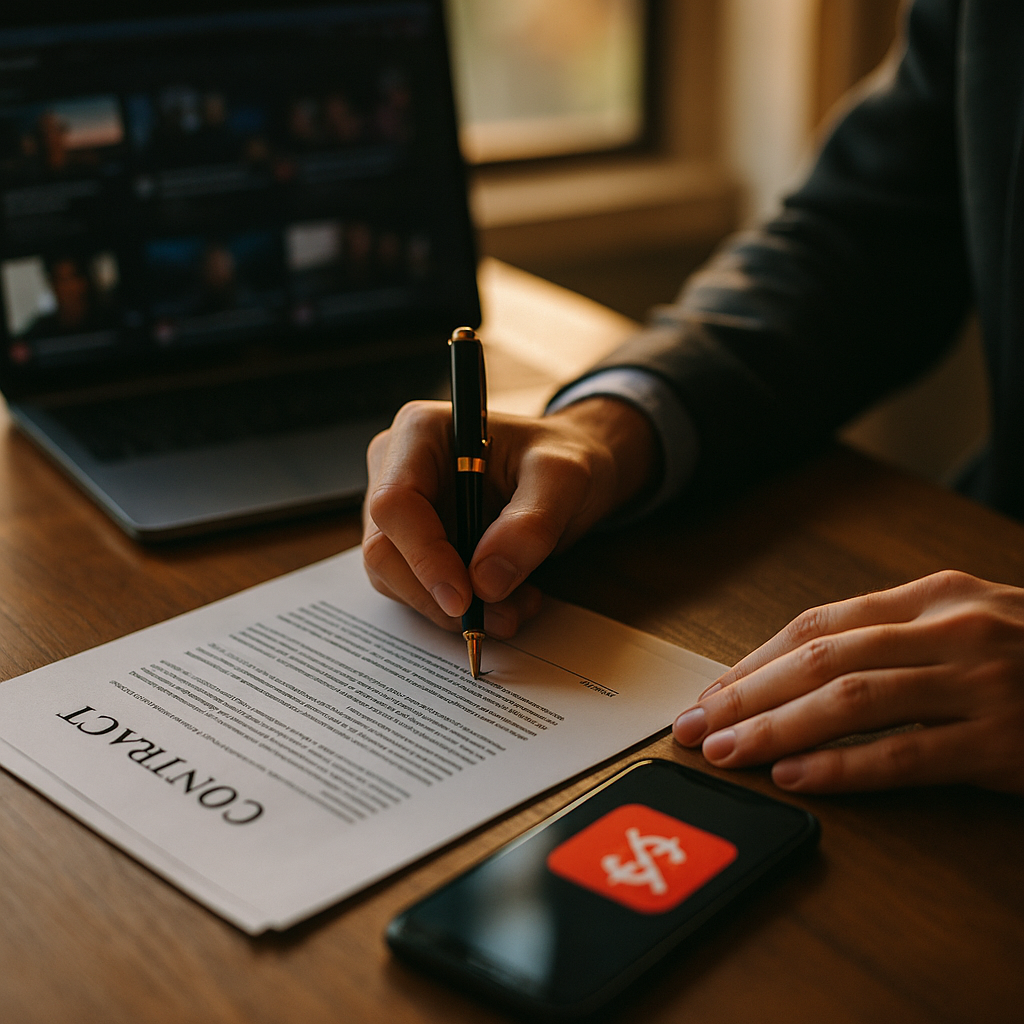
TikTok removed over 2 million influencer videos for policy violations last year, and a chunk of those were paid partnerships. If your creator contracts don’t address what happens when a platform suspends or de-monetizes sponsored content, you’re funding campaigns on a handshake. A properly drafted creator contract clause for platform de-monetization risk is no longer optional — it’s the difference between a resolved dispute and a wasted media budget.
Most brands find this out the hard way. A video gets flagged for “misleading claims” or “community guideline violations,” the sponsored post disappears mid-flight, and nobody knows who eats the cost. The creator says it wasn’t their fault. The brand says it was the product placement or script that triggered the takedown. Legal gets looped in three weeks too late. This is entirely avoidable with the right contract language, drafted before the campaign launches, not after the suspension notice hits.
Why This Clause Matters More Than It Used To
Platform enforcement has gotten more aggressive and less predictable. TikTok, YouTube, and Meta are all running AI-assisted moderation at scale, which means videos get pulled faster and with less human review than they did even two years ago. A sponsored video can be flagged for reasons that have nothing to do with the actual product: background music licensing, an incidental brand logo, a comment thread that spirals into policy-violating territory, or an algorithm misreading a testimonial as a health claim.
Add regulatory pressure on top of that. The FTC has been vocal about disclosure enforcement, and platforms are tightening their own rules in response. YouTube’s updated monetization policies and TikTok’s Community Guidelines both give the platform broad, largely unilateral authority to suspend content or accounts. Brands have zero contractual relationship with the platform — your only recourse is the creator agreement.
If your contract is silent on de-monetization, the default outcome is that the brand absorbs the loss, disputes the invoice informally, and burns the relationship with the creator in the process.
What a De-Monetization Clause Actually Needs to Cover
A strong clause isn’t one paragraph. It’s a small system of definitions, triggers, and remedies. Here’s what belongs in it.
- Definition of “de-monetization event.” Spell out exactly what counts: platform-initiated content removal, demonetization (ads disabled but content live), shadowbanning or reach suppression, account suspension, or algorithmic strikes. Vague language like “platform issues” invites arguments later.
- Root cause allocation. Was the suspension caused by the creator’s conduct (undisclosed sponsorship, policy violation unrelated to brand content, prior account strikes) or by brand-supplied assets (script, product claims, music, footage)? The clause should require a good-faith investigation before liability is assigned.
- Notice and cure period. Require the creator to notify the brand within a set window — 24 to 48 hours is standard — once they’re aware of a takedown or monetization flag. Silence shouldn’t be an option.
- Remedy structure. Define what happens next: reshoot, repost, partial refund, make-good content, or extended usage rights on a replacement asset. Tie the remedy to the root cause finding.
- Payment timing tied to performance milestones. Structure payment in tranches (e.g., 50% on posting, 50% after a 7-day live/monetization confirmation) rather than 100% upfront.
Sample Clause Language (Starting Point, Not a Final Draft)
Every legal team will want to adapt this to jurisdiction and campaign specifics, but here’s a workable base:
“In the event that a Sponsored Content post is removed, demonetized, suppressed in reach, or otherwise restricted by the Platform within [X] days of publication (‘De-Monetization Event’), the parties shall determine the cause of such event through good-faith review of Platform notifications and content records. If the De-Monetization Event resulted from Creator’s breach of Platform policies unrelated to Brand-supplied materials, Creator shall, at Brand’s election, either (a) produce and publish replacement content at no additional cost within [X] business days, or (b) refund a pro-rated portion of fees corresponding to unfulfilled deliverable value. If the De-Monetization Event resulted from Brand-supplied scripts, claims, footage, or music, Brand shall bear the cost of remediation and Creator shall be compensated for reshoot or repost efforts at the previously agreed rate.”
Notice what this does: it doesn’t assume fault in either direction. It creates a process. That process is what protects both parties from a shouting match over Slack three days before a campaign report is due to the CMO.
Who Bears the Risk When the Cause Is Unclear?
This is where most drafts fall apart, because platforms rarely give a clean answer. TikTok’s appeal process, for instance, can take days or weeks, and the platform’s stated reason for removal is often generic (“violates community guidelines”) with no specifics.
Build in a default allocation for ambiguous cases. A common approach: if root cause can’t be determined within a defined window (say, 10 business days), the risk is split — brand covers a partial refund, creator provides a discounted make-good post. This isn’t perfect, but it’s faster and cheaper than litigation, and it keeps the relationship intact for future campaigns.
It’s also worth building an escalation path into the broader influencer program, not just the individual contract. If you’re running dozens of creator partnerships a quarter, you need a standard operating procedure for what happens the moment legal or brand safety flags a suspension. Similar frameworks are useful for other high-risk content triggers — see how brands are structuring a compliance escalation matrix for vertical media placements more broadly.
Don’t Forget Disclosure and Claims Language
A huge share of platform takedowns trace back to disclosure failures or unsubstantiated claims, not random enforcement. If your creator brief didn’t include proper disclosure language, or if the script made a claim the brand can’t substantiate, that’s a brand-side failure that should shift remediation costs onto the brand, not the creator.
This is why the de-monetization clause can’t live in isolation. It needs to connect to your broader compliance documentation: the brief, the script approval process, and your FTC disclosure standards. If you haven’t audited how your scripts get edited and approved, that’s worth doing before your next campaign, because script editing can create material connection risk that platforms and regulators both scrutinize. Same goes for any AI-generated testimonial content, which carries its own compliance checklist requirements under current FTC guidance.
Livestream content adds another layer. Countdown timers, urgency language, and price claims made live are especially prone to takedown risk if they veer into deceptive scarcity territory — a pattern regulators have flagged repeatedly. If your creator program includes livestream shopping events, review your livestream scarcity risk exposure alongside your de-monetization clause, because the two issues often overlap in enforcement actions.
Insurance, Indemnification, and the Limits of Contract Language
A contract clause won’t recover ad spend that already flowed through a platform’s algorithm before a takedown. If you’re running paid amplification behind a sponsored post (Spark Ads on TikTok, boosted YouTube placements), factor that into your remedy math. Some brands now negotiate a separate media-spend protection line: if a boosted post gets pulled within the first 72 hours, the creator’s agency or MCN credits a portion of the media fee, not just the content fee.
Indemnification language matters too. Standard influencer agreements often include broad indemnification for platform violations, but check whether it’s mutual. One-sided indemnification, where the creator indemnifies the brand for everything but not vice versa, tends to break down in practice, especially with mid-tier creators who don’t have legal teams pushing back during negotiation. According to industry surveys from eMarketer, creator marketing spend continues climbing year over year, which means the dollar exposure per contract keeps rising too. It’s not a line item you can afford to leave generic.
Building This Into Your Contract Template
Don’t treat this as a one-off negotiation point. Build a standard de-monetization clause into your master creator agreement template and adjust only the dollar thresholds and timelines per campaign. This does two things: it speeds up legal review (nobody’s redrafting from scratch every time), and it signals to creators and their agents that you take platform risk seriously, which tends to make negotiations smoother, not harder.
Some practical additions worth templating:
- A defined “monetization confirmation window” (typically 3-7 days post-publish) before final payment releases.
- A requirement that creators retain screenshots of platform notices, analytics dashboards, and appeal correspondence as evidence.
- A carve-out for force majeure-style platform-wide outages or policy changes unrelated to specific content (e.g., a blanket algorithm update that suppresses reach across the board).
- Reference to the platform’s own terms — TikTok’s TikTok for Business guidelines and YouTube’s Google support policies — so both parties are working from the same rulebook.
Legal and marketing ops should co-own this template. Marketing knows the operational reality of how fast a campaign moves; legal knows how to draft language that holds up if a dispute escalates. Neither side should own it alone.
FAQs
Frequently Asked Questions
What triggers a platform de-monetization event in a creator contract?
Common triggers include content removal for policy violations, ads being disabled on an otherwise live video, reach suppression or shadowbanning, and full account suspension. A well-drafted clause defines each of these separately since remedies can differ by scenario.
Who is usually responsible for costs when TikTok removes a sponsored video?
It depends on root cause. If the creator’s own conduct or account history caused the removal, they typically bear replacement costs. If brand-supplied scripts, claims, or assets triggered the takedown, the brand usually covers remediation. Contracts should require a good-faith investigation before assigning liability.
How quickly should creators be required to report a takedown?
Most brand-side contracts require notice within 24 to 48 hours of the creator becoming aware of a suspension or monetization flag. Faster notice means faster remediation and less wasted media spend.
Should payment be held until a video is confirmed to stay live?
Many brands now structure payment in tranches, releasing a portion on posting and the remainder after a defined monetization confirmation window, often 3-7 days. This reduces exposure without requiring full payment delay.
Does this clause need to reference specific platform policies?
Yes. Referencing the current TikTok Community Guidelines and YouTube monetization policies keeps the contract aligned with actual enforcement standards and gives both parties a shared reference point during disputes.
Can a de-monetization clause cover paid amplification spend, not just organic content?
It can and should if you’re boosting sponsored posts. Add a separate provision addressing media spend protection, since ad spend lost to a takedown isn’t recovered by a standard content remedy clause alone.
Get this clause into your master template this quarter, not after your next takedown dispute. Pair it with a clear escalation protocol so legal, marketing, and the creator’s team all know exactly what happens in the first 48 hours after a suspension notice lands.
Frequently Asked Questions
What triggers a platform de-monetization event in a creator contract?
Common triggers include content removal for policy violations, ads being disabled on an otherwise live video, reach suppression or shadowbanning, and full account suspension. A well-drafted clause defines each of these separately since remedies can differ by scenario.
Who is usually responsible for costs when TikTok removes a sponsored video?
It depends on root cause. If the creator’s own conduct or account history caused the removal, they typically bear replacement costs. If brand-supplied scripts, claims, or assets triggered the takedown, the brand usually covers remediation. Contracts should require a good-faith investigation before assigning liability.
How quickly should creators be required to report a takedown?
Most brand-side contracts require notice within 24 to 48 hours of the creator becoming aware of a suspension or monetization flag. Faster notice means faster remediation and less wasted media spend.
Should payment be held until a video is confirmed to stay live?
Many brands now structure payment in tranches, releasing a portion on posting and the remainder after a defined monetization confirmation window, often 3-7 days. This reduces exposure without requiring full payment delay.
Does this clause need to reference specific platform policies?
Yes. Referencing the current TikTok Community Guidelines and YouTube monetization policies keeps the contract aligned with actual enforcement standards and gives both parties a shared reference point during disputes.
Can a de-monetization clause cover paid amplification spend, not just organic content?
It can and should if you’re boosting sponsored posts. Add a separate provision addressing media spend protection, since ad spend lost to a takedown isn’t recovered by a standard content remedy clause alone.
Top Influencer Marketing Agencies
The leading agencies shaping influencer marketing in 2026
Agencies ranked by campaign performance, client diversity, platform expertise, proven ROI, industry recognition, and client satisfaction. Assessed through verified case studies, reviews, and industry consultations.
Moburst

-
2

The Shelf
Boutique Beauty & Lifestyle Influencer AgencyA data-driven boutique agency specializing exclusively in beauty, wellness, and lifestyle influencer campaigns on Instagram and TikTok. Best for brands already focused on the beauty/personal care space that need curated, aesthetic-driven content.Clients: Pepsi, The Honest Company, Hims, Elf Cosmetics, Pure LeafVisit The Shelf → -
3

Audiencly
Niche Gaming & Esports Influencer AgencyA specialized agency focused exclusively on gaming and esports creators on YouTube, Twitch, and TikTok. Ideal if your campaign is 100% gaming-focused — from game launches to hardware and esports events.Clients: Epic Games, NordVPN, Ubisoft, Wargaming, Tencent GamesVisit Audiencly → -
4

Viral Nation
Global Influencer Marketing & Talent AgencyA dual talent management and marketing agency with proprietary brand safety tools and a global creator network spanning nano-influencers to celebrities across all major platforms.Clients: Meta, Activision Blizzard, Energizer, Aston Martin, WalmartVisit Viral Nation → -
5

The Influencer Marketing Factory
TikTok, Instagram & YouTube CampaignsA full-service agency with strong TikTok expertise, offering end-to-end campaign management from influencer discovery through performance reporting with a focus on platform-native content.Clients: Google, Snapchat, Universal Music, Bumble, YelpVisit TIMF → -
6

NeoReach
Enterprise Analytics & Influencer CampaignsAn enterprise-focused agency combining managed campaigns with a powerful self-service data platform for influencer search, audience analytics, and attribution modeling.Clients: Amazon, Airbnb, Netflix, Honda, The New York TimesVisit NeoReach → -
7

Ubiquitous
Creator-First Marketing PlatformA tech-driven platform combining self-service tools with managed campaign options, emphasizing speed and scalability for brands managing multiple influencer relationships.Clients: Lyft, Disney, Target, American Eagle, NetflixVisit Ubiquitous → -
8

Obviously
Scalable Enterprise Influencer CampaignsA tech-enabled agency built for high-volume campaigns, coordinating hundreds of creators simultaneously with end-to-end logistics, content rights management, and product seeding.Clients: Google, Ulta Beauty, Converse, AmazonVisit Obviously →