


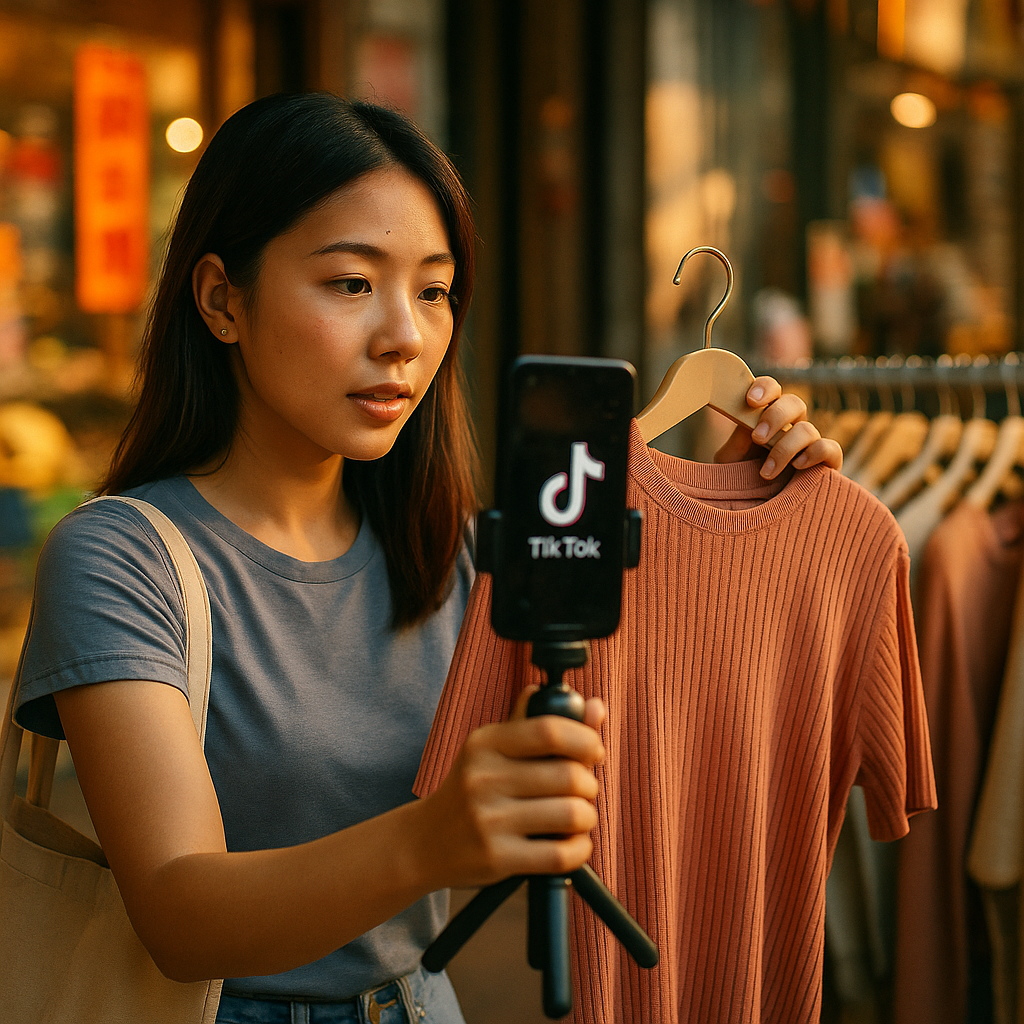
A creator with 4,000 followers in Manila just outsold a celebrity with four million. That’s not an anomaly on TikTok anymore, it’s the design. TikTok’s discovery-over-reach distribution logic now decides who gets seen, and it has quietly rewired how social commerce grows across APAC and beyond. Brands still buying reach are buying the wrong thing.
The Algorithm Stopped Caring About Follower Count
For most of the last decade, platform distribution followed a simple rule: bigger audience, bigger reach, bigger results. TikTok broke that rule on purpose. Its recommendation system, built around the For You Page, doesn’t distribute content based on who follows whom. It distributes based on signal match, watch time, replay rate, and how tightly a piece of content clusters with a specific interest community.
That means a cooking account with 8,000 followers in Jakarta can outperform a lifestyle mega-influencer if its content resonates with a dense, engaged niche. TikTok has effectively built a discovery engine that rewards relevance density over audience size. eMarketer and Statista data on APAC social commerce consistently show engagement rates skewing toward smaller creator tiers, a pattern that lines up with what we’ve already covered in the shift from macro to micro-influencer spend.
Discovery-over-reach means the platform is no longer asking “how many people will see this?” It’s asking “how many of the right people will finish, replay, and buy?”
This is a fundamentally different optimization target. And if your media planning still treats TikTok like a reach auction, you’re bidding in the wrong market.
Why Micro-Communities Convert Better Than Mass Audiences
Micro-communities on TikTok aren’t just smaller audiences. They’re higher-trust, higher-intent pockets of people who’ve opted into a very specific taste graph — skincare for sensitive skin, budget K-beauty dupes, plant-based cooking in Bangkok, secondhand fashion in Manila. The algorithm learns these clusters fast and keeps pushing relevant content deeper into them.
Brands running TikTok Shop campaigns across Southeast Asia have noticed the pattern: a wave of nano and micro creators driving steady, compounding sales tends to outperform a single high-reach placement that spikes and disappears. This mirrors what one recent payout analysis found when examining creator infrastructure at scale — the volume of small, trusted voices matters more than a handful of big ones.
Why does this happen? Three reasons, and they compound.
- Trust transfers faster in tight communities. A recommendation from someone who feels like a peer converts better than one from someone who feels like a celebrity.
- Watch-time signals favor niche relevance. TikTok’s system rewards content that keeps a specific audience segment watching, not content that gets broad but shallow attention.
- Commerce intent is pre-qualified. Someone deep in a “budget skincare” content cluster is already primed to buy, they don’t need to be convinced the category matters.
This isn’t theoretical. It’s the same dynamic behind the broader shift documented in vetted micro-influencer networks becoming a trust layer for D2C brands globally, not just in APAC.
APAC Is the Proving Ground, Not the Exception
Southeast Asia gets treated as a testing lab for TikTok Shop, and for good reason. Indonesia, Vietnam, Thailand, and the Philippines have some of the highest TikTok usage rates globally, and social commerce adoption there has outpaced most Western markets by a wide margin. TikTok Shop’s GMV growth in the region, tracked by multiple industry reports including data referenced by Statista, has consistently shown live commerce and creator-led selling as the primary growth drivers, not brand-run storefronts.
What’s happening in Jakarta or Ho Chi Minh City today tends to show up in the US and UK twelve to eighteen months later. That’s not a guess, it’s the pattern TikTok Shop followed when it expanded westward. Brands treating APAC performance as a regional curiosity are missing a preview of their own roadmap.
Here’s the uncomfortable part for global brand teams: the creator tiers that work in APAC micro-commerce don’t map cleanly onto Western agency rosters built around macro-influencer relationships. You can’t just port a US creator strategy into Manila and expect the discovery algorithm to cooperate. The community structure is different, the content pacing is different, and the trust signals are different.
What This Means for Budget Allocation
If discovery rewards niche relevance over reach, then budget models built around reach-based CPMs are measuring the wrong thing. Marketing teams need to shift evaluation criteria toward completion rate, saves, shares within niche clusters, and conversion velocity inside TikTok Shop specifically, not vanity impressions.
This isn’t a small tweak. It’s a full recalibration of how influencer program ROI gets modeled. The data backing this shift is already visible in broader creator economy spend patterns: creators now claim 45% of D2C budgets at many performance-driven brands, and that share keeps climbing as reach-based buying loses efficiency.
Some practical reallocation moves brand teams are already making:
- Fragmenting budgets across more creators, smaller checks. Instead of one $50K macro deal, brands are running twenty $2,500 micro-creator campaigns targeting distinct sub-niches.
- Paying for performance, not placement. Affiliate and commission-based models are gaining ground because they align creator incentive with the algorithm’s own bias toward conversion, a trend covered in the shift to performance pay.
- Testing content-market fit before scaling spend. Small creator tests reveal which niche clusters actually respond, before committing bigger budget.
Reach-based budgeting assumes attention is scarce and expensive. Discovery-based budgeting assumes relevance is scarce and trust is the real currency.
The Operational Risk Nobody’s Pricing In
Fragmenting spend across dozens of micro-creators sounds great in a strategy deck. Operationally, it’s a nightmare if you don’t have the infrastructure for it. Managing contracts, briefs, payments, and compliance across fifty small creators takes far more coordination than managing five large ones.
This is where a lot of brand teams get stuck. They understand the discovery-over-reach logic intellectually, but their operations stack, contracts, invoicing, FTC disclosure tracking, was built for a five-deal-a-quarter world. AI-matching platforms and escrow-backed payment tools have emerged specifically to solve this bottleneck, letting brands run high-volume micro-creator programs without a proportional increase in headcount. We’ve written about how escrow-backed payment systems are closing the trust gap in these high-volume matching workflows.
Compliance matters more here too, not less. Running content through dozens of small creators across multiple APAC markets means dozens of different disclosure norms and platform policies to track. The FTC’s endorsement guidance still applies regardless of creator size, and regional equivalents are tightening in several APAC markets as social commerce regulation catches up to platform growth. Brands scaling micro-creator volume without a compliance layer are stacking risk quietly, deal by deal, until it surfaces all at once.
Rethinking Measurement for a Discovery-First Platform
Standard influencer marketing dashboards, built around reach, impressions, and follower tiers, don’t capture what actually matters on TikTok anymore. Marketing teams need metrics that reflect how the algorithm itself evaluates content: completion rate, replay rate, shares within tight interest clusters, and direct attribution to TikTok Shop conversions.
Platforms like TikTok’s own ads platform have expanded reporting to surface some of these signals, but most brand teams still default to legacy reach metrics out of habit, not strategy. That habit is expensive. It leads teams to overpay for macro placements that look impressive in a recap deck but underperform against niche creator content that never shows up on a follower-count leaderboard.
The bigger shift, and this connects to work we’ve covered on watch-time and conversion data, is that TikTok’s own algorithm updates keep pushing brands further away from reach-based thinking. The platform is telling marketers, explicitly, what it values. Ignoring that signal isn’t a neutral choice, it’s a competitive disadvantage.
Getting Ahead of the Curve Instead of Chasing It
Brands that treat APAC micro-community performance as an early signal, rather than a regional footnote, will build discovery-optimized programs before their competitors are forced to. Start by auditing your current creator mix against niche relevance, not follower count, and reallocate at least a portion of reach-based budget into performance-based micro-creator tests this quarter.
FAQs
What is TikTok’s discovery-over-reach distribution logic?
It’s the platform’s approach to content distribution that prioritizes relevance and engagement within specific interest communities over raw audience size or follower count. Content gets pushed to users based on behavioral signals like watch time and replay rate, not who follows the creator.
Why do micro-creators often outperform macro-influencers on TikTok?
Micro-creators typically have higher trust and engagement density within tightly defined niche communities. TikTok’s algorithm rewards content that resonates deeply with a smaller, relevant audience over content that reaches a broad but less engaged one, which translates into stronger conversion for social commerce.
How is APAC influencing global TikTok Shop strategy?
APAC markets, particularly Southeast Asia, have led TikTok Shop adoption and creator-led commerce growth. Trends that emerge there, like fragmented micro-creator programs outperforming single macro placements, tend to appear in Western markets twelve to eighteen months later, making APAC a useful forecasting signal for global brand strategy.
What metrics should brands track instead of reach?
Completion rate, replay rate, shares within niche content clusters, and direct TikTok Shop conversion data matter more than impressions or follower counts. These metrics reflect how TikTok’s own algorithm evaluates and distributes content.
What operational challenges come with scaling micro-creator programs?
Running dozens of small creator deals instead of a few large ones increases the complexity of contracting, payment, and compliance tracking. Brands typically need AI-matching tools or escrow-backed payment systems to manage volume without significantly increasing headcount, along with a clear compliance process for disclosure requirements across markets.
FAQs
What is TikTok’s discovery-over-reach distribution logic?
It’s the platform’s approach to content distribution that prioritizes relevance and engagement within specific interest communities over raw audience size or follower count. Content gets pushed to users based on behavioral signals like watch time and replay rate, not who follows the creator.
Why do micro-creators often outperform macro-influencers on TikTok?
Micro-creators typically have higher trust and engagement density within tightly defined niche communities. TikTok’s algorithm rewards content that resonates deeply with a smaller, relevant audience over content that reaches a broad but less engaged one, which translates into stronger conversion for social commerce.
How is APAC influencing global TikTok Shop strategy?
APAC markets, particularly Southeast Asia, have led TikTok Shop adoption and creator-led commerce growth. Trends that emerge there, like fragmented micro-creator programs outperforming single macro placements, tend to appear in Western markets twelve to eighteen months later, making APAC a useful forecasting signal for global brand strategy.
What metrics should brands track instead of reach?
Completion rate, replay rate, shares within niche content clusters, and direct TikTok Shop conversion data matter more than impressions or follower counts. These metrics reflect how TikTok’s own algorithm evaluates and distributes content.
What operational challenges come with scaling micro-creator programs?
Running dozens of small creator deals instead of a few large ones increases the complexity of contracting, payment, and compliance tracking. Brands typically need AI-matching tools or escrow-backed payment systems to manage volume without significantly increasing headcount, along with a clear compliance process for disclosure requirements across markets.
Top Influencer Marketing Agencies
The leading agencies shaping influencer marketing in 2026
Agencies ranked by campaign performance, client diversity, platform expertise, proven ROI, industry recognition, and client satisfaction. Assessed through verified case studies, reviews, and industry consultations.
Moburst

-
2

The Shelf
Boutique Beauty & Lifestyle Influencer AgencyA data-driven boutique agency specializing exclusively in beauty, wellness, and lifestyle influencer campaigns on Instagram and TikTok. Best for brands already focused on the beauty/personal care space that need curated, aesthetic-driven content.Clients: Pepsi, The Honest Company, Hims, Elf Cosmetics, Pure LeafVisit The Shelf → -
3

Audiencly
Niche Gaming & Esports Influencer AgencyA specialized agency focused exclusively on gaming and esports creators on YouTube, Twitch, and TikTok. Ideal if your campaign is 100% gaming-focused — from game launches to hardware and esports events.Clients: Epic Games, NordVPN, Ubisoft, Wargaming, Tencent GamesVisit Audiencly → -
4

Viral Nation
Global Influencer Marketing & Talent AgencyA dual talent management and marketing agency with proprietary brand safety tools and a global creator network spanning nano-influencers to celebrities across all major platforms.Clients: Meta, Activision Blizzard, Energizer, Aston Martin, WalmartVisit Viral Nation → -
5

The Influencer Marketing Factory
TikTok, Instagram & YouTube CampaignsA full-service agency with strong TikTok expertise, offering end-to-end campaign management from influencer discovery through performance reporting with a focus on platform-native content.Clients: Google, Snapchat, Universal Music, Bumble, YelpVisit TIMF → -
6

NeoReach
Enterprise Analytics & Influencer CampaignsAn enterprise-focused agency combining managed campaigns with a powerful self-service data platform for influencer search, audience analytics, and attribution modeling.Clients: Amazon, Airbnb, Netflix, Honda, The New York TimesVisit NeoReach → -
7

Ubiquitous
Creator-First Marketing PlatformA tech-driven platform combining self-service tools with managed campaign options, emphasizing speed and scalability for brands managing multiple influencer relationships.Clients: Lyft, Disney, Target, American Eagle, NetflixVisit Ubiquitous → -
8

Obviously
Scalable Enterprise Influencer CampaignsA tech-enabled agency built for high-volume campaigns, coordinating hundreds of creators simultaneously with end-to-end logistics, content rights management, and product seeding.Clients: Google, Ulta Beauty, Converse, AmazonVisit Obviously →