


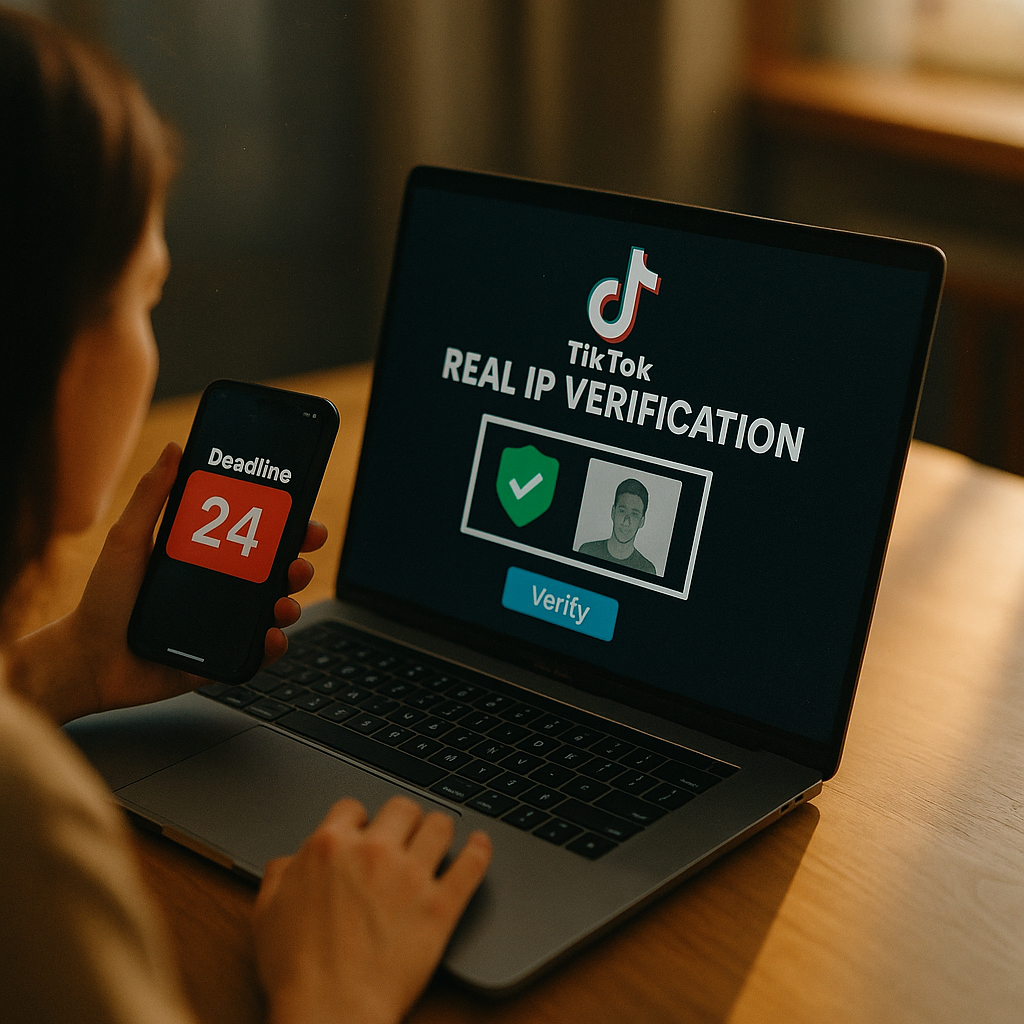
Roughly 30% of flagged TikTok Shop listings in early enforcement waves got suspended before sellers even understood why. That’s the kind of number that should stop every merchant scrolling past another “platform update” email. TikTok’s Real IP Verification program isn’t a suggestion — it’s a compliance gate, and the enforcement deadlines are closer than most brand teams realize.
If you’re running a TikTok Shop storefront, managing affiliate creator sales, or overseeing a multi-brand seller account, this is the operational fire drill you can’t outsource to “later.” Let’s get into what’s actually required, who’s exposed, and how to onboard without losing sales velocity.
What Real IP Verification Actually Checks
Real IP Verification is TikTok’s mechanism for confirming that the intellectual property behind a listed product — brand names, trademarks, patents, licensed characters, packaging designs — is legitimately owned or licensed by the merchant selling it. It’s not just an anti-counterfeit filter anymore. It’s become a full identity and rights-chain audit layered on top of seller onboarding.
Here’s the part that catches brands off guard: this isn’t only about knockoff handbags or bootleg merch. Legitimate brands using licensed characters, co-branded collabs, or even influencer-designed product lines are getting flagged because their IP documentation doesn’t match what’s on file. A perfectly authentic product can get pulled simply because the paperwork trail is thin.
The program treats missing documentation the same as fraudulent documentation — both result in suspension. Intent doesn’t matter to the algorithm doing the flagging.
This connects directly to the broader trust-and-safety overhaul TikTok has been running since its COPPA settlement compliance checklist forced platform-wide scrutiny of how merchant and user data gets verified and stored.
Why the Deadlines Matter More Than the Program Itself
Plenty of merchants have shrugged off past TikTok compliance pushes because enforcement felt soft — warnings, grace periods, quiet reinstatements. This one’s different. TikTok has been explicit that unverified sellers will face tiered restrictions: reduced discoverability first, then payout holds, then account-level suspension.
That’s a revenue kill switch, not a slap on the wrist.
For brands running active affiliate programs or Shop-integrated livestreams, a mid-campaign suspension is catastrophic. Imagine a creator partnership going live, driving thousands of dollars in GMV per hour, and the storefront gets frozen because someone in legal never uploaded a renewed trademark certificate. That’s not hypothetical — it’s the exact failure mode this program is designed to catch, and it’s already happening to sellers who assumed they had more runway.
According to eMarketer, social commerce sales in the US are projected to keep climbing well past $100 billion in the next few years, with TikTok Shop as one of the fastest-growing channels. Platforms with that much transaction volume don’t get to stay loose on compliance. Regulators won’t allow it, and TikTok knows it.
The Documentation Stack You Need Before You Even Log In
Before starting the verification flow, assemble everything. Don’t start the process piecemeal — TikTok’s system tends to time-box verification attempts, and incomplete submissions can trigger longer manual review queues.
At minimum, prepare:
- Registered trademark certificates (not just applications — pending marks often don’t satisfy the requirement)
- Business registration documents matching the legal entity name on the seller account
- Licensing agreements for any co-branded, collab, or third-party IP used in listings
- Manufacturer or supplier authorization letters, especially for private-label or white-label products
- Proof of address and beneficial ownership documentation for the account holder
Brands working with multiple sub-brands or regional entities should audit whether each storefront is registered under the correct legal name. Mismatches between the trademark holder and the seller-of-record are one of the most common rejection reasons reported by early adopters of the program.
This is essentially the same rigor demanded in the TikTok Oracle joint venture audit guide, which covers how data governance and IP verification now intersect under TikTok’s US operating structure.
Where Merchants Are Getting Tripped Up
Three patterns show up again and again in early enforcement rounds.
First: influencer-designed products. When a creator’s name or likeness is part of the branding, TikTok wants proof of the licensing arrangement between the brand and the creator, not just a partnership announcement post. A signed contract with IP assignment language is non-negotiable now.
Second: dropshipping and white-label sellers who never secured explicit trademark permission from the brand owner they’re reselling. This has always been a gray zone. It isn’t anymore.
Third — and this one’s sneaky — legacy accounts with outdated business registration info. A brand that rebranded, merged, or changed its legal entity name in the past couple of years but never updated its TikTok seller profile is walking into an automatic mismatch.
If your legal entity name, trademark filing, and TikTok seller account name aren’t identical, character for character, expect a flag. This program does not reward “close enough.”
None of this is unique to TikTok, honestly. It mirrors the direction most major platforms are heading — tighter identity checks, more documentation, less tolerance for ambiguity. The TikTok Real IP Verification overview breaks down the mechanics of the verification flow itself if you need the step-by-step submission process.
Building the Internal Compliance Workflow
This isn’t a task for one person to knock out during a slow afternoon. Treat it like a cross-functional project with legal, e-commerce ops, and brand marketing all touching the file.
A workable structure looks like this:
- Assign an owner. Someone needs to be accountable for the submission, not just “whoever has time.”
- Run a document gap audit. Compare what TikTok requires against what you currently have on file, and flag anything expired or mismatched.
- Loop in legal early. Trademark and licensing documentation often needs legal sign-off before submission, especially for co-branded SKUs.
- Set an internal deadline earlier than TikTok’s. Give yourself buffer for rejected submissions and resubmission cycles.
- Document everything. Keep a compliance file outside of TikTok’s dashboard in case you need to escalate a dispute.
This mirrors the same discipline brands should already be applying to creator gifting and disclosure tracking, as outlined in this compliance audit framework. The platforms are converging on one message: prove it, or lose access.
What Happens If You Miss the Deadline?
Short version: it gets worse the longer you wait. TikTok’s enforcement structure appears to escalate in stages rather than dropping a hammer immediately, but each stage compounds the damage.
Stage one typically throttles product visibility in search and For You feed placements — your listings still exist, they just stop getting shown. Stage two restricts new listing creation and pauses payout disbursements. Stage three is full account suspension, which can also trigger a review of any linked accounts under the same business entity.
That last part matters for multi-brand operators. A verification failure on one storefront can create scrutiny across your entire TikTok business portfolio, not just the flagged SKU.
For context on how platform enforcement actions ripple into broader operational risk, the age verification gaps analysis is a useful companion read — it shows how one compliance failure area tends to expose adjacent weaknesses in a brand’s TikTok setup.
A Quick Word on Third-Party Sellers and Marketplace Risk
If your brand relies on authorized resellers or marketplace partners to move product on TikTok Shop, don’t assume their compliance is your compliance. Verification failures on a reseller’s account can still trigger brand-level trademark disputes, especially if TikTok’s system flags inconsistent IP claims across multiple sellers listing the same product.
Consider requiring proof of Real IP Verification completion as a condition in reseller agreements going forward. It’s a small contractual addition that saves a massive headache later.
For guidance on how contract language should evolve to cover platform-specific enforcement risk, see this de-monetization risk clause breakdown — the same logic applies to reseller and distributor agreements, not just creator contracts.
Broader industry guidance on trademark protection and licensing best practices is also available through the FTC’s consumer protection resources, which brands should reference when drafting internal IP compliance policies.
Bottom line: audit your documentation now, assign clear ownership this week, and submit before TikTok’s deadline rather than at it. Waiting for enforcement to hit your storefront is the most expensive way to learn how this program works.
Frequently Asked Questions
What is TikTok’s Real IP Verification program?
It’s a merchant compliance requirement that verifies sellers hold legitimate rights to the intellectual property, trademarks, and branding used in their TikTok Shop listings. It’s designed to reduce counterfeit sales and enforce accurate seller identity records.
Who needs to complete Real IP Verification?
Any brand or merchant selling on TikTok Shop, including those using licensed characters, co-branded products, influencer-designed lines, or private-label goods manufactured under a supplier agreement.
What documents are required for verification?
Registered trademark certificates, business registration matching the seller account’s legal name, licensing agreements for third-party IP, manufacturer authorization letters, and proof of beneficial ownership.
What happens if a merchant misses the enforcement deadline?
Enforcement typically escalates in stages: reduced product visibility, then payout holds and listing restrictions, followed by full account suspension. Related storefronts under the same business entity may also face review.
Can a reseller’s verification failure affect the brand owner?
Yes. Inconsistent IP claims across multiple sellers listing the same product can trigger disputes that implicate the brand owner, even if the brand itself is verified. Contractual requirements for resellers can help mitigate this risk.
How long does the verification process typically take?
Timelines vary by document completeness and review queue volume, but incomplete submissions often face longer manual review. Submitting well ahead of any stated deadline reduces the risk of processing delays affecting your storefront status.
Frequently Asked Questions
What is TikTok’s Real IP Verification program?
It’s a merchant compliance requirement that verifies sellers hold legitimate rights to the intellectual property, trademarks, and branding used in their TikTok Shop listings. It’s designed to reduce counterfeit sales and enforce accurate seller identity records.
Who needs to complete Real IP Verification?
Any brand or merchant selling on TikTok Shop, including those using licensed characters, co-branded products, influencer-designed lines, or private-label goods manufactured under a supplier agreement.
What documents are required for verification?
Registered trademark certificates, business registration matching the seller account’s legal name, licensing agreements for third-party IP, manufacturer authorization letters, and proof of beneficial ownership.
What happens if a merchant misses the enforcement deadline?
Enforcement typically escalates in stages: reduced product visibility, then payout holds and listing restrictions, followed by full account suspension. Related storefronts under the same business entity may also face review.
Can a reseller’s verification failure affect the brand owner?
Yes. Inconsistent IP claims across multiple sellers listing the same product can trigger disputes that implicate the brand owner, even if the brand itself is verified. Contractual requirements for resellers can help mitigate this risk.
How long does the verification process typically take?
Timelines vary by document completeness and review queue volume, but incomplete submissions often face longer manual review. Submitting well ahead of any stated deadline reduces the risk of processing delays affecting your storefront status.
Top Influencer Marketing Agencies
The leading agencies shaping influencer marketing in 2026
Agencies ranked by campaign performance, client diversity, platform expertise, proven ROI, industry recognition, and client satisfaction. Assessed through verified case studies, reviews, and industry consultations.
Moburst

-
2

The Shelf
Boutique Beauty & Lifestyle Influencer AgencyA data-driven boutique agency specializing exclusively in beauty, wellness, and lifestyle influencer campaigns on Instagram and TikTok. Best for brands already focused on the beauty/personal care space that need curated, aesthetic-driven content.Clients: Pepsi, The Honest Company, Hims, Elf Cosmetics, Pure LeafVisit The Shelf → -
3

Audiencly
Niche Gaming & Esports Influencer AgencyA specialized agency focused exclusively on gaming and esports creators on YouTube, Twitch, and TikTok. Ideal if your campaign is 100% gaming-focused — from game launches to hardware and esports events.Clients: Epic Games, NordVPN, Ubisoft, Wargaming, Tencent GamesVisit Audiencly → -
4

Viral Nation
Global Influencer Marketing & Talent AgencyA dual talent management and marketing agency with proprietary brand safety tools and a global creator network spanning nano-influencers to celebrities across all major platforms.Clients: Meta, Activision Blizzard, Energizer, Aston Martin, WalmartVisit Viral Nation → -
5

The Influencer Marketing Factory
TikTok, Instagram & YouTube CampaignsA full-service agency with strong TikTok expertise, offering end-to-end campaign management from influencer discovery through performance reporting with a focus on platform-native content.Clients: Google, Snapchat, Universal Music, Bumble, YelpVisit TIMF → -
6

NeoReach
Enterprise Analytics & Influencer CampaignsAn enterprise-focused agency combining managed campaigns with a powerful self-service data platform for influencer search, audience analytics, and attribution modeling.Clients: Amazon, Airbnb, Netflix, Honda, The New York TimesVisit NeoReach → -
7

Ubiquitous
Creator-First Marketing PlatformA tech-driven platform combining self-service tools with managed campaign options, emphasizing speed and scalability for brands managing multiple influencer relationships.Clients: Lyft, Disney, Target, American Eagle, NetflixVisit Ubiquitous → -
8

Obviously
Scalable Enterprise Influencer CampaignsA tech-enabled agency built for high-volume campaigns, coordinating hundreds of creators simultaneously with end-to-end logistics, content rights management, and product seeding.Clients: Google, Ulta Beauty, Converse, AmazonVisit Obviously →