


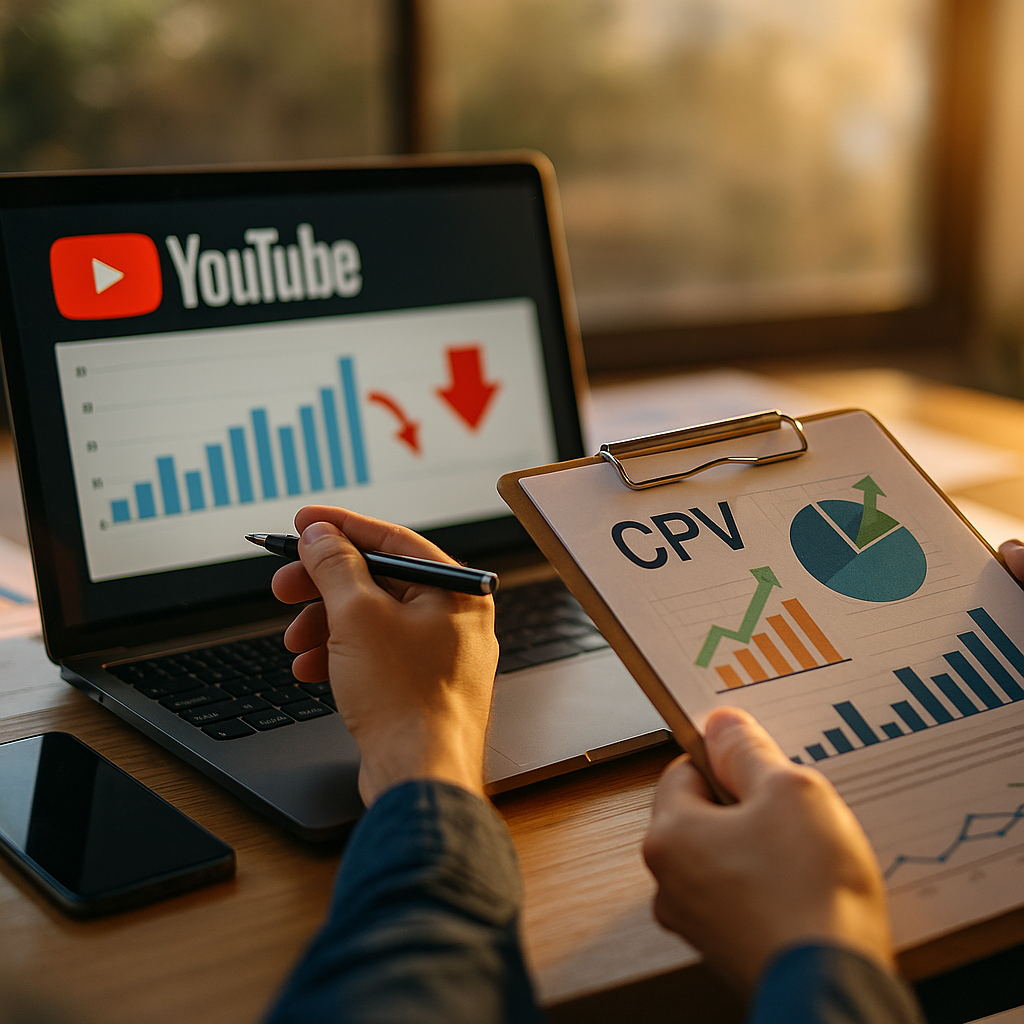
Would you pay for a “view” that never actually watched anything? That’s the question brands now face as YouTube’s impression-click view counting quietly reshapes how sponsorships get measured. A view used to mean a human sat through content long enough to matter. Now it can mean someone’s thumb hovered near a thumbnail. If your media plan still treats every view the same, you’re already overpaying somewhere.
What Impression-Click View Counting Actually Means
YouTube’s counting logic has always been murky, but the platform’s latest approach ties a “view” more closely to impression-to-click behavior rather than sustained watch time alone. In practice, that means Shorts autoplay impressions, live stream concurrent viewers, and podcast audio-video hybrids are all being tallied under looser, format-specific rules. A Short that gets swiped past in under a second can still register. A live stream viewer who joins for ten seconds to check a giveaway code counts the same as someone who stayed for the full hour.
This isn’t a conspiracy to inflate numbers, though plenty of media buyers will accuse it of exactly that. It’s a byproduct of YouTube trying to standardize measurement across wildly different content formats that never fit neatly into the original “view” definition. The problem is that brands built entire sponsorship KPI frameworks on the assumption that a view meant roughly the same thing everywhere. That assumption no longer holds.
A view on a Short, a live stream, and a long-form video are now three statistically different events wearing the same label. Treating them as interchangeable in your media plan is how CPV math quietly breaks.
Why Shorts, Live, and Podcasts Break the Old Model
Shorts were already a measurement headache before this shift. As covered in our earlier breakdown of zero-second view counting, YouTube started counting views the moment a Short began autoplaying, regardless of engagement. Impression-click counting compounds that. Now a Short can accumulate views from feed impressions that never resulted in a genuine watch, inflating volume metrics that sponsors historically used to justify rate cards.
Live streams have the opposite problem. Concurrent viewer counts have long been a vanity metric, but now they’re being folded into aggregate view totals that get reported back to sponsors as campaign performance. A brand that paid for a mid-roll mention during a three-hour live stream might see a headline number that looks great, until they realize half those “views” were people who tuned in for thirty seconds during a different segment entirely.
Podcasts on YouTube are the newest wrinkle. Video podcasts get counted using standard YouTube view logic, but audio-only listens synced through YouTube Music or podcast RSS feeds follow different rules entirely. A sponsor read that airs in both formats can generate two incompatible sets of “view” data, and reconciling them requires more manual work than most brand teams have bandwidth for.
The Real Risk: KPIs That No Longer Predict Outcomes
Here’s the operational risk nobody talks about enough. If your view counts no longer correlate with actual attention or purchase intent, then every downstream decision built on those numbers is compromised. Budget allocation, creator renewal decisions, rate negotiations, all of it rests on a metric that’s become less predictive than it used to be. According to eMarketer, brands already cite measurement inconsistency across platforms as one of the top barriers to scaling influencer spend, and this shift makes that inconsistency worse specifically on YouTube.
It’s not that views are useless. It’s that a raw view count, stripped of context about format and counting methodology, tells you almost nothing on its own anymore.
Rebuilding the KPI Stack: What to Measure Instead
The fix isn’t abandoning view-based metrics entirely. It’s layering them with format-aware benchmarks that actually reflect how each content type gets consumed and counted. Here’s what a rebuilt sponsorship scorecard should include:
- Retained view rate by format: Track the percentage of viewers who pass the 30-second and 3-minute marks separately for Shorts, live, and long-form. Don’t average them together.
- Click-through to landing page or offer: Since impressions now count toward views, click-through becomes your cleanest signal of genuine interest.
- Concurrent-to-completion ratio for live: Compare peak concurrent viewers against the number who stayed through the sponsor segment specifically.
- Audio-video reconciliation for podcasts: Report YouTube video views and off-platform audio downloads as two separate line items, never combined.
- Cost per qualified action, not cost per view: Shift rate negotiations toward outcomes YouTube can’t reclassify overnight.
This mirrors the shift we’ve already seen brands make around watch-time driven briefs on TikTok, where platforms rewarding a specific behavior forced marketers to write briefs that engineer for that behavior directly rather than hoping for it.
Renegotiating Rates Without Starting a Fight
Creators aren’t thrilled when brands show up wanting to change how deals get priced. Fair enough, their livelihood depends on stable rate structures too. But the conversation goes smoother when you frame it as adapting to platform changes neither side controls, not as distrust of the creator’s audience.
Practical approach: propose blended pricing that includes a smaller guaranteed view-based component plus a performance bonus tied to click-through or conversion. This protects creators from getting undercut by measurement noise while giving brands a way to pay more when content actually performs. We saw a similar rate restructuring play out after YouTube’s monetization changes forced a rebuild of nano-creator rates, and the brands that moved fastest on hybrid pricing kept their best creator relationships intact.
For Shorts specifically, factor in the ongoing shifts to revenue share too. Creators negotiating sponsorship rates are increasingly aware of how platform payouts changed following the Shorts revenue share adjustment, and they’ll expect brand deals to compensate for any gap.
The brands that win this transition won’t be the ones with the biggest budgets. They’ll be the ones who rebuild their scorecards before their competitors even notice the numbers shifted.
A 90-Day Playbook for Brand Teams
You don’t need a full measurement overhaul overnight. Here’s a phased approach that fits inside a normal quarterly planning cycle:
- Weeks one to two: Audit current sponsorship contracts and flag every one that prices purely on total view count without format segmentation.
- Weeks three to six: Pull historical performance data by format (Shorts, live, long-form, podcast) and identify where view counts and actual conversion diverged most.
- Weeks seven to ten: Draft updated brief templates with format-specific KPIs, similar to how briefs evolved for Shorts discovery structuring, where hook and pacing metrics now sit alongside completion rate.
- Weeks eleven to thirteen: Pilot hybrid pricing with two or three creator partners before rolling it across the full roster.
Also worth revisiting: your funnel-stage format mapping across platforms. If YouTube’s view definitions have shifted, its role in your funnel might need to shift too, particularly for top-of-funnel awareness plays where raw reach mattered most.
Documentation matters here as well. Regulatory bodies like the Federal Trade Commission continue to scrutinize how sponsorship performance gets represented to advertisers, so keeping a clean audit trail of what “view” meant in each contract protects you if a client or partner ever questions reported results.
What This Means for Reporting to Leadership
Marketing leaders reporting up the chain need translation, not just raw numbers. A view count that jumped 40 percent quarter over quarter sounds great until someone asks whether it converted to anything. Build a one-page executive summary that pairs the platform’s native view metric with your internal qualified-action metric side by side. Resources like HubSpot’s reporting frameworks offer useful templates for structuring this kind of dual-metric dashboard so finance and marketing stay aligned on what “performance” actually means.
Frequently Asked Questions
How does YouTube’s impression-click view counting differ from the old system?
The older system leaned more heavily on sustained watch time to register a view. The current approach counts views based on impression-to-click behavior in many contexts, particularly for Shorts and live content, meaning shorter or lower-engagement interactions can still register as full views.
Do podcasts get counted the same way as regular YouTube videos?
Not consistently. Video podcasts follow standard YouTube view logic, while audio-only listens through YouTube Music or RSS syndication follow separate counting rules. Brands sponsoring podcast content should request both metrics reported separately rather than combined into one number.
Should brands stop paying based on cost per view entirely?
Not entirely, but cost per view should no longer be the sole pricing metric. Layering in click-through rate, retained view rate, and qualified actions gives a more accurate picture of whether a sponsorship actually performed.
How should brands handle existing contracts signed before this change?
Audit them for renewal dates and flag any that price purely on aggregate view count. Where possible, renegotiate toward hybrid pricing models before the next renewal cycle rather than waiting for a dispute over reported performance.
Are live stream view counts reliable for measuring sponsorship value?
Concurrent viewer counts alone are weak indicators of sponsorship value. A better approach compares peak concurrent viewers against completion through the specific sponsor segment to gauge genuine attention.
Rebuild your sponsorship scorecard before your next renewal cycle, not after a client questions the numbers. Start with one format, likely Shorts or live, pilot hybrid pricing with a single creator partner, and use that data to negotiate everything else.
Frequently Asked Questions
How does YouTube’s impression-click view counting differ from the old system? The older system leaned more heavily on sustained watch time to register a view. The current approach counts views based on impression-to-click behavior in many contexts, particularly for Shorts and live content, meaning shorter or lower-engagement interactions can still register as full views.
Do podcasts get counted the same way as regular YouTube videos? Not consistently. Video podcasts follow standard YouTube view logic, while audio-only listens through YouTube Music or RSS syndication follow separate counting rules. Brands sponsoring podcast content should request both metrics reported separately rather than combined into one number.
Should brands stop paying based on cost per view entirely? Not entirely, but cost per view should no longer be the sole pricing metric. Layering in click-through rate, retained view rate, and qualified actions gives a more accurate picture of whether a sponsorship actually performed.
How should brands handle existing contracts signed before this change? Audit them for renewal dates and flag any that price purely on aggregate view count. Where possible, renegotiate toward hybrid pricing models before the next renewal cycle rather than waiting for a dispute over reported performance.
Are live stream view counts reliable for measuring sponsorship value? Concurrent viewer counts alone are weak indicators of sponsorship value. A better approach compares peak concurrent viewers against completion through the specific sponsor segment to gauge genuine attention.
Top Influencer Marketing Agencies
The leading agencies shaping influencer marketing in 2026
Agencies ranked by campaign performance, client diversity, platform expertise, proven ROI, industry recognition, and client satisfaction. Assessed through verified case studies, reviews, and industry consultations.
Moburst

-
2

The Shelf
Boutique Beauty & Lifestyle Influencer AgencyA data-driven boutique agency specializing exclusively in beauty, wellness, and lifestyle influencer campaigns on Instagram and TikTok. Best for brands already focused on the beauty/personal care space that need curated, aesthetic-driven content.Clients: Pepsi, The Honest Company, Hims, Elf Cosmetics, Pure LeafVisit The Shelf → -
3

Audiencly
Niche Gaming & Esports Influencer AgencyA specialized agency focused exclusively on gaming and esports creators on YouTube, Twitch, and TikTok. Ideal if your campaign is 100% gaming-focused — from game launches to hardware and esports events.Clients: Epic Games, NordVPN, Ubisoft, Wargaming, Tencent GamesVisit Audiencly → -
4

Viral Nation
Global Influencer Marketing & Talent AgencyA dual talent management and marketing agency with proprietary brand safety tools and a global creator network spanning nano-influencers to celebrities across all major platforms.Clients: Meta, Activision Blizzard, Energizer, Aston Martin, WalmartVisit Viral Nation → -
5

The Influencer Marketing Factory
TikTok, Instagram & YouTube CampaignsA full-service agency with strong TikTok expertise, offering end-to-end campaign management from influencer discovery through performance reporting with a focus on platform-native content.Clients: Google, Snapchat, Universal Music, Bumble, YelpVisit TIMF → -
6

NeoReach
Enterprise Analytics & Influencer CampaignsAn enterprise-focused agency combining managed campaigns with a powerful self-service data platform for influencer search, audience analytics, and attribution modeling.Clients: Amazon, Airbnb, Netflix, Honda, The New York TimesVisit NeoReach → -
7

Ubiquitous
Creator-First Marketing PlatformA tech-driven platform combining self-service tools with managed campaign options, emphasizing speed and scalability for brands managing multiple influencer relationships.Clients: Lyft, Disney, Target, American Eagle, NetflixVisit Ubiquitous → -
8

Obviously
Scalable Enterprise Influencer CampaignsA tech-enabled agency built for high-volume campaigns, coordinating hundreds of creators simultaneously with end-to-end logistics, content rights management, and product seeding.Clients: Google, Ulta Beauty, Converse, AmazonVisit Obviously →