


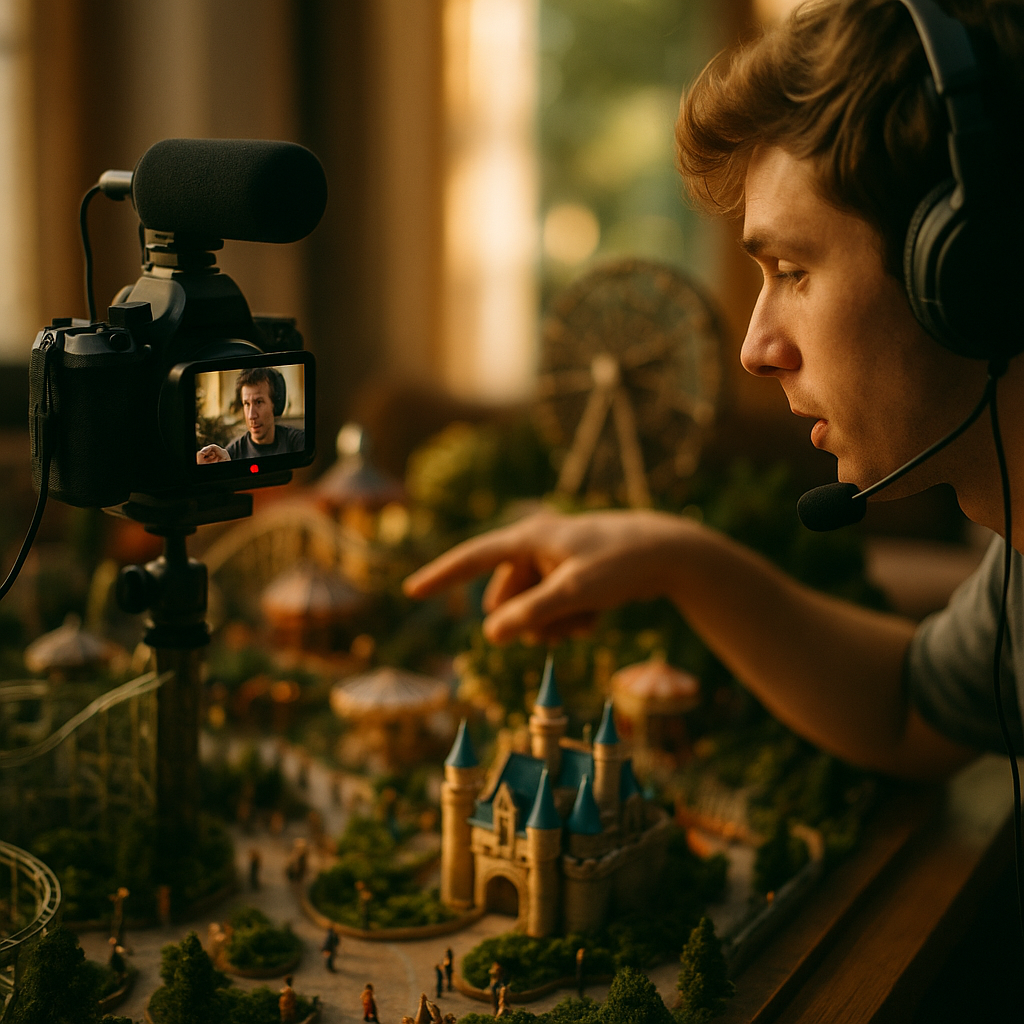
A single piece of content now has to work across five or more surfaces just to break even on production cost. That’s the quiet math behind NBCUniversal’s streaming-to-theme-park content format, a strategy pairing its library on Peacock and Japan’s U-NEXT platform with physical activations at Universal Destinations & Experiences parks. It’s not a media curiosity. It’s a blueprint for multi-touchpoint creator storytelling that brand marketers should be studying right now.
The Model, Explained Simply
NBCUniversal’s partnership with U-NEXT gives the Japanese streaming platform exclusive access to NBCUniversal titles, while Universal’s theme parks in Osaka and Orlando extend those same IP worlds into physical, ticketed experiences. A show doesn’t just stream. It becomes a land, a ride, a photo backdrop, a merchandise line, and eventually a wave of user-generated content from park visitors who post their own footage.
The genius isn’t the IP. It’s the sequencing. Streaming builds emotional familiarity at scale. The park converts that familiarity into a high-value, shareable, in-person moment. And that moment generates fresh content that feeds back into awareness for the streaming property. It’s a loop, not a funnel.
The brands winning attention right now aren’t the ones with the biggest single campaign. They’re the ones who’ve built a content loop where each touchpoint funds the next.
Why Single-Channel Campaigns Are Losing Ground
Most influencer programs still operate like a one-night stand: brief a creator, get a deliverable, post it, move on. That approach worked when reach was scarce and platforms rewarded novelty. It doesn’t work now. Audiences are fragmented across TikTok, Instagram, YouTube, and a growing list of niche apps, and attention spans have compressed to the point where a single touchpoint rarely completes a purchase decision.
Data from eMarketer consistently shows that consumers need multiple exposures across formats before converting, and that pattern holds even more tightly for considered purchases like travel, tech, and premium CPG. A creator video that only lives on one platform, in one format, is a sunk cost the moment it stops trending.
This is exactly the gap NBCUniversal’s model closes. Content isn’t built once and distributed. It’s designed from the start to mutate across formats, each version doing a different job in the customer journey.
What This Means for Creator Briefs
Brands that want this kind of compounding return need to brief creators for multiple touchpoints from day one, not retrofit a single asset after the fact. That’s the same logic behind ad-syndication ready briefs, where one shoot is engineered to serve three platforms without reshoots. It’s cheaper, faster, and it forces creative teams to think in systems instead of one-off assets.
Building a Multi-Touchpoint Creator Ecosystem
Here’s how the streaming-to-theme-park logic translates into a practical framework for brand and agency teams managing creator programs:
- Anchor content: A long-form piece (YouTube video, podcast segment, or streaming-style series) that builds narrative depth and emotional context.
- Amplification content: Short-form cuts distributed across TikTok, Reels, and Shorts that surface key moments from the anchor piece.
- Experiential activation: A physical or interactive moment, a pop-up, retail activation, or live event, that lets audiences step inside the story.
- User-generated feedback loop: Structured prompts (hashtag challenges, geotags, branded filters) that turn attendees and customers into unpaid amplifiers.
- Re-syndication: The best UGC gets pulled back into paid media and future anchor content, closing the loop.
Notice that the theme park in NBCUniversal’s model is really just a high-production experiential touchpoint. Brands without theme park budgets can replicate the function with retail activations, live commerce events, or even branded pop-up experiences tied to a creator campaign. The principle scales down. The mechanics don’t need a billion-dollar IP to work.
Funnel Stage Matters More Than Platform
One mistake brands make when trying to build this kind of ecosystem is treating every touchpoint as interchangeable. It isn’t. A top-of-funnel awareness piece needs different pacing, hooks, and calls to action than a bottom-of-funnel conversion asset. This is the same tension explored in dedicated long-form vs integrated placement by funnel stage, and it applies directly here. NBCUniversal’s streaming content builds awareness and affinity; the park experience drives high-intent, high-spend conversion. Brands need to map that same logic onto their own creator touchpoints before deciding what content goes where.
Skipping this step is how brands end up with beautiful content that doesn’t move any metric that matters. A gorgeous brand film with no conversion pathway is just expensive wallpaper.
Modular Production Is the Operational Backbone
None of this works if every touchpoint requires a separate shoot. NBCUniversal can afford theme park-scale production because the underlying IP and footage are built modularly from the start, ready to be repurposed across formats without starting from zero each time. Brand teams can borrow this discipline directly. Modular storyboard design lets a single creator shoot generate assets for a hero video, three short-form cuts, and a set of static images, all planned in the brief rather than improvised in the edit.
This is where AI-assisted production tools are quietly changing the economics of multi-touchpoint storytelling. Brands no longer need five separate creator shoots to populate five channels. They need one well-planned shoot and a production partner who understands how to slice it.
Test Before You Scale the Loop
Before committing theme-park-level budget to any single storytelling ecosystem, run smaller creator waves to validate which hooks, formats, and creators actually resonate. This is standard practice in performance marketing, and it applies to narrative-driven campaigns too. The approach outlined in multi-creator testing waves gives brands a structured way to find winning creative before committing to a full cross-media rollout. Skipping this step is how brands end up funding an “experiential activation” nobody wanted to attend.
Risk, Compliance, and the FTC Question
Multi-touchpoint campaigns multiply the number of places disclosure and compliance can go wrong. A creator might properly disclose a paid partnership in a long-form YouTube video, then reuse the same footage in a short-form cut without the disclosure carrying over. Regulators care about the platform-specific presentation of a disclosure, not just its existence somewhere in the content chain.
The FTC’s endorsement guidelines require clear and conspicuous disclosure on every version of sponsored content, which means brands scaling a single shoot across five formats need a compliance checklist for each cut, not just the master asset. This is a documented weak point in fast-moving creator programs, and it’s worth building review steps directly into the workflow rather than bolting them on afterward.
Every additional touchpoint in a content ecosystem is another place where disclosure, licensing, or brand safety can quietly break down. Build compliance checks into the workflow, not the post-mortem.
Measuring ROI Across a Content Ecosystem
The hardest part of this model isn’t production. It’s attribution. When a customer sees a creator’s YouTube video, a TikTok cut, a retail activation, and a friend’s UGC post before converting, which touchpoint gets credit? Most brands still default to last-click attribution, which systematically undervalues the awareness-building work happening earlier in the loop.
A better approach borrows from HubSpot’s multi-touch attribution frameworks, weighting each touchpoint based on its role in the journey rather than crediting whichever channel happened to close the sale. Platforms like Sprout Social can help track engagement patterns across the funnel, giving brand teams a clearer picture of which touchpoints are actually driving movement versus which are just generating vanity metrics.
Benchmarking spend against category norms also matters here. Statista’s creator economy data shows brands are steadily shifting budget away from one-off influencer posts toward sustained, multi-format partnerships, a trend that mirrors exactly what NBCUniversal is doing at theme park scale.
A Format Brands Can Actually Steal
Not every brand can build a theme park. But every brand can build a loop: an anchor story, short-form amplification, a real-world moment, and a feedback mechanism that turns customers into creators. That’s the transferable lesson buried inside NBCUniversal’s streaming-to-park pipeline, and it’s a far more useful takeaway than “invest in IP.”
Brands already experimenting with serialized, narrative-driven creator content, like the formats covered in vertical microdrama marketing, are closer to this model than they realize. The missing piece for most is the experiential layer and the feedback loop back into content. Add those two components and a modest creator program starts behaving like a media ecosystem.
Frequently Asked Questions
FAQs
What is the streaming-to-theme-park content format?
It’s a cross-media strategy where streaming content builds awareness and emotional attachment to an IP, which is then extended into physical, experiential touchpoints like theme parks or activations, generating user content that feeds back into future streaming and marketing efforts.
Can smaller brands realistically apply this model without a theme park budget?
Yes. The core mechanic, sequencing content from awareness to experience to user-generated feedback, works at any scale. Retail activations, pop-up events, and live commerce sessions can serve the same function as a theme park within a much smaller budget.
How does multi-touchpoint creator storytelling differ from a standard influencer campaign?
A standard campaign typically produces one deliverable per creator for one platform. Multi-touchpoint storytelling plans a single creative concept to be reformatted across several platforms and physical touchpoints from the start, so each asset does distinct work in the customer journey.
What’s the biggest compliance risk in cross-media creator campaigns?
Disclosure inconsistency. When one piece of sponsored content is cut into multiple formats, brands often forget to carry the disclosure requirement into every version, which creates FTC exposure even if the original asset was compliant.
How should brands measure ROI across multiple touchpoints?
Move away from last-click attribution and toward multi-touch models that assign credit based on each touchpoint’s role in the journey. Awareness-stage content should be measured on reach and engagement lift, while experiential and conversion-stage content should be measured on direct response metrics.
Start small: take one existing creator asset, map it against an awareness, amplification, and experiential touchpoint, and build the feedback loop before you scale the budget. The loop is the strategy, not the IP.
Top Influencer Marketing Agencies
The leading agencies shaping influencer marketing in 2026
Agencies ranked by campaign performance, client diversity, platform expertise, proven ROI, industry recognition, and client satisfaction. Assessed through verified case studies, reviews, and industry consultations.
Moburst

-
2

The Shelf
Boutique Beauty & Lifestyle Influencer AgencyA data-driven boutique agency specializing exclusively in beauty, wellness, and lifestyle influencer campaigns on Instagram and TikTok. Best for brands already focused on the beauty/personal care space that need curated, aesthetic-driven content.Clients: Pepsi, The Honest Company, Hims, Elf Cosmetics, Pure LeafVisit The Shelf → -
3

Audiencly
Niche Gaming & Esports Influencer AgencyA specialized agency focused exclusively on gaming and esports creators on YouTube, Twitch, and TikTok. Ideal if your campaign is 100% gaming-focused — from game launches to hardware and esports events.Clients: Epic Games, NordVPN, Ubisoft, Wargaming, Tencent GamesVisit Audiencly → -
4

Viral Nation
Global Influencer Marketing & Talent AgencyA dual talent management and marketing agency with proprietary brand safety tools and a global creator network spanning nano-influencers to celebrities across all major platforms.Clients: Meta, Activision Blizzard, Energizer, Aston Martin, WalmartVisit Viral Nation → -
5

The Influencer Marketing Factory
TikTok, Instagram & YouTube CampaignsA full-service agency with strong TikTok expertise, offering end-to-end campaign management from influencer discovery through performance reporting with a focus on platform-native content.Clients: Google, Snapchat, Universal Music, Bumble, YelpVisit TIMF → -
6

NeoReach
Enterprise Analytics & Influencer CampaignsAn enterprise-focused agency combining managed campaigns with a powerful self-service data platform for influencer search, audience analytics, and attribution modeling.Clients: Amazon, Airbnb, Netflix, Honda, The New York TimesVisit NeoReach → -
7

Ubiquitous
Creator-First Marketing PlatformA tech-driven platform combining self-service tools with managed campaign options, emphasizing speed and scalability for brands managing multiple influencer relationships.Clients: Lyft, Disney, Target, American Eagle, NetflixVisit Ubiquitous → -
8

Obviously
Scalable Enterprise Influencer CampaignsA tech-enabled agency built for high-volume campaigns, coordinating hundreds of creators simultaneously with end-to-end logistics, content rights management, and product seeding.Clients: Google, Ulta Beauty, Converse, AmazonVisit Obviously →