


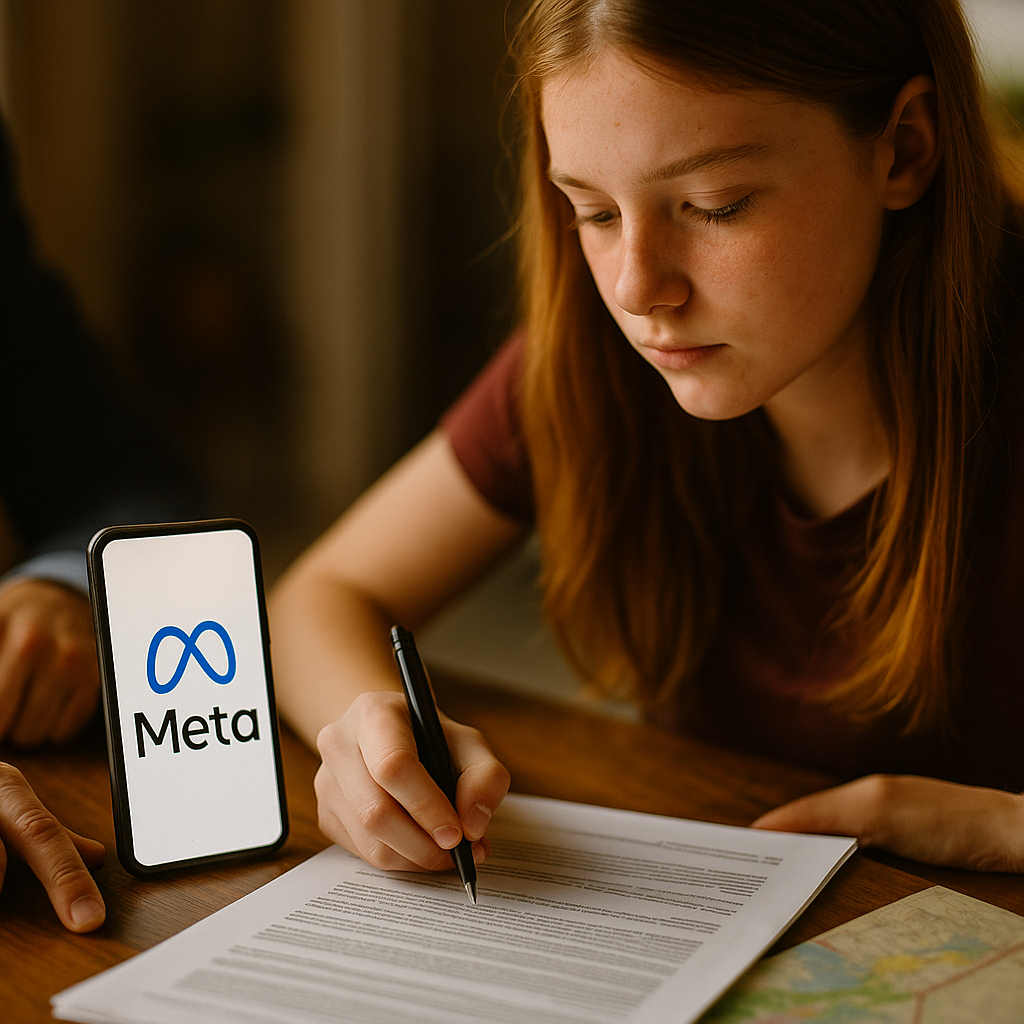
$18 billion. That’s the number Meta agreed to pay to resolve teen safety litigation, and it’s already reshaping how brands plan creator campaigns anywhere near a youth audience. If your influencer program touches anyone under 18, or even brushes up against that demographic through “all ages welcome” content, the Meta teen safety settlement just became your problem too.
This isn’t a one-time fine that Meta absorbs and forgets. The settlement carries multi-year compliance obligations, third-party audit requirements, and platform-level changes that ripple straight into how brands source, brief, and pay creators. Marketing teams that treat this as “Meta’s legal issue” instead of “our operational risk” are going to find that out the hard way, likely through a subpoena, a state AG inquiry, or a canceled retail partnership.
What Actually Changed, and Why It Matters Through 2027
The settlement isn’t just a check Meta wrote. It locks in a set of behavioral and structural changes that extend into age assurance systems, default privacy settings for minors, algorithmic feed restrictions, and independent oversight that runs on a multi-year timeline. Some of these mechanisms phase in gradually, which is exactly why brands need a roadmap rather than a one-time checklist. A single fix now won’t hold up against requirements that evolve annually through the settlement window.
Brands running influencer or UGC campaigns that could reach teens (think beauty, gaming, fast fashion, snacks, mobile apps, edtech) are now operating in an environment where the platform itself is under continuous scrutiny. That scrutiny extends to advertisers by association. If Meta has to prove it’s limiting personalized ad delivery to minors, your campaign’s targeting parameters become part of that evidence trail.
Regulators aren’t just auditing Meta anymore. They’re increasingly asking which brands and agencies benefited from data practices Meta is now being forced to unwind, which means your creator contracts and targeting briefs could become discovery material.
We’ve covered the mechanics of the underlying case in detail, including the age assurance deadlines that brands need to build into their planning cycles, and the specific usage caps that changed how teen accounts function. If you haven’t audited your current campaigns against those mechanics yet, that’s step one before anything in this article applies.
The Creative Layer: Your Ads Are Now Evidence
Here’s the uncomfortable part. Creative that was perfectly fine eighteen months ago might now read as evidence of targeting minors, even if that was never your intent. Influencer content that features school settings, back-to-school framing, teen slang, or creators who skew visibly younger can trigger scrutiny regardless of your actual media buying parameters.
Meta’s own response to the settlement has forced changes to how ad creative gets reviewed before it goes live, and we broke down what that means for creative teams in our piece on how the settlement forces brands to rethink teen ad creative. The short version: the platform’s automated systems are now flagging content based on visual and contextual signals, not just declared audience settings. A skincare brand running “get ready with me” content featuring a 16-year-old creator, targeted at “18+” but featuring braces and a school uniform, is exactly the kind of mismatch that gets flagged, and now potentially investigated.
Practical fix: build a creative pre-screen into your approval workflow that specifically checks for age-signaling elements independent of your stated targeting. Don’t rely on the platform to catch it after the fact. Legal teams increasingly want proof that the brand caught the risk before publication, not after a regulator did.
Creator Contracts Need a Rewrite, Not a Patch
Most influencer agreements written before this settlement have zero language addressing teen data handling, age verification obligations, or audience composition warranties. That gap is now a liability. If a creator’s audience skews younger than disclosed, or if a campaign inadvertently collects data from minors through comments, DMs, or lead forms, the brand is exposed even if the creator never intended harm.
We’ve written specifically about why brands must audit creator contracts in light of this settlement, and the same logic applies to the broader $459 million related action, covered in our breakdown of what brands must audit now for data consent. The common thread across both: contracts need explicit representations from creators about audience demographics, data collection practices tied to giveaways or affiliate links, and indemnification if those representations turn out false.
Here’s what a modernized clause set should cover at minimum:
- Creator warranties on audience age composition, backed by platform analytics access
- Prohibition on collecting personal data from users the creator knows or suspects are minors
- Mandatory disclosure of any co-branded content that touches teen-adjacent categories (gaming, mobile apps, beauty, snacks)
- Indemnification triggers specific to age assurance failures, not just generic FTC disclosure violations
- Audit rights allowing the brand to review creator-side data handling on request
If you’re working through an AI-assisted creator matching platform to source talent, the indemnification language gets more complicated because liability can shift between the brand, the platform, and the creator depending on how the matching algorithm made its recommendation. Our guide to indemnification language for AI creator matching platforms walks through how to close that gap contractually.
Age Verification Isn’t Optional Anymore
Meta’s non-personalized teen feed changes mean brands can no longer assume that “targeted to 18+” is a reliable proxy for “no minors will see this.” We laid out the operational implications in our action plan for non-personalized teen feeds, and the core takeaway holds: default feed changes mean your reach data going forward will look different, and you need a baseline before you can spot anomalies.
This isn’t unique to Meta, either. TikTok is under similar pressure following its own COPPA settlement, detailed in our analysis of what brand compliance teams must fix, and the cross-border implications for TikTok Shop specifically are covered in our age verification compliance matrix. If your influencer program runs across multiple platforms (and whose doesn’t, at this point), you need a harmonized age assurance policy rather than platform-by-platform patchwork. Inconsistency across platforms is itself a red flag to regulators, since it suggests compliance is reactive rather than built into your governance structure.
A harmonized, platform-agnostic age assurance policy is no longer a nice-to-have. Regulators increasingly view inconsistent enforcement across platforms as evidence that compliance is an afterthought, not a system.
International Complications Are Coming Faster Than You Think
US brands running global creator campaigns can’t treat this as a domestic issue. The UK, EU, and Australia have all moved on youth safety rules independently of the US settlement, and in several cases their thresholds are stricter. Our comparison of youth safety rules for creator campaigns across those markets is worth bookmarking if you run any pan-regional influencer activity, because a campaign compliant under the US settlement framework can still violate the UK’s approach to online safety enforced by regulators referenced at the ICO.
Data localization adds another wrinkle. If your creator payment infrastructure or audience data pipeline touches TikTok’s US data residency framework, the compliance obligations start to overlap with Meta’s in ways that make a unified governance approach more efficient than managing each platform separately. See our breakdown of fixing cross-border creator payments for the mechanics.
Building the Actual Roadmap
Enough diagnosis. Here’s how a compliance-forward brand should structure its response over the next few quarters, built to hold up through the multi-year settlement window rather than needing a rebuild every time a new deadline hits.
- Audit current creator rosters for audience age composition, using platform-provided analytics rather than self-reported creator estimates.
- Rewrite standard creator agreements to include age composition warranties, data handling restrictions, and indemnification tied specifically to teen safety obligations.
- Build a creative pre-screen that flags age-signaling content elements independent of declared targeting settings.
- Harmonize age assurance policy across every platform you run campaigns on, not just Meta.
- Document your compliance process in writing, dated and version-controlled, so you have a paper trail if a regulator or retail partner comes asking.
- Reassess quarterly. This settlement’s obligations phase in over multiple years, and your roadmap needs the same cadence.
None of this is glamorous work. It’s also cheaper than the alternative. Compliance teams that treat this as a live, evolving obligation (checking in against benchmarks from sources like eMarketer on shifting platform usage patterns among teens, or industry guidance from the FTC on endorsement disclosure) will spend far less time firefighting than teams that wait for the next headline settlement to force their hand.
Frequently Asked Questions
Does the Meta teen safety settlement apply to brands directly, or only to Meta?
The settlement’s legal obligations apply to Meta directly, but the platform changes it triggers (age assurance requirements, feed restrictions, ad targeting limits) affect any brand running campaigns that could reach teen audiences. Regulators have also signaled interest in advertiser practices that relied on data collection methods the settlement now restricts.
What is the biggest mistake brands make with youth-adjacent creator campaigns right now?
Assuming that “18+ targeting” settings are sufficient protection. Creative signals, creator audience composition, and data collection through comments or giveaways can all expose minors regardless of stated targeting parameters, and regulators are increasingly looking past the targeting settings to the actual content and outcomes.
How often should compliance policies be reviewed given this settlement’s multi-year timeline?
Quarterly at minimum. The settlement’s obligations phase in over several years, and platform responses to those obligations (like feed algorithm changes) shift on a similar cadence, so a static policy will fall out of date quickly.
Do creator contracts need to be renegotiated retroactively?
Existing contracts should be reviewed for gaps, but the more urgent priority is updating standard templates going forward. For active campaigns with material teen safety exposure, renegotiation or an addendum covering audience warranties and indemnification is worth the friction.
Does this settlement affect platforms other than Meta?
Not directly, but it has raised the regulatory bar industry-wide. TikTok’s own COPPA settlement and youth safety enforcement in the UK, EU, and Australia reflect the same pressure, meaning brands running multi-platform campaigns need a consistent compliance approach rather than platform-specific patches.
Start with the audit, not the contract rewrite. You can’t fix what you haven’t measured, and a documented, dated audit trail is the single strongest asset you can hand your legal team if this settlement’s fallout ever lands on your desk.
Top Influencer Marketing Agencies
The leading agencies shaping influencer marketing in 2026
Agencies ranked by campaign performance, client diversity, platform expertise, proven ROI, industry recognition, and client satisfaction. Assessed through verified case studies, reviews, and industry consultations.
Moburst

-
2

The Shelf
Boutique Beauty & Lifestyle Influencer AgencyA data-driven boutique agency specializing exclusively in beauty, wellness, and lifestyle influencer campaigns on Instagram and TikTok. Best for brands already focused on the beauty/personal care space that need curated, aesthetic-driven content.Clients: Pepsi, The Honest Company, Hims, Elf Cosmetics, Pure LeafVisit The Shelf → -
3

Audiencly
Niche Gaming & Esports Influencer AgencyA specialized agency focused exclusively on gaming and esports creators on YouTube, Twitch, and TikTok. Ideal if your campaign is 100% gaming-focused — from game launches to hardware and esports events.Clients: Epic Games, NordVPN, Ubisoft, Wargaming, Tencent GamesVisit Audiencly → -
4

Viral Nation
Global Influencer Marketing & Talent AgencyA dual talent management and marketing agency with proprietary brand safety tools and a global creator network spanning nano-influencers to celebrities across all major platforms.Clients: Meta, Activision Blizzard, Energizer, Aston Martin, WalmartVisit Viral Nation → -
5

The Influencer Marketing Factory
TikTok, Instagram & YouTube CampaignsA full-service agency with strong TikTok expertise, offering end-to-end campaign management from influencer discovery through performance reporting with a focus on platform-native content.Clients: Google, Snapchat, Universal Music, Bumble, YelpVisit TIMF → -
6

NeoReach
Enterprise Analytics & Influencer CampaignsAn enterprise-focused agency combining managed campaigns with a powerful self-service data platform for influencer search, audience analytics, and attribution modeling.Clients: Amazon, Airbnb, Netflix, Honda, The New York TimesVisit NeoReach → -
7

Ubiquitous
Creator-First Marketing PlatformA tech-driven platform combining self-service tools with managed campaign options, emphasizing speed and scalability for brands managing multiple influencer relationships.Clients: Lyft, Disney, Target, American Eagle, NetflixVisit Ubiquitous → -
8

Obviously
Scalable Enterprise Influencer CampaignsA tech-enabled agency built for high-volume campaigns, coordinating hundreds of creators simultaneously with end-to-end logistics, content rights management, and product seeding.Clients: Google, Ulta Beauty, Converse, AmazonVisit Obviously →