


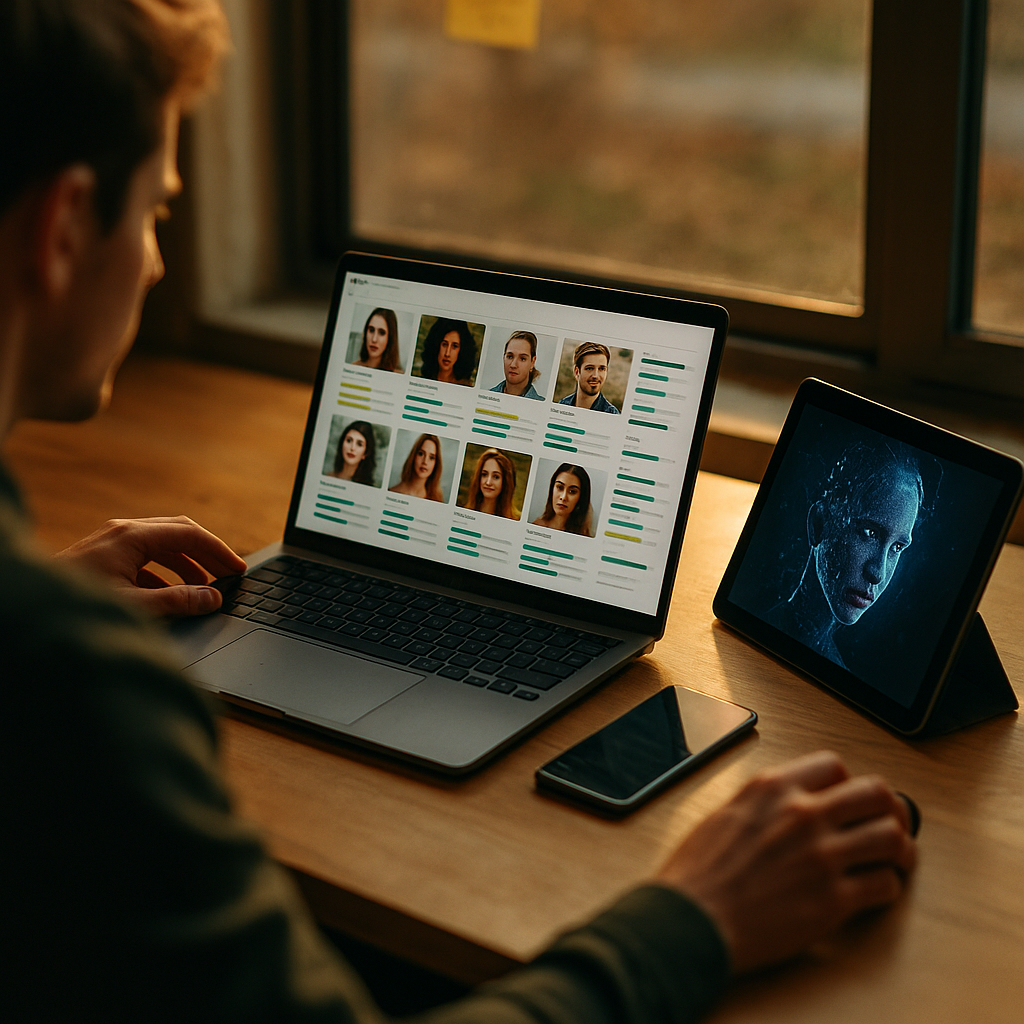
Ninety-one percent of marketers say influencer marketing delivers a solid return, yet most brand teams still burn two to three weeks manually vetting nano and micro-influencer candidates for a single campaign. That math doesn’t hold up anymore. An AI-assisted discovery workflow can compress that timeline to hours, without sacrificing the fraud checks and brand-safety diligence that make micro-influencer programs worth running in the first place.
The Vetting Bottleneck Nobody Budgets For
Everyone loves nano and micro-influencers on paper. Higher engagement rates, lower fees, more authentic-feeling content. The catch is volume. A campaign targeting creators with 5,000 to 50,000 followers might require sourcing from a pool of thousands to land forty usable partners. Manual vetting at that scale means someone on your team scrolling profiles, cross-checking follower authenticity, reading captions for brand fit, and screening for past controversies, one Instagram tab at a time.
That’s not a workflow. That’s a bottleneck disguised as due diligence.
Agencies routinely quote three to four weeks for discovery and vetting on mid-sized micro-influencer campaigns. By the time contracts go out, the campaign window has shrunk, the budget has been partially spent on labor instead of media, and the brand still can’t fully verify audience quality across every creator. This is the same structural problem that shows up in AI marketing agents that fail on bad data: the tools aren’t the issue, the underlying process feeding them is.
What an AI-Assisted Discovery Workflow Actually Looks Like
Strip away the vendor jargon and an AI-assisted discovery workflow is really just four automated checkpoints stacked in sequence: sourcing, scoring, screening, and shortlisting. Each stage removes a category of manual labor without removing human judgment from the final call.
- Sourcing: Natural-language search across creator databases (think “fitness micro-influencers, 10k to 40k followers, US-based, posts about home workouts”) replaces manual hashtag scrolling.
- Scoring: Machine learning models rank candidates on audience authenticity, engagement quality, and brand affinity rather than raw follower count.
- Screening: Automated brand-safety and compliance scans flag past controversial content, undisclosed sponsorships, or FTC violations before a human ever opens the profile.
- Shortlisting: The system surfaces a ranked list with supporting evidence, ready for a strategist to review and approve.
What used to take a coordinator three weeks of tab-switching now takes a platform a few hours to process, with the human reviewer spending an afternoon confirming the top candidates instead of generating the list from scratch.
The shift isn’t from human vetting to AI vetting. It’s from AI doing the sorting and humans doing the judgment call, which is exactly the division of labor that scales.
Building the Stack: Four Layers That Matter
You don’t need a custom-built AI system to run this workflow. Most mid-market teams stitch together existing platforms. Here’s how the layers typically break down.
Discovery and database layer. Tools like Modash, Upfluence, and HypeAuditor maintain searchable databases of tens of millions of creator profiles, filterable by niche, geography, and audience demographics. This is your sourcing engine.
Affinity and fit scoring. Rather than filtering purely on follower count, look for platforms that score creators against your brand’s actual content themes and past top performers. This is where affinity-based matching has quietly replaced follower-tier filtering as the industry standard, a shift covered in depth in our piece on affinity scores replacing follower filters.
Compliance and fraud screening. Bot-follower detection, engagement pod flagging, and disclosure history checks belong here. HypeAuditor and similar tools quantify what percentage of a creator’s audience looks suspicious, which matters more than it used to now that regulators are paying closer attention to influencer disclosure practices, per FTC guidance on endorsements.
Workflow and relationship management. Platforms like CreatorIQ, Grin, and Aspire handle the handoff from shortlist to outreach to contract, keeping the vetting data attached to each creator record instead of buried in someone’s spreadsheet.
None of this works if the underlying data feeding your models is stale or mismatched, which is the same lesson from why nearly half of agentic AI marketing projects fail on bad data. Garbage inputs produce confidently wrong shortlists, and confidently wrong is worse than obviously wrong because it doesn’t get double-checked.
Where Humans Still Win
AI is excellent at pattern matching across thousands of profiles in seconds. It is not good at reading tone, sensing whether a creator’s humor fits your brand voice, or catching the subtle cultural context that makes a partnership feel authentic instead of transactional.
The workflow that actually holds up in production keeps a human strategist as the final checkpoint on every shortlist, not as a rubber stamp but as a genuine filter. Set a rule: no creator gets contracted without a human reviewing at least their last ten posts and one piece of long-form content, like a YouTube video or an Instagram Reel with commentary. AI can surface the candidates. It shouldn’t make the final call alone, particularly given how briefs and creative direction can drift when unverified AI output enters the pipeline unchecked, a risk explored in RAG for creator briefs and hallucinated claims.
There’s also a governance layer that shouldn’t be skipped. Any AI system touching creator selection and eventually spend decisions needs an audit trail, especially if procurement or legal ever asks why a specific creator was approved. That’s the same principle behind evaluating risk in agentic AI campaign managers: automation without documentation is a liability waiting to surface during a brand-safety incident.
The ROI Math Behind the Time Savings
Let’s put numbers on this. If a coordinator earning a fully loaded rate spends fifteen working days sourcing and vetting fifty creators for a campaign, that’s roughly 120 hours of labor before a single contract is signed. An AI-assisted workflow that compresses sourcing and initial screening to a few hours, with a human reviewer spending another eight to twelve hours confirming the shortlist, cuts that to under twenty hours total.
Across a brand running quarterly micro-influencer campaigns, that’s not a marginal efficiency gain. It’s the difference between running four campaigns a year and running eight, with the same headcount. Marketers report engagement rates on nano and micro tiers running well above those of mega-influencers, according to data tracked by Sprout Social, which makes the case for scaling micro-influencer volume even stronger once the vetting bottleneck is removed.
Speed without governance just means you make bad hiring decisions faster. The value of an AI-assisted workflow is that it makes good decisions faster, because the screening logic is consistent across every candidate instead of varying by which coordinator happened to review the profile.
There’s a budget conversation buried in here too. Faster vetting means more campaign cycles per year, which means more data flowing back into your creator performance models, which improves the affinity scoring for the next round. It compounds. Teams that treat discovery as a one-off manual task never get that flywheel spinning. For a broader view of how spend and creator data connect to measurable outcomes, see how AI media buying links creator content to sales lift. Discovery speed is the front end of that same pipeline.
Common Mistakes When Teams Automate Too Fast
Three failure patterns show up repeatedly. First, teams turn off human review entirely to chase speed, then get burned when a scored-high creator turns out to have a deleted controversial post that the fraud scanner didn’t catch because it only indexes current content. Second, teams rely on a single scoring vendor without validating its methodology against actual campaign performance, essentially trusting a black box. Third, teams skip the compliance documentation step, assuming the platform’s audit log is enough, only to discover during a legal review that it doesn’t capture who approved what and when.
Build in a quarterly audit where you compare AI-recommended creators against actual campaign performance. If the model’s top picks aren’t outperforming your historical average, the scoring weights need adjusting, not abandoning. Industry benchmarks on creator marketing spend and channel allocation, tracked by eMarketer, are a useful external check on whether your internal performance data is in line with broader market trends.
Next Step
Pick one upcoming campaign, run discovery and initial screening through an AI-assisted platform, and time it against your last manual vetting cycle. The gap will make the budget case for you.
FAQs
What does an AI-assisted discovery workflow actually automate?
It automates creator sourcing, audience authenticity scoring, and initial brand-safety screening, leaving final approval and relationship judgment to a human strategist.
How much time can brands realistically save on vetting?
Most mid-market teams report cutting vetting time from two to three weeks down to one to two days, depending on campaign size and how many creators need review.
Is AI-based influencer vetting accurate enough to replace manual review entirely?
No. AI scoring is strong at pattern detection across large candidate pools, but human reviewers still need to confirm brand fit, tone, and content quality before contracting.
What tools are commonly used to build this kind of workflow?
Modash, Upfluence, and HypeAuditor for sourcing and fraud detection, paired with CreatorIQ, Grin, or Aspire for workflow management and relationship tracking.
Does faster vetting increase compliance risk?
Not if the workflow includes documented human review and an audit trail. The risk comes from removing human checkpoints, not from using automation to speed up sourcing.
Top Influencer Marketing Agencies
The leading agencies shaping influencer marketing in 2026
Agencies ranked by campaign performance, client diversity, platform expertise, proven ROI, industry recognition, and client satisfaction. Assessed through verified case studies, reviews, and industry consultations.
Moburst

-
2

The Shelf
Boutique Beauty & Lifestyle Influencer AgencyA data-driven boutique agency specializing exclusively in beauty, wellness, and lifestyle influencer campaigns on Instagram and TikTok. Best for brands already focused on the beauty/personal care space that need curated, aesthetic-driven content.Clients: Pepsi, The Honest Company, Hims, Elf Cosmetics, Pure LeafVisit The Shelf → -
3

Audiencly
Niche Gaming & Esports Influencer AgencyA specialized agency focused exclusively on gaming and esports creators on YouTube, Twitch, and TikTok. Ideal if your campaign is 100% gaming-focused — from game launches to hardware and esports events.Clients: Epic Games, NordVPN, Ubisoft, Wargaming, Tencent GamesVisit Audiencly → -
4

Viral Nation
Global Influencer Marketing & Talent AgencyA dual talent management and marketing agency with proprietary brand safety tools and a global creator network spanning nano-influencers to celebrities across all major platforms.Clients: Meta, Activision Blizzard, Energizer, Aston Martin, WalmartVisit Viral Nation → -
5

The Influencer Marketing Factory
TikTok, Instagram & YouTube CampaignsA full-service agency with strong TikTok expertise, offering end-to-end campaign management from influencer discovery through performance reporting with a focus on platform-native content.Clients: Google, Snapchat, Universal Music, Bumble, YelpVisit TIMF → -
6

NeoReach
Enterprise Analytics & Influencer CampaignsAn enterprise-focused agency combining managed campaigns with a powerful self-service data platform for influencer search, audience analytics, and attribution modeling.Clients: Amazon, Airbnb, Netflix, Honda, The New York TimesVisit NeoReach → -
7

Ubiquitous
Creator-First Marketing PlatformA tech-driven platform combining self-service tools with managed campaign options, emphasizing speed and scalability for brands managing multiple influencer relationships.Clients: Lyft, Disney, Target, American Eagle, NetflixVisit Ubiquitous → -
8

Obviously
Scalable Enterprise Influencer CampaignsA tech-enabled agency built for high-volume campaigns, coordinating hundreds of creators simultaneously with end-to-end logistics, content rights management, and product seeding.Clients: Google, Ulta Beauty, Converse, AmazonVisit Obviously →