


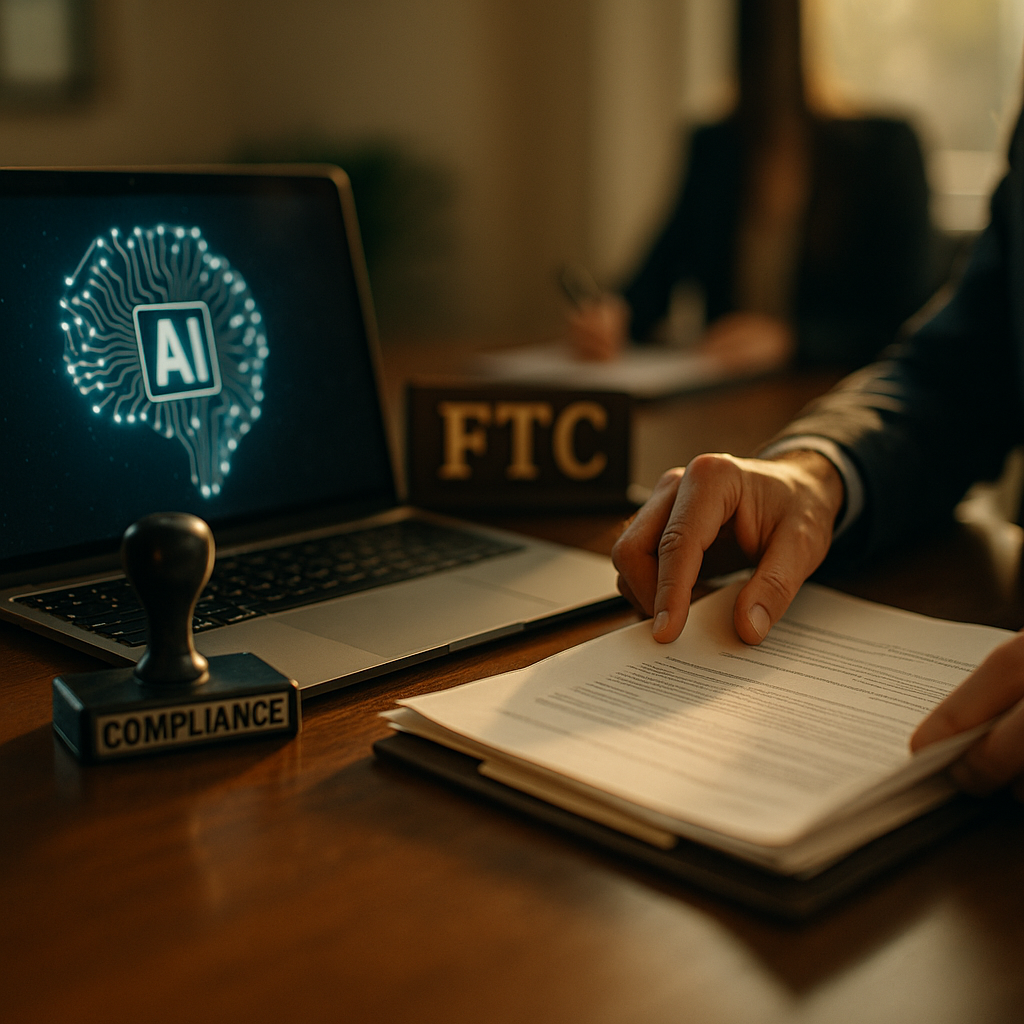
Seventy-three percent of marketing teams now use AI agents somewhere in campaign operations, according to recent eMarketer survey data. Fewer than one in five have a human sign-off requirement before those agents can pull a creator asset, halt payment, or reverse a live campaign. That gap is where the next FTC enforcement action is quietly being written. Letting an AI agent auto-approve creator campaign rollbacks feels like operational efficiency. It’s actually a compliance blind spot with your brand’s name on it.
What Counts as an “Auto-Approved Rollback,” Exactly?
A rollback, in creator marketing terms, is any reversal action: pulling a sponsored post, halting a payout, reissuing a disclosure, swapping out flagged creative, or terminating a creator relationship mid-flight. Brands increasingly hand these decisions to AI agents embedded in creator-matching platforms, campaign management tools, and payment automation systems. The agent monitors for trigger conditions (an FTC complaint, a platform policy violation, a brand safety flag) and executes a rollback without waiting for a compliance officer to weigh in.
That’s the pitch, anyway: faster response, less human latency, fewer campaigns bleeding out while legal reviews a Slack thread. The problem is that rollback decisions carry legal weight. Reversing a disclosure, terminating a paid relationship, or reclassifying a creator’s status can trigger contractual, tax, and disclosure obligations that an AI agent has no authority, and often no visibility, to handle correctly.
The Compliance Blind Spot Nobody Priced Into the Contract
Most creator platform agreements were written before agentic AI could take unilateral action on live campaigns. That means the indemnification language, the audit trail requirements, and the dispute resolution clauses were built for a world where a human clicked “approve.” When an algorithm makes that call instead, brands often discover their contracts simply don’t address it.
If your vendor contract doesn’t specify who owns liability for an AI agent’s rollback decision, you’ve effectively agreed to find out the hard way.
This is exactly the gap covered in our breakdown of algorithm change indemnification clauses, and it applies just as directly to rollback automation. If the platform’s AI reverses a campaign incorrectly, and that reversal causes a creator to file a breach-of-contract claim, who eats the cost? In most current agreements, the answer is: unclear, which in litigation terms means “the brand, probably.”
Where This Breaks FTC and Privacy Rules
The FTC doesn’t care whether a human or a machine made the decision. It cares whether disclosures were accurate, whether material connections were flagged, and whether consumers were misled. An AI agent that auto-approves a rollback, say, pulling a disclosure statement because a creator’s contract status changed, can inadvertently create a window where sponsored content appears undisclosed or misrepresented. That’s a straight line to an FTC endorsement guideline violation, and it’s one the brand owns regardless of which system pulled the trigger.
Our recent piece on FTC endorsement rules covering AI-driven content makes clear that regulators are actively expanding scrutiny of automated decision-making in creator campaigns, not narrowing it. Rollback logic that touches disclosure status is squarely in that expanded zone.
There’s a second, quieter risk: data handling. Rollback events often involve pulling creator payment records, personal data, or performance metrics to justify the reversal. If that data processing happens without a proper legal basis, or if it crosses jurisdictions your data processing addendum doesn’t cover, you’ve stacked a privacy violation on top of the disclosure problem. This is the same structural issue explored in AI creator-matching DPAs under new state privacy laws, and it’s worth checking whether your rollback automation was ever included in that data mapping exercise.
Four Failure Modes Brands Are Already Living Through
These aren’t hypotheticals. Compliance teams at mid-size and enterprise brands are reporting variations of the same four scenarios:
- The false-positive rollback. An AI agent flags a creator for a policy violation that never happened, pulls the campaign, and triggers a contractual breach claim from the creator’s side, all before a human notices the mistake.
- The disclosure gap. A rollback reverses creative mid-campaign, but the platform doesn’t sync the change across every distribution channel, leaving outdated, undisclosed content live on one platform while it’s pulled from another.
- The payment freeze without documentation. The agent halts payout pending review but generates no audit trail explaining why, leaving the brand unable to justify the delay if the creator or a regulator asks.
- The scope creep rollback. An agent designed to catch brand safety issues starts making judgment calls on creative quality or performance thresholds, decisions that were never part of its original compliance mandate.
Each of these has a paper trail problem at its core. Auditing AI decision logic after the fact is exactly the discipline covered in auditing AI creator scripts for undisclosed material connection, and the same audit muscle applies to rollback decisions, not just script generation.
Building Guardrails Without Killing the Speed Advantage
Nobody’s arguing brands should abandon automation and go back to manual review queues. The speed benefit is real, and in fast-moving creator campaigns, delay itself carries risk. The fix isn’t removing the agent. It’s narrowing what it’s allowed to decide alone.
A workable model looks like this: AI agents can flag, pause, and recommend rollbacks in real time. Humans retain final approval authority on any action touching disclosure status, payment terms, or contract termination. That single distinction, flag versus finalize, resolves most of the liability exposure without slowing down detection.
Speed of detection and authority to act are two different problems. Solving the first doesn’t require surrendering the second.
Practically, this means:
- Requiring a documented human sign-off for any rollback touching FTC disclosure language.
- Setting a mandatory audit log for every automated rollback decision, including the trigger condition and confidence score.
- Building indemnification language into vendor contracts that explicitly addresses AI-initiated actions, following the model in indemnification language for AI creator matching platforms.
- Running quarterly reviews of agent decision accuracy against a sample of human-reviewed cases, similar to the audit cadence recommended in our AI livestream pricing audit guide.
Platforms like Sprout Social and campaign management tools increasingly offer configurable approval thresholds. Use them. Default settings almost always favor speed over documentation, and that default is exactly what regulators will point to if something goes wrong.
Who’s Actually on the Hook When the Agent Gets It Wrong?
This is the question legal teams keep asking, and the honest answer is: it depends entirely on your contract language, which is precisely why so many brands are exposed right now. Platform vendors will argue the brand configured the automation and accepted the risk. Brands will argue the vendor’s AI made an autonomous decision outside their control. Regulators, meanwhile, tend to hold the brand responsible for consumer-facing outcomes regardless of which party’s software pulled the trigger.
The safest assumption: treat every AI agent rollback decision as if your compliance team made it personally, because from the FTC’s perspective, that’s functionally true. Build documentation, approval gates, and contract terms around that assumption, not around the vendor’s marketing claims about “autonomous compliance.”
Bottom line: audit every AI agent in your creator stack this quarter, identify which ones can execute rollbacks without human sign-off, and shut that gap before a regulator or a creator’s attorney finds it first.
FAQs
What does “auto-approve rollback” mean in influencer campaigns?
It refers to an AI agent independently reversing a campaign action, such as pulling content, halting payment, or ending a creator contract, without requiring human sign-off first.
Can AI agents legally make compliance decisions on their own?
There’s no blanket legal prohibition, but regulators like the FTC hold brands responsible for outcomes regardless of whether a human or a machine made the decision. Autonomous compliance actions increase risk rather than removing it.
What’s the biggest compliance risk with automated rollback approval?
The most common risk is a disclosure gap, where an AI agent reverses or pulls sponsored content inconsistently across platforms, leaving undisclosed material live somewhere while it’s removed elsewhere.
How should brands audit AI agent decision logs?
Require every rollback action to generate a documented trigger condition, confidence score, and timestamp, then review a sample of those logs quarterly against human-reviewed outcomes to check for false positives or scope creep.
Who is liable if an AI agent approves a bad rollback?
Liability depends on contract language, but brands should assume they will be held responsible by regulators and creators alike, and should negotiate indemnification terms with vendors that explicitly cover AI-initiated actions.
Top Influencer Marketing Agencies
The leading agencies shaping influencer marketing in 2026
Agencies ranked by campaign performance, client diversity, platform expertise, proven ROI, industry recognition, and client satisfaction. Assessed through verified case studies, reviews, and industry consultations.
Moburst

-
2

The Shelf
Boutique Beauty & Lifestyle Influencer AgencyA data-driven boutique agency specializing exclusively in beauty, wellness, and lifestyle influencer campaigns on Instagram and TikTok. Best for brands already focused on the beauty/personal care space that need curated, aesthetic-driven content.Clients: Pepsi, The Honest Company, Hims, Elf Cosmetics, Pure LeafVisit The Shelf → -
3

Audiencly
Niche Gaming & Esports Influencer AgencyA specialized agency focused exclusively on gaming and esports creators on YouTube, Twitch, and TikTok. Ideal if your campaign is 100% gaming-focused — from game launches to hardware and esports events.Clients: Epic Games, NordVPN, Ubisoft, Wargaming, Tencent GamesVisit Audiencly → -
4

Viral Nation
Global Influencer Marketing & Talent AgencyA dual talent management and marketing agency with proprietary brand safety tools and a global creator network spanning nano-influencers to celebrities across all major platforms.Clients: Meta, Activision Blizzard, Energizer, Aston Martin, WalmartVisit Viral Nation → -
5

The Influencer Marketing Factory
TikTok, Instagram & YouTube CampaignsA full-service agency with strong TikTok expertise, offering end-to-end campaign management from influencer discovery through performance reporting with a focus on platform-native content.Clients: Google, Snapchat, Universal Music, Bumble, YelpVisit TIMF → -
6

NeoReach
Enterprise Analytics & Influencer CampaignsAn enterprise-focused agency combining managed campaigns with a powerful self-service data platform for influencer search, audience analytics, and attribution modeling.Clients: Amazon, Airbnb, Netflix, Honda, The New York TimesVisit NeoReach → -
7

Ubiquitous
Creator-First Marketing PlatformA tech-driven platform combining self-service tools with managed campaign options, emphasizing speed and scalability for brands managing multiple influencer relationships.Clients: Lyft, Disney, Target, American Eagle, NetflixVisit Ubiquitous → -
8

Obviously
Scalable Enterprise Influencer CampaignsA tech-enabled agency built for high-volume campaigns, coordinating hundreds of creators simultaneously with end-to-end logistics, content rights management, and product seeding.Clients: Google, Ulta Beauty, Converse, AmazonVisit Obviously →