


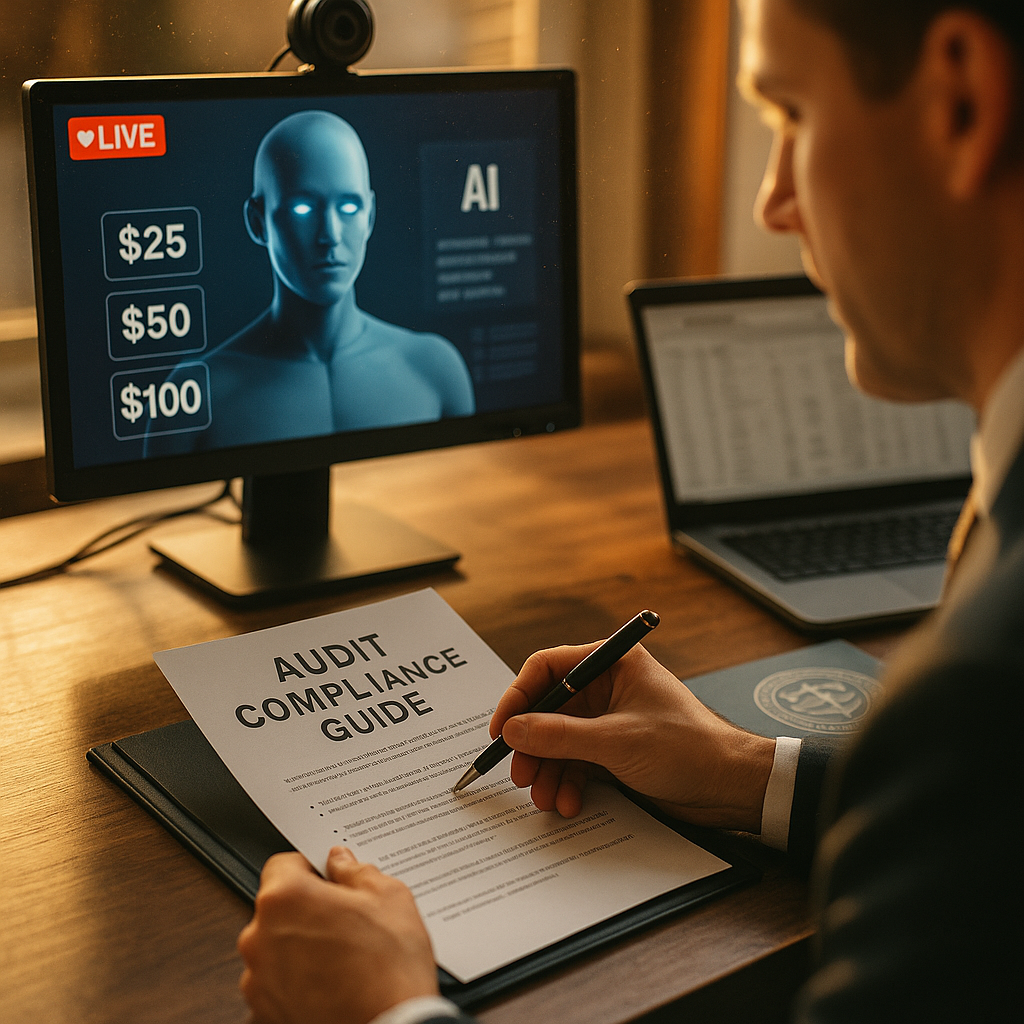
Roughly 62% of shoppers who watched a livestream shopping event in the past year said a flashing “limited time price” or algorithmically generated discount influenced their purchase decision. Now ask yourself: can your brand prove, line by line, how those prices were calculated? If the honest answer is “not really,” you have a problem that’s bigger than a bad look. It’s the exact fact pattern the FTC has signaled it will pursue. A structured compliance audit for AI-curated livestream price claims is no longer optional homework, it’s the difference between a clean campaign and a consent decree.
Why AI Pricing Engines Turned Into a Liability Surface
Livestream commerce on TikTok Shop and Amazon Live doesn’t run on static price tags anymore. Dynamic pricing engines, many powered by third-party AI vendors, adjust “flash deals,” bundle discounts, and countdown offers in real time based on viewer behavior, inventory signals, and even watch-time engagement. That’s great for conversion rate. It’s terrible for compliance, because nobody on the brand side always knows exactly why a price appeared, how it was justified, or whether the “was $89, now $34” claim reflects an actual prior selling price.
The FTC has already made clear, through its updated Endorsement Guides and its ongoing surveillance pricing inquiry, that algorithmic opacity is not a defense. If a creator says “lowest price of the year” and the AI engine generated that claim without a verifiable reference price, the brand is on the hook, not just the platform, and not just the creator.
An AI vendor’s pricing logic being a “black box” to your own legal team is not a mitigating factor in an FTC investigation. It’s the finding.
What Counts as a “Price Claim” in a Livestream Context
- Verbal claims by the host or creator (“this is the cheapest it’s ever been”)
- On-screen overlays generated by the platform’s AI (“limited stock, price drops in 10 minutes”)
- Automated bundle math (“buy 2, save 40%”) calculated by a third-party pricing tool
- Personalized discount codes surfaced to specific viewer segments
Each of these is a separate claim with a separate evidentiary trail. Treat them as one undifferentiated blob and your audit will miss the gaps that actually matter.
What the FTC Actually Cares About Here
The agency’s enforcement posture, reinforced by recent guidance referenced in FTC endorsement and advertising guidance, boils down to three questions investigators ask when they pull a livestream recording: Was the price claim substantiated at the time it was made? Was the material connection between brand and creator disclosed clearly and contemporaneously? And was the “discount” calculated using pricing history that would survive scrutiny, or was it manufactured to create urgency?
Our earlier coverage of FTC rules on AI-generated endorsements walked through how the agency now treats AI avatars and composite ad claims the same as human endorsers. Livestream pricing claims sit squarely in that same expanded enforcement zone, because an AI-generated price banner is functionally an endorsement of value.
This isn’t theoretical. Retail media and pricing data sharing arrangements are already drawing scrutiny, as we detailed in our breakdown of retail media data sharing and surveillance pricing risk. Livestream commerce just adds a real-time, high-velocity layer on top of an already sensitive data practice.
Building the Audit: Five Checkpoints That Actually Hold Up
A compliance audit that exists as a PDF nobody reads is worse than no audit at all, because it creates a false sense of coverage. Build yours around checkpoints that generate evidence, not just checkboxes.
- Pricing provenance log. For every discount or “lowest price” claim made during a livestream, require a timestamped record of the reference price, the source system, and who or what generated the claim. If your AI vendor can’t produce this, that’s a contract problem, not just a marketing problem.
- Disclosure synchronization check. Verify that sponsorship or material connection disclosures appear at the same moment as price claims, not buried in a video description added after the fact. Our piece on reconciling AI labels with FTC disclosures covers the timing conflicts that trip up most brands.
- Script and claim review. Cross-reference creator scripts against actual on-screen pricing overlays. Mismatches between what a host says and what the AI engine displays are one of the most common findings in internal audits right now, and they’re exactly the kind of discrepancy an FTC investigator would flag first.
- Platform-side data pull. Both TikTok Shop and Amazon Live retain backend records of pricing changes and viewer targeting. Your audit needs a standing process to request and archive this data, not a scramble after a complaint lands. This overlaps with the verification work covered in the TikTok Shop real IP verification checklist.
- Escalation protocol. Define, in writing, who reviews a flagged claim, how fast, and what the kill switch looks like if a livestream is actively making unsubstantiated claims in real time. Our livestream pricing escalation matrix is a useful starting template if you’re building this from scratch.
TikTok Shop and Amazon Live Aren’t the Same Risk
Treating both platforms with an identical audit template is a common mistake. TikTok Shop’s AI curation leans heavily on engagement-based personalization, meaning two viewers in the same livestream can see different discount prompts. That personalization is efficient for conversion and genuinely difficult to audit after the fact unless you’re capturing viewer-level logs in real time.
Amazon Live, by contrast, ties more tightly into the broader Amazon pricing infrastructure, including the same dynamic pricing systems that power the standard product detail page. That means a livestream price claim can be cross-checked against Amazon’s own pricing history tools, which is actually an advantage for brands willing to build the reconciliation step into their audit. Fewer creator-driven variables, more platform-side data to pull.
According to data cited by eMarketer’s livestream commerce research, live shopping in the US is projected to keep growing at double-digit rates through the next several years, which means the compliance gap you leave unaddressed today compounds with every new campaign you run on either platform.
Who Should Own This Audit Internally?
Marketing wants speed. Legal wants documentation. Neither one alone should own this process. The most durable structures we’ve seen split ownership three ways: a marketing ops lead who manages the pricing provenance log day to day, a legal or compliance reviewer who signs off on claim language before a livestream goes live, and a vendor management function that holds the AI pricing tool and platform contracts accountable through indemnification language. We’ve written extensively about how that contract layer should be structured in indemnification language for AI creator matching platforms, and the same logic applies almost directly to AI pricing vendors.
If your AI pricing vendor won’t put pricing provenance obligations in writing, that refusal is itself the audit finding you need to escalate.
Documentation Cadence: Weekly Isn’t Optional Anymore
Quarterly audits made sense when livestream commerce was a side channel. It isn’t anymore. Given the volume of livestream events most consumer brands now run, weekly spot checks of a sample of streams, paired with monthly full audits of high-volume creators, is the realistic minimum. Build a simple dashboard that flags any price claim exceeding a defined discount threshold (say, anything above 40% off) for manual review before the next livestream airs. That threshold-based triage keeps the audit sustainable instead of becoming a full-time forensic exercise.
Tools like Sprout Social’s social commerce analytics and platform-native reporting dashboards can help pull viewer engagement and claim frequency data, but they won’t do the substantiation work for you. That step requires a human sign-off, every time.
FAQs
Frequently Asked Questions
What exactly triggers FTC scrutiny of a livestream price claim?
Scrutiny typically follows a pattern of unsubstantiated “lowest price” or countdown discount claims combined with weak or delayed material connection disclosures. A single mistake rarely triggers an investigation. A documented pattern across multiple livestreams is what draws attention.
Do we need separate audits for TikTok Shop and Amazon Live?
Yes. TikTok Shop’s viewer-level personalization and Amazon Live’s tighter integration with platform pricing history create different evidence trails, so a single audit template applied to both will miss platform-specific risks.
Who is legally responsible if an AI pricing tool generates a false discount claim?
Brands typically bear primary liability for claims made during their sponsored livestreams, regardless of whether the claim originated from a creator, a platform algorithm, or a third-party pricing vendor. Contractual indemnification can shift financial exposure but does not eliminate regulatory responsibility.
How often should a livestream pricing audit be conducted?
Weekly spot checks paired with monthly comprehensive reviews are becoming the practical standard for brands running frequent livestream commerce campaigns, especially those using AI-driven dynamic pricing.
What documentation should we keep for every price claim?
At minimum, retain the timestamped reference price, the source system or vendor that generated the claim, the creator script, the on-screen overlay as it appeared, and the disclosure timing relative to the claim.
Next step: pull your last 30 days of TikTok Shop and Amazon Live recordings this week, run them against the five checkpoints above, and flag anything without a documented pricing source before your next livestream airs. That single exercise will tell you more about your real exposure than any policy document sitting in a shared drive.
Top Influencer Marketing Agencies
The leading agencies shaping influencer marketing in 2026
Agencies ranked by campaign performance, client diversity, platform expertise, proven ROI, industry recognition, and client satisfaction. Assessed through verified case studies, reviews, and industry consultations.
Moburst

-
2

The Shelf
Boutique Beauty & Lifestyle Influencer AgencyA data-driven boutique agency specializing exclusively in beauty, wellness, and lifestyle influencer campaigns on Instagram and TikTok. Best for brands already focused on the beauty/personal care space that need curated, aesthetic-driven content.Clients: Pepsi, The Honest Company, Hims, Elf Cosmetics, Pure LeafVisit The Shelf → -
3

Audiencly
Niche Gaming & Esports Influencer AgencyA specialized agency focused exclusively on gaming and esports creators on YouTube, Twitch, and TikTok. Ideal if your campaign is 100% gaming-focused — from game launches to hardware and esports events.Clients: Epic Games, NordVPN, Ubisoft, Wargaming, Tencent GamesVisit Audiencly → -
4

Viral Nation
Global Influencer Marketing & Talent AgencyA dual talent management and marketing agency with proprietary brand safety tools and a global creator network spanning nano-influencers to celebrities across all major platforms.Clients: Meta, Activision Blizzard, Energizer, Aston Martin, WalmartVisit Viral Nation → -
5

The Influencer Marketing Factory
TikTok, Instagram & YouTube CampaignsA full-service agency with strong TikTok expertise, offering end-to-end campaign management from influencer discovery through performance reporting with a focus on platform-native content.Clients: Google, Snapchat, Universal Music, Bumble, YelpVisit TIMF → -
6

NeoReach
Enterprise Analytics & Influencer CampaignsAn enterprise-focused agency combining managed campaigns with a powerful self-service data platform for influencer search, audience analytics, and attribution modeling.Clients: Amazon, Airbnb, Netflix, Honda, The New York TimesVisit NeoReach → -
7

Ubiquitous
Creator-First Marketing PlatformA tech-driven platform combining self-service tools with managed campaign options, emphasizing speed and scalability for brands managing multiple influencer relationships.Clients: Lyft, Disney, Target, American Eagle, NetflixVisit Ubiquitous → -
8

Obviously
Scalable Enterprise Influencer CampaignsA tech-enabled agency built for high-volume campaigns, coordinating hundreds of creators simultaneously with end-to-end logistics, content rights management, and product seeding.Clients: Google, Ulta Beauty, Converse, AmazonVisit Obviously →