


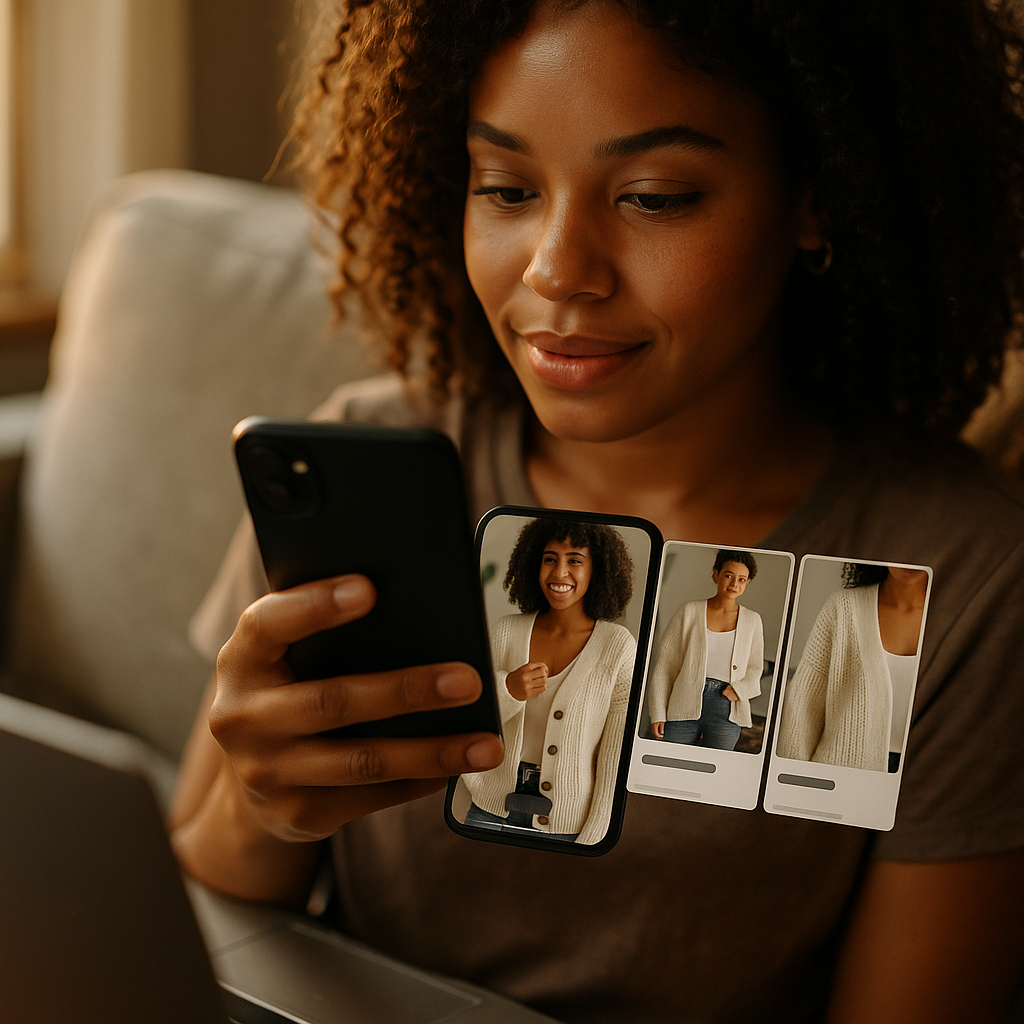
One product wins 55% of clicks inside an AI shopping assistant’s carousel. The rest split the leftovers. If that number doesn’t unsettle your influencer strategy, it should, because optimizing creator content for AI shopping assistants has quietly become the difference between funding a campaign and funding a rounding error. Carousels are the new shelf space, and creators are the new packaging.
What the 55% Carousel Effect Actually Means
When a shopper asks ChatGPT, Gemini, or Perplexity to recommend a product, the assistant doesn’t return a list of ten links like classic search. It returns a compact carousel, usually three to five items, with one clear frontrunner. Recent analysis of shopping-intent queries across major AI assistants shows the top-ranked item captures the majority of subsequent clicks and add-to-cart actions, hence the 55% figure. Positions two through five fight over scraps.
This is a winner-take-most environment, not a winner-take-all one, but the gap between first and fourth is brutal. Brands used to obsessing over page-one Google rankings are now relearning that lesson inside a completely different interface, one where the “page” is a handful of cards generated on the fly.
In carousel placement, there is no page two. There’s only the carousel and everything the assistant decided not to show you.
Why Creator Content Became the Raw Material
AI shopping assistants don’t invent product descriptions from nothing. They pull from a mix of retailer feeds, review aggregators, and, increasingly, creator content that’s been indexed, transcribed, and structured for retrieval. A YouTube review with clear spec callouts, a TikTok demo with an accurate caption, an Instagram carousel with alt text that actually describes the product: these become source material an assistant can cite or synthesize.
The uncomfortable truth is most creator content still isn’t built for machine consumption. It’s built for human scroll behavior: hooks, jump cuts, vague captions like “obsessed with this.” That works for engagement. It fails for retrieval, because the assistant has nothing structured to extract a price, a size range, or a use case from.
This is the same shift covered in zero-click shopping citations, where visibility depends less on traffic and more on whether an AI system trusts your content enough to surface it at all.
The Ranking Signals Nobody Talks About
Ask ten marketers how AI shopping assistants rank products and you’ll get ten vague answers about “relevance.” In practice, four signals dominate:
- Structured data completeness. Product schema, availability, and price accuracy pulled from merchant feeds.
- Source consistency. Does creator content match retailer listings, or contradict them?
- Freshness. Recent creator posts and reviews outrank stale content, especially for fast-moving categories.
- Claim verifiability. Assistants increasingly cross-check specific claims (ingredient lists, battery life, sizing) against retailer or brand-verified data before citing a creator’s word for it.
That last point matters more than most brands realize. An assistant that can’t verify a creator’s claim will quietly drop it from consideration rather than risk a wrong answer. This is exactly the failure mode explored in stopping hallucinated product claims, where unverified creator statements get filtered out before they ever reach a shopper.
Can You Actually Engineer Carousel Placement?
Partially, yes. You can’t buy your way into a carousel the way you buy a paid search slot, at least not yet, though ads inside AI assistants are coming faster than most procurement teams have budgeted for. What you can do today is control the inputs.
Start with the brief. Instead of asking creators to “show off the product,” specify the exact attributes an assistant needs to extract: material, dimensions, price tier, compatible use cases, comparison points against named competitors. This isn’t creative interference, it’s giving the algorithm something to chew on.
Second, standardize captions and video descriptions across a campaign so the same facts appear in the same language everywhere. Assistants weigh corroboration heavily. Five creators independently confirming a product “fits carry-on size limits” is a stronger signal than one glowing but vague testimonial.
Third, treat the merchant feed and creator content as one system, not two departments that never talk. If your Google Merchant Center listing says one price and a creator’s caption says another from three months ago, that mismatch can knock the product out of consideration entirely. Google’s own merchant support documentation is a useful baseline for feed hygiene most social teams have never read.
The brands winning carousel placement aren’t the ones with the best creators. They’re the ones whose creator content and retailer data tell the exact same story.
Structured Briefs Beat Talented Creators
It sounds heretical to a creative director, but it’s true: a mediocre creator with a rigorously structured brief will outperform a brilliant creator working off a vague one, at least in AI retrieval terms. The frameworks used for structured data specs in AI Mode apply directly here. Product name, exact SKU, price at time of posting, three verifiable claims, one comparison anchor. That’s the skeleton every piece of carousel-eligible content needs, regardless of platform.
Agencies running this at scale are starting to build creator briefs the way engineers write API documentation: rigid fields, optional flourishes. It feels cold. It also works, and it’s a lot cheaper than the alternative of getting cited by no one.
Measurement Nobody’s Built Yet
Here’s the operational headache: most attribution stacks still measure clicks and conversions from links, not citations from an assistant’s carousel. If a shopper sees your product in a Gemini carousel, reads the AI’s summary (partially built from a creator’s video), and buys directly through the retailer without ever clicking a tracked link, your dashboard shows nothing. The sale happened. The credit didn’t.
This is the exact gap addressed in building attribution models for AI citations. Brands need a parallel measurement track that monitors whether their products and creator content are being surfaced and cited at all, independent of traditional click tracking. Tools that scrape and log AI assistant responses for branded queries are still immature, but a handful of martech vendors are racing to fill the gap, and eMarketer’s ongoing coverage of retail media and AI commerce trends is worth a recurring check for anyone building this internally.
Statista’s consumer research on AI assistant adoption in shopping behavior also gives a useful macro read: assistant-driven product discovery is growing fast enough that treating it as a side channel, rather than a core optimization target, is already a strategic mistake for categories like electronics, beauty, and home goods.
Compliance Doesn’t Disappear Because a Robot Is Reading
One thing brands keep getting wrong: assuming disclosure rules relax when the audience is an AI system rather than a human scroller. They don’t. The FTC’s endorsement guidelines still apply to the underlying creator content, and if an assistant surfaces a sponsored post without clear disclosure baked in, that’s a liability that follows the brand, not the platform. Build disclosure language into the structured brief itself so it survives however the content gets repurposed or summarized downstream.
Where This Is Headed
Expect carousel logic to keep tightening rather than loosening. As assistants get better at verifying claims in real time, the margin for sloppy creator content shrinks further. Brands that start treating creator briefs as structured data inputs now, rather than creative guidelines with a checklist bolted on, will have a year or more of head start before this becomes table stakes across every category.
Next step: audit your last five creator campaigns for structured, verifiable product claims (not vibes), then rebuild your next brief template around the four ranking signals above before your competitors do it first.
FAQs
What is the 55% carousel effect in AI shopping assistants?
It refers to research showing the top-ranked product in an AI shopping assistant’s carousel captures the majority, around 55%, of subsequent clicks and purchase actions, while lower-ranked items split the remainder.
How does creator content influence AI shopping carousel placement?
AI assistants pull from creator reviews, captions, and video transcripts as source material when they can verify the claims against retailer data. Structured, consistent, and verifiable creator content is more likely to be cited or used to rank a product favorably.
Can brands pay to appear in AI shopping carousels?
Paid placement inside AI assistant carousels is still emerging and not yet standardized across platforms. Brands should focus on optimizing organic inputs, structured data and verifiable creator claims, while monitoring how assistant advertising products roll out.
How should brands brief creators for AI shopping assistant visibility?
Briefs should specify exact product attributes, price at time of posting, verifiable claims, and comparison points, rather than general creative direction, so AI systems have structured data to extract and corroborate.
Does FTC disclosure still apply to content read by AI assistants?
Yes. FTC endorsement guidelines apply to the underlying creator content regardless of whether a human or an AI assistant is the audience, so disclosure language should be built into the content itself.
How do brands measure success in AI shopping carousels?
Traditional click-based attribution misses most AI-driven discovery. Brands need parallel tracking that monitors whether their products and creator content are being cited or surfaced in assistant responses, independent of link clicks.
Top Influencer Marketing Agencies
The leading agencies shaping influencer marketing in 2026
Agencies ranked by campaign performance, client diversity, platform expertise, proven ROI, industry recognition, and client satisfaction. Assessed through verified case studies, reviews, and industry consultations.
Moburst

-
2

The Shelf
Boutique Beauty & Lifestyle Influencer AgencyA data-driven boutique agency specializing exclusively in beauty, wellness, and lifestyle influencer campaigns on Instagram and TikTok. Best for brands already focused on the beauty/personal care space that need curated, aesthetic-driven content.Clients: Pepsi, The Honest Company, Hims, Elf Cosmetics, Pure LeafVisit The Shelf → -
3

Audiencly
Niche Gaming & Esports Influencer AgencyA specialized agency focused exclusively on gaming and esports creators on YouTube, Twitch, and TikTok. Ideal if your campaign is 100% gaming-focused — from game launches to hardware and esports events.Clients: Epic Games, NordVPN, Ubisoft, Wargaming, Tencent GamesVisit Audiencly → -
4

Viral Nation
Global Influencer Marketing & Talent AgencyA dual talent management and marketing agency with proprietary brand safety tools and a global creator network spanning nano-influencers to celebrities across all major platforms.Clients: Meta, Activision Blizzard, Energizer, Aston Martin, WalmartVisit Viral Nation → -
5

The Influencer Marketing Factory
TikTok, Instagram & YouTube CampaignsA full-service agency with strong TikTok expertise, offering end-to-end campaign management from influencer discovery through performance reporting with a focus on platform-native content.Clients: Google, Snapchat, Universal Music, Bumble, YelpVisit TIMF → -
6

NeoReach
Enterprise Analytics & Influencer CampaignsAn enterprise-focused agency combining managed campaigns with a powerful self-service data platform for influencer search, audience analytics, and attribution modeling.Clients: Amazon, Airbnb, Netflix, Honda, The New York TimesVisit NeoReach → -
7

Ubiquitous
Creator-First Marketing PlatformA tech-driven platform combining self-service tools with managed campaign options, emphasizing speed and scalability for brands managing multiple influencer relationships.Clients: Lyft, Disney, Target, American Eagle, NetflixVisit Ubiquitous → -
8

Obviously
Scalable Enterprise Influencer CampaignsA tech-enabled agency built for high-volume campaigns, coordinating hundreds of creators simultaneously with end-to-end logistics, content rights management, and product seeding.Clients: Google, Ulta Beauty, Converse, AmazonVisit Obviously →