


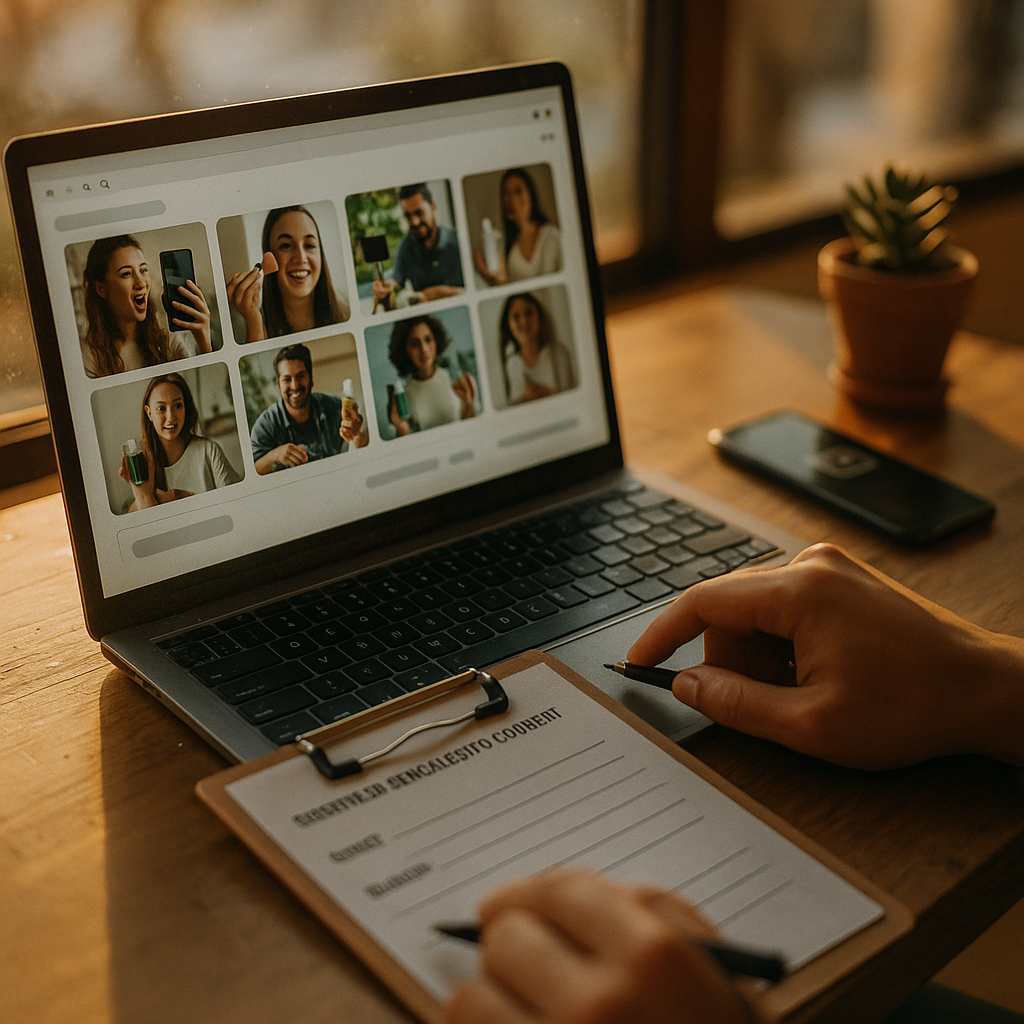
Roughly 46% of marketers say sourcing creators is the single biggest bottleneck in scaling a UGC program, according to recent creator economy surveys. Yet a growing category of UGC marketplace platforms has quietly flipped the sourcing model: instead of brands hunting for creators, brands post a brief and creators apply. No cold DMs. No agency retainers. Just inbound applications from vetted talent who already want the gig.
For brand and agency teams tired of manual outreach, that shift matters more than it sounds.
The Cold Pitch Is Dying, and Brands Are Fine With That
For years, influencer sourcing meant one of two things: an agency scout combing Instagram for the right aesthetic, or a brand manager sliding into DMs and hoping for a reply rate above 5%. Neither scales. Both are expensive in hours, even when the dollar cost looks small.
UGC marketplaces solve a narrower but higher-frequency problem: getting short-form, authentic content (unboxings, testimonials, demo videos) fast, at predictable prices, without the courtship. Platforms like Billo, JoinBrands, Trend, and Insense operate on a marketplace logic. Brands upload a brief with deliverables, budget, and usage terms. Creators browse open briefs and submit pitches or sample work. The brand picks, the creator delivers, everyone moves on.
That inversion is the whole point. It is why marketing ops teams increasingly treat UGC sourcing as a procurement function rather than a relationship-building exercise, and why AI creator discovery vs human scouts comparisons keep coming up in budget reviews.
How the Inbound Model Actually Works
Strip away the branding and most UGC marketplaces run the same core loop:
- Brief posting. The brand specifies deliverables, aesthetic, hook style, and usage rights up front.
- Creator application. Vetted creators (many platforms gate entry with portfolio review) submit interest, sometimes with a sample clip.
- Selection and brief lock. The brand picks one or several creators; terms and payment are locked in the platform, not negotiated over email.
- Delivery and revision. Content is uploaded, revisions requested inside the tool, and payment released on approval.
The efficiency gain is structural. Creators are pre-qualified by the platform (portfolio, engagement history, sometimes ID verification), so brands skip the vetting step that eats most of a scout’s week. That is the same efficiency logic behind AI creator lookalike modeling for nano creators: let the system do the matching, let humans do the judgment calls.
The real ROI of a UGC marketplace isn’t cheaper content. It’s the elimination of the 15 to 20 hours per campaign that used to go into manual creator vetting and outreach.
Billo vs JoinBrands vs Trend vs Insense: What Actually Sets Them Apart
Not all marketplaces solve the same problem, and treating them as interchangeable is where a lot of brands waste budget.
Billo leans heavily into paid social ad content: short, punchy, hook-first videos optimized for Meta and TikTok ad placements rather than organic reach. Turnaround is fast, often under a week, and pricing is flat-rate per video, which makes it easy to budget at scale.
JoinBrands positions itself as a broader marketplace covering everything from product reviews to long-form YouTube integrations, with a wider creator tier range. That breadth is useful for brands running multi-format campaigns but means quality variance is higher; more time goes into brief-writing to compensate.
Trend emphasizes curated matching, closer to a boutique agency experience wrapped in marketplace software. It costs more per asset but reduces the revision cycles that eat into a campaign timeline.
Insense distinguishes itself by tying directly into paid amplification, letting brands run creator content as whitelisted or Spark ads without a separate licensing negotiation. For teams already running performance-driven creator programs, that built-in ad integration often outweighs a slightly higher base price.
None of these are wrong choices. They are optimized for different KPIs, and the mistake most teams make is picking one based on brand name recognition rather than mapping it against the actual deliverable: is this for organic social, paid ad creative, or product page UGC?
Does the Inbound Model Actually Save Money?
Yes, but the savings show up in a different line item than most finance teams expect. Marketplace platforms typically charge per-asset fees that look higher than a nano-creator’s organic rate. What they eliminate is the labor cost of sourcing: no scout salary, no agency markup, no weeks-long DM campaigns with single-digit response rates.
Run the math on a 20-video quarterly UGC batch. Manual sourcing (identifying, vetting, negotiating, contracting) can consume 40 to 60 hours of a coordinator’s time. At a fully loaded rate of $45 to $60 an hour, that is $1,800 to $3,600 in labor before a single video is shot. A marketplace compresses that into brief-writing and selection, often under 8 hours total.
That is the same operational logic driving broader martech consolidation conversations, including the ones covered in our demand-gen operations coverage: the cost isn’t the tool subscription, it’s the headcount hours the tool replaces.
The Rights and Compliance Trap Nobody Talks About
Here is where marketplace convenience can quietly become a legal headache. Usage rights on UGC marketplaces vary wildly by platform and by tier. Some include unlimited organic usage but charge extra for paid amplification. Others grant a fixed license window (say, six or twelve months) and auto-expire, which means content quietly becomes unusable on your product pages if nobody tracks the clock.
Brands running UGC at scale need a rights management layer that sits above the marketplace itself, tracking which assets are licensed for what, for how long, and on which channels. That’s precisely the gap covered in our UGC rights management comparison, and it is worth reading before signing a multi-platform contract, not after a licensing dispute lands on legal’s desk.
Disclosure compliance is the other landmine. Even marketplace-sourced content that involves any brand payment or free product falls under FTC endorsement guidelines, and platforms differ in how rigorously they enforce disclosure language before content goes live. Brands remain liable regardless of what the marketplace’s terms of service claim, so it pays to build a disclosure checklist into your brief template rather than relying on the platform’s default settings. The FTC’s endorsement guidance is unambiguous on this point, and regulators have shown increasing willingness to enforce it.
Choosing a Marketplace: Five Questions Before You Sign
Skip the demo call small talk and ask these directly:
- What’s the actual creator vetting process? Portfolio review is not the same as engagement verification.
- How are usage rights structured, and do they expire? Get this in writing, not in a sales pitch.
- What’s the revision policy? Unlimited revisions sound great until they double your turnaround time.
- Does the platform support paid amplification licensing natively? If you’re running whitelisted ads, this saves a second negotiation entirely.
- What’s the average time-to-first-draft? Ask for a real number, not a marketing claim.
Most teams find that a single marketplace doesn’t cover every format they need. A common setup pairs a fast, ad-focused platform like Billo or Insense for paid creative with a broader marketplace like JoinBrands for organic and long-form content, layered with a separate rights management tool to keep licensing straight across both. This mirrors the multi-tool reality documented in eMarketer’s creator economy research, where brands increasingly run two or three specialized platforms rather than one all-in-one suite.
Budget benchmarking also helps. According to Sprout Social’s industry data, brands running structured UGC programs report notably higher content output per dollar than those relying on ad hoc influencer outreach, largely because marketplace workflows cut the sourcing tax entirely.
What This Means for Your Next Quarter
Pick one marketplace for paid creative, one for organic UGC if your volume justifies it, and put a rights-tracking process in place before your first batch of content goes live, not after the license windows start expiring. That single operational fix will save more budget than any negotiation over per-video pricing.
Frequently Asked Questions
What is a UGC marketplace platform?
A UGC marketplace platform is a software tool where brands post content briefs and vetted creators apply or submit work directly, replacing manual outreach and pitching with an inbound application model.
How do creators get inbound brand requests without pitching?
Creators join a marketplace, build a portfolio or verified profile, and browse open briefs posted by brands. Selection happens through the platform, so creators respond to specific requests rather than cold-pitching brands themselves.
Are UGC marketplace platforms cheaper than hiring an agency?
Per-asset pricing can look comparable or even higher than a nano-creator’s organic rate, but the real savings come from eliminated sourcing labor. Manual vetting and negotiation often costs more in staff hours than the marketplace fee itself.
Who owns the usage rights to UGC marketplace content?
It depends entirely on the platform and tier. Some licenses cover organic use only, others include paid amplification, and many have fixed expiration windows. Brands should confirm rights terms in writing before campaigns launch.
Do brands still need to follow FTC disclosure rules with marketplace content?
Yes. Any compensated content, including marketplace-sourced UGC, falls under FTC endorsement guidelines regardless of the platform’s own terms of service. Brands remain liable for ensuring proper disclosure.
Which UGC marketplace is best for paid social ad creative?
Billo and Insense are generally favored for ad-focused UGC because of fast turnaround and, in Insense’s case, native paid amplification licensing that skips a separate negotiation step.
Top Influencer Marketing Agencies
The leading agencies shaping influencer marketing in 2026
Agencies ranked by campaign performance, client diversity, platform expertise, proven ROI, industry recognition, and client satisfaction. Assessed through verified case studies, reviews, and industry consultations.
Moburst

-
2

The Shelf
Boutique Beauty & Lifestyle Influencer AgencyA data-driven boutique agency specializing exclusively in beauty, wellness, and lifestyle influencer campaigns on Instagram and TikTok. Best for brands already focused on the beauty/personal care space that need curated, aesthetic-driven content.Clients: Pepsi, The Honest Company, Hims, Elf Cosmetics, Pure LeafVisit The Shelf → -
3

Audiencly
Niche Gaming & Esports Influencer AgencyA specialized agency focused exclusively on gaming and esports creators on YouTube, Twitch, and TikTok. Ideal if your campaign is 100% gaming-focused — from game launches to hardware and esports events.Clients: Epic Games, NordVPN, Ubisoft, Wargaming, Tencent GamesVisit Audiencly → -
4

Viral Nation
Global Influencer Marketing & Talent AgencyA dual talent management and marketing agency with proprietary brand safety tools and a global creator network spanning nano-influencers to celebrities across all major platforms.Clients: Meta, Activision Blizzard, Energizer, Aston Martin, WalmartVisit Viral Nation → -
5

The Influencer Marketing Factory
TikTok, Instagram & YouTube CampaignsA full-service agency with strong TikTok expertise, offering end-to-end campaign management from influencer discovery through performance reporting with a focus on platform-native content.Clients: Google, Snapchat, Universal Music, Bumble, YelpVisit TIMF → -
6

NeoReach
Enterprise Analytics & Influencer CampaignsAn enterprise-focused agency combining managed campaigns with a powerful self-service data platform for influencer search, audience analytics, and attribution modeling.Clients: Amazon, Airbnb, Netflix, Honda, The New York TimesVisit NeoReach → -
7

Ubiquitous
Creator-First Marketing PlatformA tech-driven platform combining self-service tools with managed campaign options, emphasizing speed and scalability for brands managing multiple influencer relationships.Clients: Lyft, Disney, Target, American Eagle, NetflixVisit Ubiquitous → -
8

Obviously
Scalable Enterprise Influencer CampaignsA tech-enabled agency built for high-volume campaigns, coordinating hundreds of creators simultaneously with end-to-end logistics, content rights management, and product seeding.Clients: Google, Ulta Beauty, Converse, AmazonVisit Obviously →