


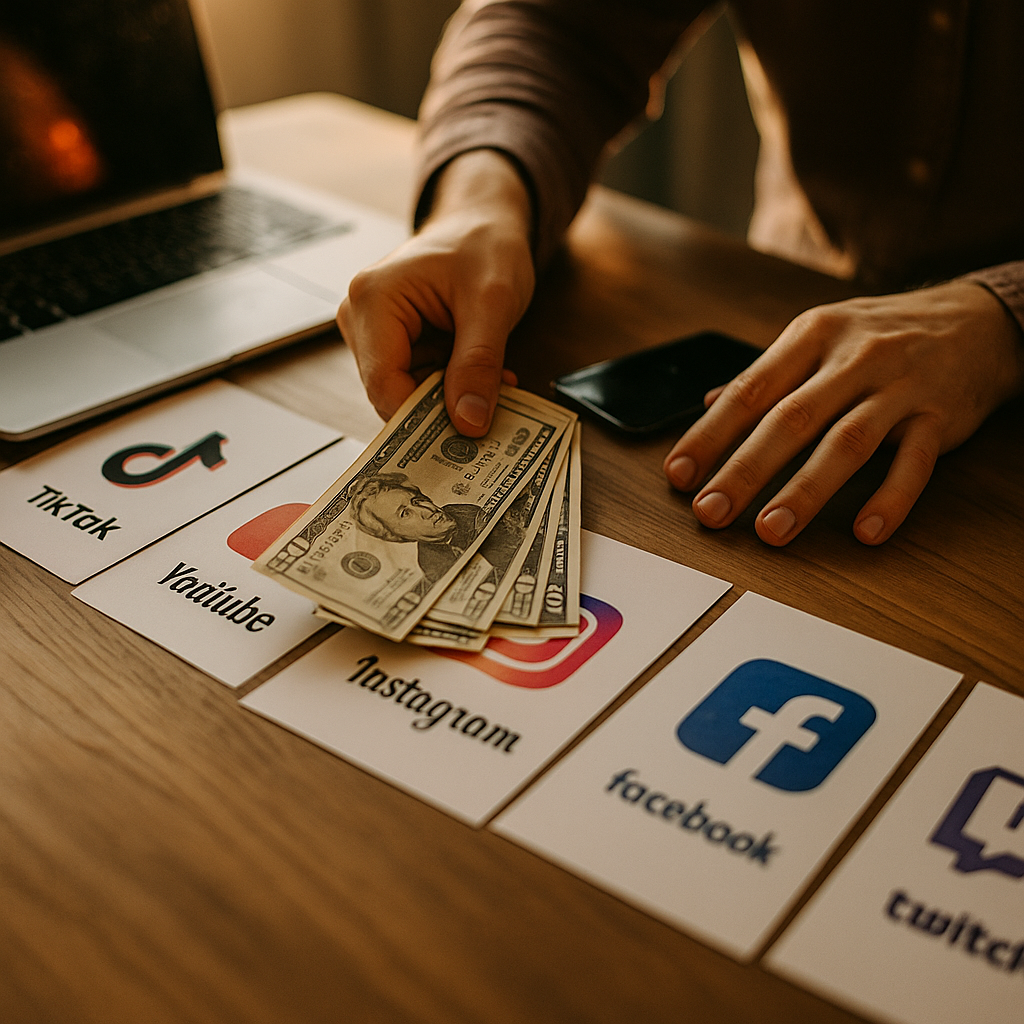
Half of Gen Z now starts product research on TikTok instead of Google, and a growing share never touches a traditional feed at all before they buy. That single data point should worry anyone still building a creator strategy around Instagram Reels and hoping for the best. Discovery fragmentation isn’t a future risk. It’s already rewriting how creators get found, how brands allocate budget, and who actually controls the distribution layer.
The Feed Era Is Over, Even If Nobody Announced It
For a decade, “distribution” meant one thing: get your creator’s content into a feed algorithm and hope it surfaced. Instagram, TikTok, and YouTube each ran their own black box, and brands built entire media plans around guessing what those algorithms rewarded this quarter.
That model is fracturing. Search engines now surface creator content directly in results. Retail platforms run their own discovery engines. AI shopping assistants recommend products based on creator reviews scraped from dozens of sources, not a single ranked feed. Our earlier coverage on how feeds fade as search evolves laid out the mechanics: attention is no longer concentrated in one algorithmic pipe, it’s scattered across search, marketplaces, and agent-driven surfaces that didn’t exist in a meaningful way three years ago.
Discovery used to be a single funnel with one gatekeeper. Now it’s a mesh of five or six overlapping systems, each with its own ranking logic and its own data trail.
That shift matters because most brand measurement stacks were built for the single-funnel world. When discovery fragments, attribution fragments with it.
Where Are Creators Actually Getting Discovered Now?
Ask ten marketers this question and you’ll get ten different answers, which is precisely the point. Discovery now happens across:
- Traditional social feeds (still relevant, just no longer dominant)
- Search engines indexing creator video and UGC directly
- Retail media placements inside Amazon, Walmart, and Target’s own ecosystems
- Inbound creator marketplaces where talent applies to brand campaigns rather than waiting to be scouted
- AI shopping agents and chat assistants synthesizing creator reviews into purchase recommendations
Retail media is arguably the biggest disruptor here. As we covered in the piece on how retail media networks are absorbing creator budget, brands are increasingly funding creator content through retail platforms because that’s where the purchase decision actually happens. Discovery and conversion are merging into the same transaction, which changes who gets credit for the sale, and who gets paid for the influence.
Meanwhile, inbound marketplaces flip the traditional scouting model entirely. Instead of brands hunting for creators, creators browse open briefs and apply. The inbound UGC marketplace model shows how this reduces sourcing time but also shifts negotiating leverage toward creators who now have visibility into multiple competing offers at once.
AI Agents Are Becoming a Discovery Channel of Their Own
This is the part most brand teams still underestimate. When a consumer asks an AI assistant “what’s the best running shoe under $150,” that assistant is pulling from a pool of creator content, reviews, and structured data, then synthesizing an answer without ever showing the original feed post. The creator did the work. The AI agent gets the discovery credit.
That’s not hypothetical. Our analysis of AI agent orchestration in creator amplification found that brands are already structuring content specifically to be machine-readable, optimizing for how large language models parse and cite creator claims rather than optimizing purely for human scroll behavior. That’s a genuinely new skill set, and most in-house teams don’t have it yet.
It also raises compliance questions nobody’s fully answered. If an AI agent summarizes a paid creator endorsement without disclosing the paid relationship, who’s liable? The FTC’s endorsement guidance was written for human-to-human recommendations, not machine-mediated ones. Expect regulatory clarity to lag the technology by at least a year or two, which means brands need to build disclosure discipline into content itself, not just into the platform posting it.
Why Fragmentation Is a Budget Problem Before It’s a Content Problem
Here’s the uncomfortable truth: most influencer budgets are still allocated by platform, not by discovery pathway. That worked fine when platform and discovery pathway were the same thing. They aren’t anymore.
A single piece of creator content today might get discovered through TikTok’s feed, resurface in a Google search result, get cited by an AI shopping assistant, and simultaneously live on a retail product page as sponsored UGC. Four discovery pathways, one asset, and most measurement dashboards only track one of them accurately.
If your reporting only measures platform-native engagement, you’re capturing a shrinking fraction of where your creator content actually drives decisions.
This is exactly why view-through rate has overtaken click-through rate as the preferred KPI for many teams. Clicks assume a linear, single-channel journey. View-through metrics account for the reality that a consumer might see creator content in one place and convert somewhere else entirely, days later, on a different device, through a different discovery pathway.
Practically, this means brands need to stop asking “which platform performed best” and start asking “which discovery pathways are actually influencing purchase decisions, regardless of where the content lives.” That’s a harder question, but it’s the right one. According to eMarketer’s ongoing coverage of retail and creator media convergence, brands that track cross-channel influence consistently outperform those measuring platform-by-platform in isolation, simply because they can shift budget toward what’s actually working instead of what’s easiest to report.
The Operational Fix: Map Before You Optimize
Fragmentation isn’t going to reverse. The realistic move is building an operating model that assumes five or six discovery surfaces exist simultaneously and plans for all of them. A few concrete steps:
- Audit your discovery surfaces quarterly. Search, retail media, inbound marketplaces, AI citations, and native feeds should all get separate line items in your reporting, even if the content asset is shared across them.
- Build machine-readable content standards. If AI agents are summarizing your creator content, structure claims, disclosures, and product details so they parse cleanly. This isn’t optional anymore, and teams are already feeling the operational strain of retrofitting it, as detailed in the piece on machine readability compliance burnout.
- Diversify sourcing beyond outbound scouting. Inbound marketplaces surface creators actively looking for brand fit, which often converts better than cold outreach.
- Shift KPIs toward view-through and downstream conversion rather than platform-native engagement alone.
- Treat retail media as a discovery channel, not just a media buy. Budget accordingly, and coordinate creative across both.
For a broader framework on managing this across channels simultaneously, the guide on mapping a fragmented distribution strategy breaks down how to allocate budget across five distinct discovery channels without losing measurement coherence. It’s worth building into your next planning cycle rather than treating fragmentation as a problem to solve later.
None of this requires abandoning existing platform relationships. It requires accepting that “platform strategy” and “discovery strategy” are no longer synonyms, and building teams, tools, and budgets that reflect the difference. Tools like Sprout Social’s cross-channel listening features and Meta’s own attribution updates are both quietly adapting to this reality, which is a signal worth paying attention to even if you’re not a customer of either.
What This Means for Next Year’s Planning
Brands that keep budgeting by platform will keep measuring a shrinking slice of actual influence. The ones pulling ahead are treating discovery as a mesh of pathways, search, retail, marketplaces, and AI agents, and building measurement that follows the consumer rather than the channel.
Frequently Asked Questions
What is discovery fragmentation in influencer marketing?
Discovery fragmentation refers to the shift away from a single dominant discovery channel (social feeds) toward multiple simultaneous pathways, including search engines, retail media platforms, inbound creator marketplaces, and AI shopping agents, each with different ranking logic and data visibility.
Why are traditional feed metrics becoming less reliable?
Feed metrics only capture engagement that happens natively on one platform. As consumers discover creator content through search results, AI summaries, or retail product pages, feed-based reporting misses a growing share of the actual influence path, leading brands to underinvest in high-performing but under-measured channels.
How should brands adjust budgets for a fragmented discovery landscape?
Brands should allocate budget by discovery pathway rather than by platform alone, track view-through and downstream conversion rather than clicks, and treat retail media and AI-readable content as distinct line items requiring their own strategy and measurement.
Do AI shopping agents count as a discovery channel?
Yes. AI assistants increasingly synthesize creator reviews and endorsements into direct product recommendations without surfacing the original post, meaning brands need content structured for machine readability, not just human scrolling.
What’s the biggest compliance risk from discovery fragmentation?
Disclosure gaps. When AI agents or aggregators summarize paid creator content, sponsorship disclosures can get stripped out, creating regulatory exposure. Building disclosure language directly into the content itself, rather than relying on platform-level tags, reduces this risk.
Top Influencer Marketing Agencies
The leading agencies shaping influencer marketing in 2026
Agencies ranked by campaign performance, client diversity, platform expertise, proven ROI, industry recognition, and client satisfaction. Assessed through verified case studies, reviews, and industry consultations.
Moburst

-
2

The Shelf
Boutique Beauty & Lifestyle Influencer AgencyA data-driven boutique agency specializing exclusively in beauty, wellness, and lifestyle influencer campaigns on Instagram and TikTok. Best for brands already focused on the beauty/personal care space that need curated, aesthetic-driven content.Clients: Pepsi, The Honest Company, Hims, Elf Cosmetics, Pure LeafVisit The Shelf → -
3

Audiencly
Niche Gaming & Esports Influencer AgencyA specialized agency focused exclusively on gaming and esports creators on YouTube, Twitch, and TikTok. Ideal if your campaign is 100% gaming-focused — from game launches to hardware and esports events.Clients: Epic Games, NordVPN, Ubisoft, Wargaming, Tencent GamesVisit Audiencly → -
4

Viral Nation
Global Influencer Marketing & Talent AgencyA dual talent management and marketing agency with proprietary brand safety tools and a global creator network spanning nano-influencers to celebrities across all major platforms.Clients: Meta, Activision Blizzard, Energizer, Aston Martin, WalmartVisit Viral Nation → -
5

The Influencer Marketing Factory
TikTok, Instagram & YouTube CampaignsA full-service agency with strong TikTok expertise, offering end-to-end campaign management from influencer discovery through performance reporting with a focus on platform-native content.Clients: Google, Snapchat, Universal Music, Bumble, YelpVisit TIMF → -
6

NeoReach
Enterprise Analytics & Influencer CampaignsAn enterprise-focused agency combining managed campaigns with a powerful self-service data platform for influencer search, audience analytics, and attribution modeling.Clients: Amazon, Airbnb, Netflix, Honda, The New York TimesVisit NeoReach → -
7

Ubiquitous
Creator-First Marketing PlatformA tech-driven platform combining self-service tools with managed campaign options, emphasizing speed and scalability for brands managing multiple influencer relationships.Clients: Lyft, Disney, Target, American Eagle, NetflixVisit Ubiquitous → -
8

Obviously
Scalable Enterprise Influencer CampaignsA tech-enabled agency built for high-volume campaigns, coordinating hundreds of creators simultaneously with end-to-end logistics, content rights management, and product seeding.Clients: Google, Ulta Beauty, Converse, AmazonVisit Obviously →