


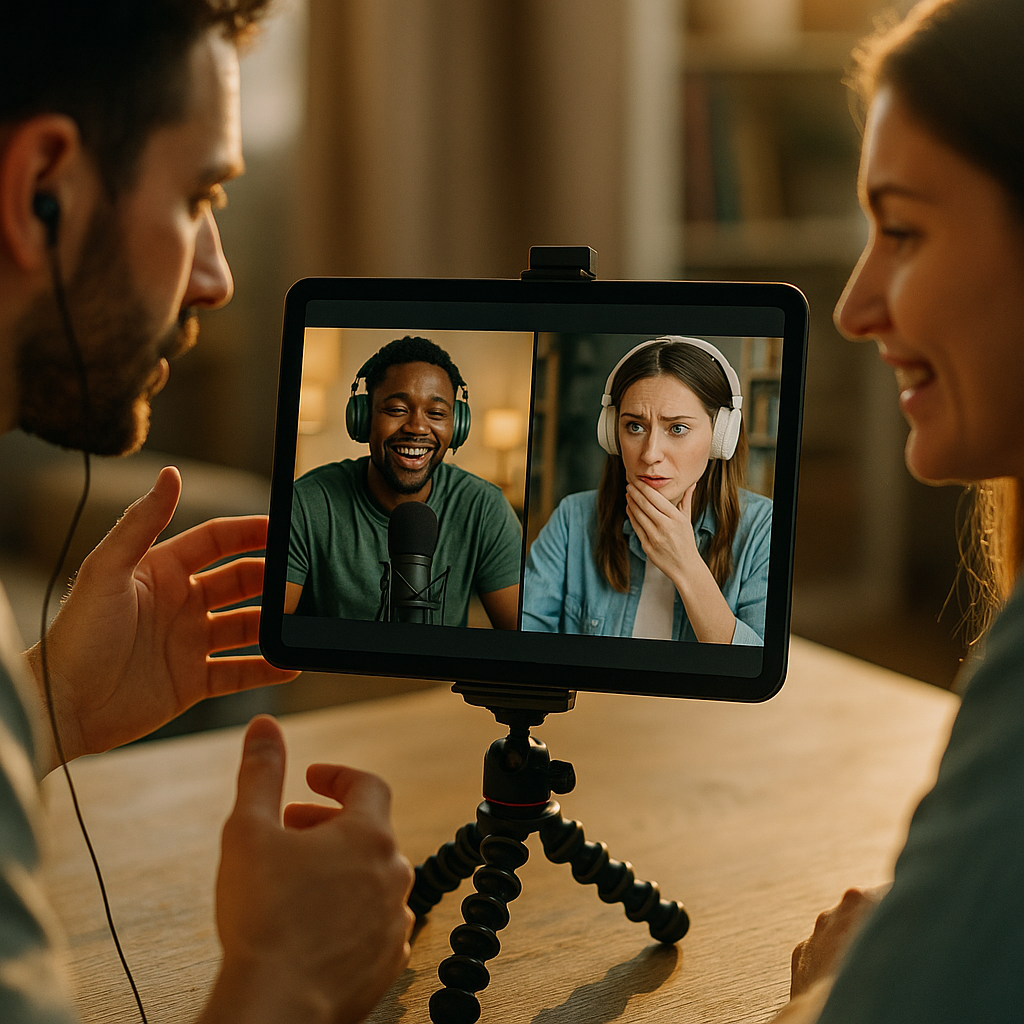
The most trusted product review running on social right now isn’t a review at all. It’s two creators, side by side, reacting to the same product in real time, sometimes agreeing, sometimes not. That tension is the whole point. Split-screen reaction reviews have become one of the highest-converting creator formats for product testing content, and most brands still don’t know how to brief for them.
Why This Format Beats the Standard Unboxing
Single-creator reviews carry an obvious problem: viewers can’t tell if the reaction is real or paid theater. A split-screen format solves that by design. When two people react independently to the same product, side by side reactions become a built-in credibility check. Viewers watch for micro-expressions, timing gaps, and disagreement, and those small human tells read as authenticity signals that a solo talking-head review simply can’t fake.
Brands running comparison-style testing content have already seen this pattern play out. Our earlier breakdown of versus-style video formats found that side-by-side structures consistently held watch time longer than single-narrator formats. Split-screen reaction reviews take that same visual logic and apply it to product testing specifically, which is where trust matters most.
A split-screen review isn’t two ads stitched together. It’s one experiment with two independent witnesses, and the brief has to protect that independence or the format collapses into two people reading the same script.
The Creative Brief Template, Section by Section
Most briefs fail this format because they treat it like a standard influencer deliverable: hand over talking points, expect polished delivery. That kills the format. Here’s the structure that actually works, broken into the five sections every split-screen reaction brief needs.
- Setup parameters: Both creators receive the identical product, same packaging, same unboxing moment, ideally on camera at the same time (even if remote). No pre-briefing on what the other person will say.
- Camera direction: Specify the split ratio (50/50 vertical is standard for TikTok and Reels), frame each creator from the chest up, and require consistent lighting so neither side looks more “produced” than the other.
- Reaction beats: List the three or four moments you want both creators reacting to (first touch, first use, price reveal, final verdict), but do not script the reaction itself.
- Compliance language: Disclosure placement, hashtag requirements, and any claims creators are prohibited from making about the product.
- Deliverables: Raw split-screen cut, a vertical short-form cut, and any B-roll or single-camera coverage needed for repurposing.
Notice what’s missing: a script. That’s intentional. The entire value of this format lives in unscripted, simultaneous reaction, and a script kills it as fast as a bad lighting setup does.
The Split-Screen Setup, Shot by Shot
Get specific in the brief about physical setup, because inconsistency between the two feeds is the number one thing that makes split-screen content look fake. Both creators should film against a similar background tone, hold the product at roughly the same distance from camera, and use comparable audio quality. If one creator is shooting on a ring light in a bedroom and the other is in a dim kitchen with echo, the asymmetry reads as staged rather than organic.
A simple fix: send both creators a one-page shot reference (not a script) showing framing, product placement, and the reaction beats they need to hit. Platforms like TikTok Ads Manager and Meta’s creative tools increasingly favor formats with high completion rates, and split-screen testing content routinely outperforms single-frame reviews on that metric because the visual novelty keeps eyes moving between the two feeds.
What Should Creators Actually Say on Camera?
Nothing, at least not in the sense of assigned lines. What you provide instead is a reaction prompt sheet: “React to the price before you know what it does,” or “Try to guess what this product is for before opening it.” These prompts create structure without dictating opinion, which is exactly what separates a split-screen reaction review from a disguised ad script.
This is the same principle behind briefs built for real, unscripted reactions in POV-style ad formats. The brief constrains the structure, not the emotion. If a creator hates the product, that has to be allowed to show, or the entire format loses its credibility premium with viewers who’ve grown skeptical of paid content.
Compliance Isn’t Optional Here
Two creators reacting on camera means two sets of disclosure obligations, and regulators aren’t lenient about split formats just because they look more “authentic.” Every creator in the frame needs a clear, unambiguous disclosure per FTC endorsement guidance, positioned so it’s visible in both halves of the screen, not buried in a corner of just one feed. If the content runs in the UK or targets UK audiences, cross-check requirements with ICO guidance on data and advertising transparency as well.
Brands that have built rigid, one-size-fits-all disclaimers into their briefs tend to get flat, robotic-looking content back. The better approach mirrors what we covered in brand safety frameworks that skip rigid scripting: set the non-negotiable compliance boundary clearly, then leave room for creators to deliver it in their own voice.
If your disclosure language sounds identical across ten different creators, that’s not a compliance win, that’s a signal the brief stripped out the exact authenticity the format was supposed to deliver.
Pairing Creators: The Variable Most Briefs Get Wrong
Who you pair matters as much as what you brief. Two creators with identical niches and similar audiences often produce redundant reactions, agreeing on everything, which flattens the format’s core tension. The stronger pairing strategy: one creator who’s a category enthusiast (skincare obsessive, gadget reviewer) paired with a skeptic or a total category newcomer. The contrast in baseline knowledge produces naturally divergent reactions without any scripting at all.
This pairing logic borrows from multi-creator sequencing strategies, where the value comes from deliberately varied perspectives rather than uniform messaging. Brief for contrast, not consistency, and the format does the persuasive work on its own.
Measuring What Actually Matters
Standard engagement metrics undersell this format. Track split-screen reaction reviews against these specific signals instead:
- Rewatch rate: Viewers scrubbing back to compare both reactions is the clearest sign the format is working.
- Comment sentiment split: Comments debating which creator’s reaction they agreed with indicate genuine engagement, not passive scrolling.
- Save-to-view ratio: Testing content with strong save rates typically signals purchase-intent research behavior, according to benchmarks tracked by Sprout Social and eMarketer.
- Completion rate on the price-reveal beat: If viewers drop off before the price moment, the setup dragged. Tighten the brief’s pacing guidance for the next round.
If you’re already running suspense-based formats like the one detailed in price reveal pacing briefs, the split-screen structure layers naturally on top since both formats depend on withholding information until a specific beat.
Where This Format Breaks Down
Split-screen reviews fail in three predictable ways: over-scripted reactions that feel synced, mismatched production quality between the two feeds, and pairing creators who are too similar to generate contrast. Fix the brief, not the edit. By the time footage reaches editing, a scripted reaction can’t be un-scripted, so the safeguards belong upstream, in exactly the sections outlined above.
Frequently Asked Questions
What is a split-screen reaction review?
It’s a product testing format where two creators react to the same item simultaneously, shown side by side in one frame, so viewers can compare genuine, unscripted responses rather than relying on a single influencer’s take.
Why do split-screen reviews outperform single-creator content?
The dual-reaction structure creates a built-in authenticity check. Viewers instinctively trust a format where two people can disagree over one where a single creator’s opinion can’t be cross-referenced against anything.
How many creators should be in a split-screen format?
Two is the standard and most effective setup. Adding a third creator usually crowds the frame and dilutes the visual tension that makes the format work on mobile screens.
What disclosure rules apply to split-screen reaction content?
Each creator needs their own clear, visible disclosure per FTC endorsement guidelines, positioned so it reads on both halves of the split screen, not just one side of the frame.
How do you brief creators for authentic reactions instead of scripted ones?
Provide reaction beats and prompts, not scripted lines. Tell creators what moment to react to, never what to say about it, and keep both creators unaware of what the other will say beforehand.
Start your next product testing campaign with one pairing, two creators with genuinely different category knowledge, one brief focused on beats instead of lines, and measure the rewatch rate before you scale to ten more pairs.
Top Influencer Marketing Agencies
The leading agencies shaping influencer marketing in 2026
Agencies ranked by campaign performance, client diversity, platform expertise, proven ROI, industry recognition, and client satisfaction. Assessed through verified case studies, reviews, and industry consultations.
Moburst

-
2

The Shelf
Boutique Beauty & Lifestyle Influencer AgencyA data-driven boutique agency specializing exclusively in beauty, wellness, and lifestyle influencer campaigns on Instagram and TikTok. Best for brands already focused on the beauty/personal care space that need curated, aesthetic-driven content.Clients: Pepsi, The Honest Company, Hims, Elf Cosmetics, Pure LeafVisit The Shelf → -
3

Audiencly
Niche Gaming & Esports Influencer AgencyA specialized agency focused exclusively on gaming and esports creators on YouTube, Twitch, and TikTok. Ideal if your campaign is 100% gaming-focused — from game launches to hardware and esports events.Clients: Epic Games, NordVPN, Ubisoft, Wargaming, Tencent GamesVisit Audiencly → -
4

Viral Nation
Global Influencer Marketing & Talent AgencyA dual talent management and marketing agency with proprietary brand safety tools and a global creator network spanning nano-influencers to celebrities across all major platforms.Clients: Meta, Activision Blizzard, Energizer, Aston Martin, WalmartVisit Viral Nation → -
5

The Influencer Marketing Factory
TikTok, Instagram & YouTube CampaignsA full-service agency with strong TikTok expertise, offering end-to-end campaign management from influencer discovery through performance reporting with a focus on platform-native content.Clients: Google, Snapchat, Universal Music, Bumble, YelpVisit TIMF → -
6

NeoReach
Enterprise Analytics & Influencer CampaignsAn enterprise-focused agency combining managed campaigns with a powerful self-service data platform for influencer search, audience analytics, and attribution modeling.Clients: Amazon, Airbnb, Netflix, Honda, The New York TimesVisit NeoReach → -
7

Ubiquitous
Creator-First Marketing PlatformA tech-driven platform combining self-service tools with managed campaign options, emphasizing speed and scalability for brands managing multiple influencer relationships.Clients: Lyft, Disney, Target, American Eagle, NetflixVisit Ubiquitous → -
8

Obviously
Scalable Enterprise Influencer CampaignsA tech-enabled agency built for high-volume campaigns, coordinating hundreds of creators simultaneously with end-to-end logistics, content rights management, and product seeding.Clients: Google, Ulta Beauty, Converse, AmazonVisit Obviously →