


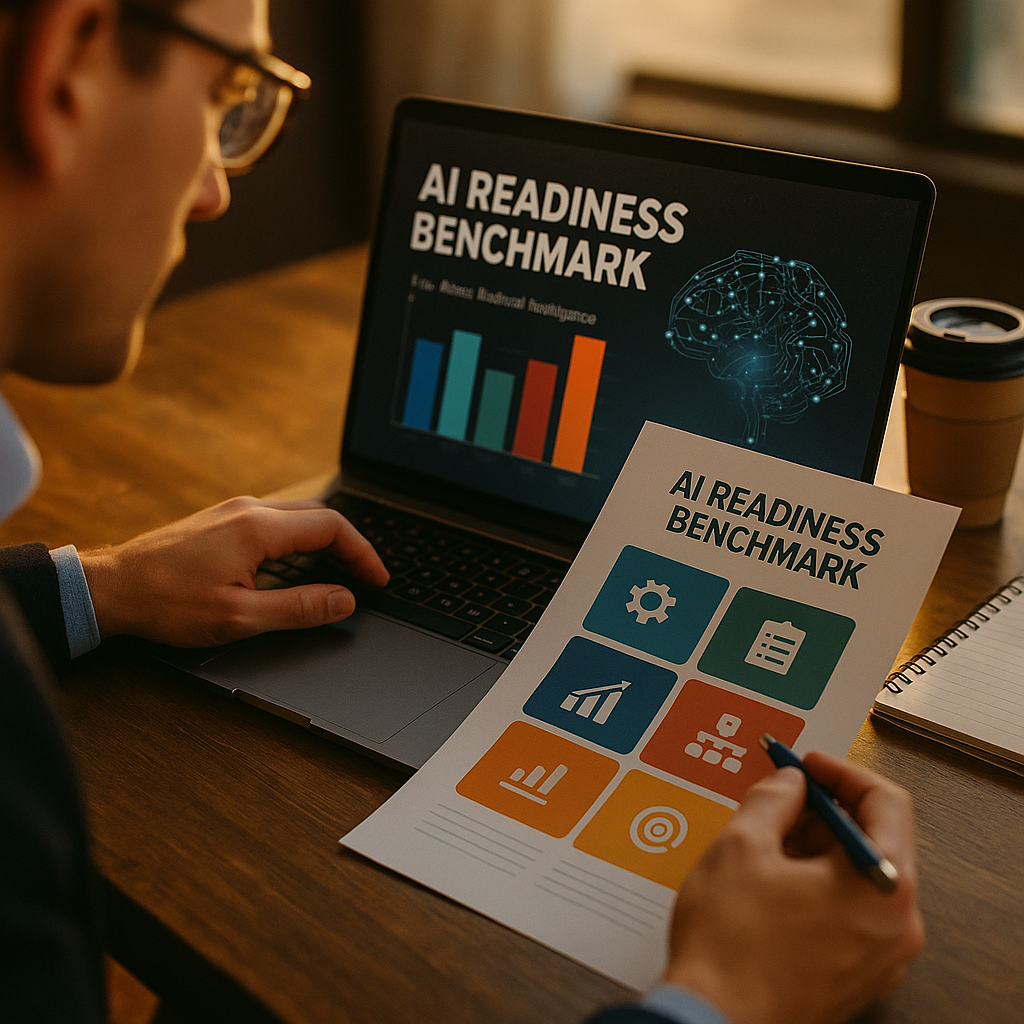
Only 30% of brands say they feel ready to scale AI across their marketing operations, according to recent surveys of senior marketers. The other 70% are stuck somewhere between “we bought the tools” and “we have no idea if this is working.” If that sounds like your organization, you’re not behind. You’re just honest.
That 30% figure isn’t a technology problem. It’s a readiness problem, and readiness is measurable if you know what to look for.
The Readiness Gap Isn’t About Tools, It’s About Trust
Every brand has AI tools now. Content generation, creator matching, campaign optimization, compliance scanning, it’s all available off the shelf. What’s missing isn’t access. It’s confidence that the outputs can be trusted without a human double checking every decision.
Think about it this way: a brand can deploy an AI agent to negotiate creator rates in an afternoon. But if legal doesn’t trust the contract language, if finance doesn’t trust the reconciliation, if the CMO doesn’t trust the brand voice, the tool sits idle or gets used at 10% capacity. AI agents that renegotiate creator rates are a good example. The technology works. The trust infrastructure around it usually doesn’t.
Readiness isn’t about whether you have the technology. It’s about whether your data, governance, and teams can survive contact with it at scale.
This is why “readiness” needs a definition beyond gut feel. Marketers who say they’re “not ready” usually mean one of three things: their data isn’t clean enough, their approval workflows can’t keep pace, or nobody has mapped who’s accountable when the AI gets it wrong.
A Four Pillar Framework for AI Readiness Benchmarking
We’ve built this framework from patterns across brand and agency teams navigating creator AI adoption. It scores readiness across four pillars, each with a simple internal test.
- Data infrastructure. Can your CRM, DAM, and campaign platforms actually feed an AI system clean, structured data? Most can’t. One widely cited benchmark found that only 21% of CRM data is ready for AI creator matching, which tells you the bottleneck is rarely the model. It’s the plumbing.
- Governance and compliance. Do you have documented rules for disclosure, brand safety, and escalation before an AI agent posts, negotiates, or pays anything? An AI compliance checker flagging FTC disclosure risk before content goes live is a governance layer most brands still lack.
- Workflow integration. Is AI bolted onto existing processes, or has the process been redesigned around it? Bolted on tools create shadow work. Redesigned workflows create leverage.
- Talent and change management. Do your teams know what to do when the AI is wrong, not just when it’s right? This is the pillar most benchmarking frameworks skip, and it’s usually the one that determines whether adoption sticks past the pilot phase.
Score your team one to five on each pillar. Anything averaging below three means you’re not ready to scale, you’re ready to pilot. That distinction matters more than most roadmaps admit.
Where Most Brands Stall: The Data Layer
If there’s one pillar that quietly wrecks more AI rollouts than any other, it’s data readiness. Marketers get excited about the model, the automation, the agent. Nobody gets excited about fixing duplicate creator records or standardizing UTM taxonomies. But that unglamorous work is exactly what determines whether an AI system produces useful output or garbage at scale.
A CRM data readiness checklist before AI creator matching should be step one for any brand claiming to be “AI ready.” Skip it, and you’ll spend six months debugging why your matching engine keeps surfacing the wrong creators, when the real issue was inconsistent field mapping from day one.
Attribution is the other quiet killer. Traditional forms and last click models routinely miss how consumers actually discover brands now. Research on this shows attribution forms missing AI referrals, which skews the ROI numbers leadership uses to greenlight bigger AI budgets. You can’t scale what you can’t measure accurately, and right now, most brands can’t.
Governance: The Pillar Everyone Underestimates
Ask ten marketing leaders if they have an AI governance policy and eight will say yes. Ask to see it, and most will produce a slide deck from a workshop eighteen months ago that nobody’s referenced since.
Real governance means answering specific, uncomfortable questions. What happens when an AI agent auto renews a creator contract on unfavorable terms? Teams dealing with AI auto renewing creator contracts without guardrails are learning this the expensive way. What happens when a tool call chain triggers an action nobody approved? That’s exactly the scenario explored in AI tool call chaining risk, and the answer for most brands right now is “we’re not sure,” which is not an answer leadership should accept.
Access governance matters just as much as decision governance. As brands connect more systems through protocols like MCP, the risk isn’t that AI can’t reach the data. It’s that it can reach too much of it without oversight. Governance frameworks for MCP style access need to be in place before, not after, you plug your CRM into an agent network.
If your governance policy can’t answer “what happens when this goes wrong,” it’s a slide deck, not a policy.
Budget Discipline: Why Scaling Without Visibility Backfires
Here’s a pattern we keep seeing: a brand pilots AI successfully in one region or one product line, gets excited, and scales the budget tenfold without scaling the monitoring infrastructure alongside it. Costs spiral. Nobody notices until the quarterly review.
Consumption based pricing models make this worse. Unlike flat SaaS licenses, many AI martech tools now bill by usage, meaning a scaled deployment can quietly multiply costs in ways finance never modeled. Consumption based martech pricing turning AI costs unpredictable is now a standing agenda item in budget meetings that used to be routine renewals. Brands that pass the readiness benchmark tend to have real time dashboards preventing agentic AI budgets from spiraling before they scale spend, not after.
According to industry data tracked by eMarketer, AI related marketing spend continues to climb faster than the governance frameworks meant to contain it. That gap is precisely what this readiness benchmark is designed to close.
How to Run This Benchmark This Quarter
You don’t need a consulting engagement to do this. Here’s a lightweight version any marketing ops lead can run in two weeks:
- Pull a sample of 100 CRM records and audit for duplicates, missing fields, and inconsistent taxonomy. That’s your data score.
- Interview legal and compliance about existing AI escalation protocols. If they can’t describe a specific process, that’s your governance score.
- Map one AI enabled workflow end to end and count the manual overrides required. Fewer overrides, higher integration score.
- Survey the team running the tool day to day. Ask what they’d do if the AI produced an obviously wrong output tomorrow. Vague answers mean low talent readiness.
Average the four scores. Anything below a 3 out of 5 means pilot mode, not scale mode, and that’s fine. Better to know now than after the budget’s already committed. Benchmarking resources from HubSpot and social specific maturity models from Sprout Social both offer useful comparison points if you want external validation of your internal scoring.
The Compliance Layer Nobody Can Skip
No readiness framework is complete without a regulatory check. The FTC has made clear that AI generated disclosures and influencer content fall under the same rules as any other endorsement, and platforms are enforcing this more aggressively. AI video disclosure labels triggering reach penalties are already reshaping how brands brief creators, and TikTok’s AI labeling rules forcing workflow rebuilds show how quickly platform policy can outpace internal process. Readiness benchmarking has to include a regulatory checkpoint, or the other three pillars are built on sand.
The bottom line: 30% readiness isn’t a failure statistic. It’s a snapshot of who’s done the unglamorous groundwork. Run the four pillar audit this quarter, fix the lowest scoring pillar first, and revisit the benchmark before committing next year’s AI budget.
FAQs
What does “AI readiness” actually mean for a marketing team?
It means your data infrastructure, governance policies, workflows, and team training can support AI tools operating at scale without constant manual correction or compliance risk. It’s not about having the tools, it’s about being able to trust their output.
Why do so few brands feel ready to scale AI?
Most brands invested in AI tools before fixing the underlying data and governance issues that determine whether those tools produce reliable results. The technology moved faster than the operational foundation supporting it.
How long does it take to become AI ready?
A basic readiness audit can be completed in two to four weeks. Closing the gaps identified, particularly around data cleanup and governance documentation, typically takes one to two quarters depending on how outdated your systems are.
What’s the biggest blocker to AI readiness in influencer marketing specifically?
Data quality in CRM and creator databases. Poorly structured or duplicated records make creator matching, attribution, and compliance tracking unreliable, no matter how sophisticated the AI layered on top of them is.
Should brands pause AI adoption until they’re fully ready?
No. Piloting in controlled, low risk workflows while fixing data and governance gaps in parallel is more effective than waiting for perfect readiness, which rarely arrives on its own schedule.
Top Influencer Marketing Agencies
The leading agencies shaping influencer marketing in 2026
Agencies ranked by campaign performance, client diversity, platform expertise, proven ROI, industry recognition, and client satisfaction. Assessed through verified case studies, reviews, and industry consultations.
Moburst

-
2

The Shelf
Boutique Beauty & Lifestyle Influencer AgencyA data-driven boutique agency specializing exclusively in beauty, wellness, and lifestyle influencer campaigns on Instagram and TikTok. Best for brands already focused on the beauty/personal care space that need curated, aesthetic-driven content.Clients: Pepsi, The Honest Company, Hims, Elf Cosmetics, Pure LeafVisit The Shelf → -
3

Audiencly
Niche Gaming & Esports Influencer AgencyA specialized agency focused exclusively on gaming and esports creators on YouTube, Twitch, and TikTok. Ideal if your campaign is 100% gaming-focused — from game launches to hardware and esports events.Clients: Epic Games, NordVPN, Ubisoft, Wargaming, Tencent GamesVisit Audiencly → -
4

Viral Nation
Global Influencer Marketing & Talent AgencyA dual talent management and marketing agency with proprietary brand safety tools and a global creator network spanning nano-influencers to celebrities across all major platforms.Clients: Meta, Activision Blizzard, Energizer, Aston Martin, WalmartVisit Viral Nation → -
5

The Influencer Marketing Factory
TikTok, Instagram & YouTube CampaignsA full-service agency with strong TikTok expertise, offering end-to-end campaign management from influencer discovery through performance reporting with a focus on platform-native content.Clients: Google, Snapchat, Universal Music, Bumble, YelpVisit TIMF → -
6

NeoReach
Enterprise Analytics & Influencer CampaignsAn enterprise-focused agency combining managed campaigns with a powerful self-service data platform for influencer search, audience analytics, and attribution modeling.Clients: Amazon, Airbnb, Netflix, Honda, The New York TimesVisit NeoReach → -
7

Ubiquitous
Creator-First Marketing PlatformA tech-driven platform combining self-service tools with managed campaign options, emphasizing speed and scalability for brands managing multiple influencer relationships.Clients: Lyft, Disney, Target, American Eagle, NetflixVisit Ubiquitous → -
8

Obviously
Scalable Enterprise Influencer CampaignsA tech-enabled agency built for high-volume campaigns, coordinating hundreds of creators simultaneously with end-to-end logistics, content rights management, and product seeding.Clients: Google, Ulta Beauty, Converse, AmazonVisit Obviously →