


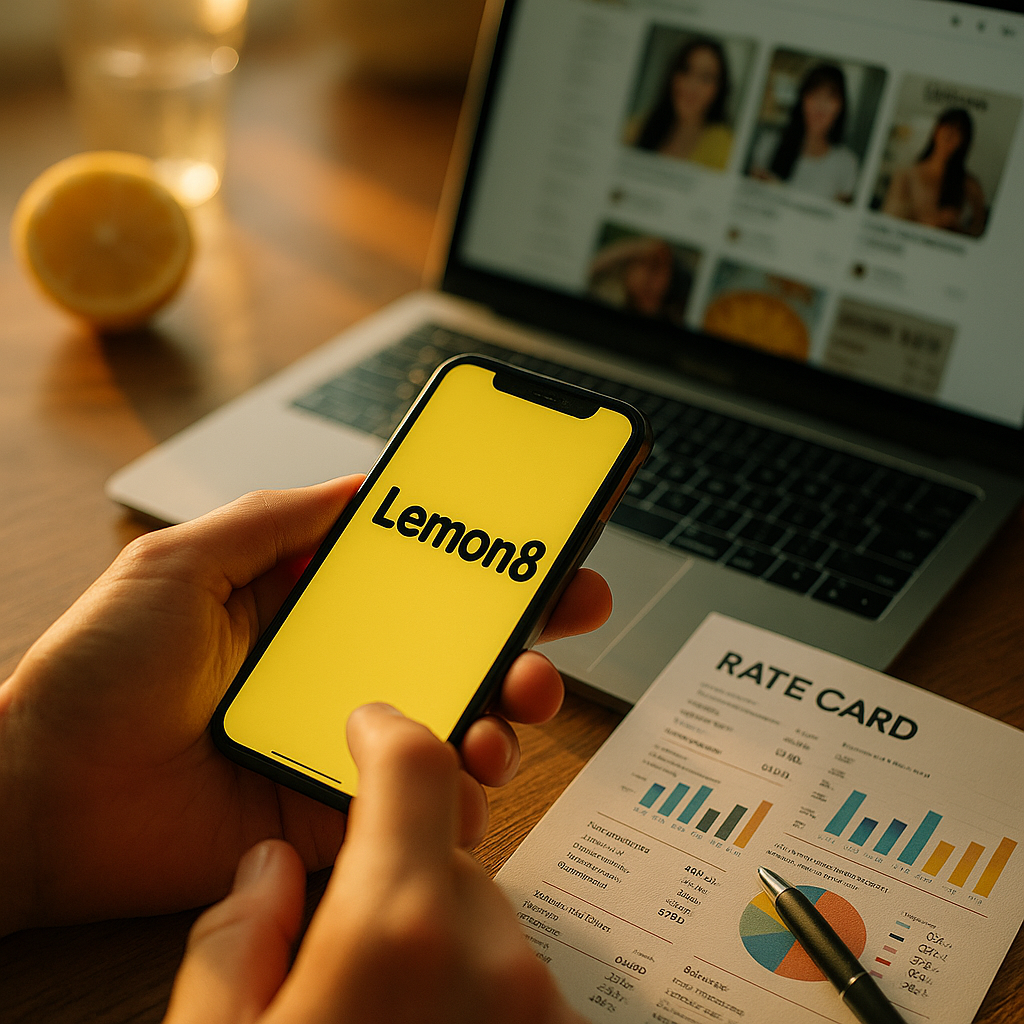
Lemon8 has crossed 20 million monthly active users in the US, and brand accounts still get organic reach numbers that would make a TikTok media buyer weep with envy. That window will not stay open forever. This Lemon8 brand playbook breaks down what early movers are actually doing right now, before the platform matures into another pay-to-play feed.
Why Lemon8 Deserves Budget Attention Now
ByteDance did not build Lemon8 by accident. It is a deliberate hedge, a lifestyle and content discovery app that borrows Pinterest’s visual grid, Instagram’s aspirational polish, and TikTok’s algorithmic distribution engine. The result is a platform that surfaces content based on relevance and engagement rather than follower count alone, which means a brand with zero existing audience can still land in front of thousands of relevant users on day one.
That is the entire pitch for early movers. Platforms reward first arrivals with cheaper attention. Anyone who built a presence on TikTok in its first eighteen months in the US knows this curve intimately: low competition, high reach, and algorithms still hungry for content to test.
Brands treating Lemon8 as a testing ground rather than a full media buy are seeing engagement rates several multiples higher than their saturated Instagram feeds, simply because the content pool is thinner and the algorithm has less to sort through.
Who Is Actually Spending Time There?
Skew female, skew younger, skew aspirational. Beauty, fashion, home decor, wellness, and food content dominate the discovery feed. Think of it as the demographic overlap between Pinterest’s intent-driven browsing and TikTok’s Gen Z and younger millennial user base. If your brand already runs influencer programs in beauty, lifestyle, or home categories, the audience fit is close to plug and play.
It is worth noting Lemon8’s format encourages longer dwell time than a typical short-form feed. Users swipe through image carousels and read captions closely, which changes the creative brief entirely. A brand used to writing seven-word TikTok hooks needs to relearn how to write a scroll-stopping headline for a static card.
The Content Formats Winning Right Now
Lemon8 rewards a specific content shape: multi-image carousels with text overlays, styled like a magazine spread crossed with a Pinterest board. Video exists on the platform, but it is not the primary driver of reach the way it is on TikTok. Brands porting over vertical video assets without reformatting them for a carousel-first feed consistently underperform.
- Product roundups: “5 things I bought this month” style posts convert browsing into consideration.
- Before and after visuals: especially strong in beauty, skincare, and home organization niches.
- Text-heavy tip lists: Lemon8’s audience reads captions the way Pinterest users read pin descriptions, so keyword-rich text matters for discovery.
- Aesthetic lifestyle staging: product placed inside a fully styled scene outperforms plain product shots.
This is closer to Pinterest discovery mechanics than anything TikTok trained brand teams to expect, and creative briefs need to reflect that shift rather than recycling short-form video scripts.
Building Creator Relationships Before the Rate Card Rises
Right now, Lemon8 creator rates sit well below TikTok and Instagram equivalents, largely because brand demand has not caught up with the user base growth. That gap will close. Every emerging platform follows the same arc: cheap creator access during the land grab phase, followed by rising CPMs once agencies and in-house teams formalize budgets around it. The playbook for locking in rates before that shift is essentially the same one that applies to any emerging platform creator deal, secure multi-post agreements now, before rate cards catch up to demand.
Some brands are approaching this with structured agency support rather than ad hoc outreach. Moburst, a global growth agency founded in 2013 that works with brands including Google, Uber and Samsung, has built its influencer practice around creator vetting and repurposing organic content into paid media assets rather than letting it expire after one post cycle, an approach that translates well to a visually driven app like Lemon8 where carousel assets have a long shelf life. Brands weighing whether to build a Lemon8 presence in-house or through partners might also look at how agencies approach app design partners when evaluating platform-native creative execution.
Practical move: identify five to ten creators already active on Lemon8 who overlap with your existing influencer roster on other platforms. Cross-platform creators who already understand your brand voice ramp up faster than a cold Lemon8-only creator search, and they typically negotiate lower rates for platform expansion of an existing partnership.
Disclosure and Compliance Nobody Is Talking About Yet
Lemon8 is US-based in terms of user growth, which means FTC disclosure rules apply in full. The FTC’s endorsement guidance does not carve out exceptions for newer platforms, and enforcement risk does not shrink just because a platform is unfamiliar to compliance teams. Brands should require the same #ad or #sponsored disclosure standards they already enforce on TikTok and Instagram.
The complication is platform-specific: Lemon8 does not yet have a mature branded content toggle comparable to TikTok’s paid partnership label. That means disclosure sits entirely on caption text and creator diligence rather than a platform-enforced label. Brands that have already built compliance frameworks around paid partnership disclosure standards should extend those same contract clauses to Lemon8 creator agreements rather than assuming the platform will handle enforcement for them.
This is also a data privacy conversation brand legal teams should not skip. ByteDance ownership invites the same scrutiny Lemon8 has already faced from US lawmakers, and any brand running paid campaigns should keep an eye on regulatory developments the way they would with TikTok itself.
Measuring ROI Without a Mature Attribution Stack
Lemon8’s ad platform and analytics tooling are still catching up to what marketers expect from Meta or TikTok. There is no equivalent yet to a fully built out ads manager with granular conversion tracking. That does not mean ROI is unmeasurable, it means brands need to rely on proxy metrics during the early phase.
- Track engagement rate per post relative to follower count, not raw impressions.
- Use unique promo codes or UTM-tagged links in creator bios to trace traffic back to Lemon8 specifically.
- Monitor branded hashtag volume as a directional signal of organic amplification.
- Compare cost per engagement against your current benchmark on Pinterest or Instagram, since the audience and content style overlap most closely with those platforms.
Brands accustomed to detailed dashboards from platforms like Sprout Social or HubSpot will need to build lighter-weight tracking manually for now. That friction is temporary. It is also exactly the kind of measurement gap that historically resolves once a platform reaches the scale where eMarketer and Statista start publishing regular ad spend benchmarks for it.
How This Compares to Other Emerging Platform Bets
Every emerging platform decision comes down to the same risk calculation: reach now versus platform longevity later. Brands that got early into RedNote’s creator ecosystem or built presence on Bluesky before ads arrived faced a similar tradeoff. Lemon8 sits in a slightly safer category because it already has meaningful, sustained user growth rather than a speculative spike, but the underlying discipline is identical: test small, document what works, and be ready to scale spend the moment attribution improves.
Frequently Asked Questions
What is Lemon8 and how is it different from TikTok?
Lemon8 is a lifestyle content and discovery app owned by ByteDance, styled closer to Pinterest and Instagram than to TikTok’s short-form video feed. It emphasizes image carousels, styled photography, and text-driven captions across beauty, fashion, food, and home content.
Is Lemon8 worth the investment for brands right now?
For brands in beauty, fashion, home, or lifestyle categories, yes, the current combination of low competition and organic reach makes it a low-cost testing ground. Brands outside those verticals should validate audience fit before committing significant budget.
Do FTC disclosure rules apply to Lemon8 creator content?
Yes. FTC endorsement guidelines apply regardless of platform. Since Lemon8 lacks a mature built-in disclosure label, brands must rely on contract language and manual caption review to enforce compliance.
How do brands measure ROI on Lemon8 given limited analytics tools?
Most brands currently rely on proxy metrics such as engagement rate, UTM-tagged links, promo codes, and branded hashtag volume until Lemon8’s native analytics and ad platform mature further.
What content format performs best on Lemon8?
Multi-image carousels with text overlays and styled lifestyle photography consistently outperform straight video reposts, since the platform’s discovery algorithm favors Pinterest-style browsing behavior over short-form video consumption.
Next step: Pick two or three creators already active in your category on Lemon8, negotiate a short test run before rate cards catch up, and build your disclosure language into the contract from the first post rather than retrofitting compliance later.
Frequently Asked Questions
What is Lemon8 and how is it different from TikTok?
Lemon8 is a lifestyle content and discovery app owned by ByteDance, styled closer to Pinterest and Instagram than to TikTok’s short-form video feed. It emphasizes image carousels, styled photography, and text-driven captions across beauty, fashion, food, and home content.
Is Lemon8 worth the investment for brands right now?
For brands in beauty, fashion, home, or lifestyle categories, yes, the current combination of low competition and organic reach makes it a low-cost testing ground. Brands outside those verticals should validate audience fit before committing significant budget.
Do FTC disclosure rules apply to Lemon8 creator content?
Yes. FTC endorsement guidelines apply regardless of platform. Since Lemon8 lacks a mature built-in disclosure label, brands must rely on contract language and manual caption review to enforce compliance.
How do brands measure ROI on Lemon8 given limited analytics tools?
Most brands currently rely on proxy metrics such as engagement rate, UTM-tagged links, promo codes, and branded hashtag volume until Lemon8’s native analytics and ad platform mature further.
What content format performs best on Lemon8?
Multi-image carousels with text overlays and styled lifestyle photography consistently outperform straight video reposts, since the platform’s discovery algorithm favors Pinterest-style browsing behavior over short-form video consumption.
Top Influencer Marketing Agencies
The leading agencies shaping influencer marketing in 2026
Agencies ranked by campaign performance, client diversity, platform expertise, proven ROI, industry recognition, and client satisfaction. Assessed through verified case studies, reviews, and industry consultations.
Moburst

-
2

The Shelf
Boutique Beauty & Lifestyle Influencer AgencyA data-driven boutique agency specializing exclusively in beauty, wellness, and lifestyle influencer campaigns on Instagram and TikTok. Best for brands already focused on the beauty/personal care space that need curated, aesthetic-driven content.Clients: Pepsi, The Honest Company, Hims, Elf Cosmetics, Pure LeafVisit The Shelf → -
3

Audiencly
Niche Gaming & Esports Influencer AgencyA specialized agency focused exclusively on gaming and esports creators on YouTube, Twitch, and TikTok. Ideal if your campaign is 100% gaming-focused — from game launches to hardware and esports events.Clients: Epic Games, NordVPN, Ubisoft, Wargaming, Tencent GamesVisit Audiencly → -
4

Viral Nation
Global Influencer Marketing & Talent AgencyA dual talent management and marketing agency with proprietary brand safety tools and a global creator network spanning nano-influencers to celebrities across all major platforms.Clients: Meta, Activision Blizzard, Energizer, Aston Martin, WalmartVisit Viral Nation → -
5

The Influencer Marketing Factory
TikTok, Instagram & YouTube CampaignsA full-service agency with strong TikTok expertise, offering end-to-end campaign management from influencer discovery through performance reporting with a focus on platform-native content.Clients: Google, Snapchat, Universal Music, Bumble, YelpVisit TIMF → -
6

NeoReach
Enterprise Analytics & Influencer CampaignsAn enterprise-focused agency combining managed campaigns with a powerful self-service data platform for influencer search, audience analytics, and attribution modeling.Clients: Amazon, Airbnb, Netflix, Honda, The New York TimesVisit NeoReach → -
7

Ubiquitous
Creator-First Marketing PlatformA tech-driven platform combining self-service tools with managed campaign options, emphasizing speed and scalability for brands managing multiple influencer relationships.Clients: Lyft, Disney, Target, American Eagle, NetflixVisit Ubiquitous → -
8

Obviously
Scalable Enterprise Influencer CampaignsA tech-enabled agency built for high-volume campaigns, coordinating hundreds of creators simultaneously with end-to-end logistics, content rights management, and product seeding.Clients: Google, Ulta Beauty, Converse, AmazonVisit Obviously →