


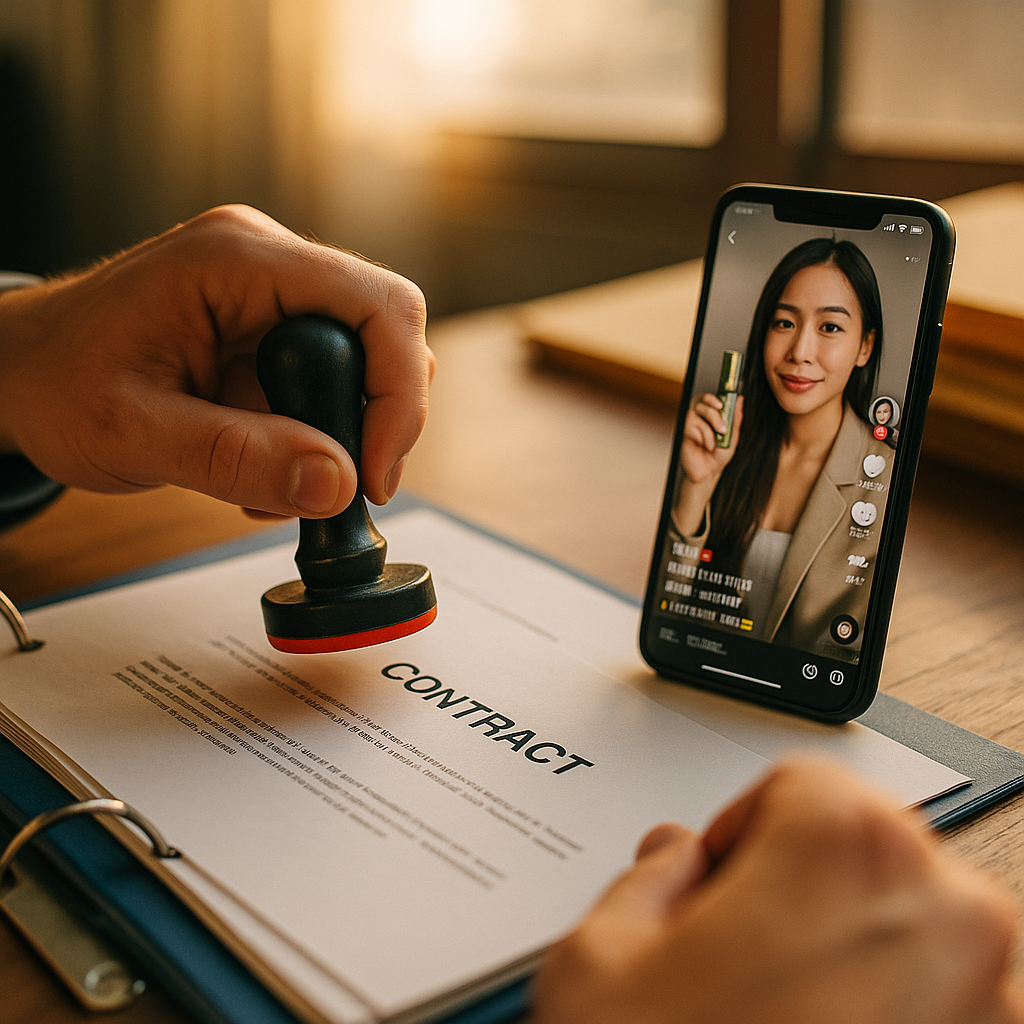
Roughly 700,000 US users downloaded RedNote (Xiaohongshu) in a single week when TikTok’s fate looked uncertain, and the app never fully gave that audience back. That’s not a niche experiment anymore. It’s a distribution channel with real commerce infrastructure, a lifestyle-obsessed user base, and almost zero institutional knowledge among Western marketing teams. This RedNote entry playbook covers what actually needs to happen before your brand posts a single piece of content.
What Is RedNote, and Why Should US Brands Care Now?
RedNote, known in China as Xiaohongshu (“Little Red Book”), started as a shopping guide for Chinese consumers buying overseas goods. It evolved into something closer to Pinterest crossed with Instagram crossed with a native shopping mall, where product discovery, reviews, and purchase happen inside one scroll. The platform claims hundreds of millions of monthly active users, the vast majority still in mainland China, but the US cohort that arrived during the TikTok uncertainty period stuck around and kept posting in English.
That matters for two reasons. First, it created a bilingual, cross-cultural content layer that didn’t exist before, English-language lifestyle content sitting next to Mandarin posts, algorithmically blended. Second, it proved that a meaningful slice of US Gen Z and millennial consumers will migrate to an unfamiliar app if the content feels authentic and unpolished. Brands watching creator economy platform shifts closely, the same audience segment covered in our early adopter platform playbook for Bluesky, should treat RedNote with similar urgency: get in before the paid ad tools mature and the CPMs climb.
The brands that win on RedNote right now aren’t buying ads. They’re building organic credibility while the platform still rewards it, because that window closes the moment self-serve ad tools go fully live for US advertisers.
The Compliance Gate Nobody Talks About
Before any content strategy conversation, legal needs a seat at the table. RedNote is owned by a Chinese company, and its data handling sits under Chinese law, specifically the Personal Information Protection Law (PIPL). For US brands, that raises questions that sound abstract until your general counsel asks them directly: where does user data flow, what happens to influencer contracts signed with entities in mainland China, and does your industry (finance, healthcare, defense-adjacent) carry restrictions on Chinese-platform engagement?
This isn’t paranoia. It’s the same due diligence process that should have happened before any brand ran a TikTok campaign in the first place, just compressed into a shorter runway. Talk to your data privacy counsel. Review any existing corporate policy on Chinese-owned apps, especially if you’re a publicly traded company or a government contractor. Document the review. If regulatory scrutiny of Chinese apps intensifies again (and it likely will, given the political history here), you want a paper trail showing you did the homework, not a scramble after the fact.
Pair that with a hard look at your creator contracts. Standard US influencer agreements assume US-based platforms and US-standard disclosure norms. RedNote requires its own addendum: data residency clauses, IP ownership for content that may get reposted across borders, and disclosure language that satisfies both FTC guidance and Xiaohongshu’s own community rules, which differ from Meta’s or TikTok’s in subtle but important ways.
Content Localization Isn’t Translation
The single biggest mistake brands make entering any Chinese-origin platform is treating localization as a translation task. It’s not. RedNote’s content culture rewards a specific aesthetic: personal, diary-style, heavy on “tips and tricks” framing, light on overt sales language. A post that reads as a polished ad on Instagram reads as spam on RedNote. Users there built their trust in the platform on the premise that recommendations feel peer-to-peer, not brand-to-consumer.
That means your creative brief needs a rewrite, not a language swap. Structure posts around the “grwm” (get ready with me) and “haul” formats that dominate the feed. Lean into numbered lists and screenshot-heavy tutorials. Skip the cinematic production value that wins on YouTube or TikTok Shop livestreams, our TikTok Shop livestream playbook covers that format’s specific production demands, and instead lean unpolished. Grainy phone footage performs better here than a studio shoot, at least for now.
Search behavior on RedNote also skews differently. Users type in full questions and phrases the way they’d search Pinterest, not short keyword strings like Google. Brands that understand this search-first discovery layer will out-perform brands that just repost existing assets. The parallel to Pinterest’s Idea Pin discovery mechanics, detailed in our piece on creator brief discovery gaps, is instructive: captions and on-screen text need to answer the exact question a user would type, not just describe the product.
Finding the Right Creators, and Why Your Usual Vetting Process Won’t Cut It
KOL (Key Opinion Leader) is the term you’ll hear constantly, and it’s not just a regional synonym for “influencer.” RedNote’s KOL ecosystem has its own tiering, its own agency intermediaries, and its own pricing logic that doesn’t map cleanly onto US rate cards. A mid-tier KOL with 50,000 followers can command pricing that looks disproportionate compared to a US creator with the same follower count, because engagement rates on RedNote still run meaningfully higher than the US platform average.
Vetting also gets harder because a chunk of the creator pool operates through agencies (MCNs, multi-channel networks) that control pricing and content approval. Direct-to-creator outreach, the norm on Instagram or TikTok, sometimes gets ignored entirely on RedNote unless you go through the right agency gatekeeper. Budget time for relationship-building before campaign execution. This isn’t a platform where you post a brief on a marketplace tool and get bids within an hour.
- Confirm whether the creator’s audience is majority US-based or majority mainland Chinese. Engagement numbers can look identical while the buyer intent is completely different.
- Ask for screenshots of past brand collaboration performance, not just follower counts. RedNote’s algorithm rewards saves and comments over raw likes, so ask creators to share save-rate data specifically.
- Clarify content ownership and repost rights upfront. Cross-border content licensing gets messy fast if it’s not written into the agreement.
Measurement Will Frustrate Your Attribution Model
Here’s the uncomfortable part. RedNote doesn’t yet offer the granular ad-attribution tooling US marketers expect from Meta Ads Manager or TikTok’s business suite. There’s no mature pixel ecosystem, no robust API for pulling performance data into your existing MMM (marketing mix modeling) stack, and limited third-party analytics support compared to platforms like Sprout Social or HubSpot cover natively for Western channels.
Practically, that means your KPIs need to shift toward directional signals in the near term: save rate, comment sentiment, branded search lift on Google and Amazon after a campaign runs, and direct traffic spikes to your US ecommerce site. Some brands are running simple UTM-tagged links in creator bios and bio-link tools to approximate traffic attribution, imperfect, but better than nothing. Expect this to improve. Every platform that has scaled a Western advertiser base eventually built out attribution tooling to match, and RedNote’s ecommerce ambitions all but guarantee it happens here too.
Market researchers tracking cross-border social commerce, including analysts at eMarketer and Statista, have flagged Xiaohongshu’s US growth as one of the more unusual platform migration stories of the decade. Worth monitoring their reporting as the ad infrastructure matures, because rate cards and measurement standards will likely shift fast once self-serve tools launch broadly.
The Pre-Launch Checklist
Before your first post goes live, run through this sequence. Skipping steps here is how brands end up with a compliance headache six months in, right when the channel starts actually working.
- Legal review of data handling and any industry-specific restrictions on Chinese-platform engagement.
- Updated creator contract template with cross-border IP and disclosure clauses.
- A localization brief built around RedNote-native formats, not translated US assets.
- A vetted shortlist of KOLs or MCN partners with verified US audience overlap.
- A measurement framework built on directional signals, not platform-native attribution, at least for the first two quarters.
- A crisis-response plan for how your brand responds if geopolitical tension around Chinese apps resurfaces publicly.
Treat that last point seriously. Brands that entered TikTok early without a stated position on platform risk found themselves fielding press questions they weren’t prepared for. Don’t repeat that mistake on RedNote.
Frequently Asked Questions
FAQs
Is RedNote (Xiaohongshu) safe for US brands to use given data privacy concerns?
There’s no blanket answer. Safety depends on your industry, your existing corporate policy on Chinese-owned platforms, and how your legal team interprets PIPL data-handling exposure. Run a formal compliance review before launch rather than relying on assumptions carried over from TikTok’s situation, since the ownership and legal structures differ.
How is RedNote different from TikTok Shop for ecommerce brands?
RedNote blends discovery and commerce more tightly around lifestyle content and peer recommendation, closer to Pinterest’s browsing behavior than TikTok’s short-form video feed. It lacks TikTok Shop’s mature affiliate and livestream commerce tooling, though that infrastructure is developing quickly.
What budget should a brand allocate for a first RedNote campaign?
Most agencies recommend treating the first quarter as a learning budget: enough to test five to ten creator partnerships, not a full media buy. Reserve additional spend for the relationship-building and agency-vetting time that RedNote’s KOL ecosystem requires before scaling.
Can US brands run paid ads on RedNote yet?
Paid advertising tools for US-based advertisers remain limited and inconsistent compared to Meta or TikTok’s ad platforms. Most brand activity today happens through organic KOL partnerships rather than self-serve ad buys, though that’s expected to change as the platform courts more Western advertisers.
Do FTC disclosure rules apply to RedNote influencer content?
Yes. Any US-based creator promoting a product for compensation must follow FTC disclosure requirements regardless of which platform hosts the content. Layer that requirement on top of RedNote’s own community disclosure norms, which are stricter about language framing than some US platforms.
Next step: run the compliance review and a five-creator pilot before committing further budget. If save rates and comment sentiment hold up after 60 days, scale the KOL roster; if attribution stays too murky to justify spend, hold at pilot size until the platform’s measurement tools catch up.
Top Influencer Marketing Agencies
The leading agencies shaping influencer marketing in 2026
Agencies ranked by campaign performance, client diversity, platform expertise, proven ROI, industry recognition, and client satisfaction. Assessed through verified case studies, reviews, and industry consultations.
Moburst

-
2

The Shelf
Boutique Beauty & Lifestyle Influencer AgencyA data-driven boutique agency specializing exclusively in beauty, wellness, and lifestyle influencer campaigns on Instagram and TikTok. Best for brands already focused on the beauty/personal care space that need curated, aesthetic-driven content.Clients: Pepsi, The Honest Company, Hims, Elf Cosmetics, Pure LeafVisit The Shelf → -
3

Audiencly
Niche Gaming & Esports Influencer AgencyA specialized agency focused exclusively on gaming and esports creators on YouTube, Twitch, and TikTok. Ideal if your campaign is 100% gaming-focused — from game launches to hardware and esports events.Clients: Epic Games, NordVPN, Ubisoft, Wargaming, Tencent GamesVisit Audiencly → -
4

Viral Nation
Global Influencer Marketing & Talent AgencyA dual talent management and marketing agency with proprietary brand safety tools and a global creator network spanning nano-influencers to celebrities across all major platforms.Clients: Meta, Activision Blizzard, Energizer, Aston Martin, WalmartVisit Viral Nation → -
5

The Influencer Marketing Factory
TikTok, Instagram & YouTube CampaignsA full-service agency with strong TikTok expertise, offering end-to-end campaign management from influencer discovery through performance reporting with a focus on platform-native content.Clients: Google, Snapchat, Universal Music, Bumble, YelpVisit TIMF → -
6

NeoReach
Enterprise Analytics & Influencer CampaignsAn enterprise-focused agency combining managed campaigns with a powerful self-service data platform for influencer search, audience analytics, and attribution modeling.Clients: Amazon, Airbnb, Netflix, Honda, The New York TimesVisit NeoReach → -
7

Ubiquitous
Creator-First Marketing PlatformA tech-driven platform combining self-service tools with managed campaign options, emphasizing speed and scalability for brands managing multiple influencer relationships.Clients: Lyft, Disney, Target, American Eagle, NetflixVisit Ubiquitous → -
8

Obviously
Scalable Enterprise Influencer CampaignsA tech-enabled agency built for high-volume campaigns, coordinating hundreds of creators simultaneously with end-to-end logistics, content rights management, and product seeding.Clients: Google, Ulta Beauty, Converse, AmazonVisit Obviously →